DIY butcher block countertops

Wow! Last time I wrote it was still nice and warm out-the thing about this remodel, or any large scale remodel I imagine, is that it is all consuming. This project has consumed my time, my money, and my energy which means that when we were kicking butt to get it finished, I didn’t have a lot left to give to blog writing. But I’m back now, with lots of goodies to share 🙂

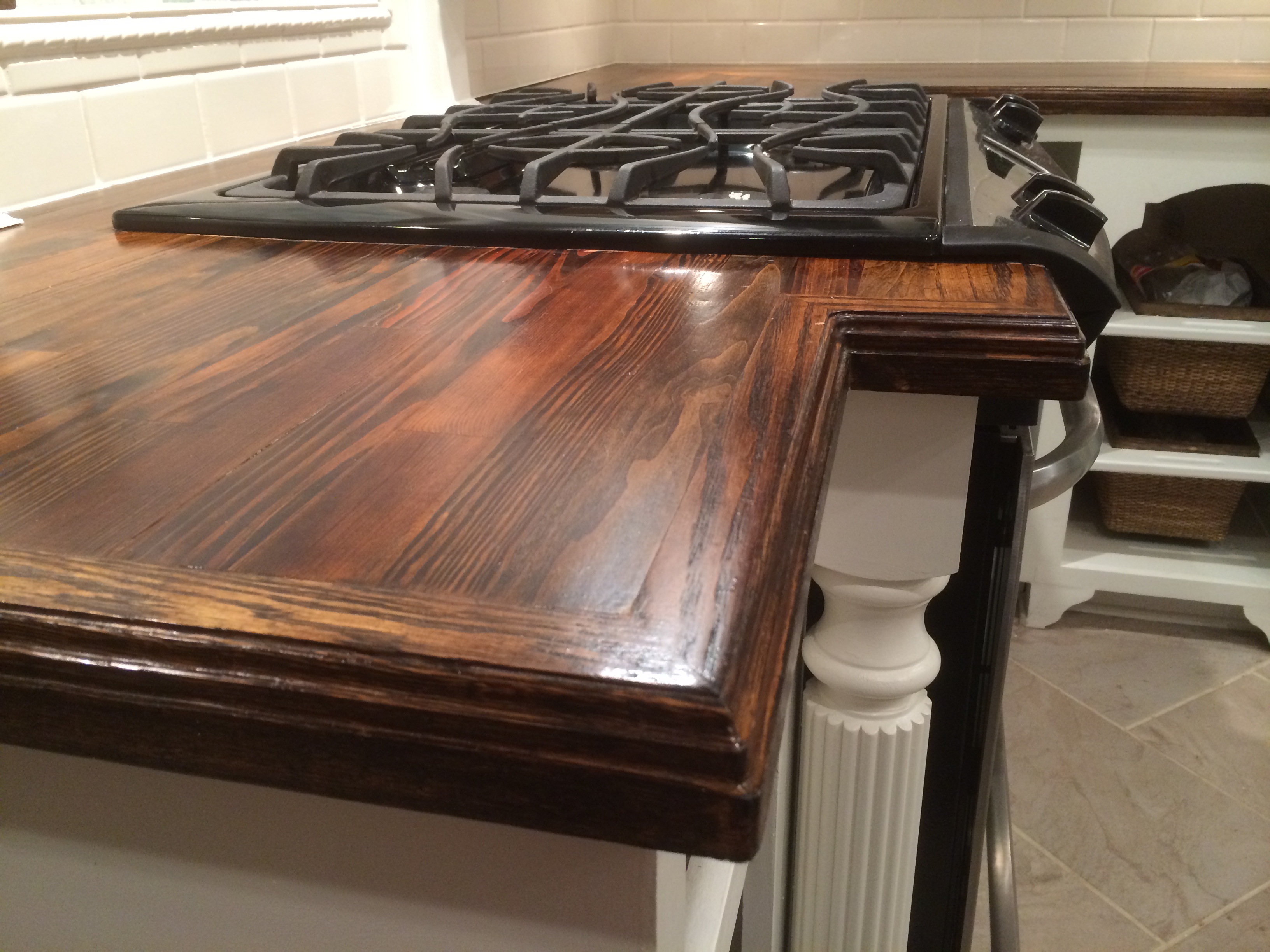
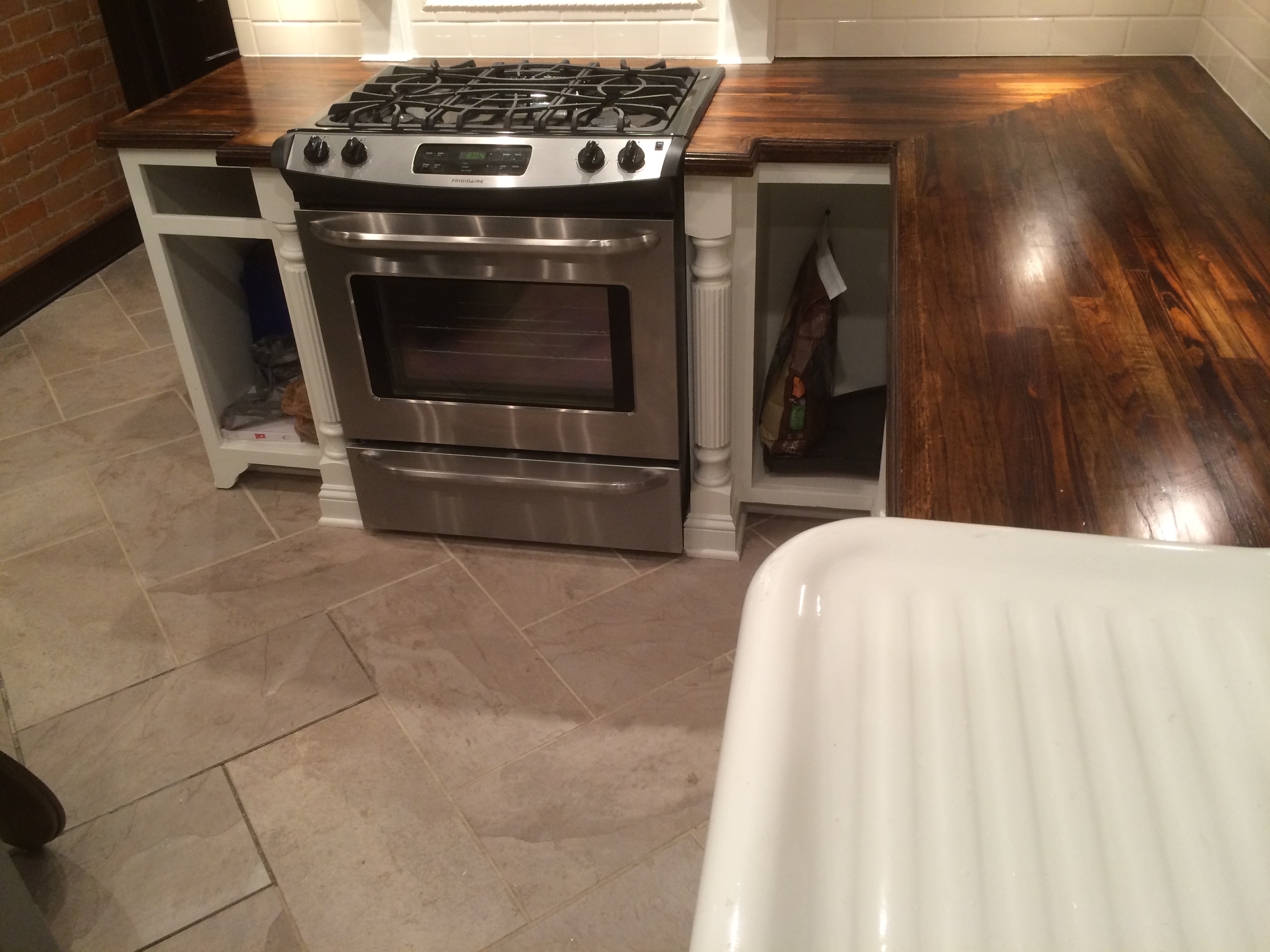
In planning this kitchen renovation, cost was an obvious factor. On top of that, we really wanted to use materials that were authentic to the time period whenever possible. The obvious choice then for our countertops was butcher block.

We decided to be a little ambitious and make our own 🙂 Looking back, it was probably not the easiest way (especially when I got a glimpse at Ikea’s prices) but I can honestly say that our countertops were made from wood that is as old as this house. We were even able to use some lumber that came from a porch tear-down that my dad did in our neighborhood. We started out with several 12′ pieces that looked a little something like this:
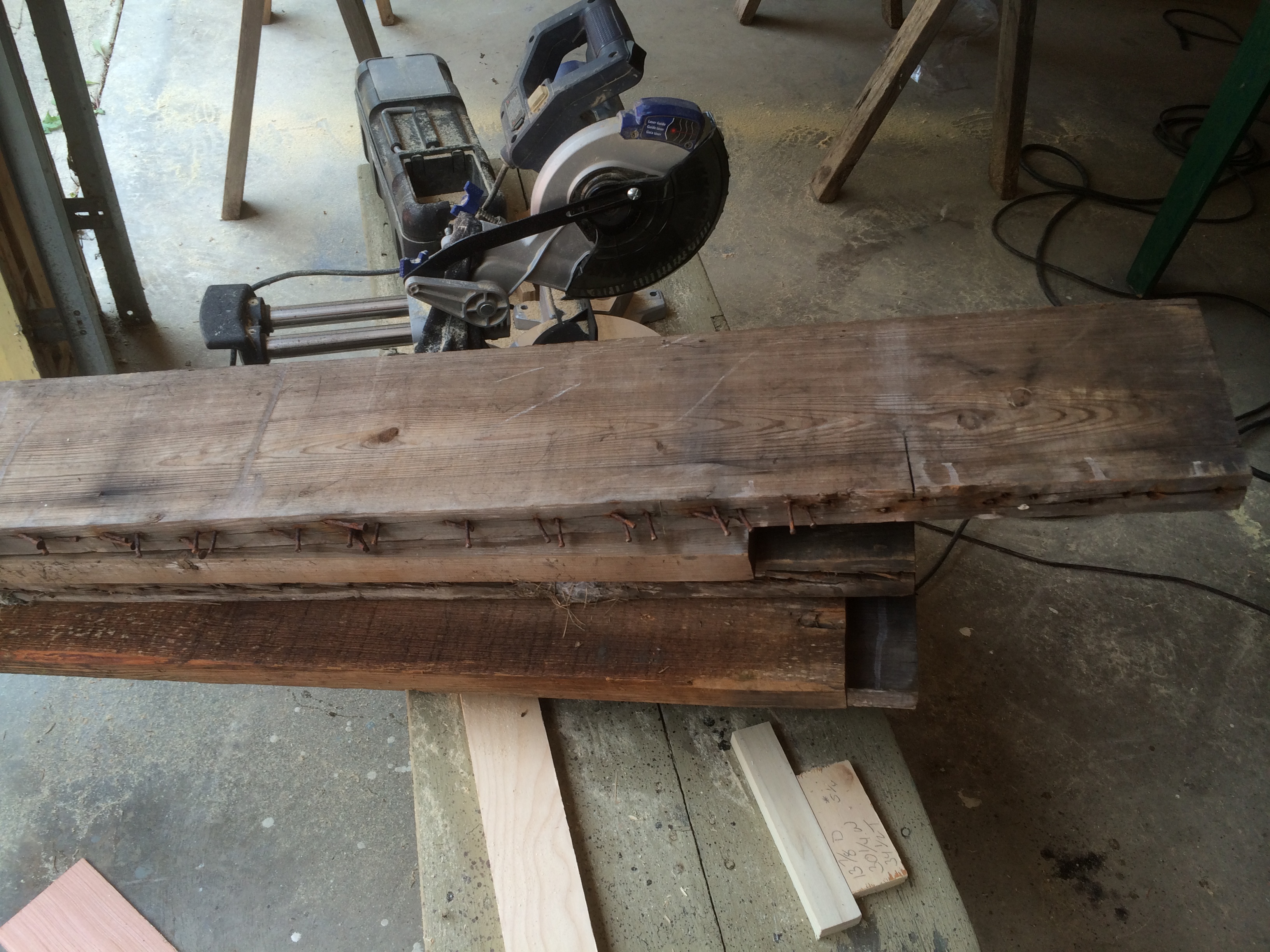
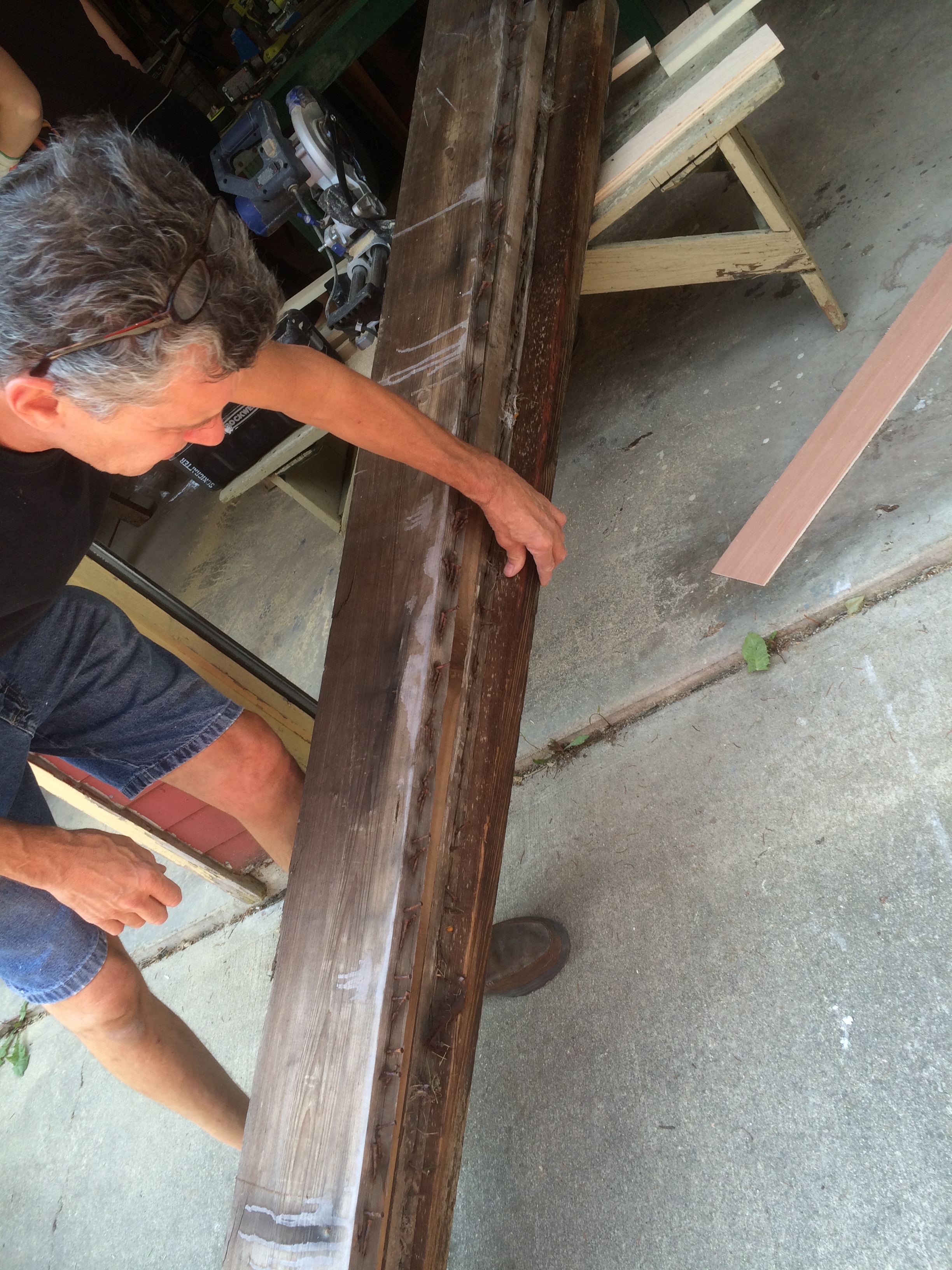
photo 2 (12) photo 4 (7)

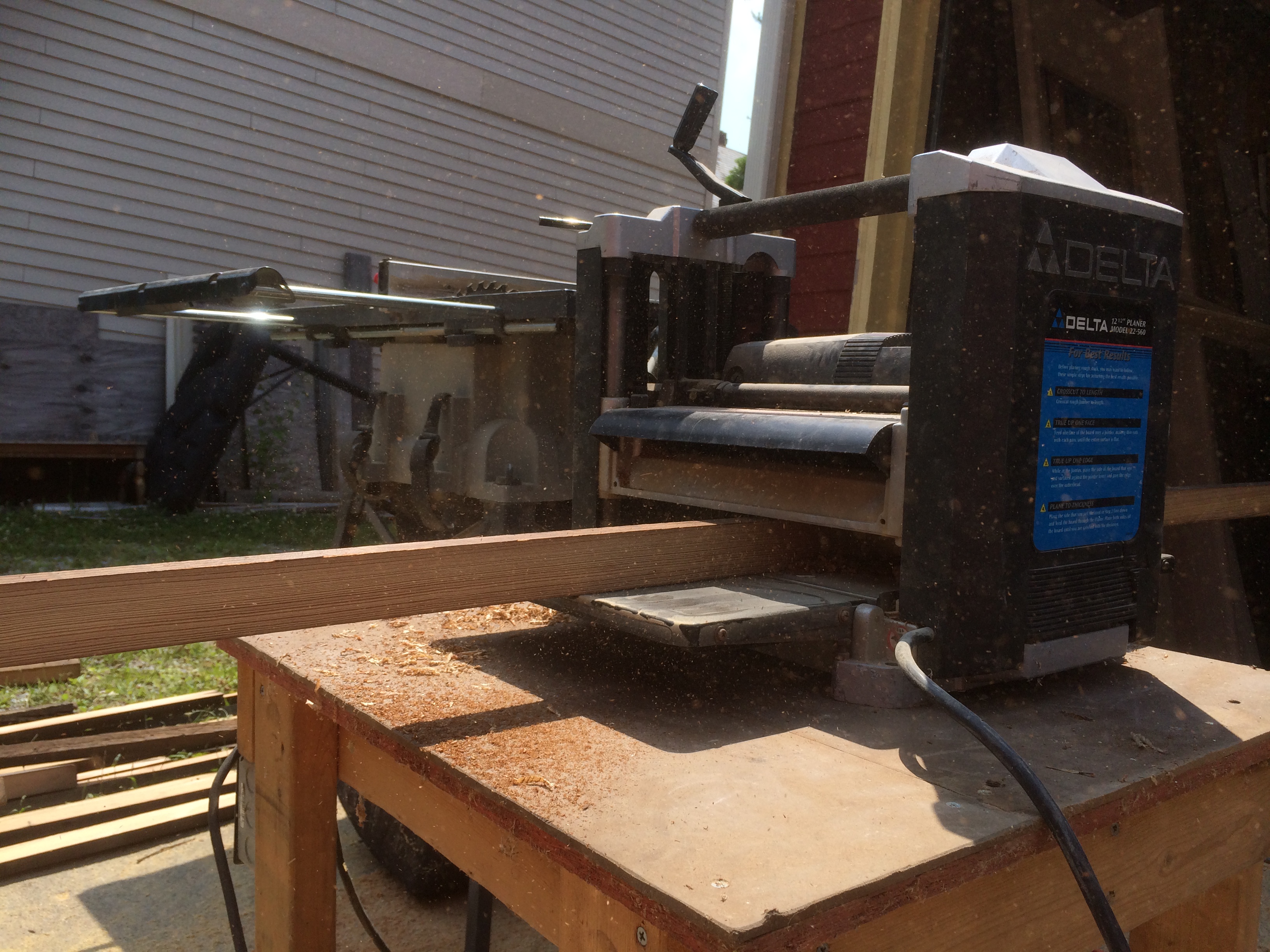
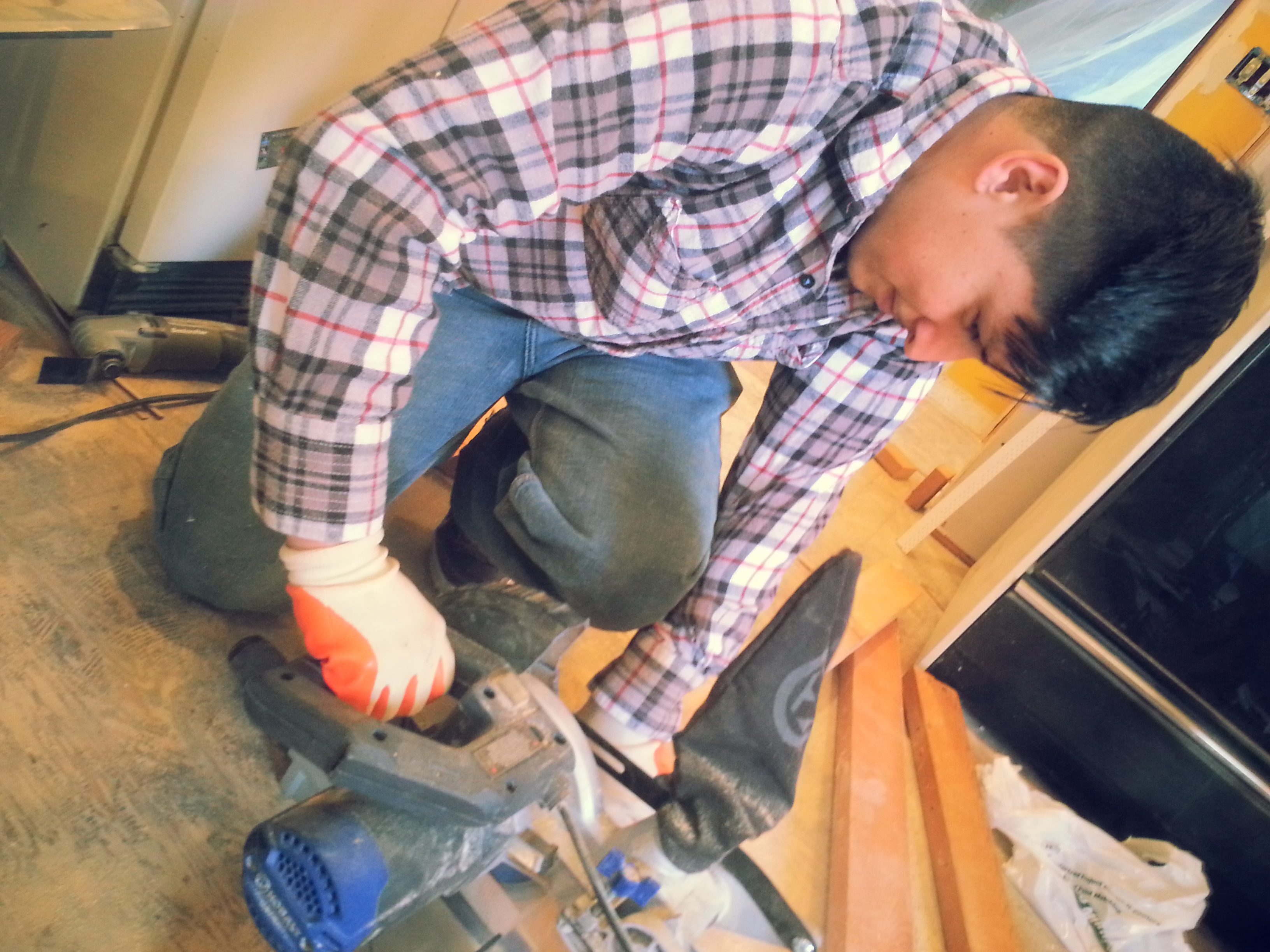
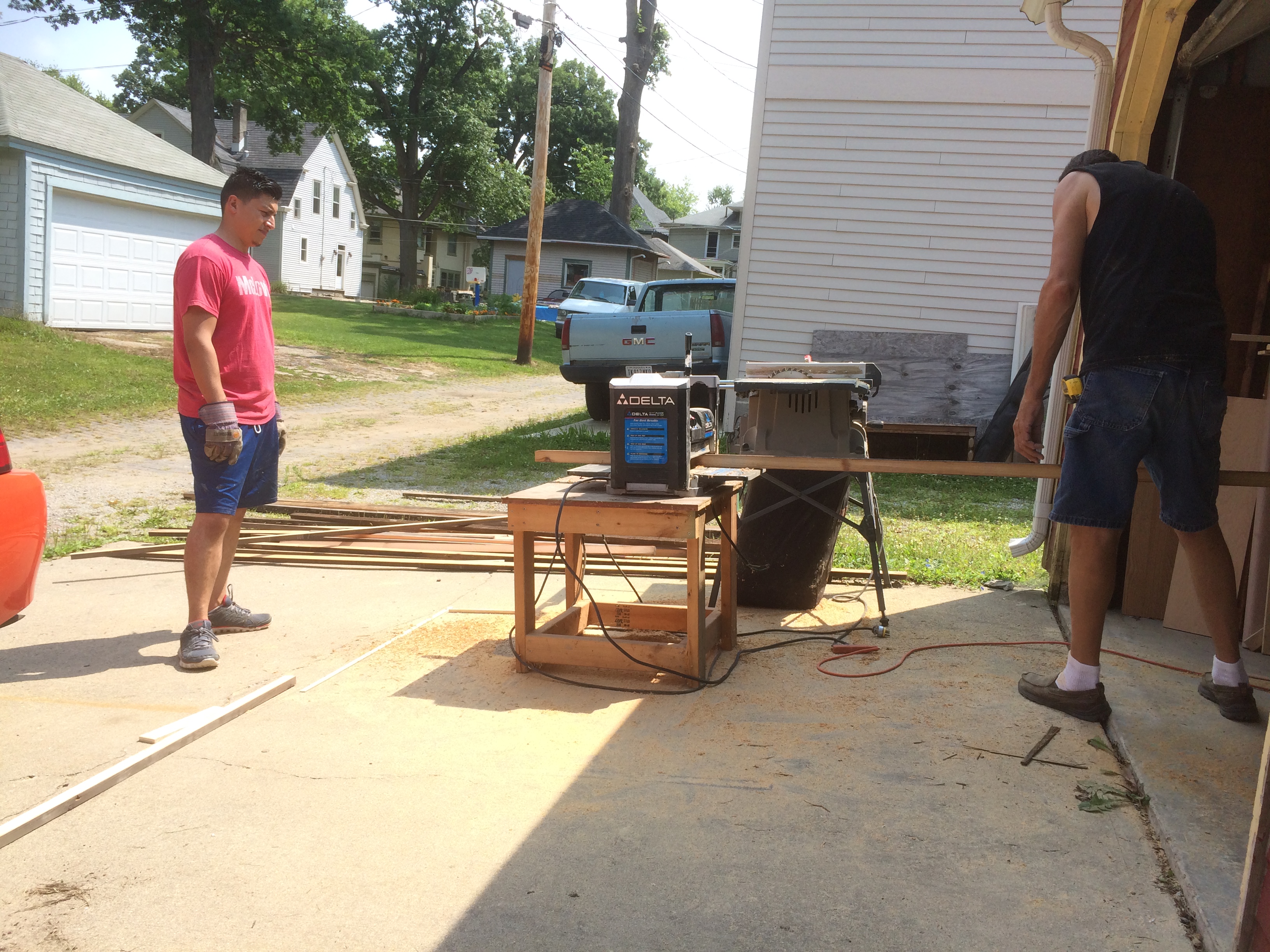
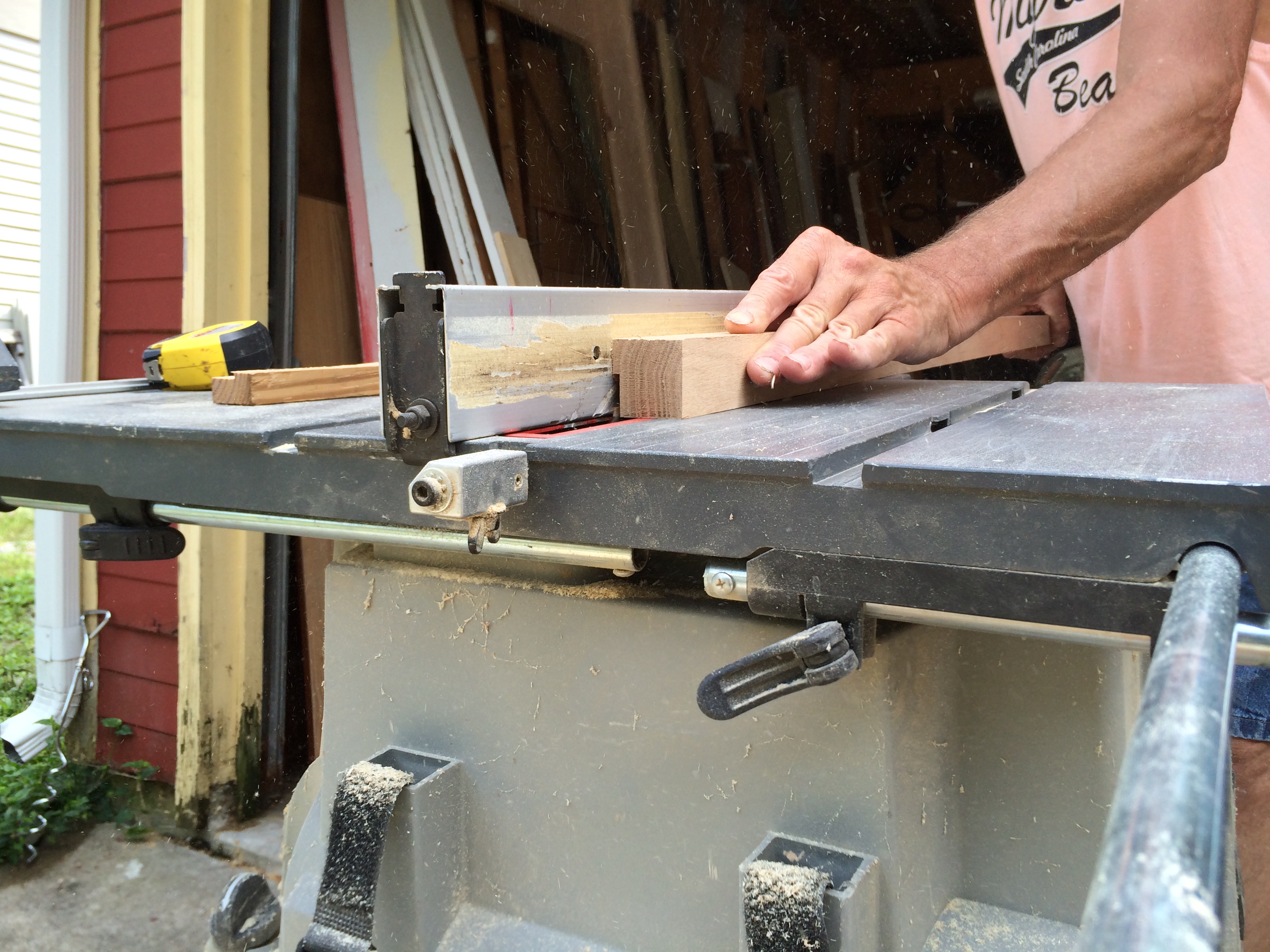
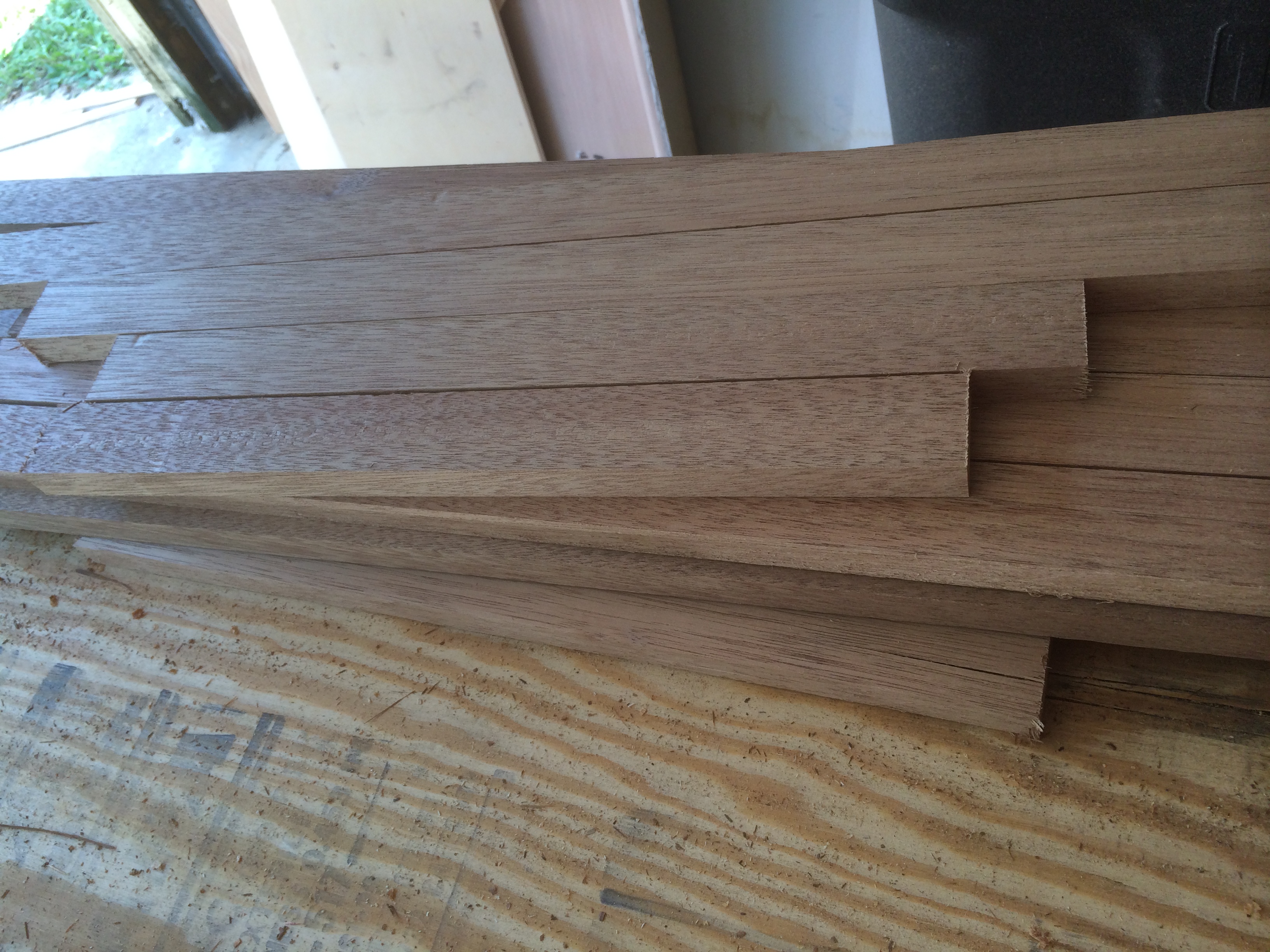
The boards were full of nails and paint and years of exposure but it was nothing a little 12″ planer wouldn’t fix 😉 After removing all the nails (super important!) we cut the boards into 2″ strips using a table saw. Then we ran the boards through the planer so that we could make sure that our countertops would be flat and even. The strips had to be planed on all sides.
1 (3)
1F

1B

After that, we cut the strips into various sized lengths. There was no exact measurement, we just wanted to make sure that we would have lots of different lengths to choose from when assembling the butcher block. We ended up with a couple piles that looked like this:
1D


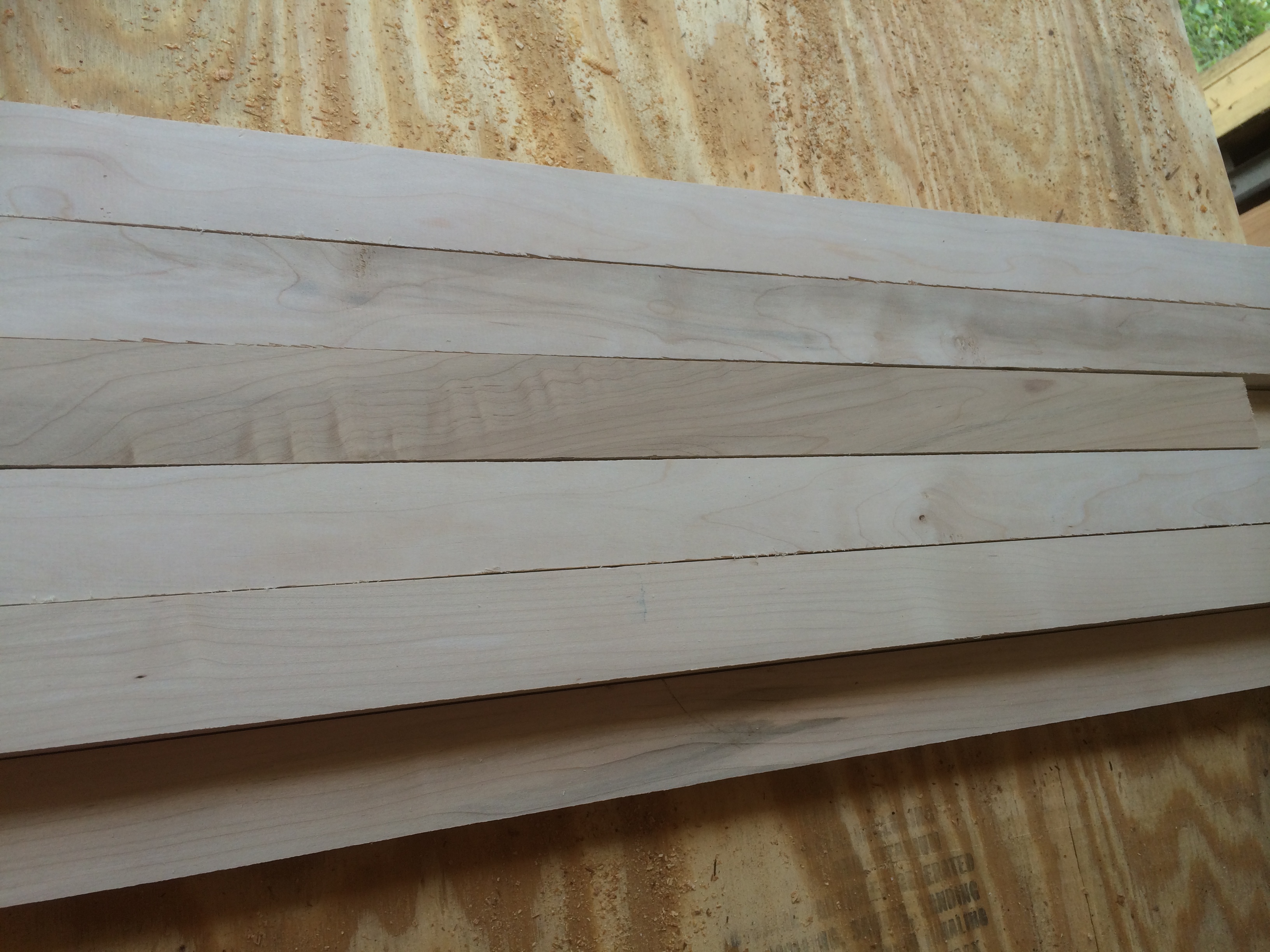
We knew that we would need several feet of countertop so we decided to mix in some new stock maple and mahogany that we purchased from Menard’s. Those boards went through the same process of being cut into 2″ strips and then planed down to size. By mixing the new growth maple and mahogany with the mature pine we were able to salvage, we could ensure that the butcher block would have several beautiful colors when it was stained and finished.
2 (3)


2


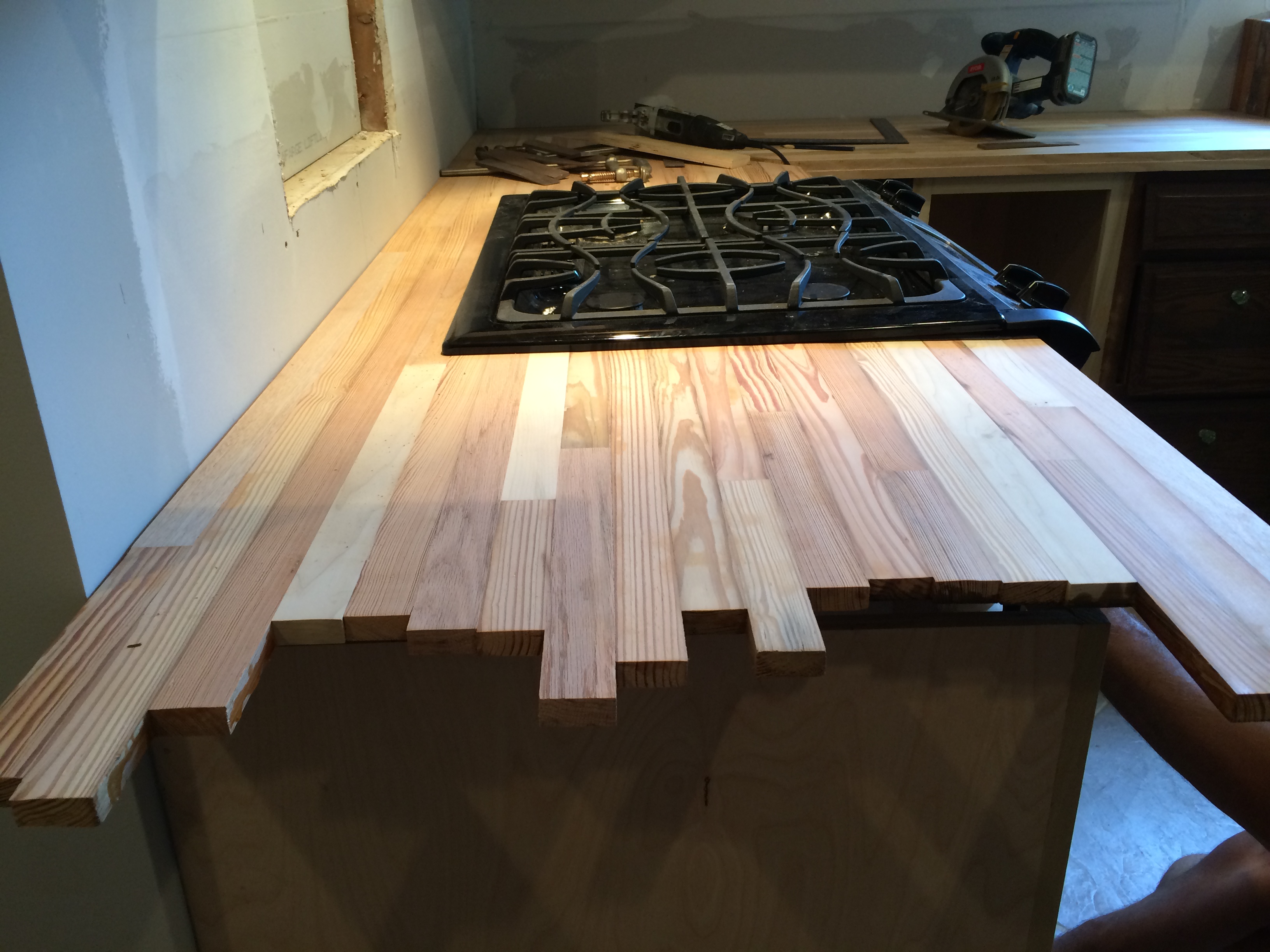
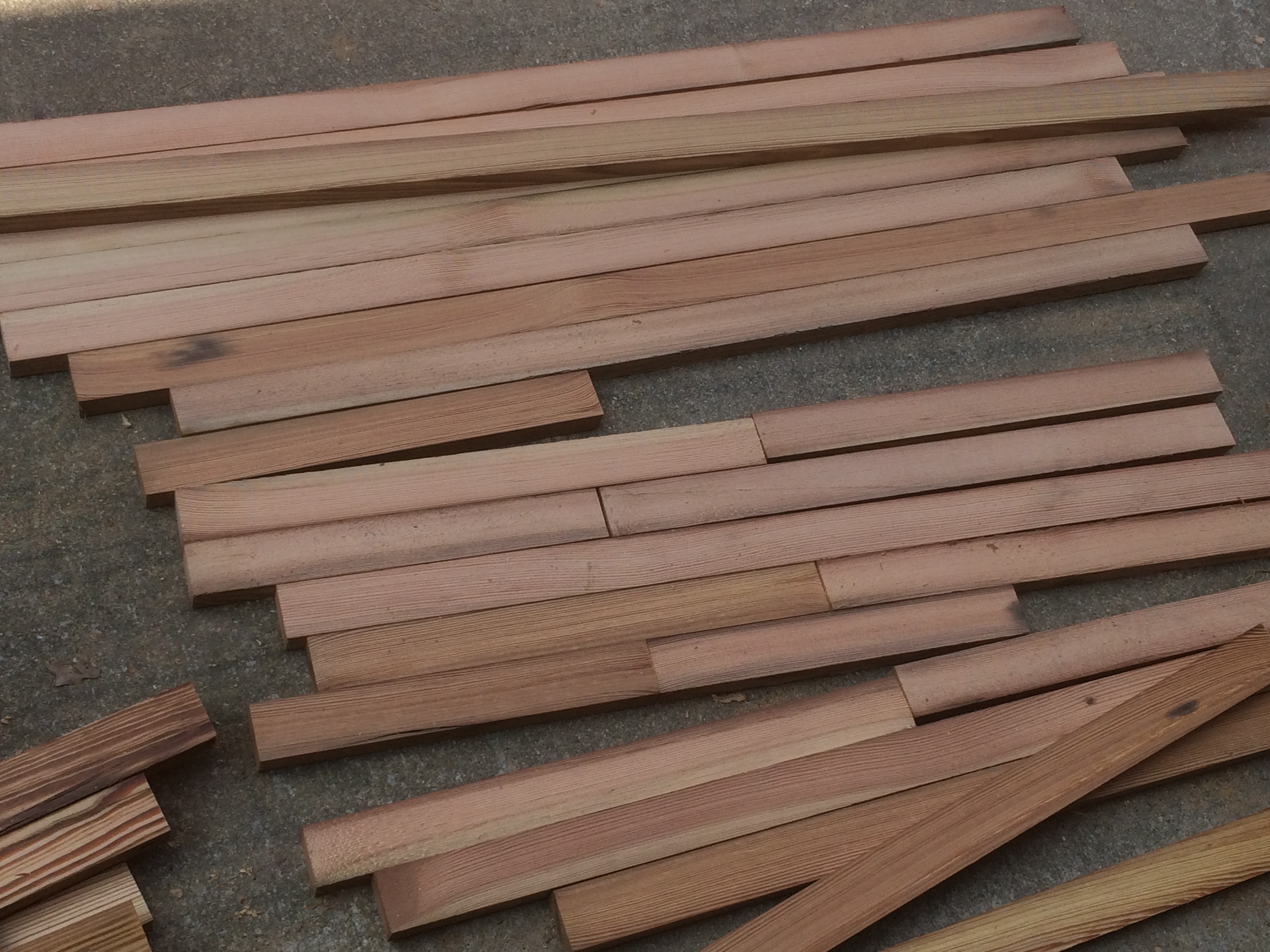
After taking some good measurements and drawing up some rough diagrams for the shape of the countertops we would be creating, we began to intermix the different species of wood to achieve the look we wanted. It was important to lay all the pieces out first WITHOUT glue; we ended up switching several pieces around before we were ready to commit to any particular “color” pattern.

3 (2)


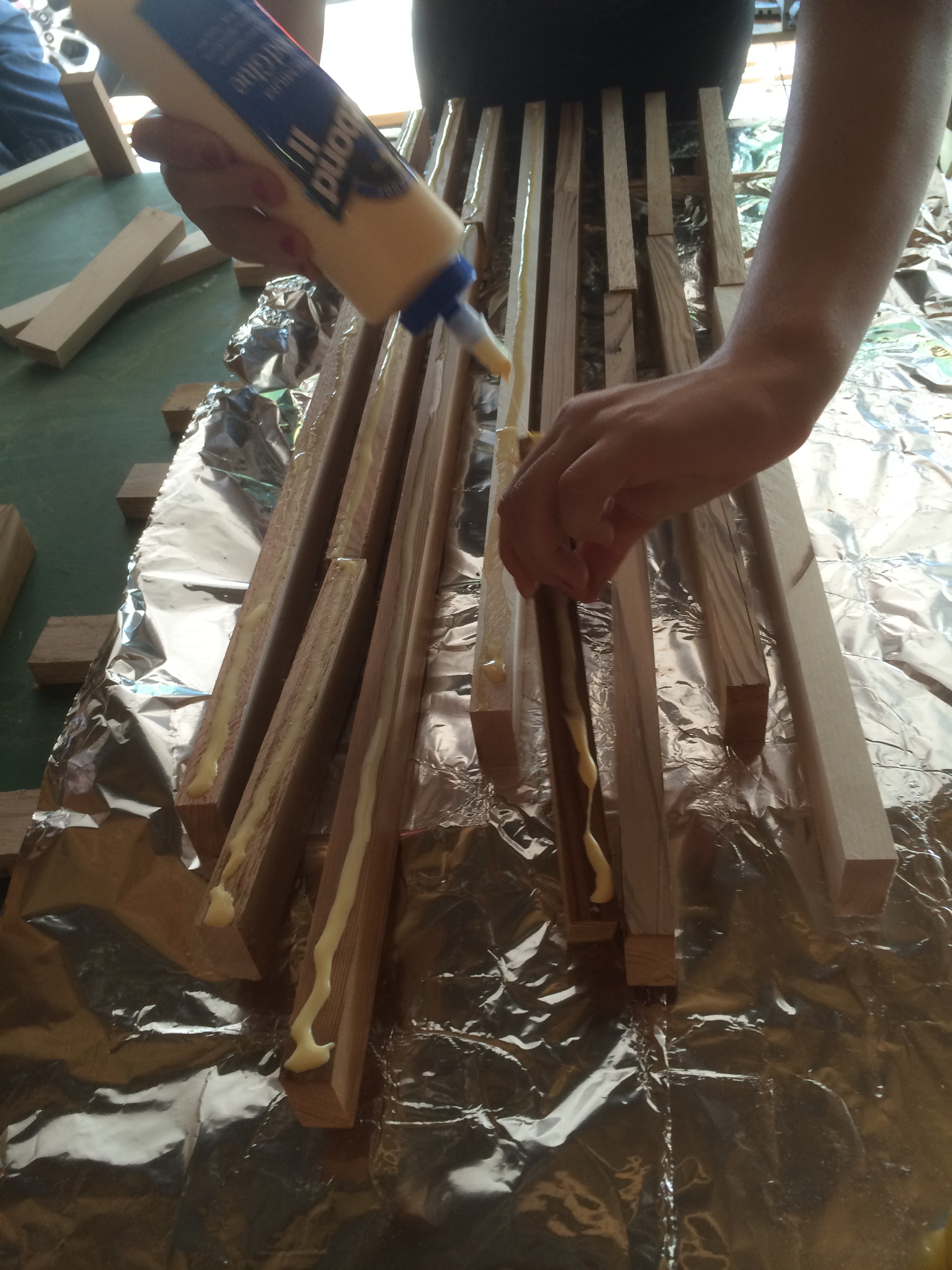
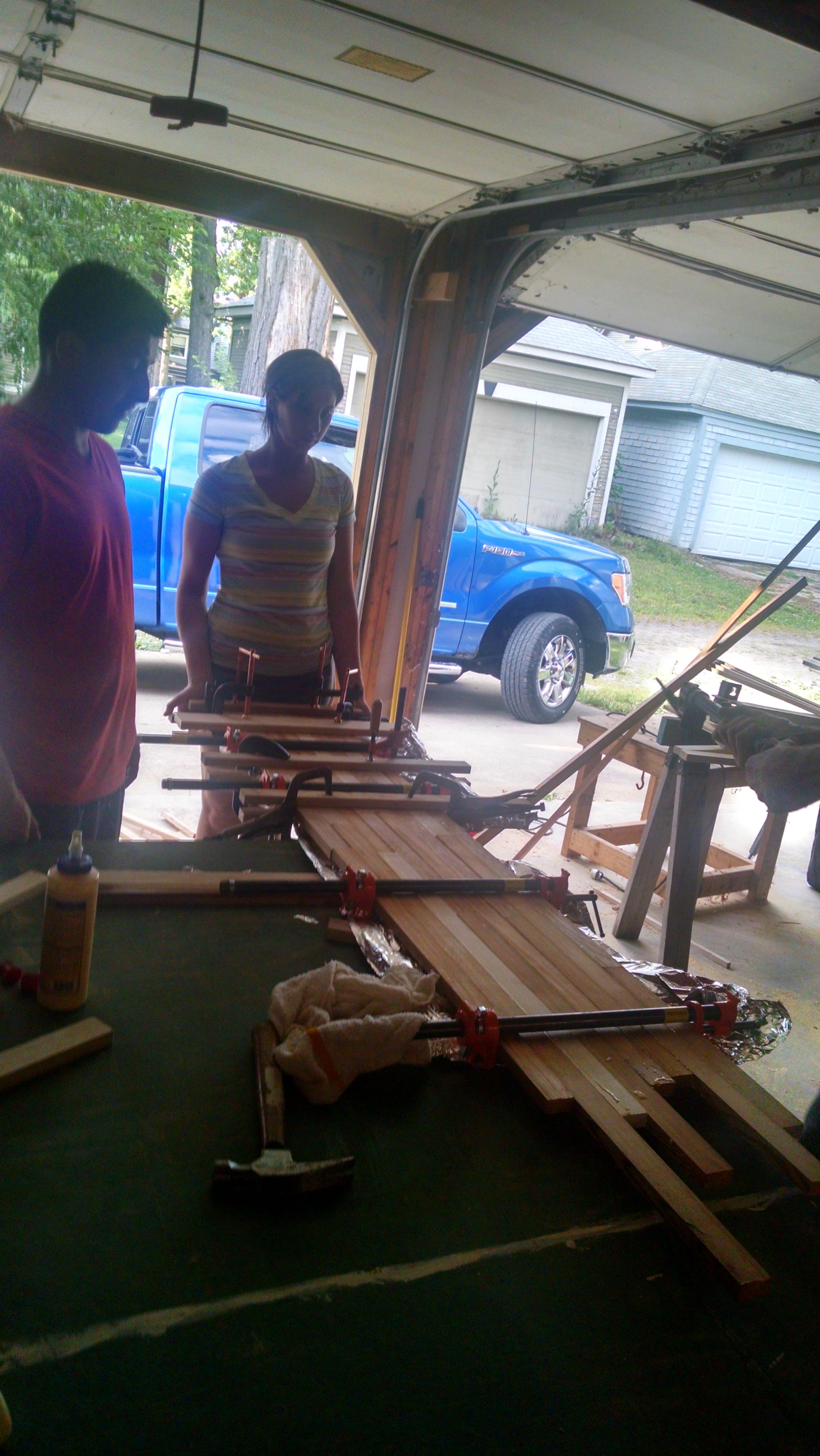
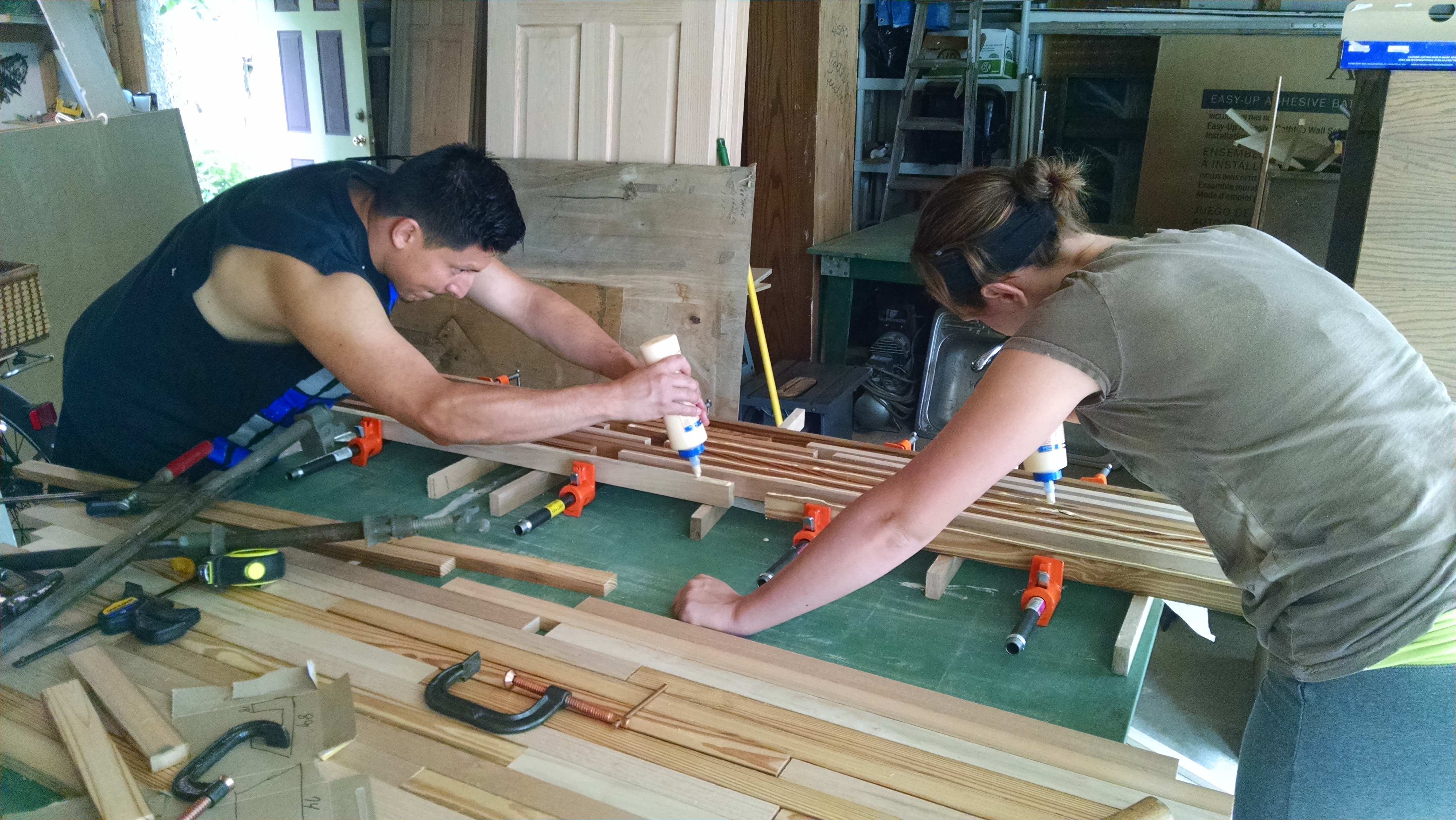
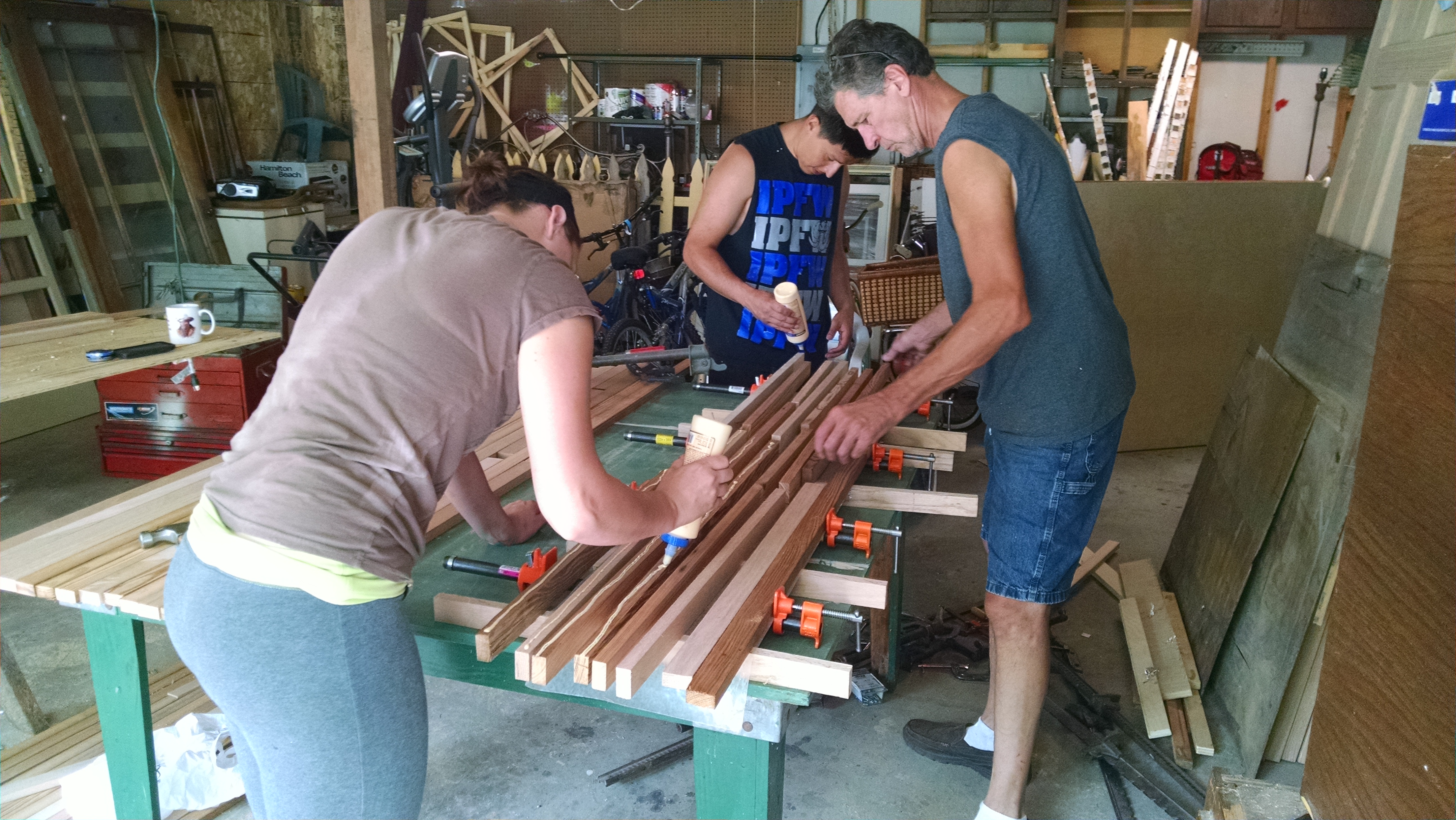
When we were sure we had enough pieces to make all four pieces of countertop that we needed we started to glue them up.

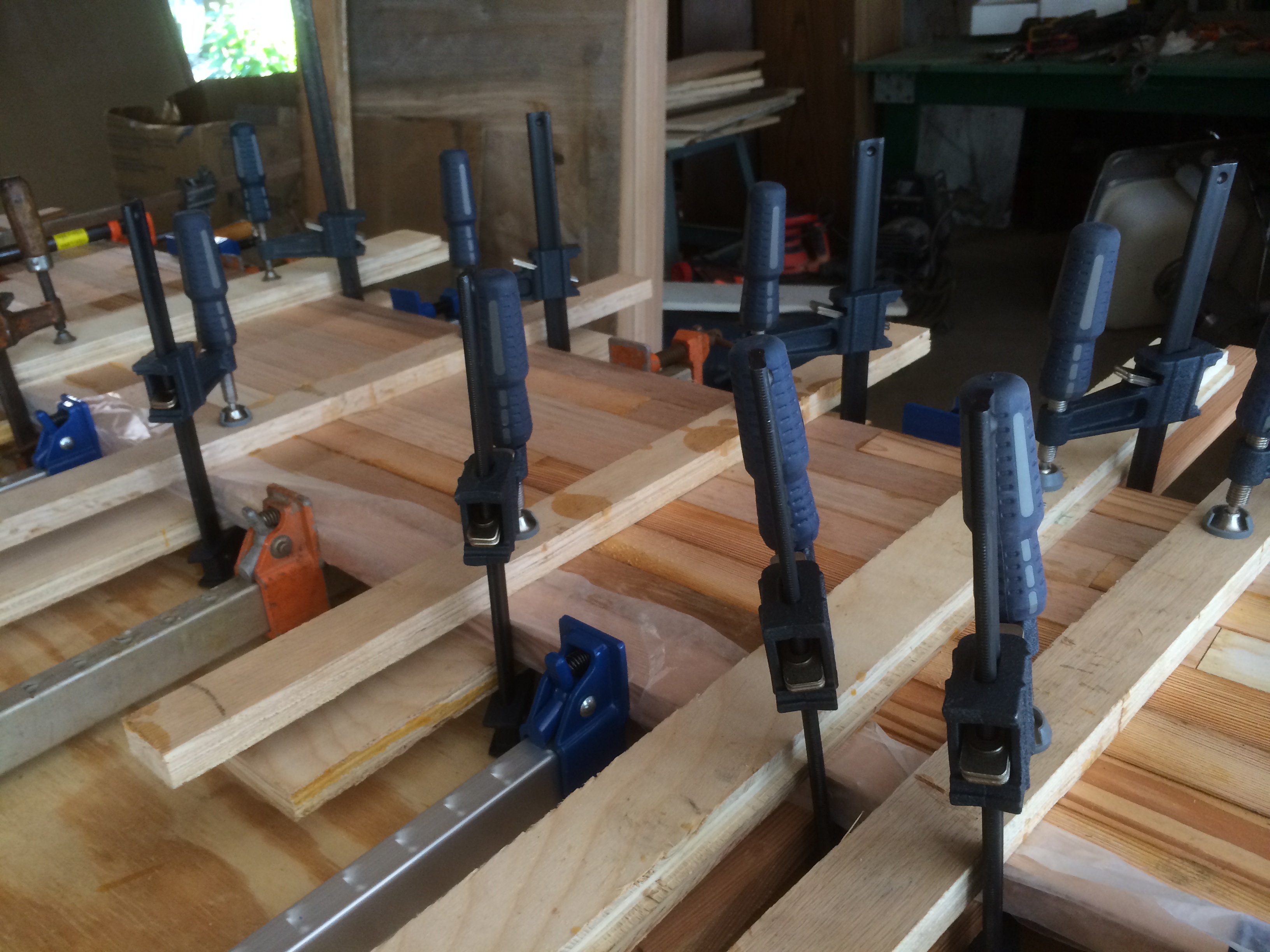
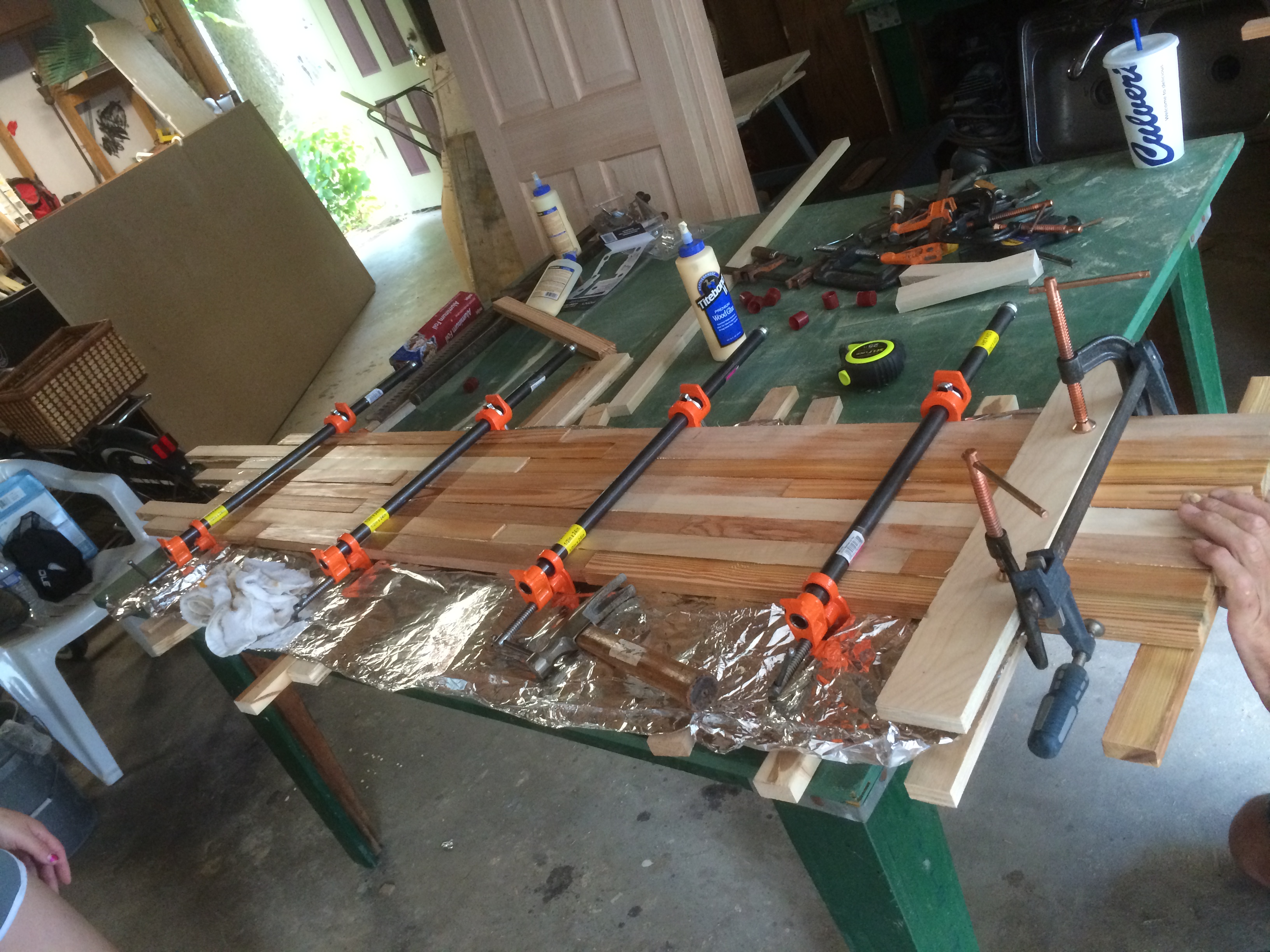
WARNING: if you are crazy like we are and you decide to tackle this project on your own, just know that you will need about a million clamps. No seriously, get as many as you can.

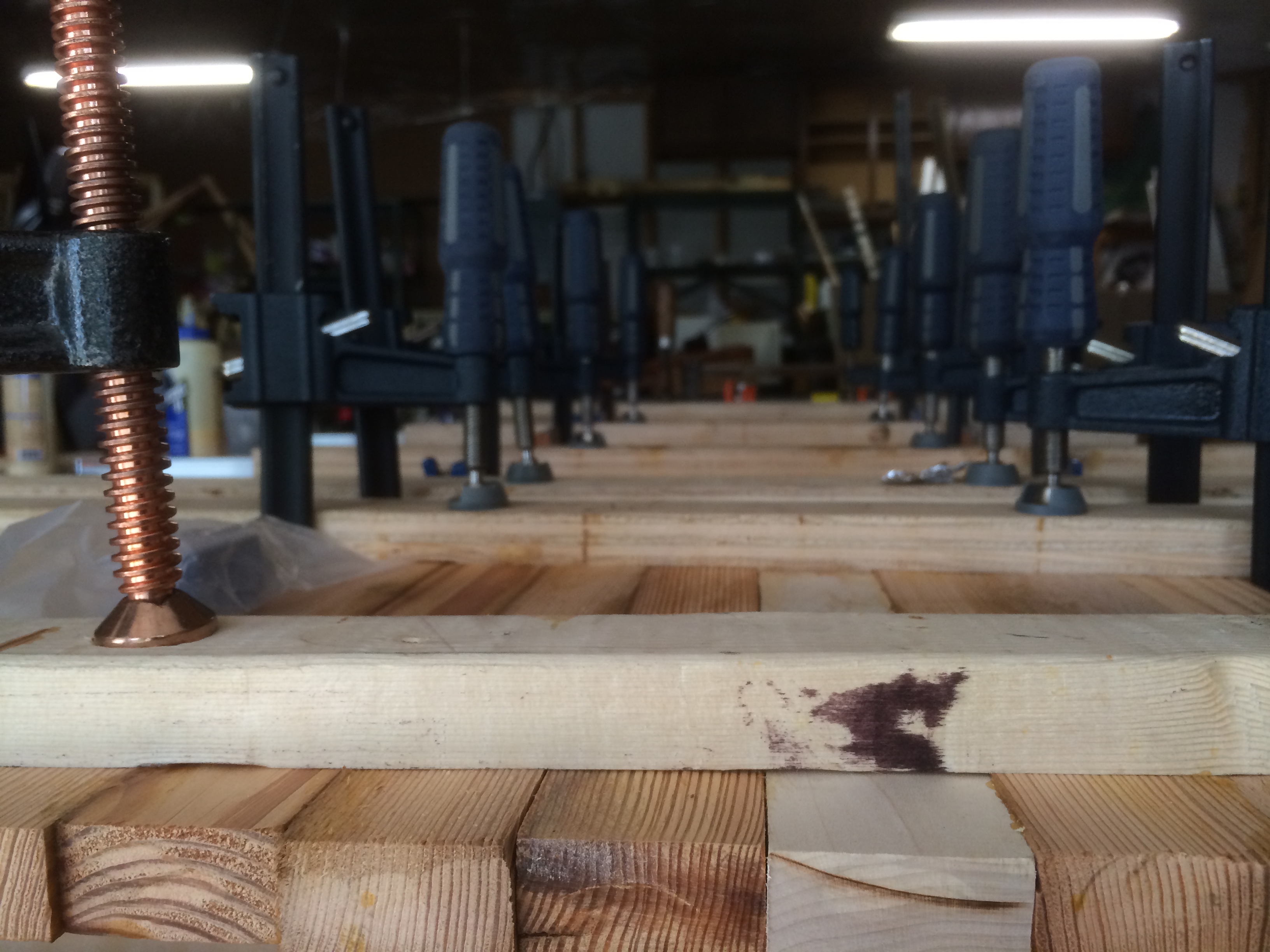
You will need both bar clamps and C-clamps. You will also need some scrap wood to place between the countertop and the clamp so that when pressure is applied the surface of the countertop is not dented. We placed aluminum foil between the countertop and our work surface to prevent glue from getting all over. Since it is very likely that you will be using water around your kitchen countertops make sure that the glue you use to assemble the pieces together is waterproof.
IMG_20140727_111122808IMG_20140727_111109348 (1)photo 2 (9)3photo 2 (7)
photo 3 (7)photo 3 (6)

We let the glue dry for at least 24 hours. Although our countertops would sit on cabinets that were about 23″ deep we decided to assemble the countertops in pieces that were only 12″ wide. That meant that we had 8 total pieces to make. We decided to do it this way so that after the glue dried and we removed the clamps we could run the whole piece thru the planer one more time, which would ensure uniform thickness and save us a lot of sanding down the road. I tried calling different mills in the area and could not get anyone to agree to run these through their industrial planer so we were stuck using ours which is only 12″ wide. After the 12″ piece was planed for the last time we then had to glue it together with another 12″ piece which gave us the depth required to sit on top of the cabinet base. You may not follow me exactly but just know it was a lot of glue, clamp, repeat. It took us several weekends to get the countertops assembled.

We had to add one more edge piece on to the front of the countertop which would be routed with a customized roman ogee profile. This gave the countertops a finished look.
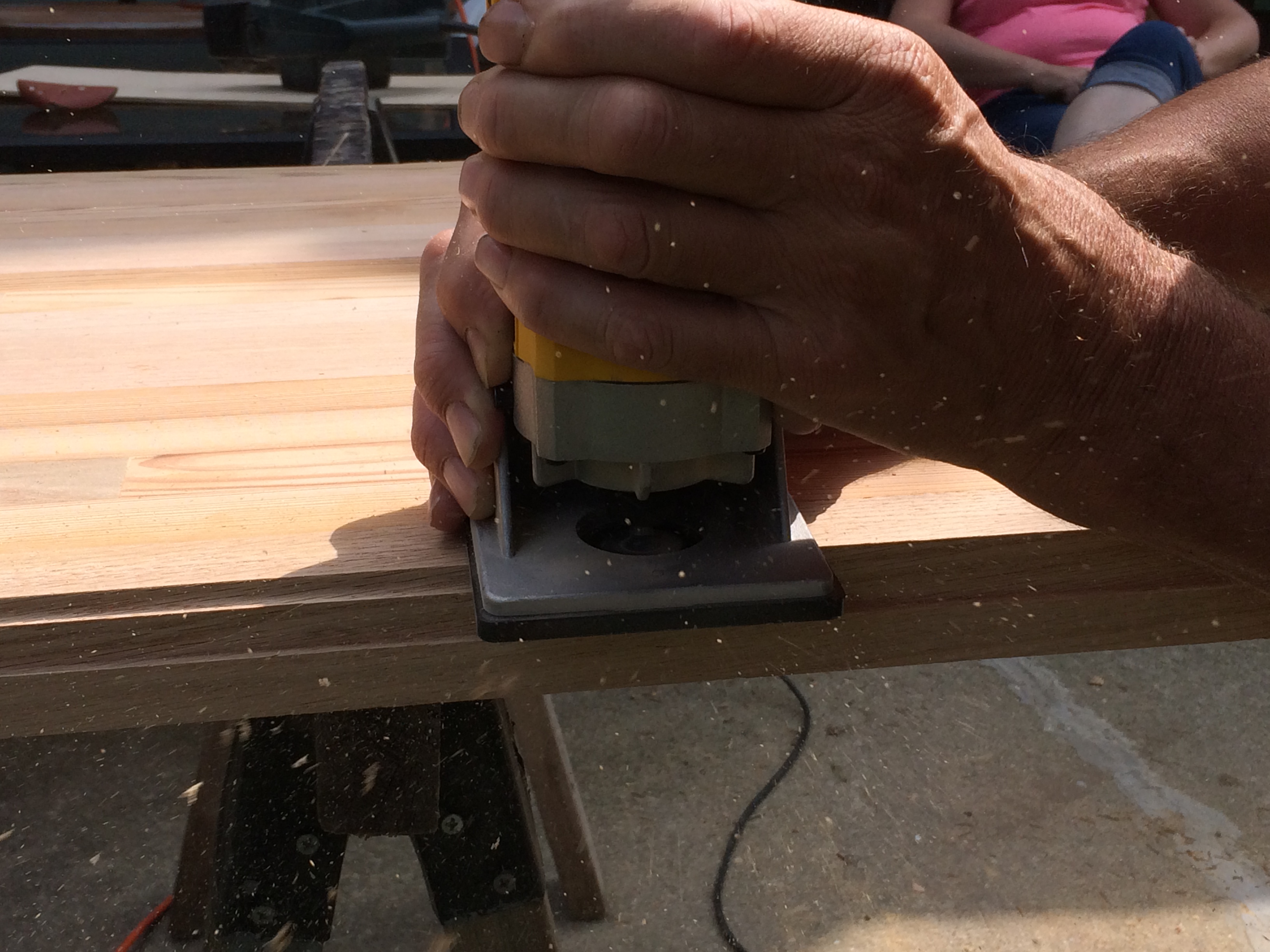
photo 1 (2)

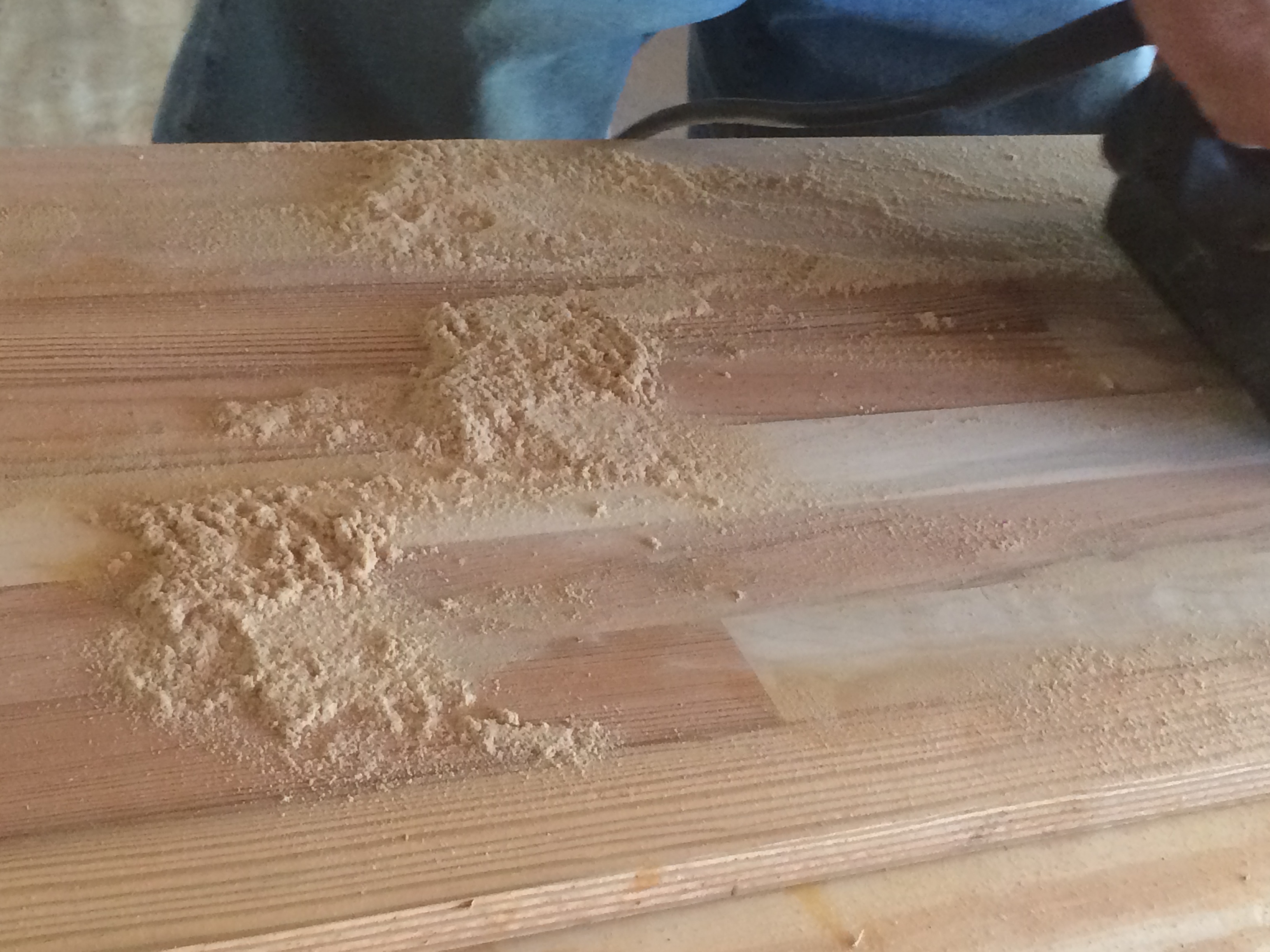
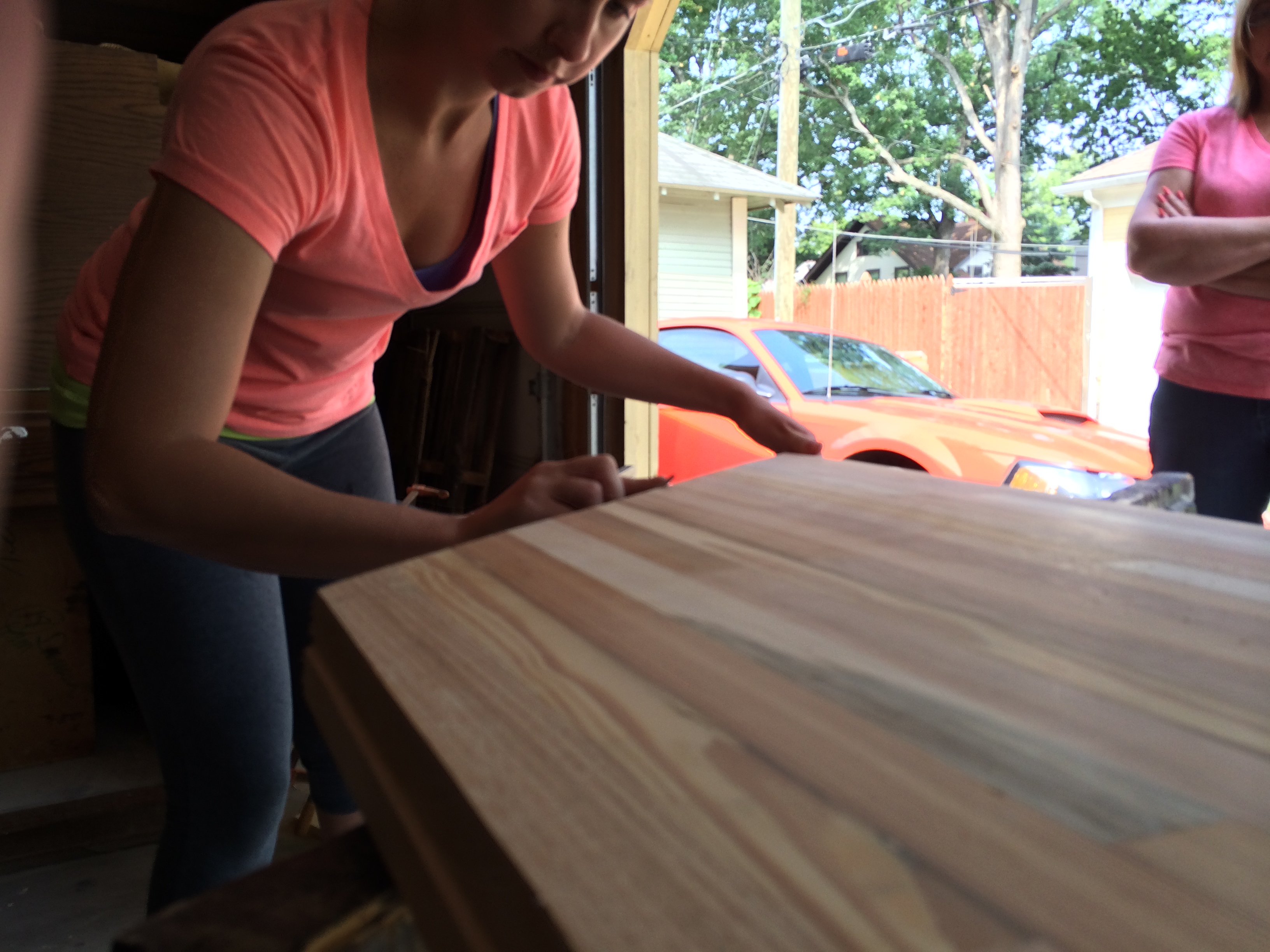
After that we had to begin the tedious process of using wood filler to hide all the minute gaps between the strips of wood. Then, it was a whole lot of sanding!
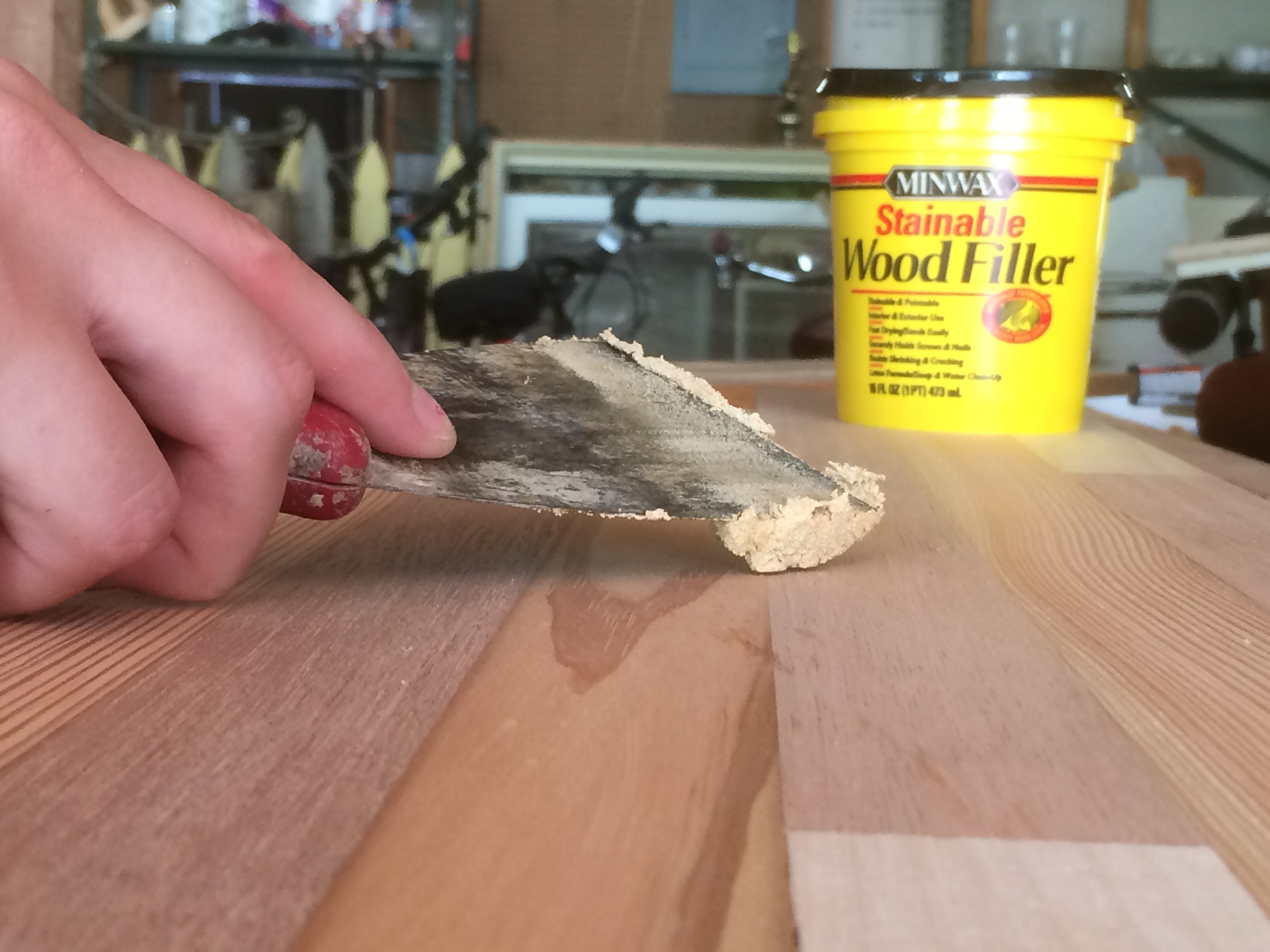
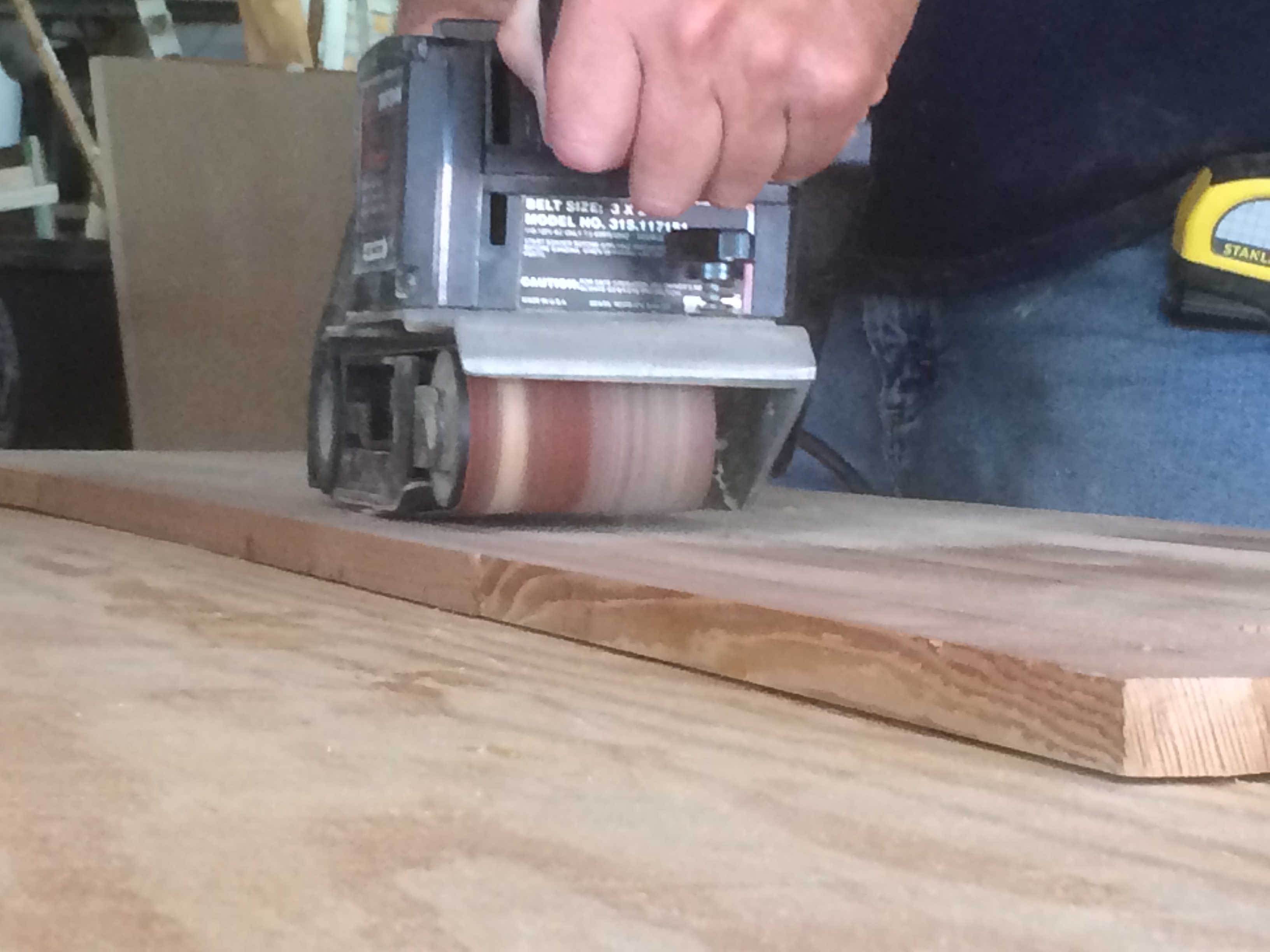
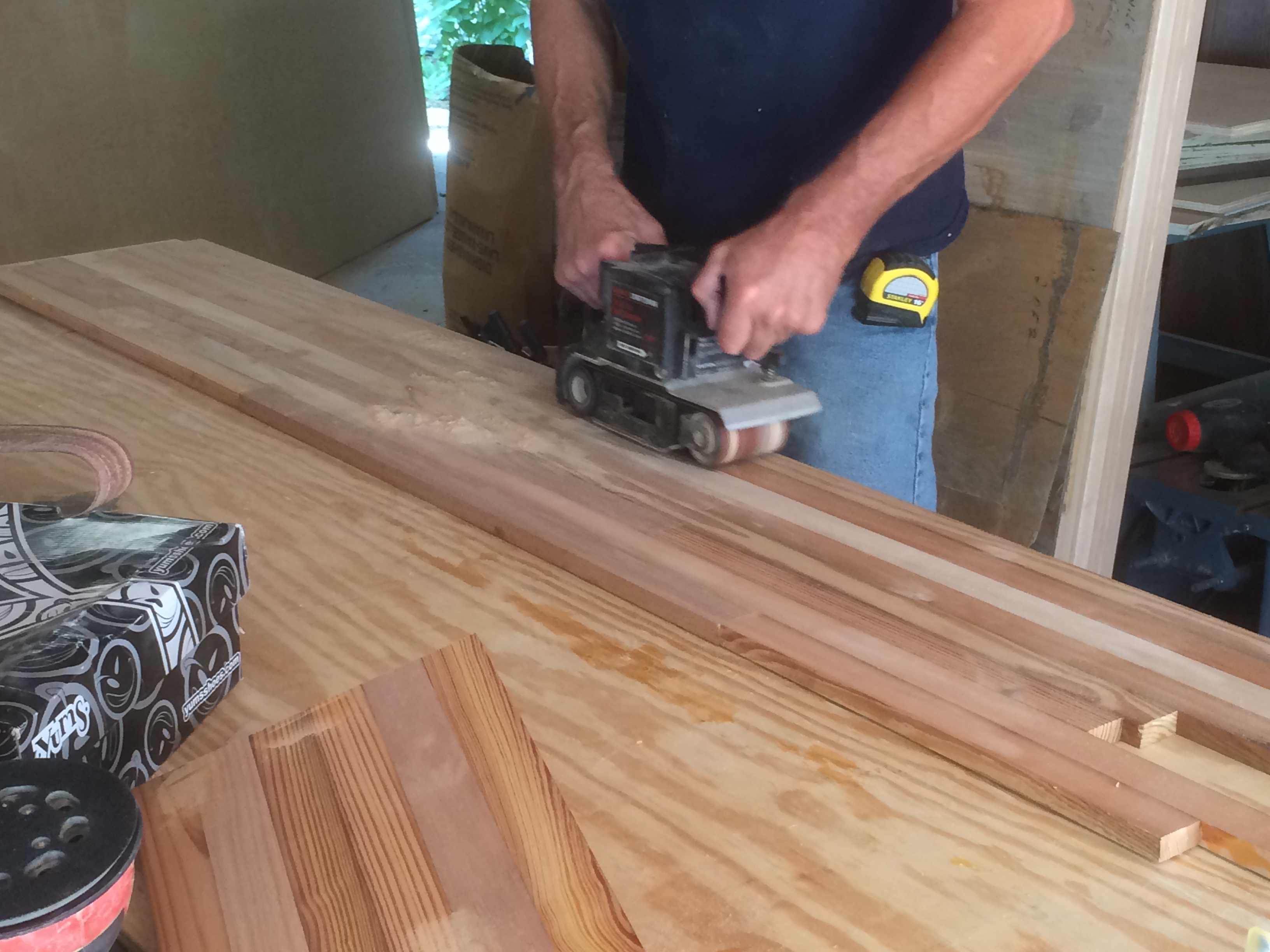
photo 1 (7)photo 5 (3)photo 3 (5)photo 1 (6)photo 2 (6)photo 4 (3)

Soon it was time to bring the countertops in and start fitting them. Some of the cuts were difficult. We had to create two custom edges to match the profile of our antique cast iron sink. We also had to create a mitered corner at the junction of two slabs of countertop.
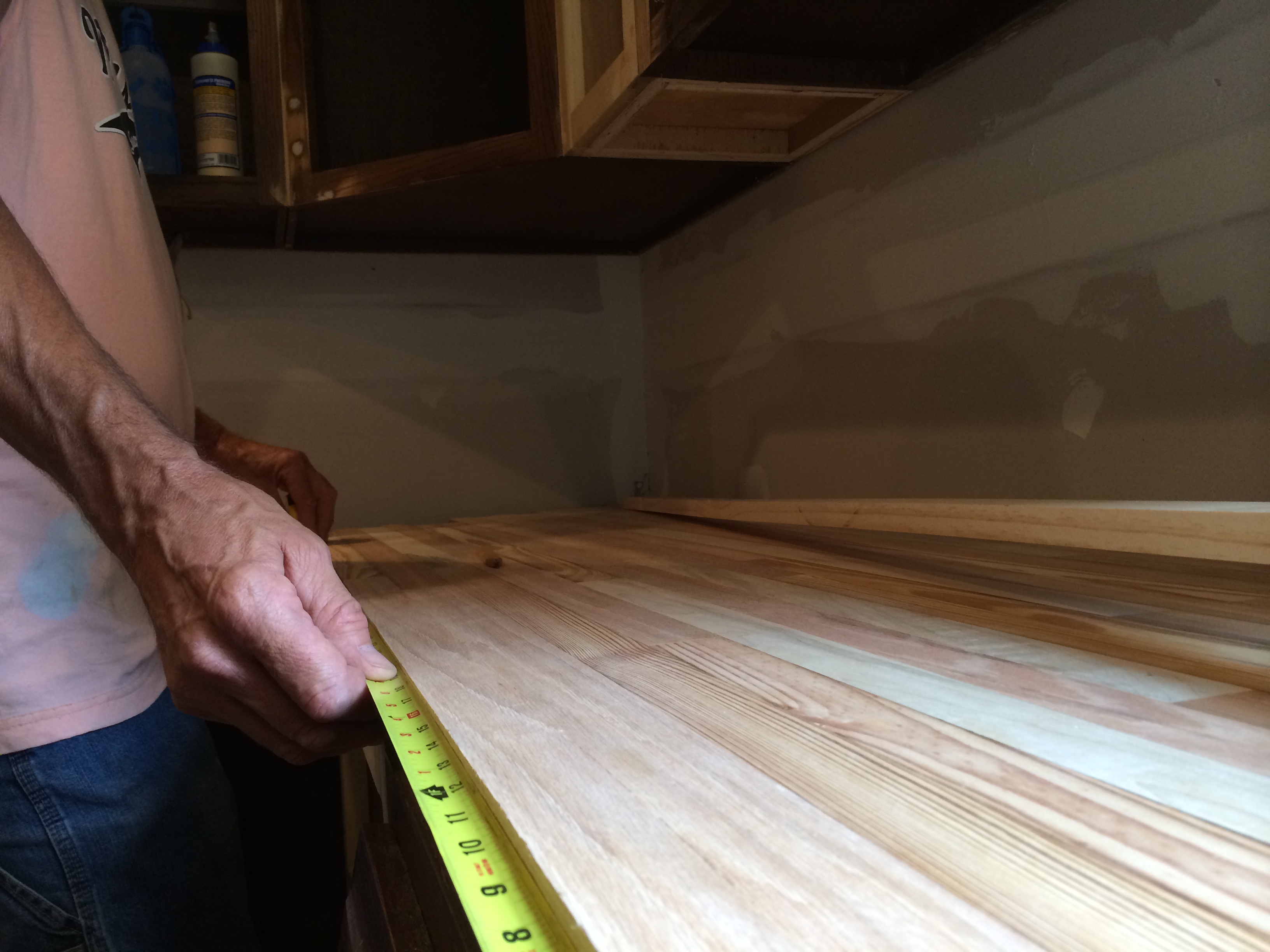
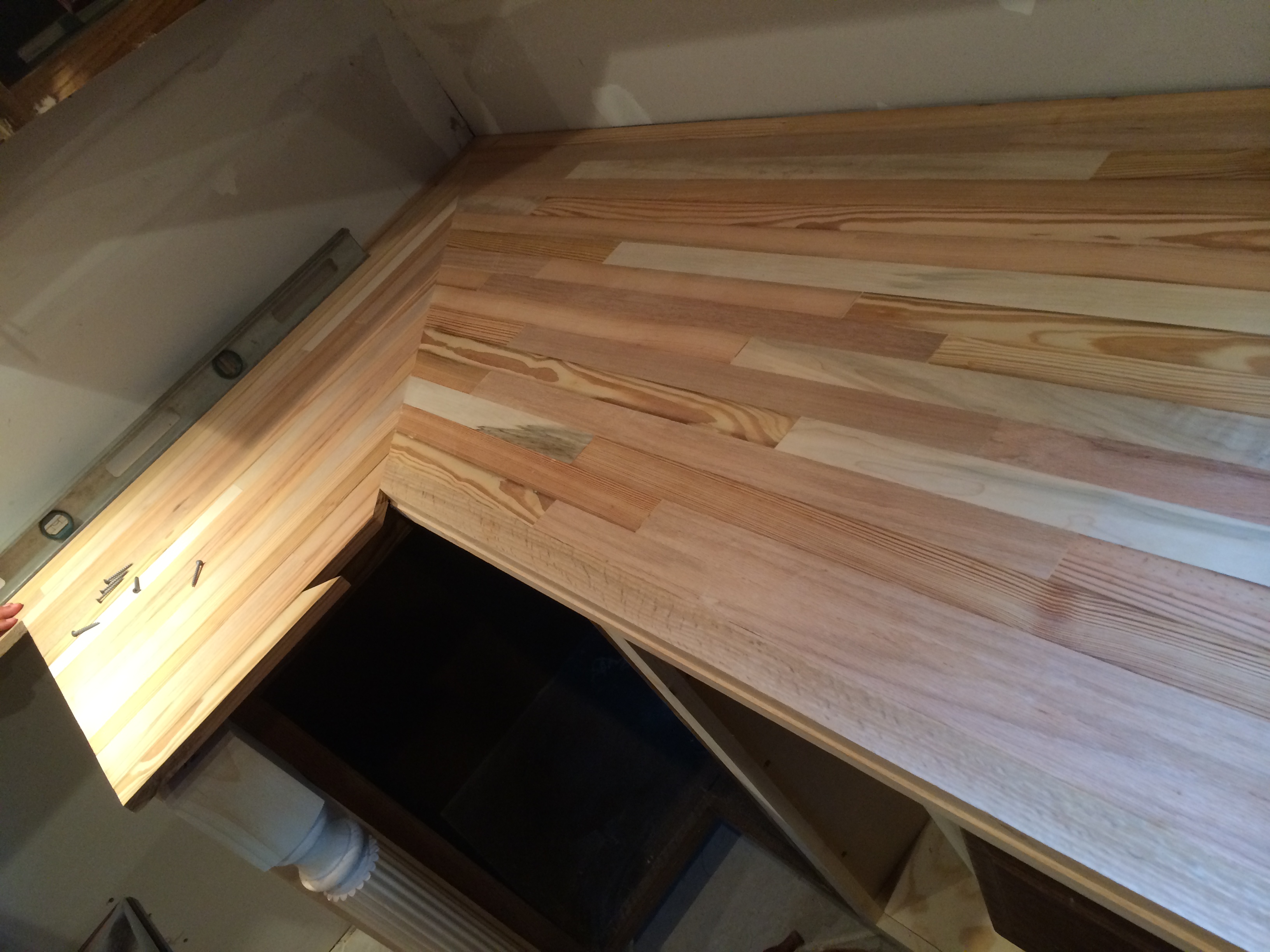
photo 1 (4)photo 2 (10) photo 1 (10)

Aren’t they just BEAUTIFUL?!photo 2 (2)

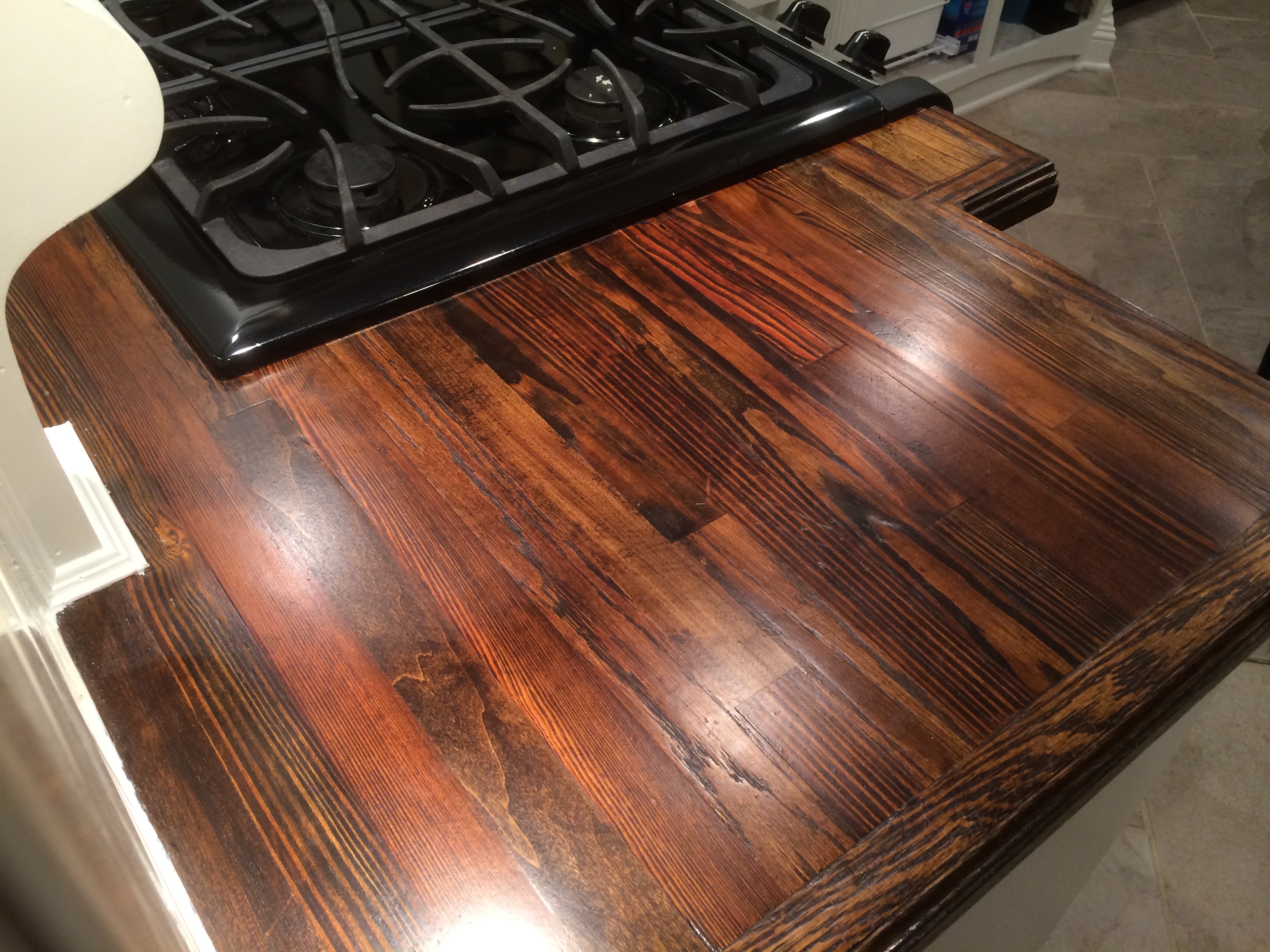
Once we had our final measurements, we began the process of cutting off the edges to fit the length of the countertop. I also started testing different stains and oils to determine how we would finish and protect the butcher block. We ended up choosing to stain the butcher block with a couple of coats of walnut stain. Then, after reading many, many reviews of different products we decided to seal the countertops with a product called Waterlox. Many people choose to only treat their countertops with oil; any scratches or dullness can easily be repaired and retreated as many times as you want. However, since we chose to make all the countertops out of wood (as opposed to just the island top, for example) then I wanted to make sure that they were absolutley water proof so there would be no chance of warping or water damage. For that reason, we sealed the countertops with Waterlox. The product is available online and you can choose a couple of different finishes. We decided to go with a satin sheen. After the walnut stain had dried, I applied several coats of Waterlox over the top. Although this sealer can be used by itself, we decided to apply it over the stain in order to get a darker, richer color. So far, this has held up very well.
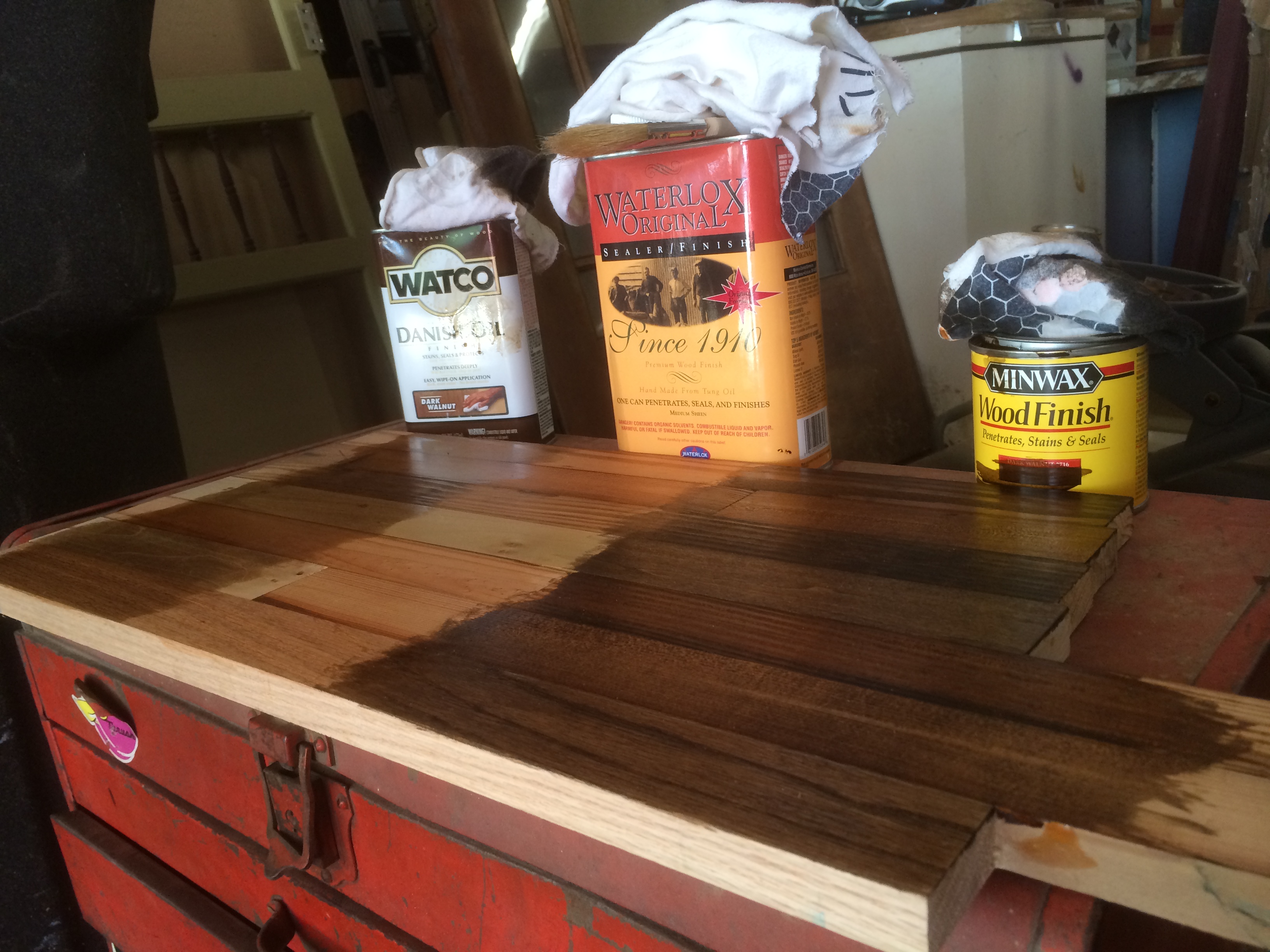
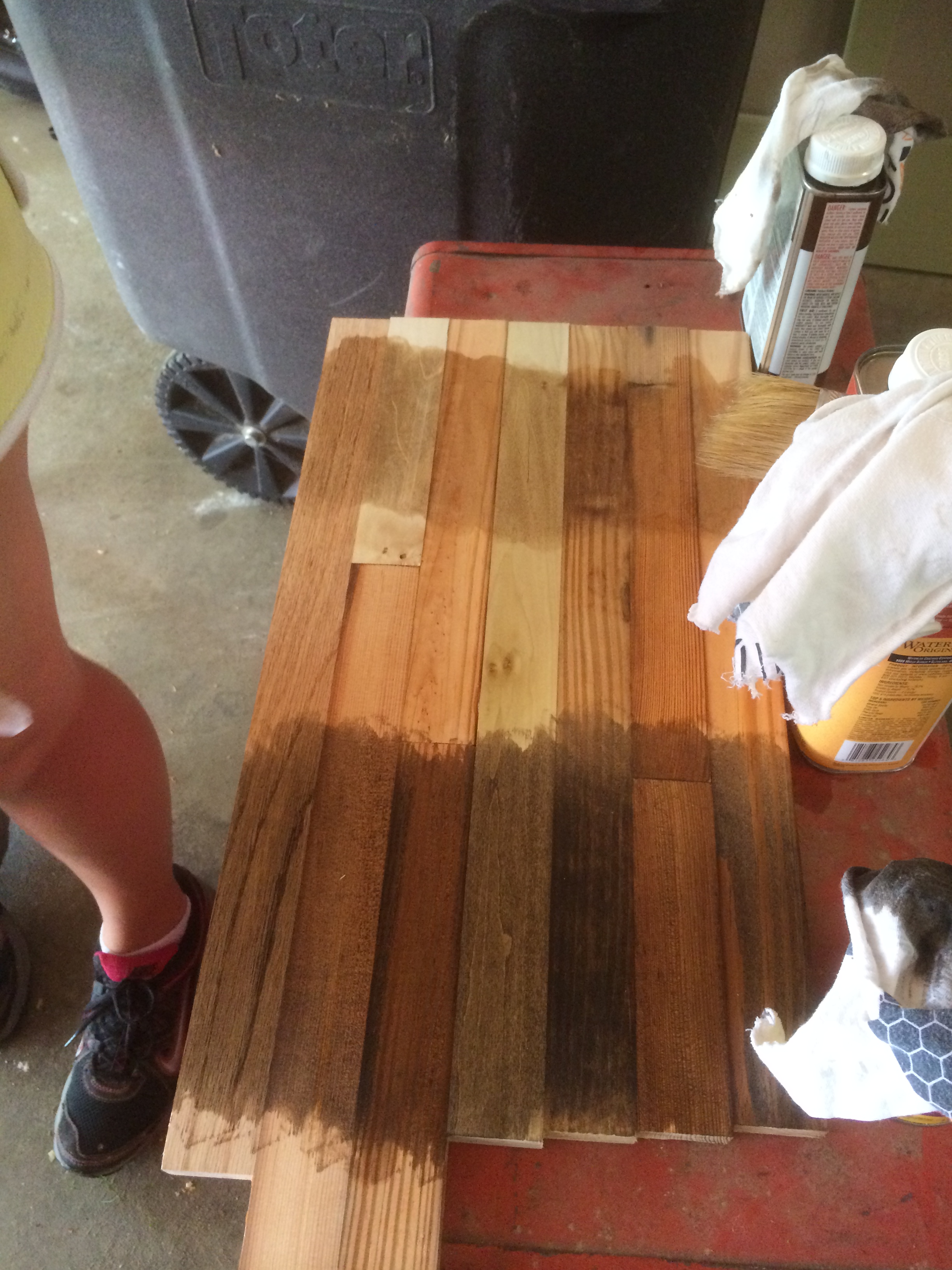
photo 2 (4) photo 3 (4)

After the countertops had completely dried we brought them in from our makeshift workshop in the garage and started the process of installation. I got the easy job 🙂
IMG_20140817_155016127_HDR

The end result is very warm and inviting, and I think, absolutely stunning. Although this project was a TON of work, knowing that we used salvaged wood that had a history in OUR neighborhood, made this all worth it. Check out these amazing countertops!
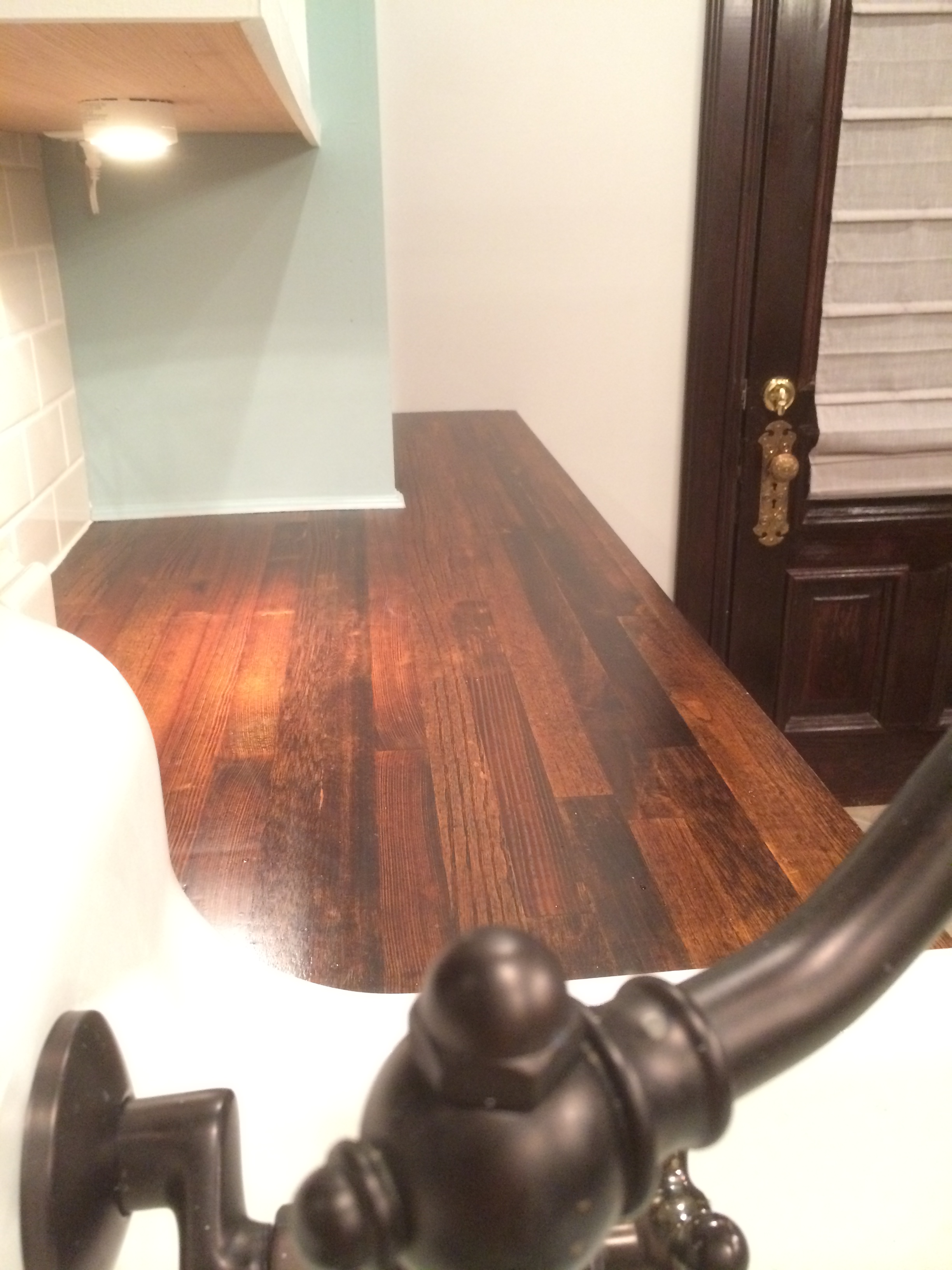
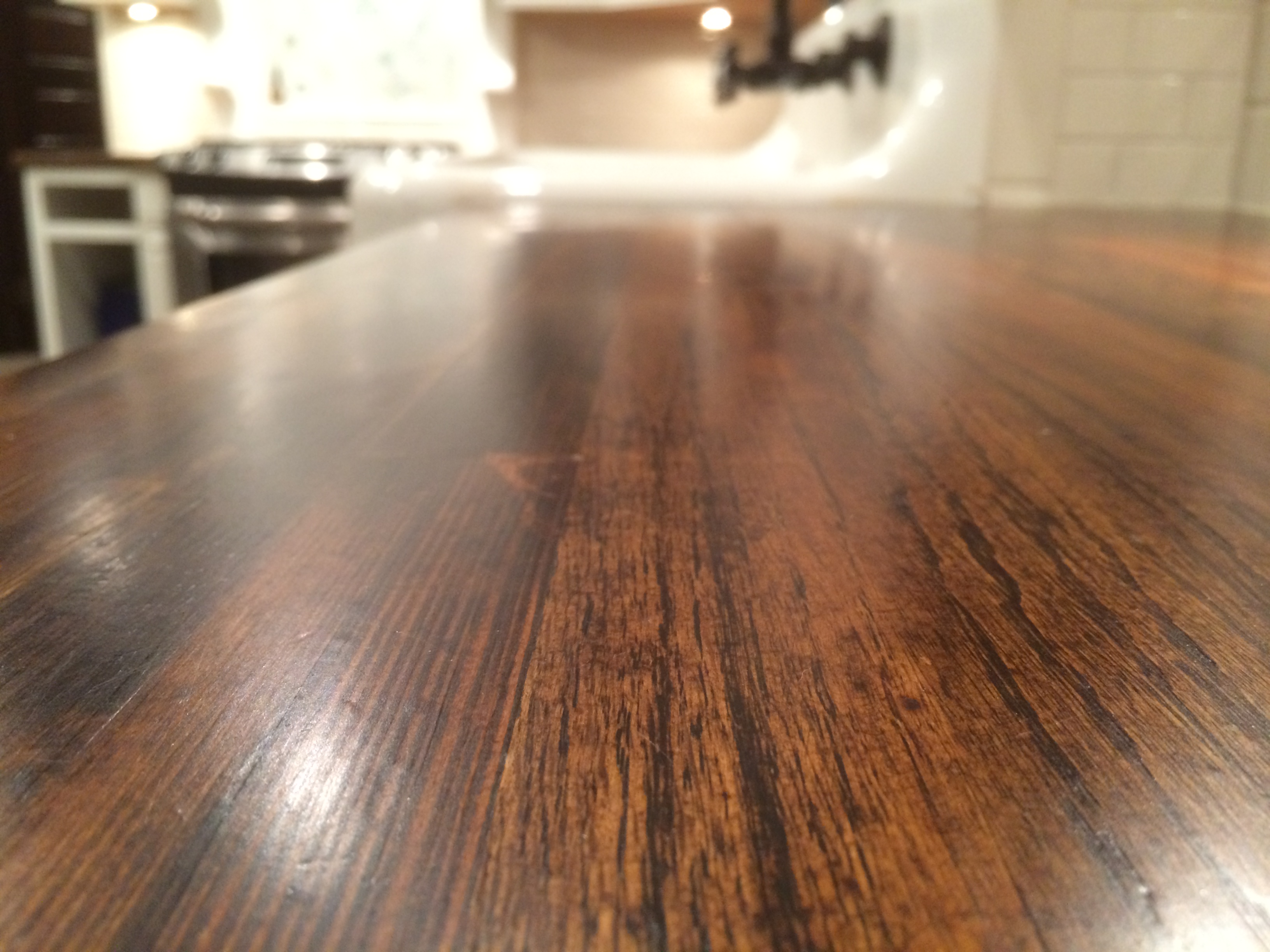
photo 2 (15)
f3f1 f5 photo 2 (14)


Cabinets are up!

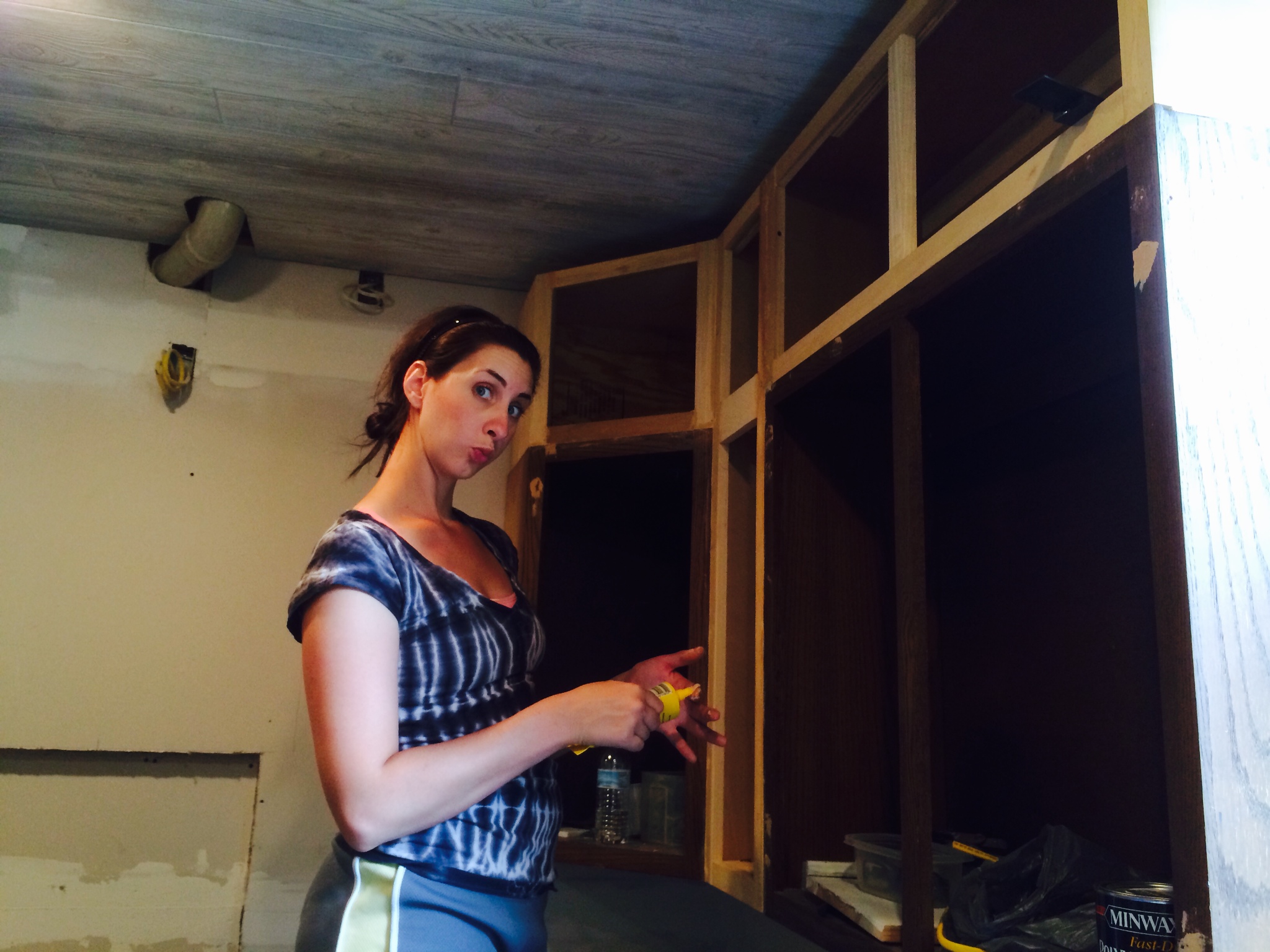
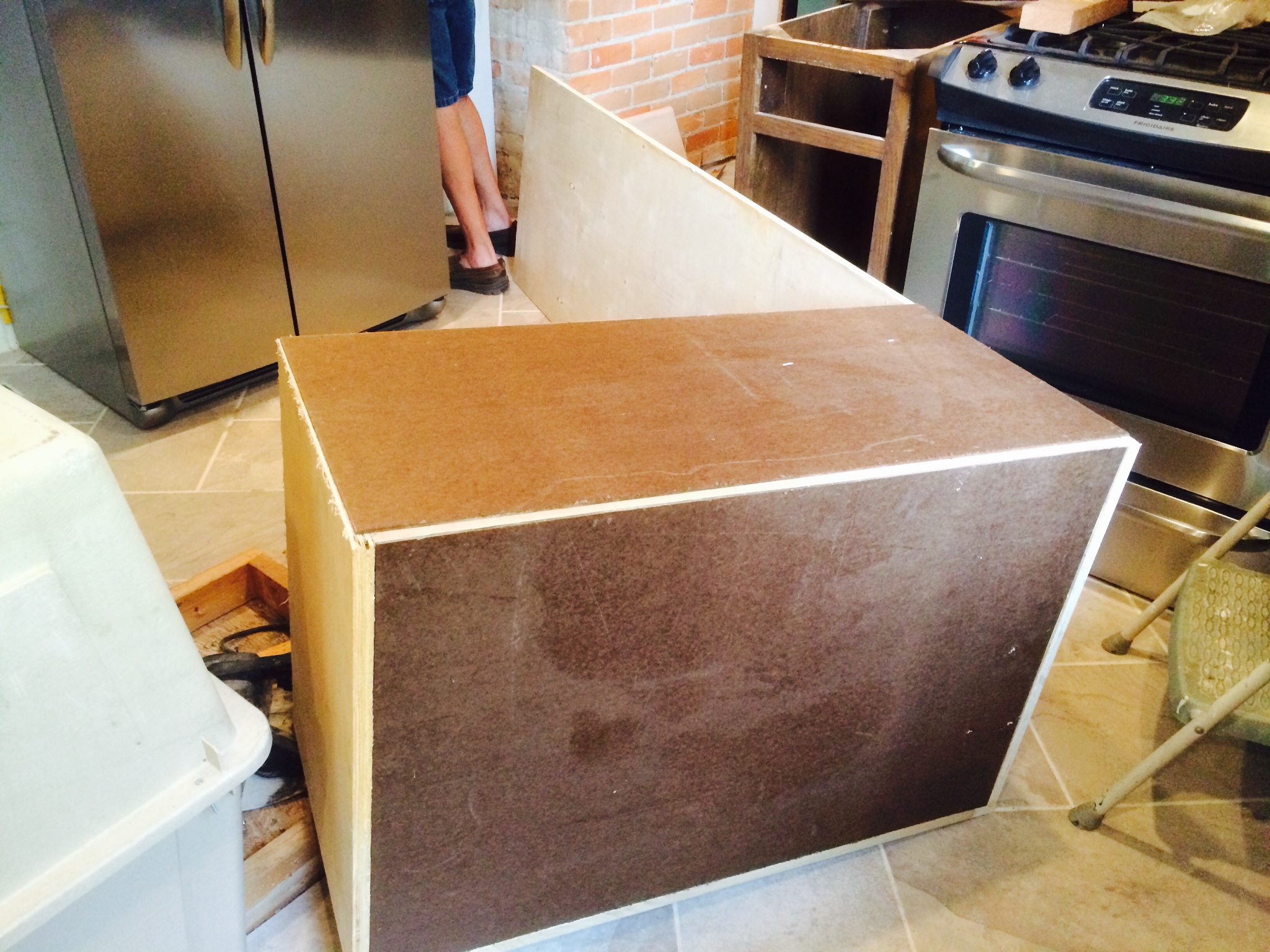
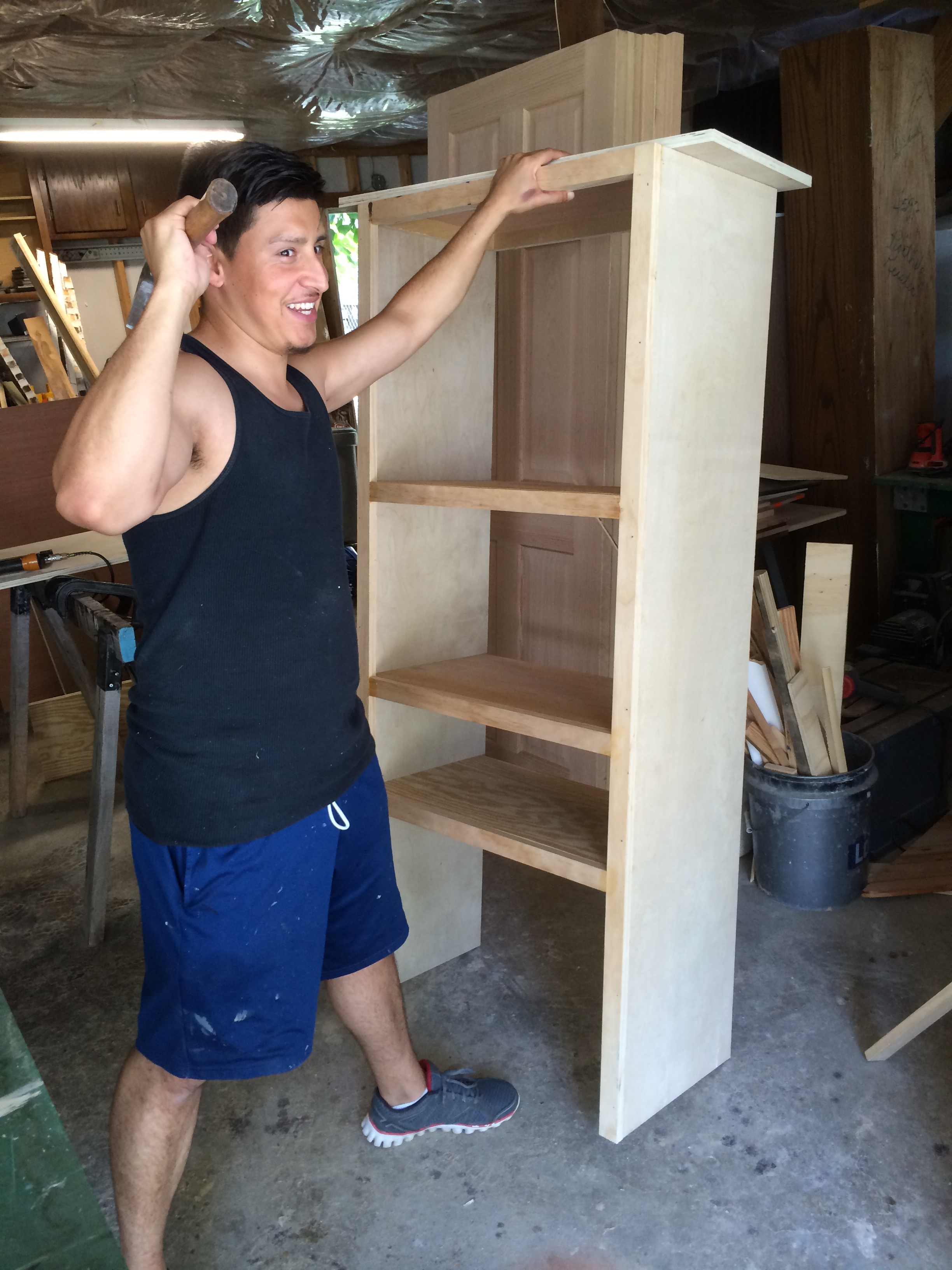
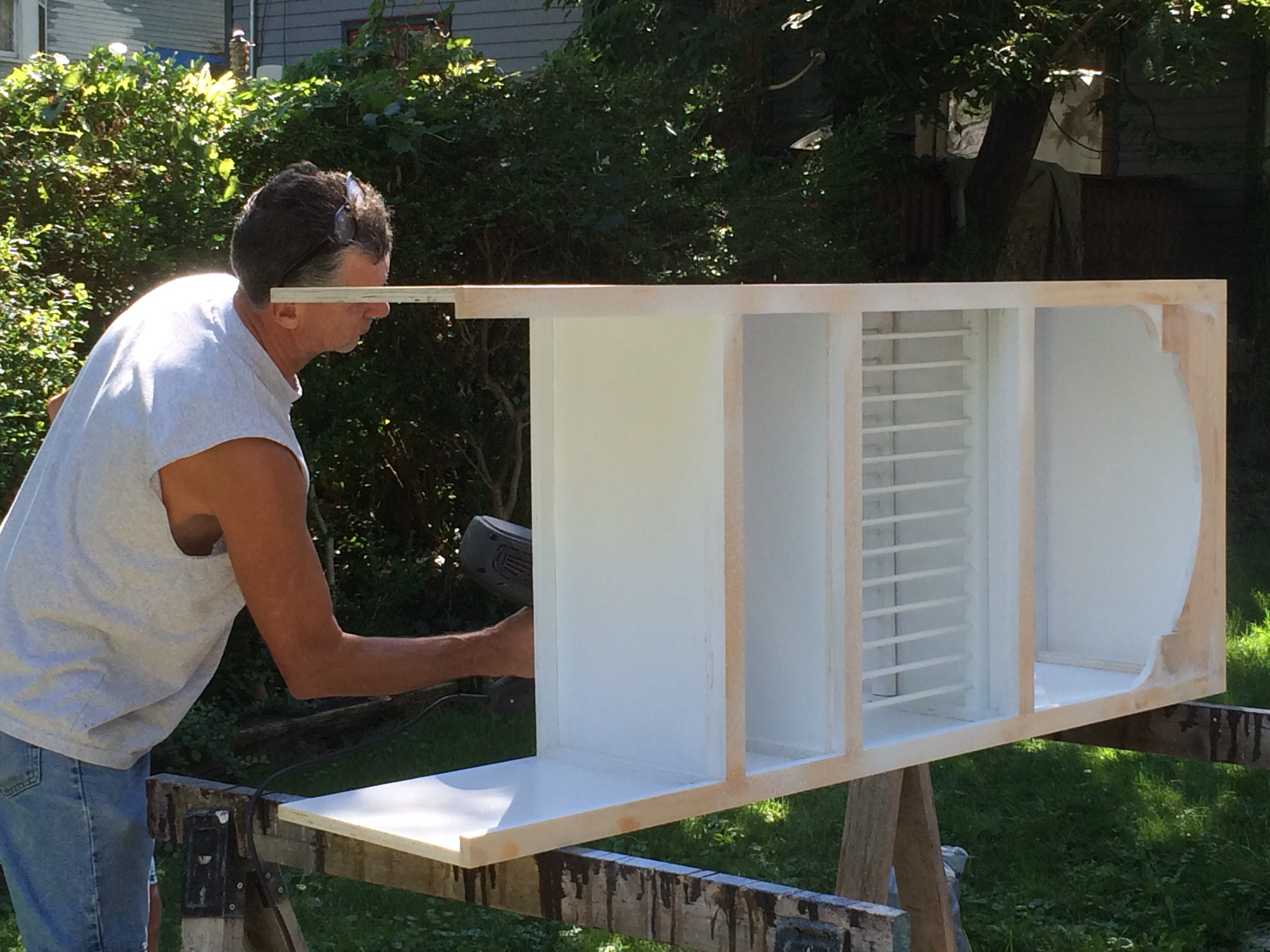
We were able to salvage a few cabinets from the pre-remodel kitchen but the majority of the cabinets for this renovations were custom made by my dad and Raul. It has taken weeks to get all of them done but economically it has been worth it. I would have spent $$$ thousands $$$ if we hadn’t done it this way. On the plus side everything is tailor-made to my needs and wants. On the downside, we still have a LOT of sanding and painting to do. All in good time, though!

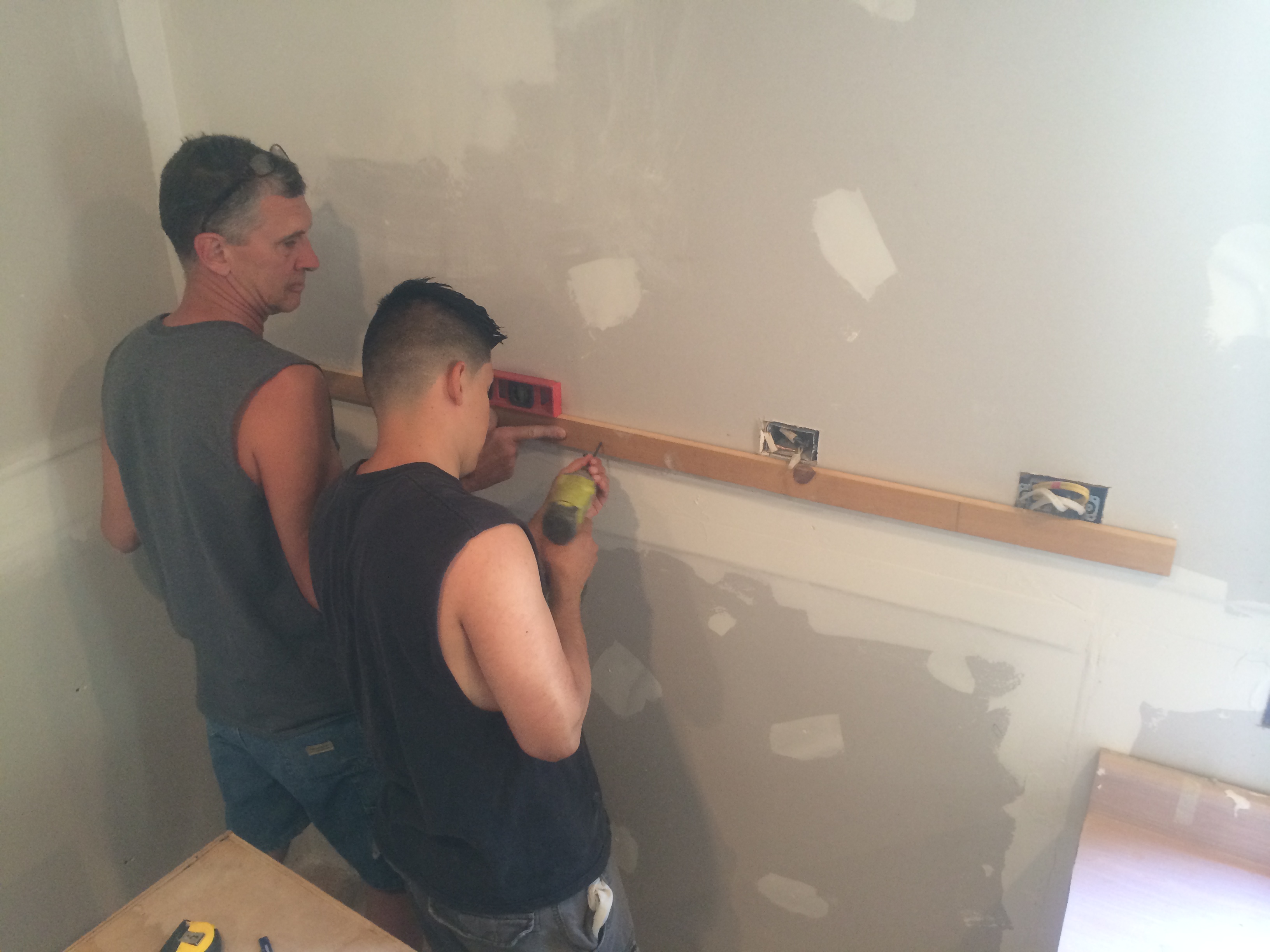
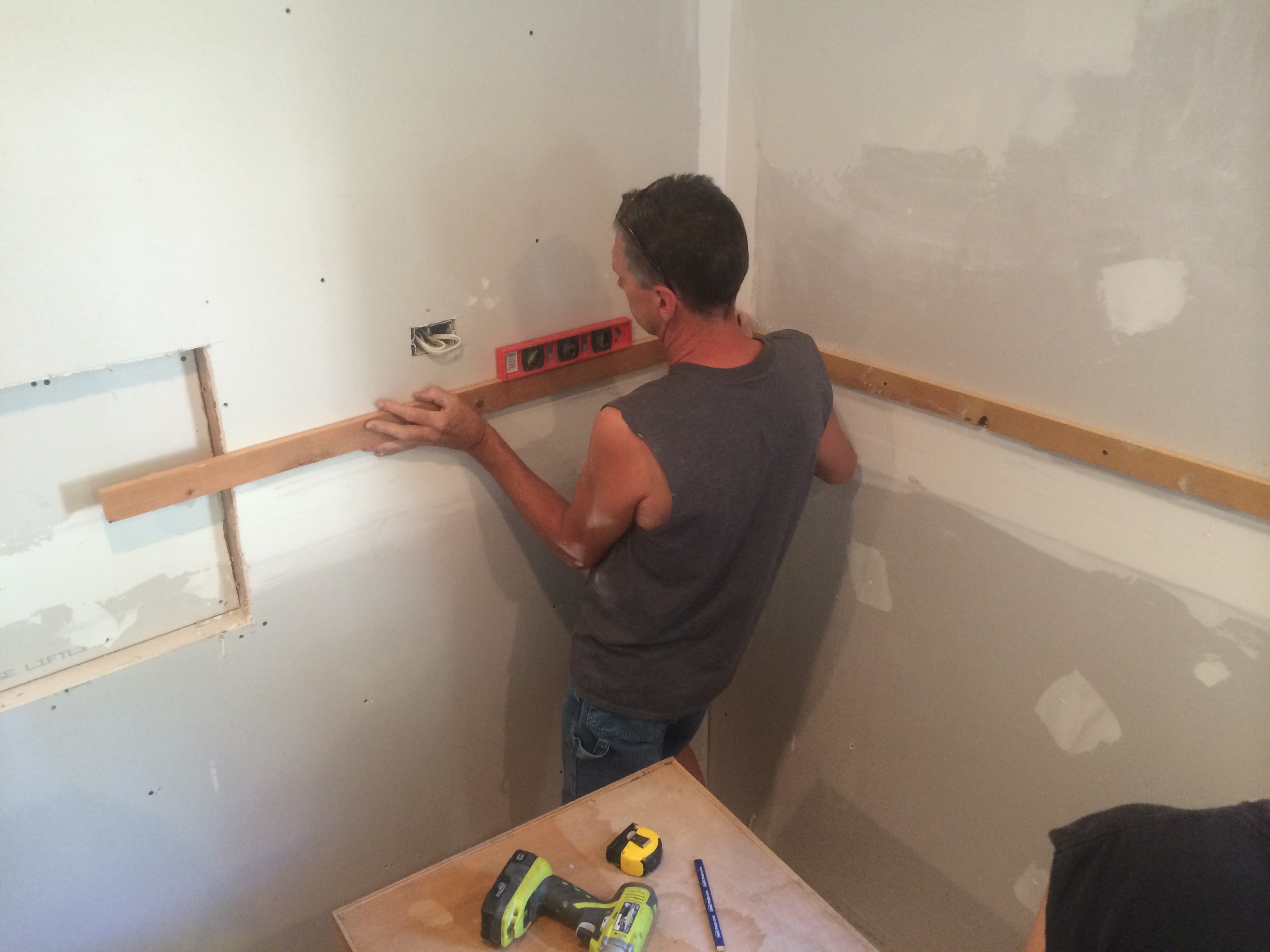
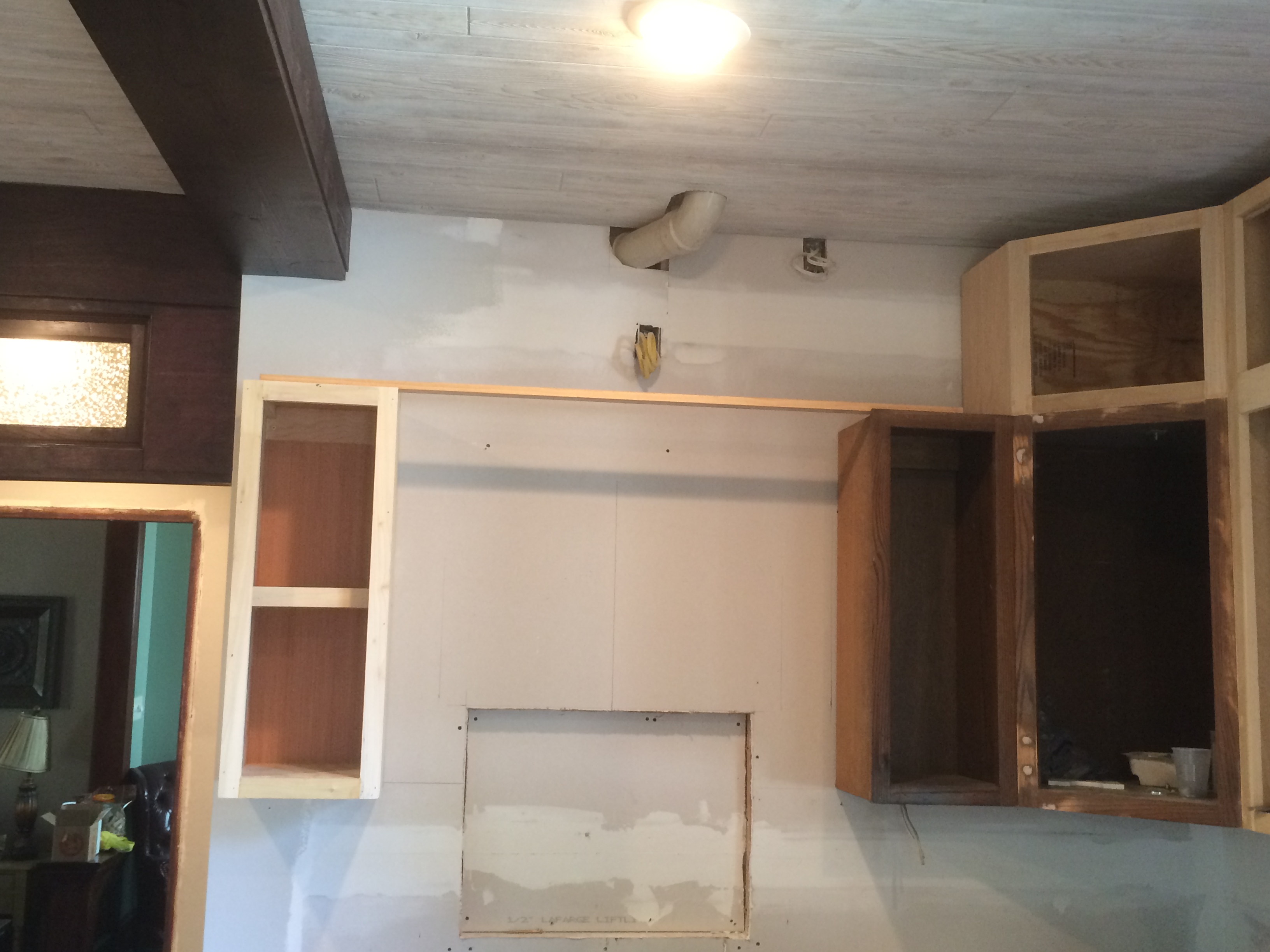
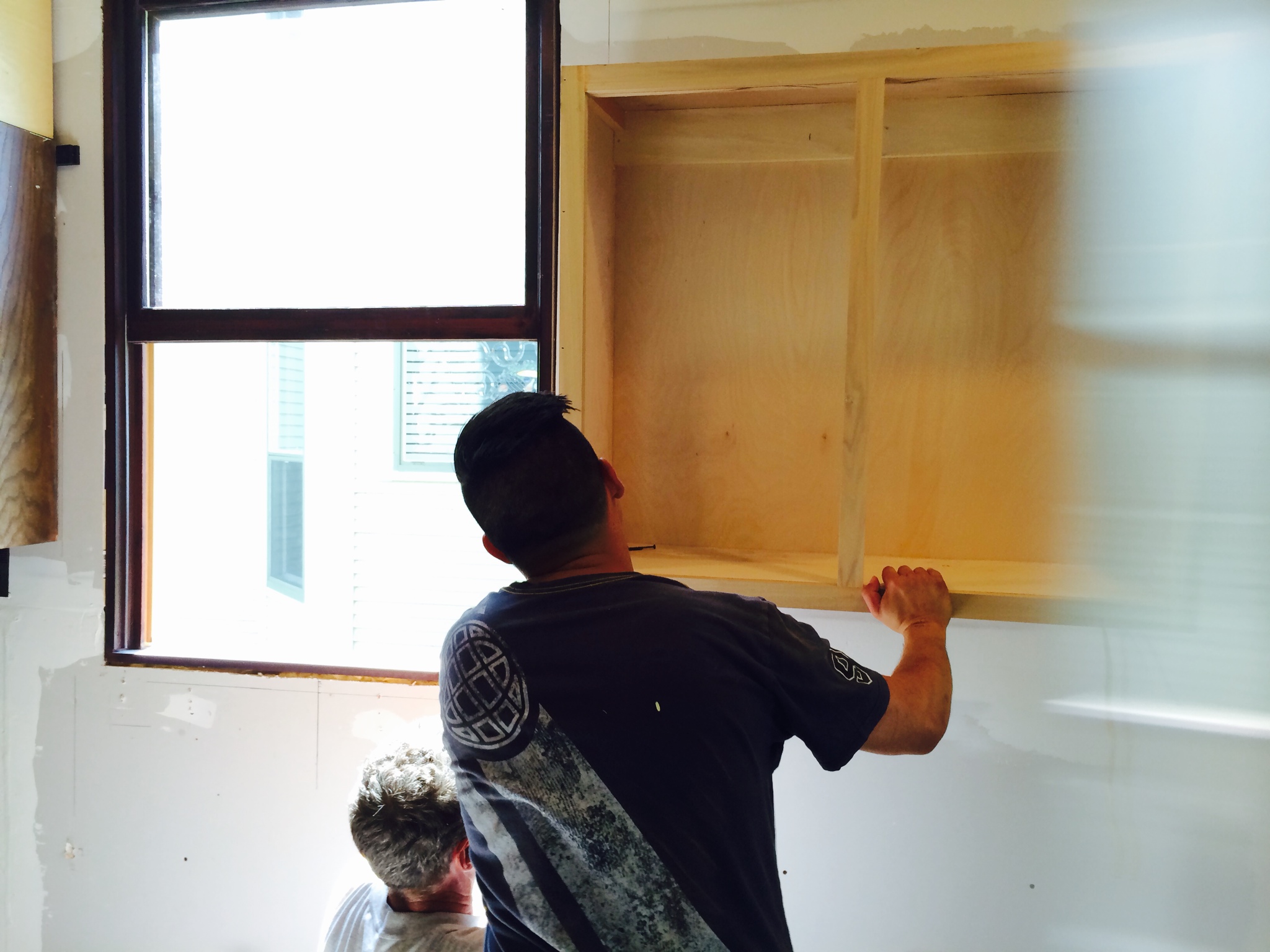
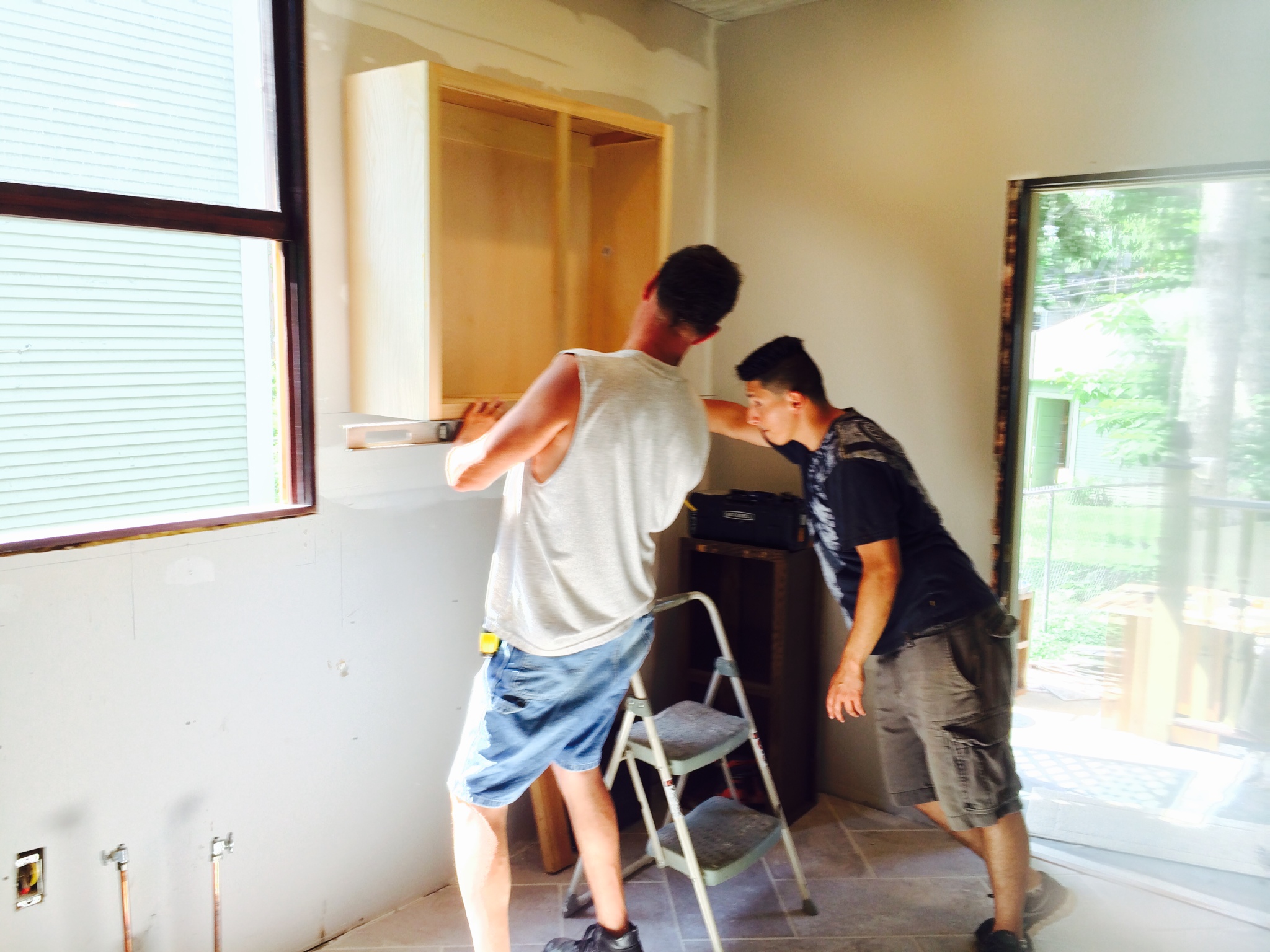
We started out by establishing our baseline for the upper cabinets.

1 2

The first cabinet we hung was one of the corner cabinets that we had removed from the pre-remodel kitchen. The cabinet has a lazy susan insert that we really kind of liked before we tore everything out.

3

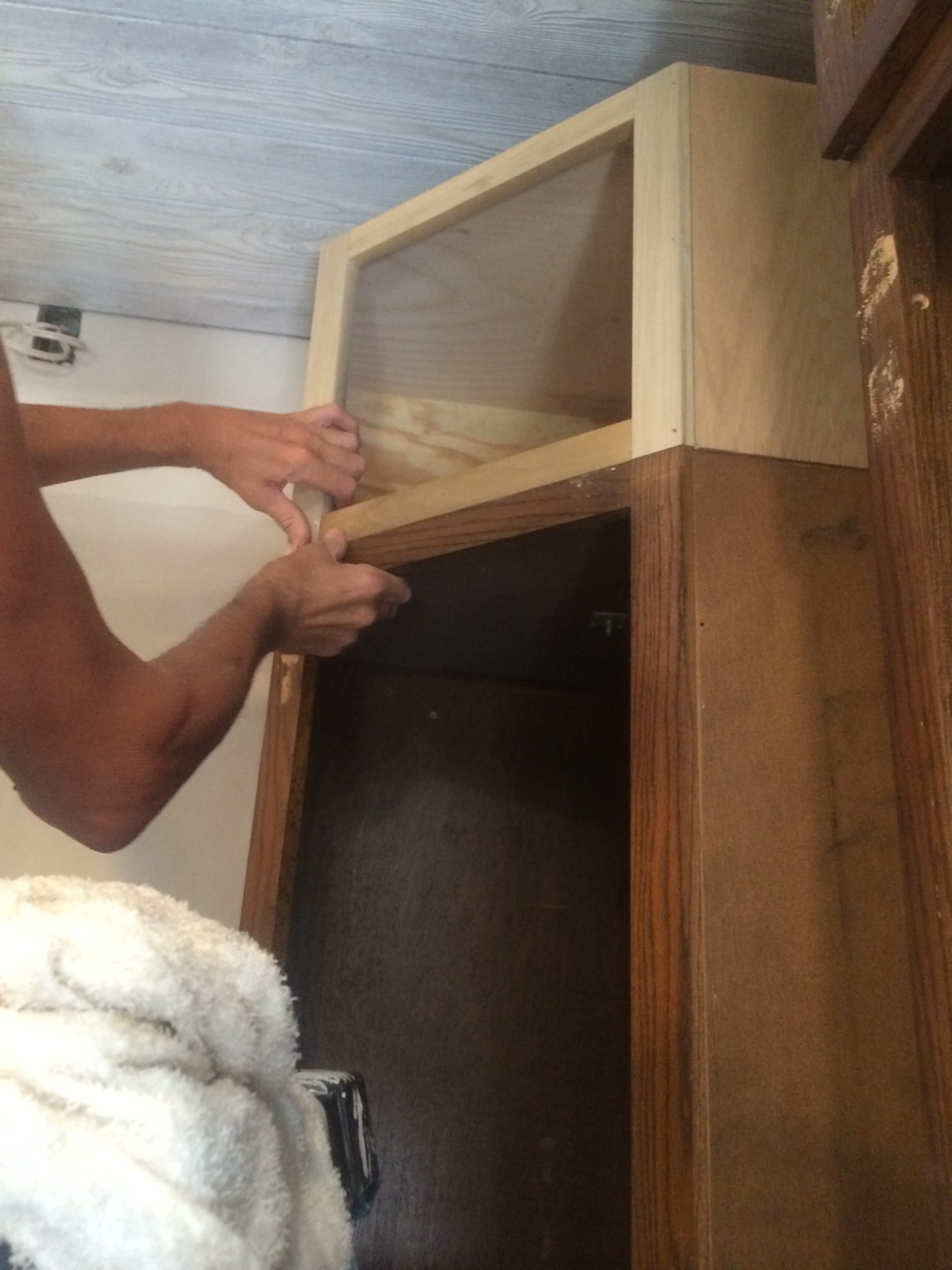
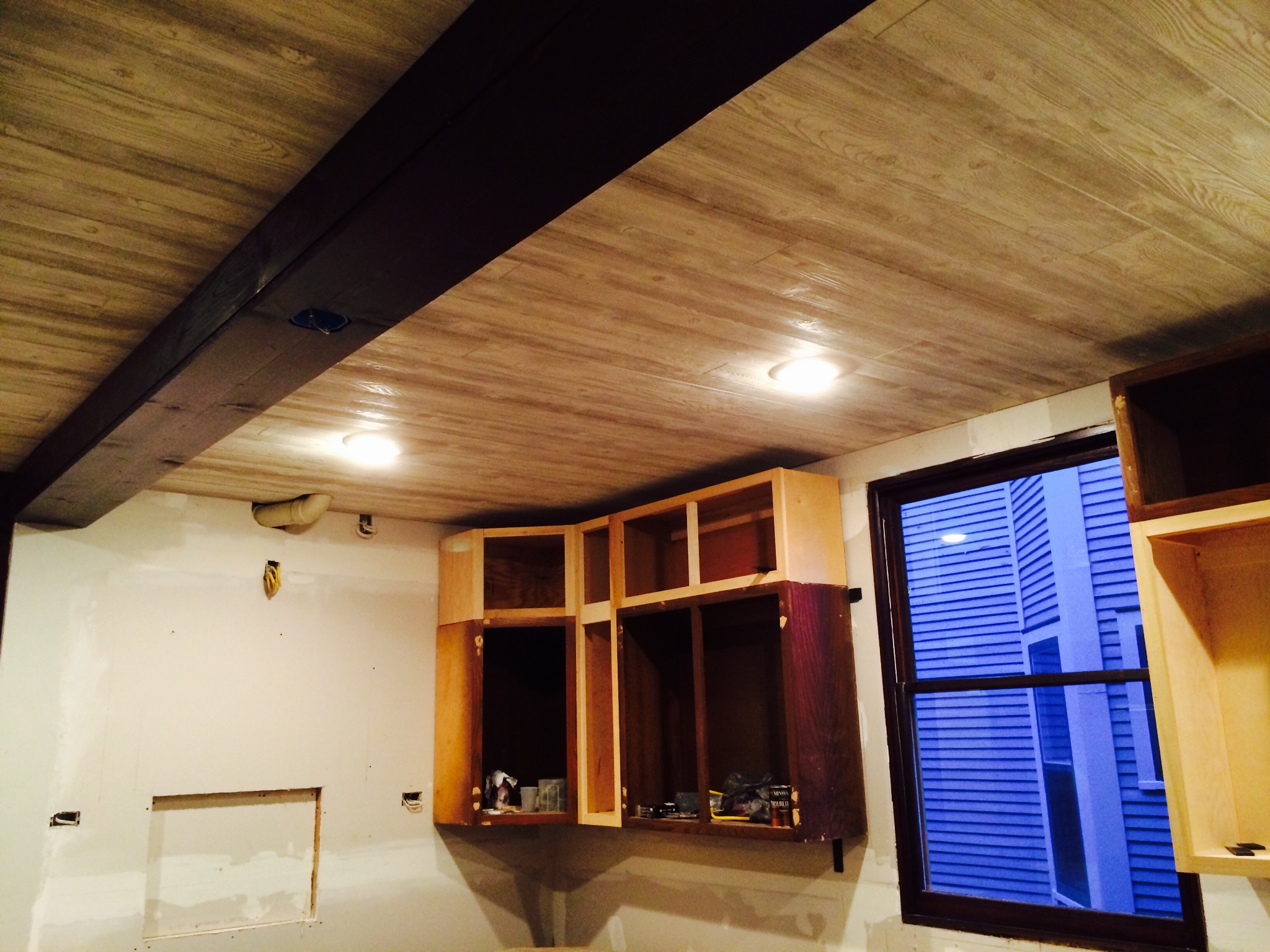
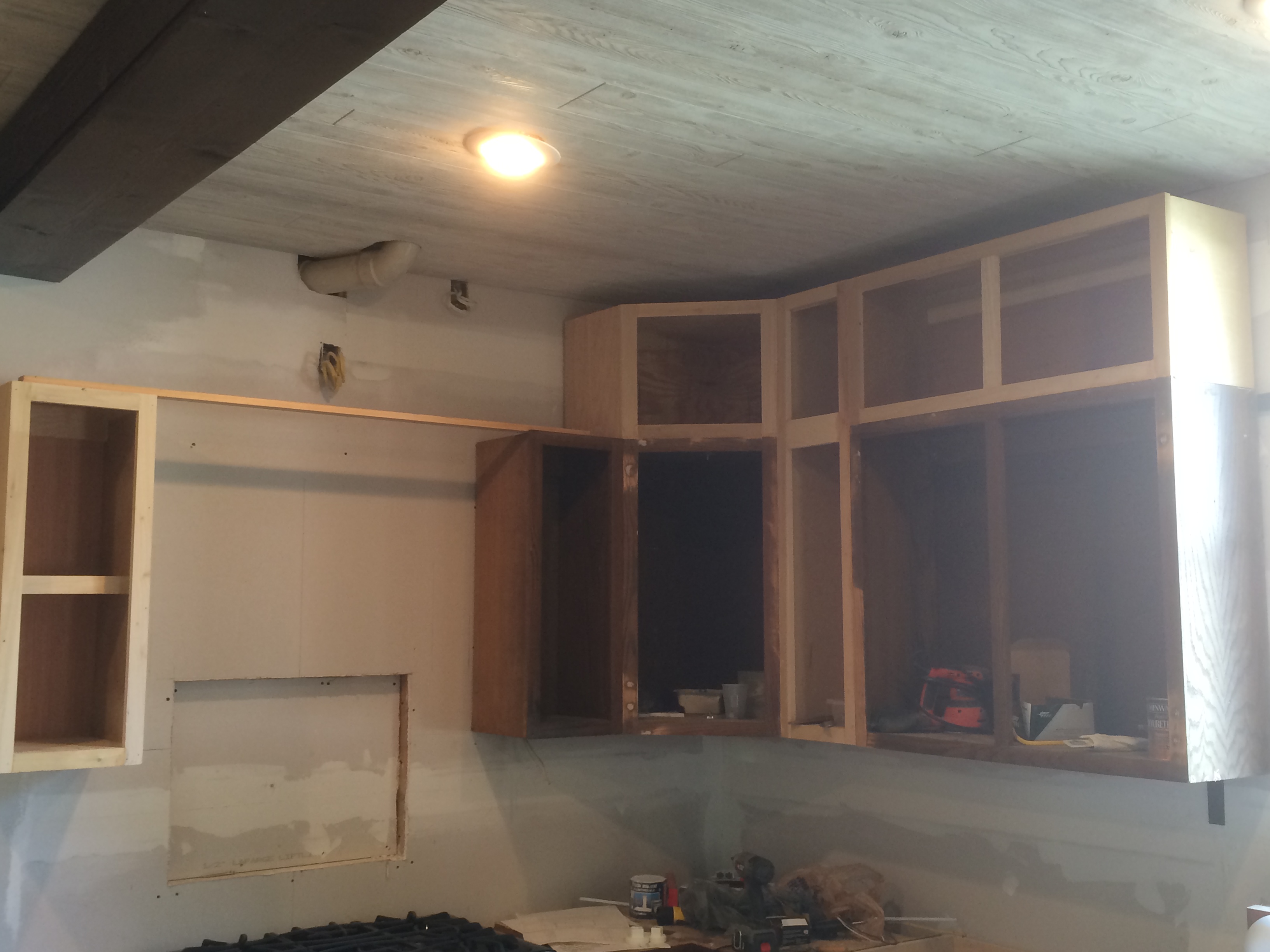
Since we wanted the new cabinets to extend all the way to the ceiling that meant that we would have two rows of upper cabinets in some places.

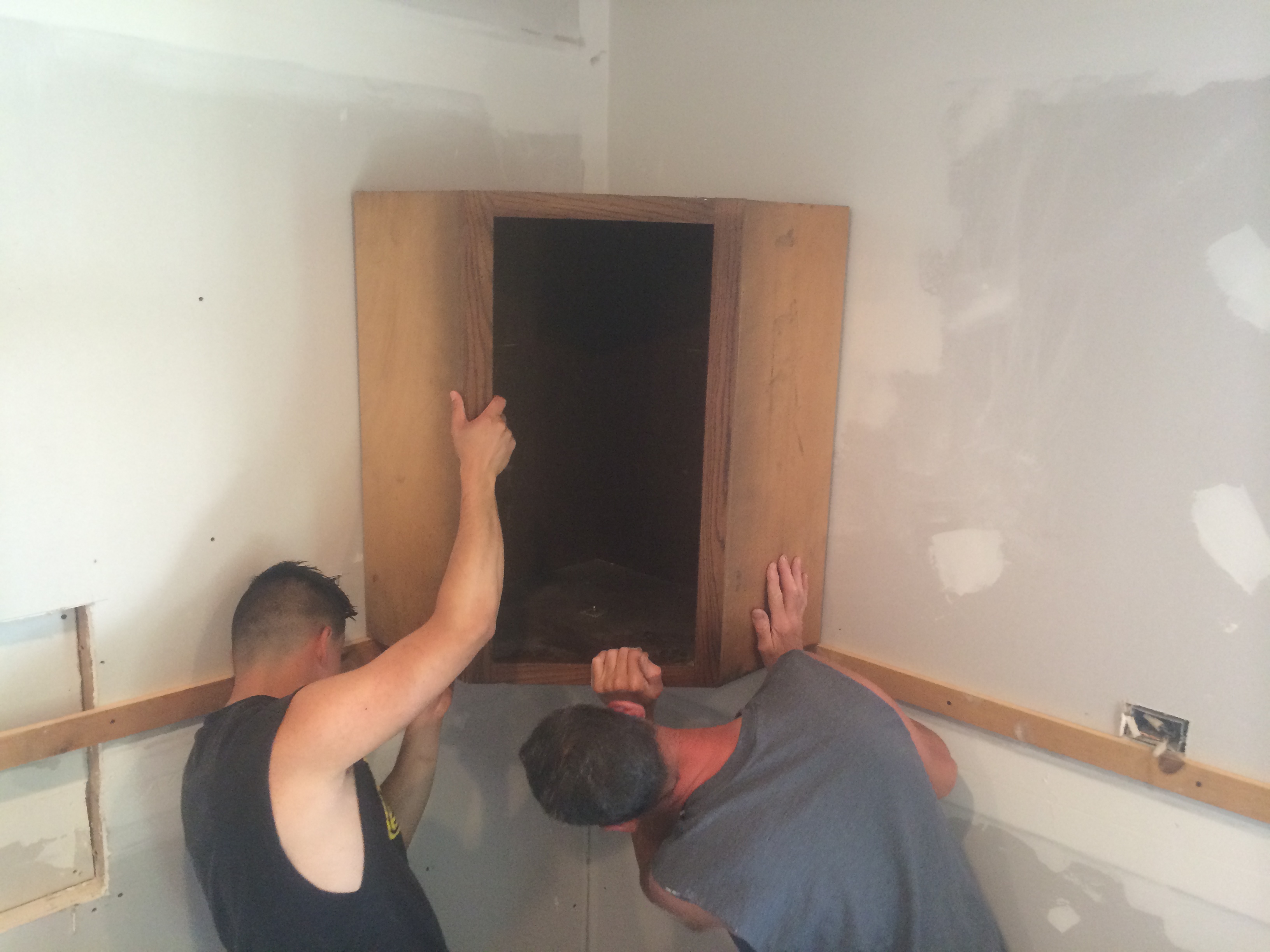
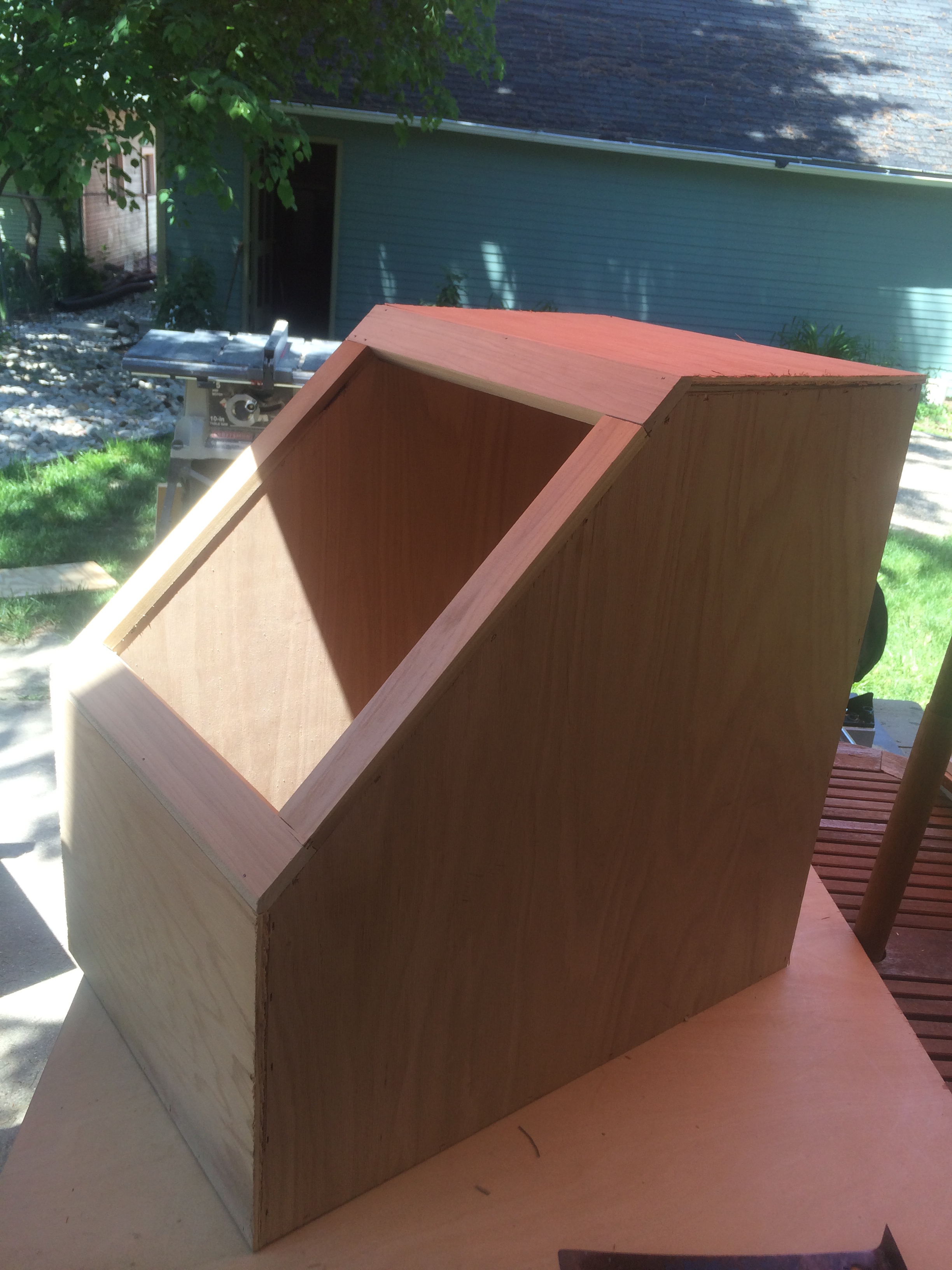
We had to build a smaller corner cabinet to sit on top of the one we had just installed.

4 5

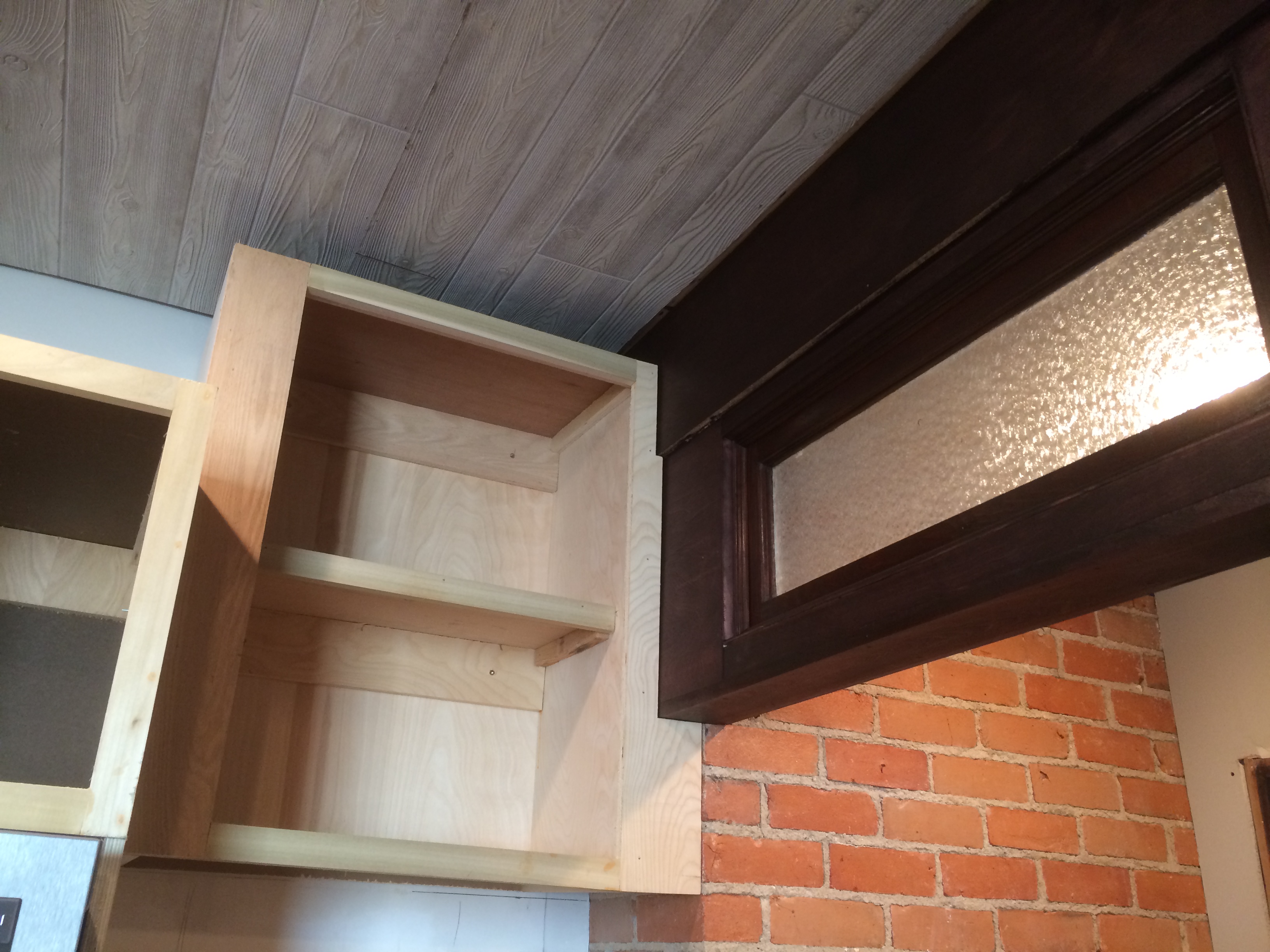
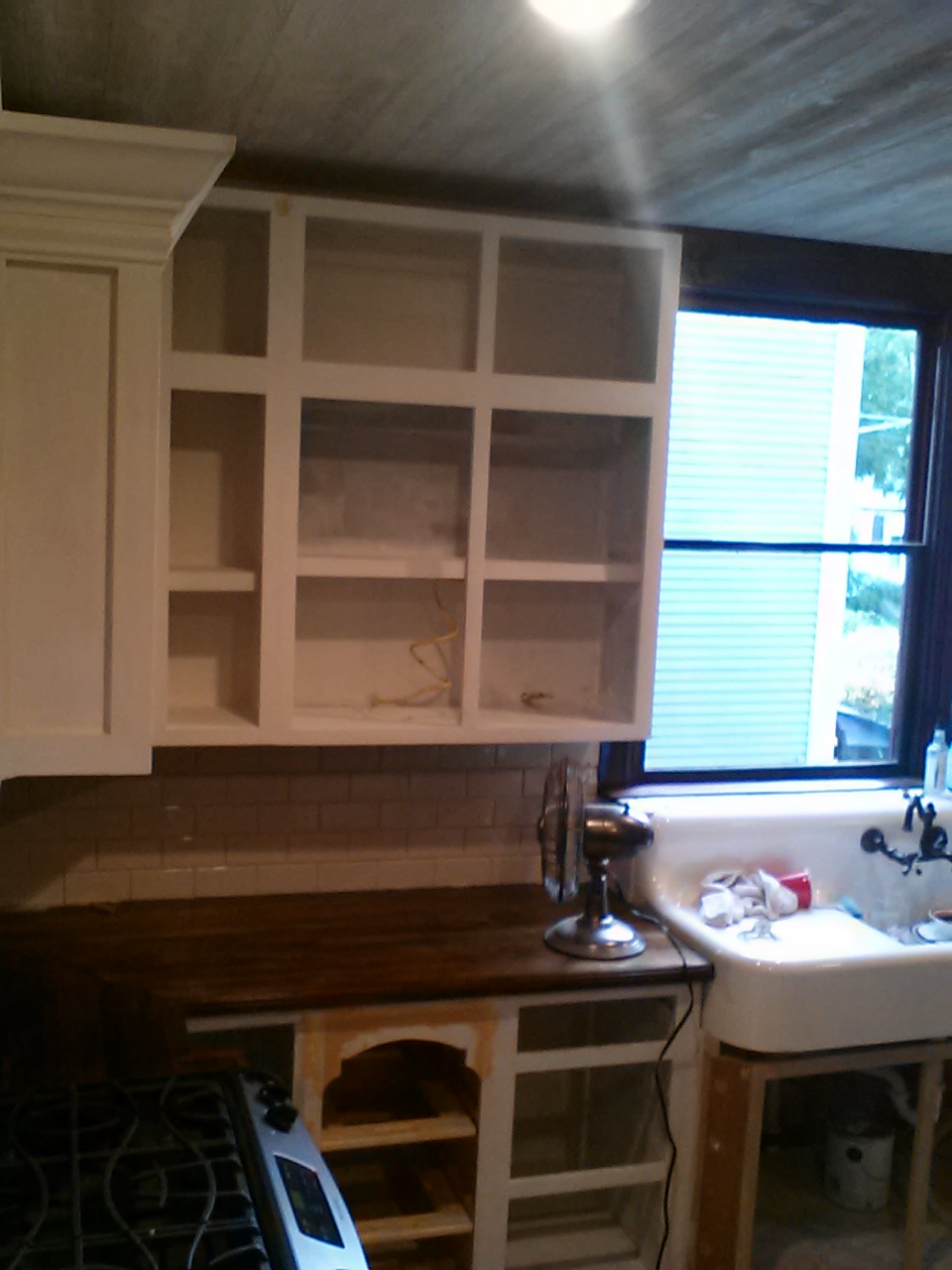
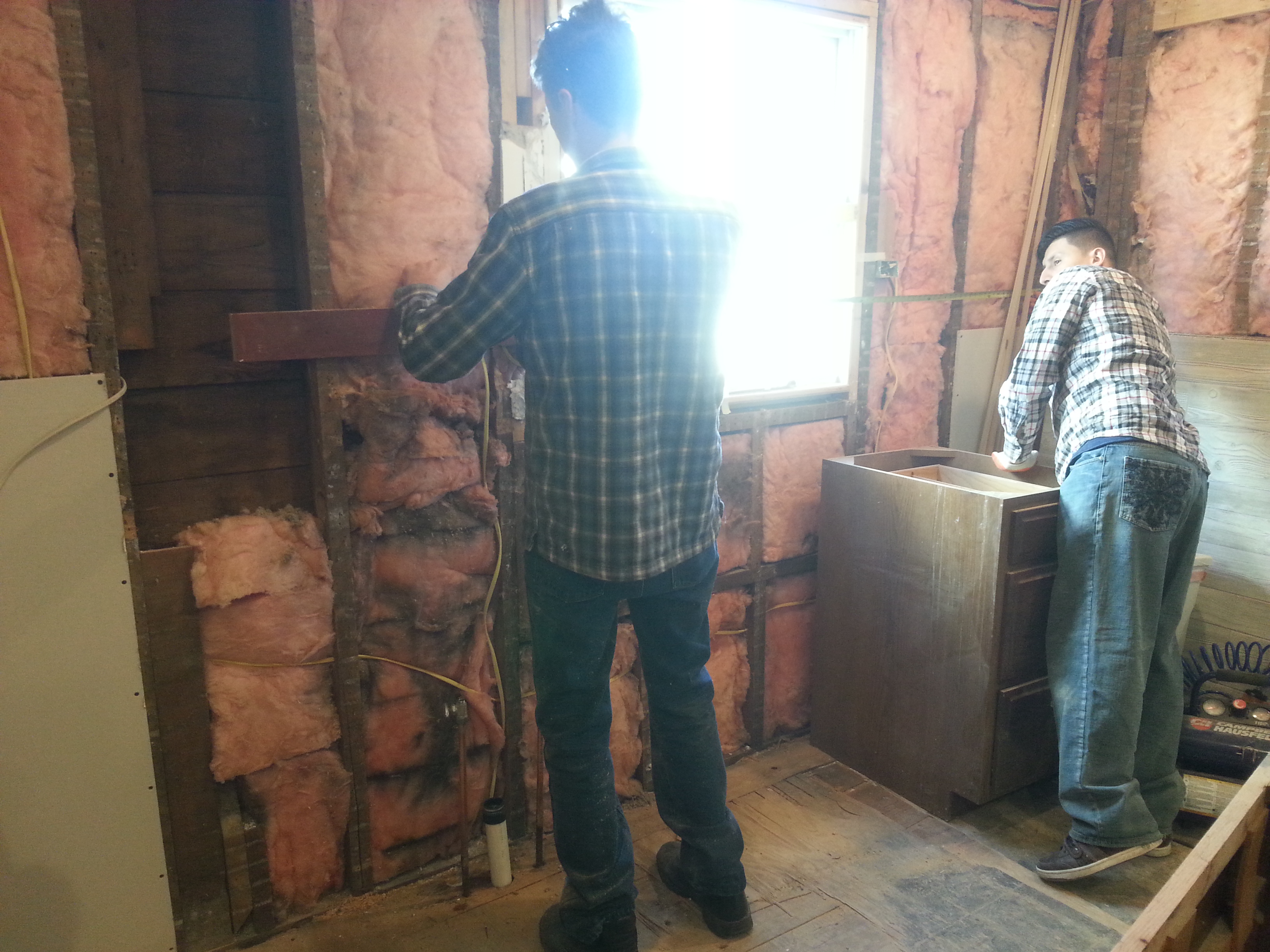
Next we started filling in and making the rest of the uppers. Everything seen that is the dark colored wood were cabinets we salvaged and reused. The lighter colored cabinets were made by my dad and Raul using 3/4″ plywood and 1″x 2″s for the frame. The backs were created from 1/4″ plywood and the shelves were created from high grade 1/2″ plywood.

6

My job was to go along and fill in any cracks or holes with wood filler or paintable caulk.

7

We left a gap between these upper cabinets for our custom hood range.8 9 10

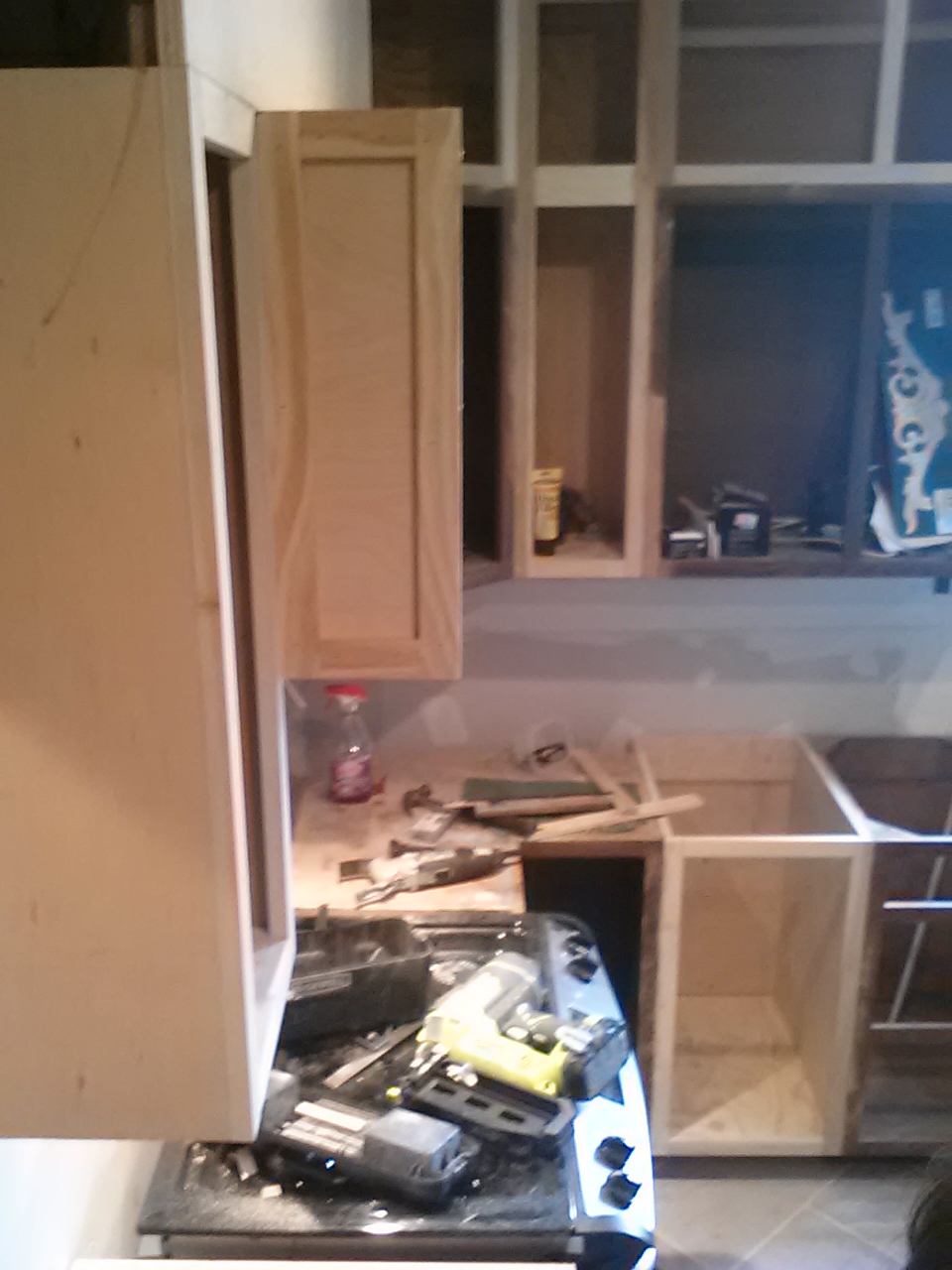
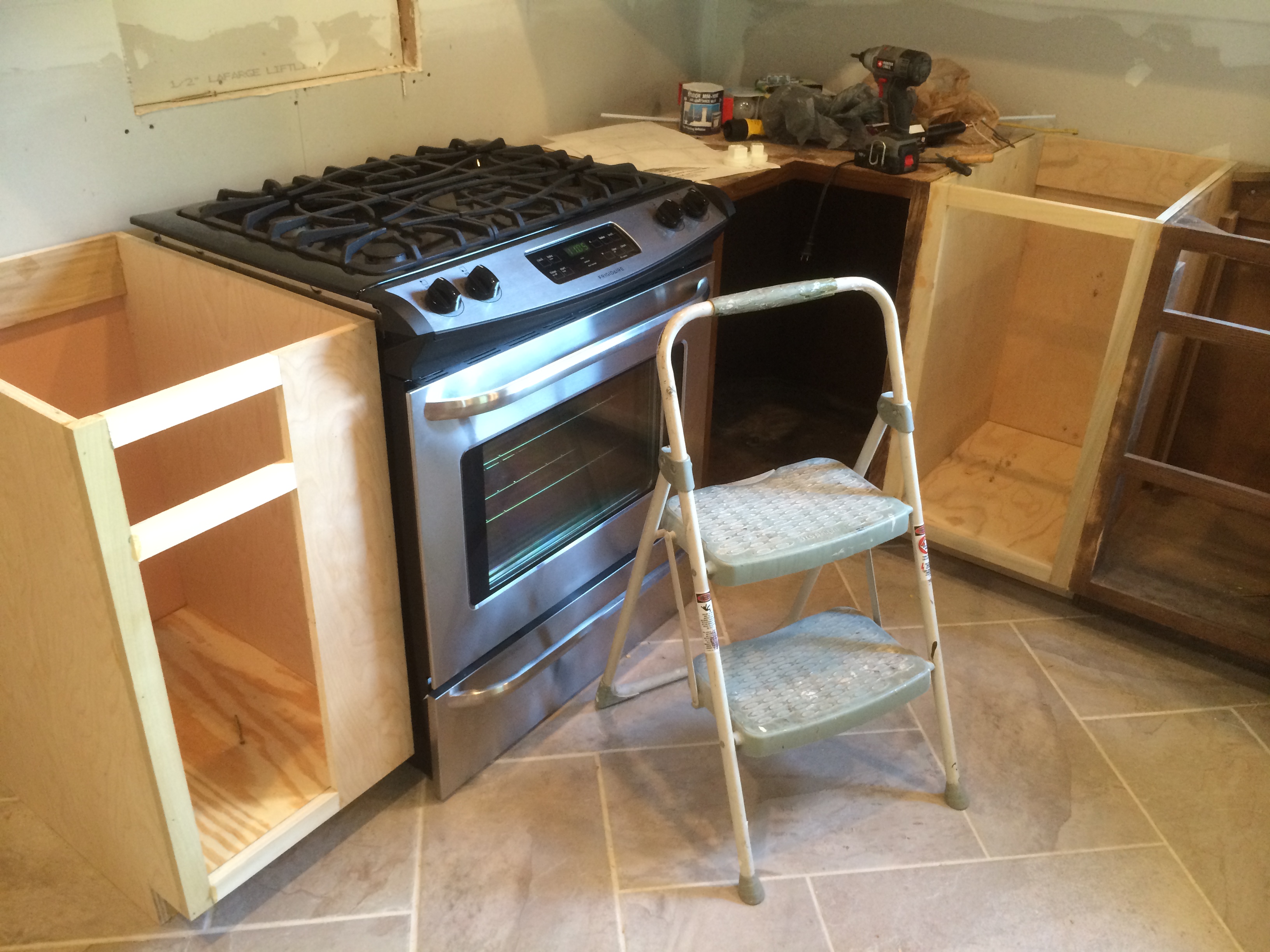
Yay! Lower cabinets, too!

11 12 13

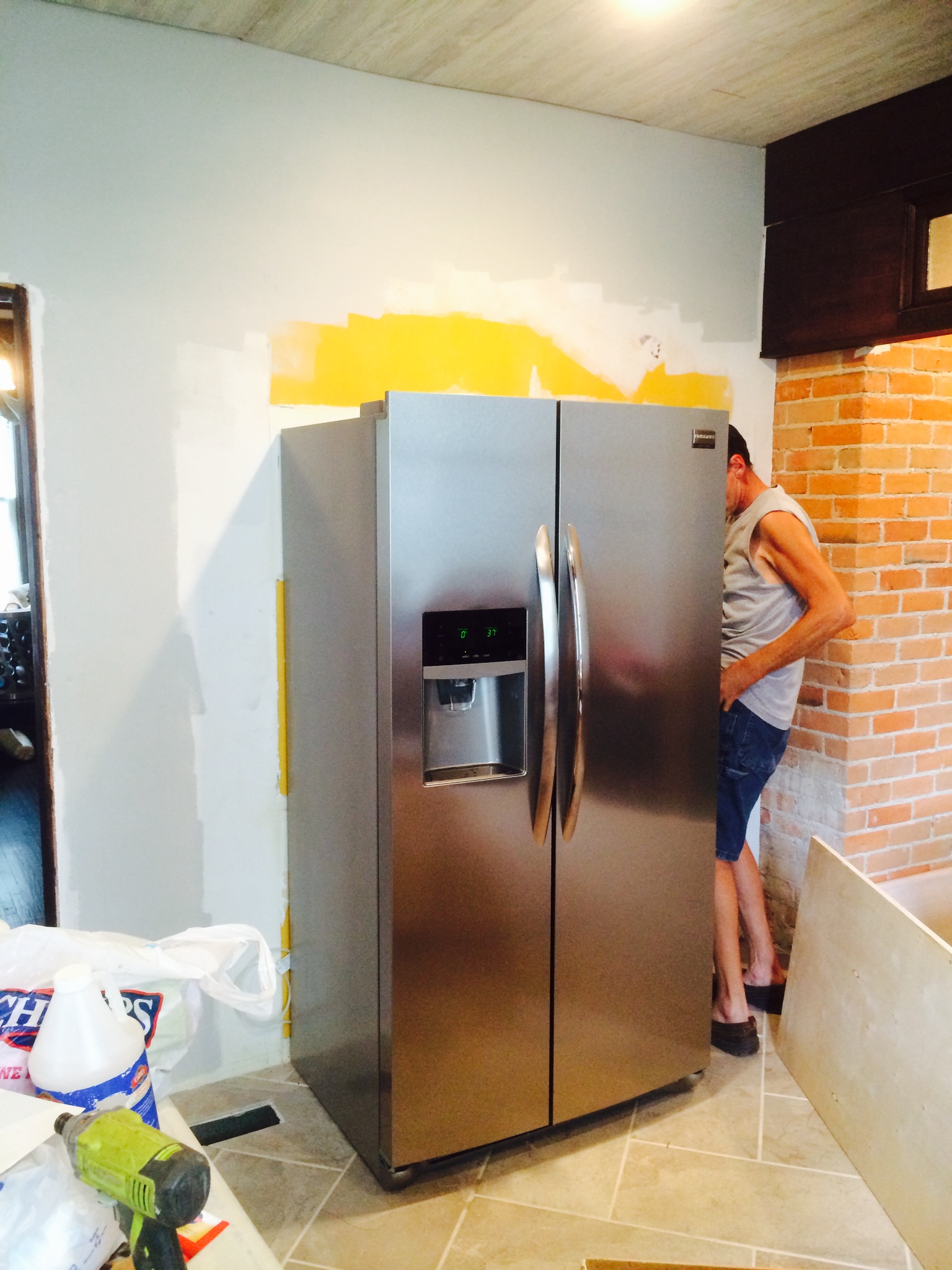
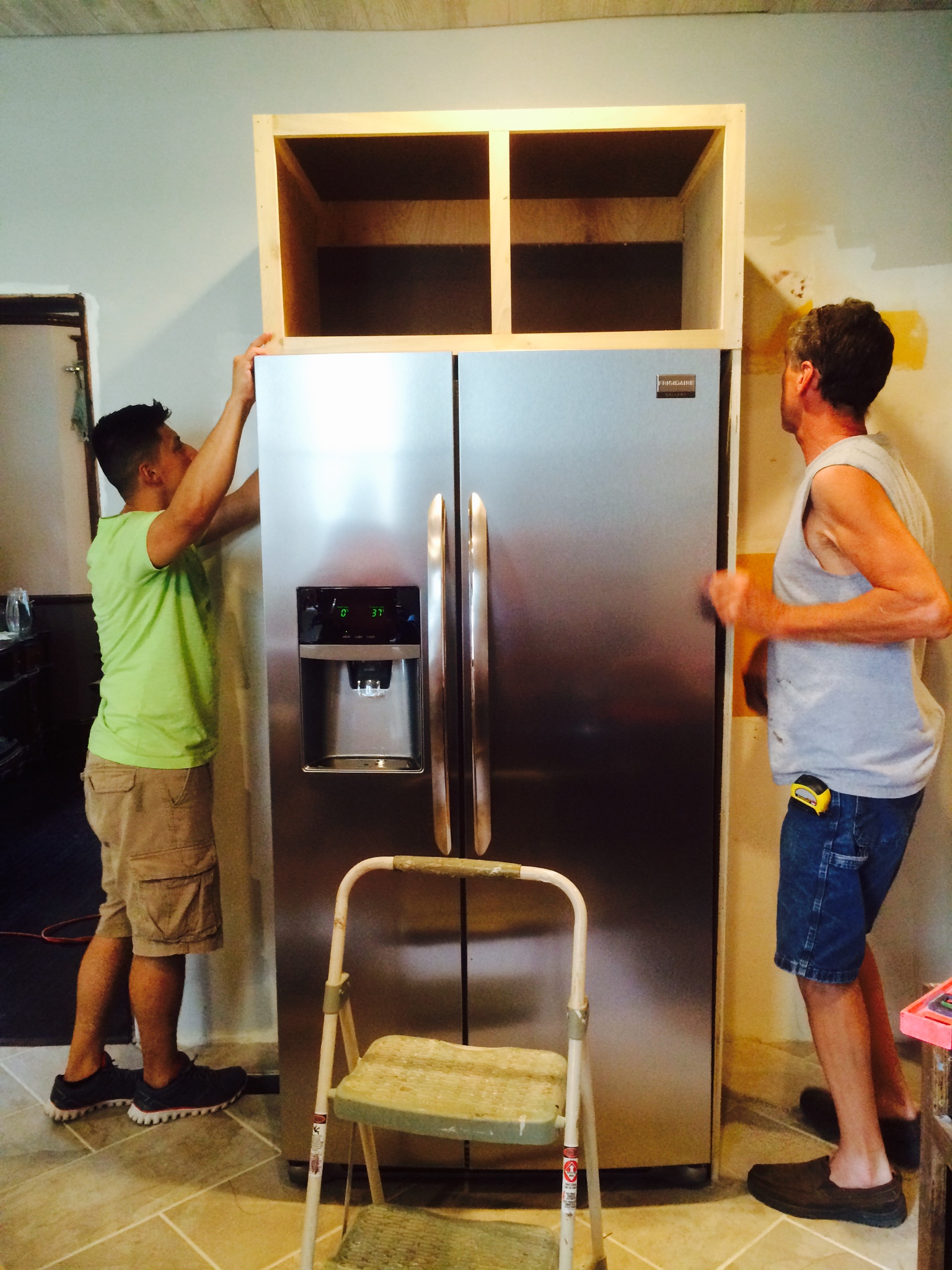
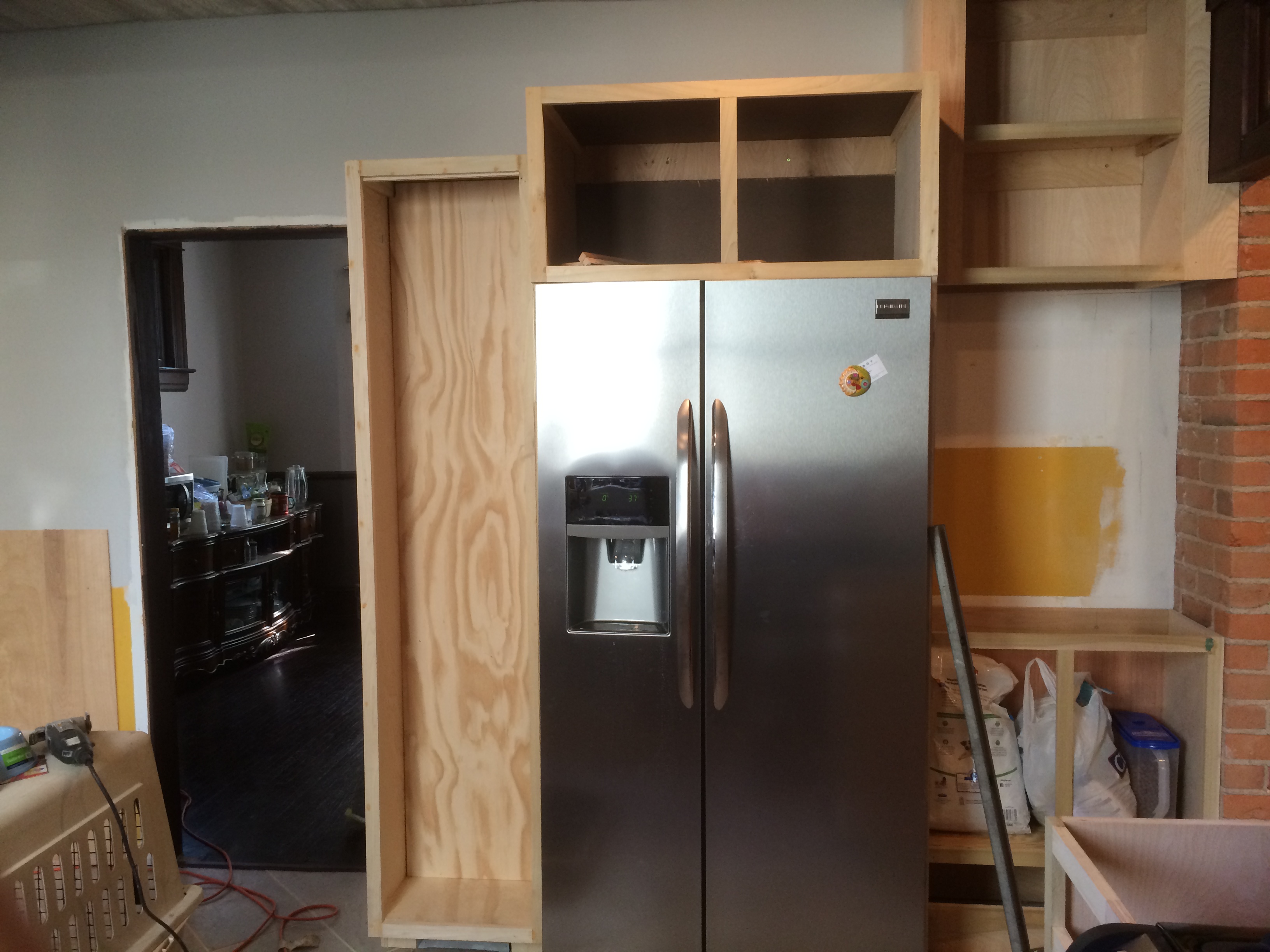
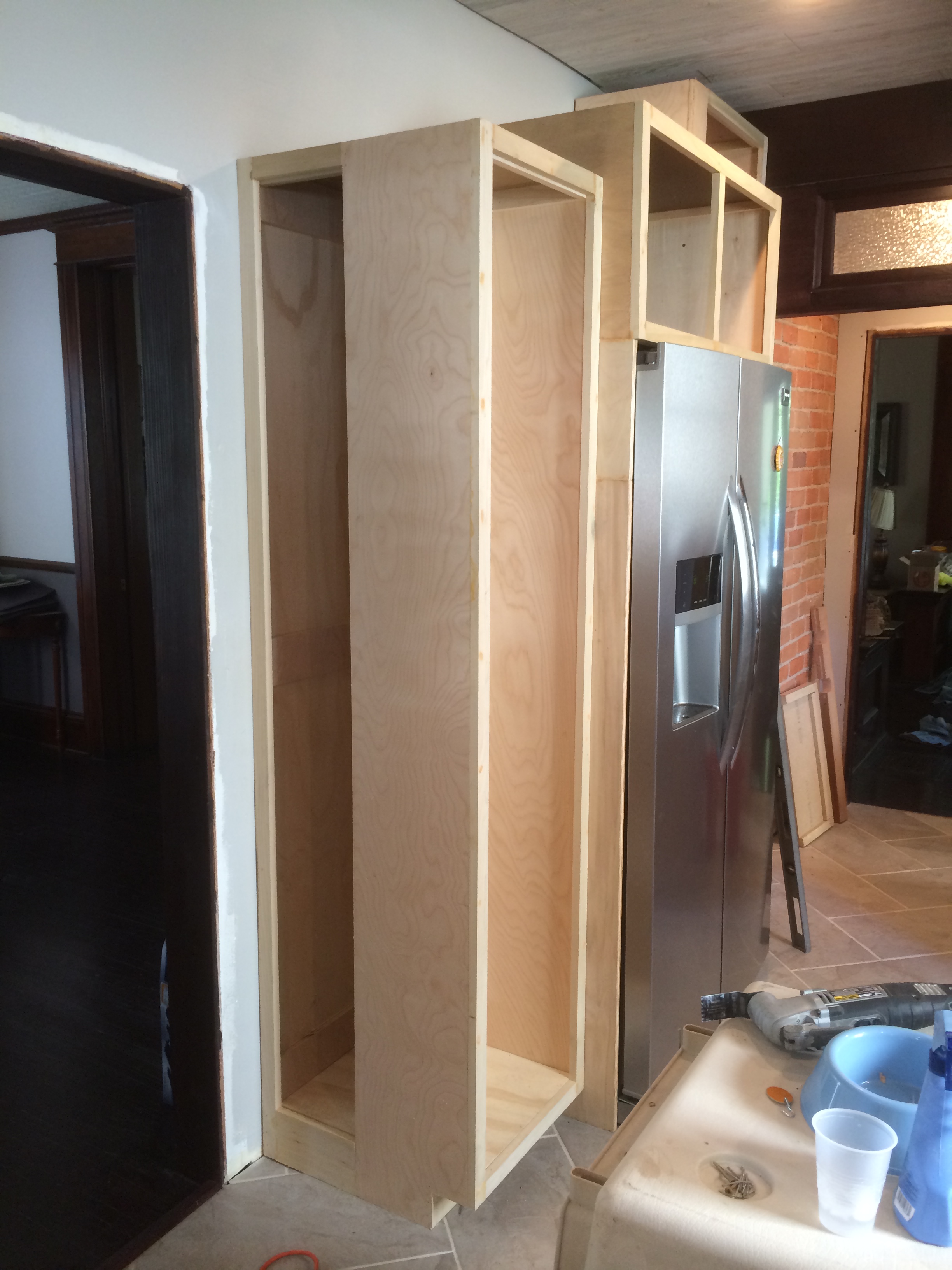
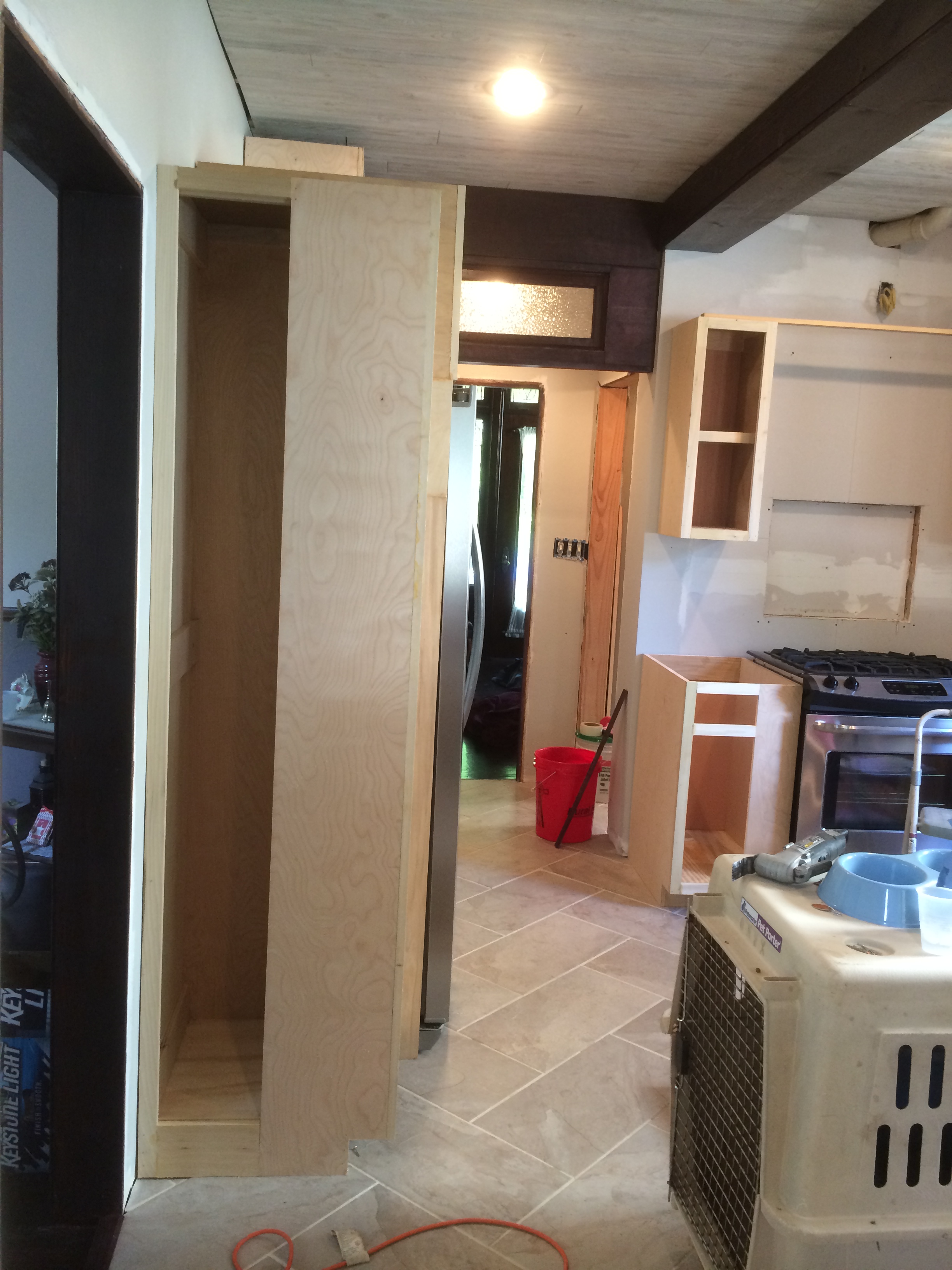
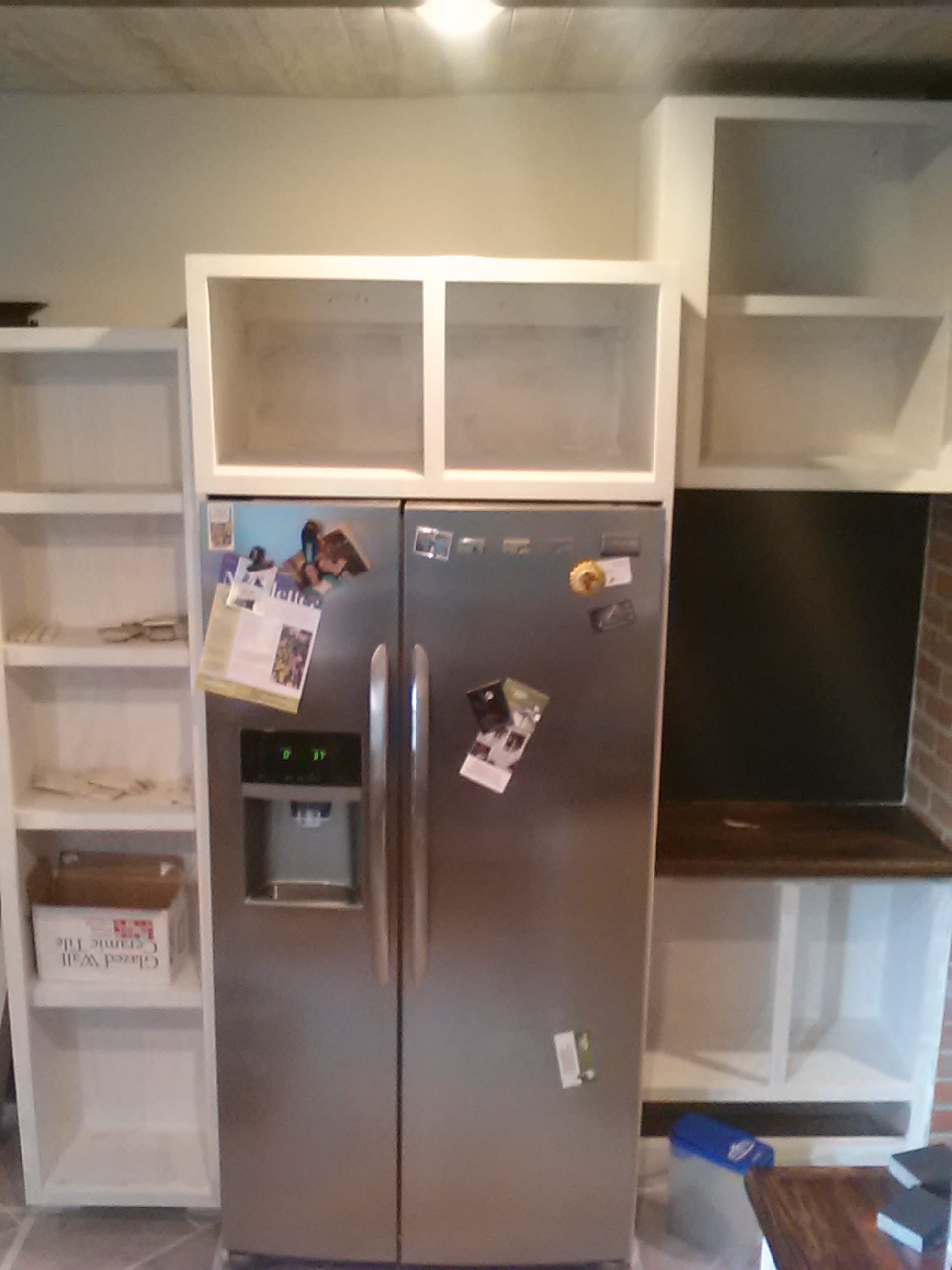
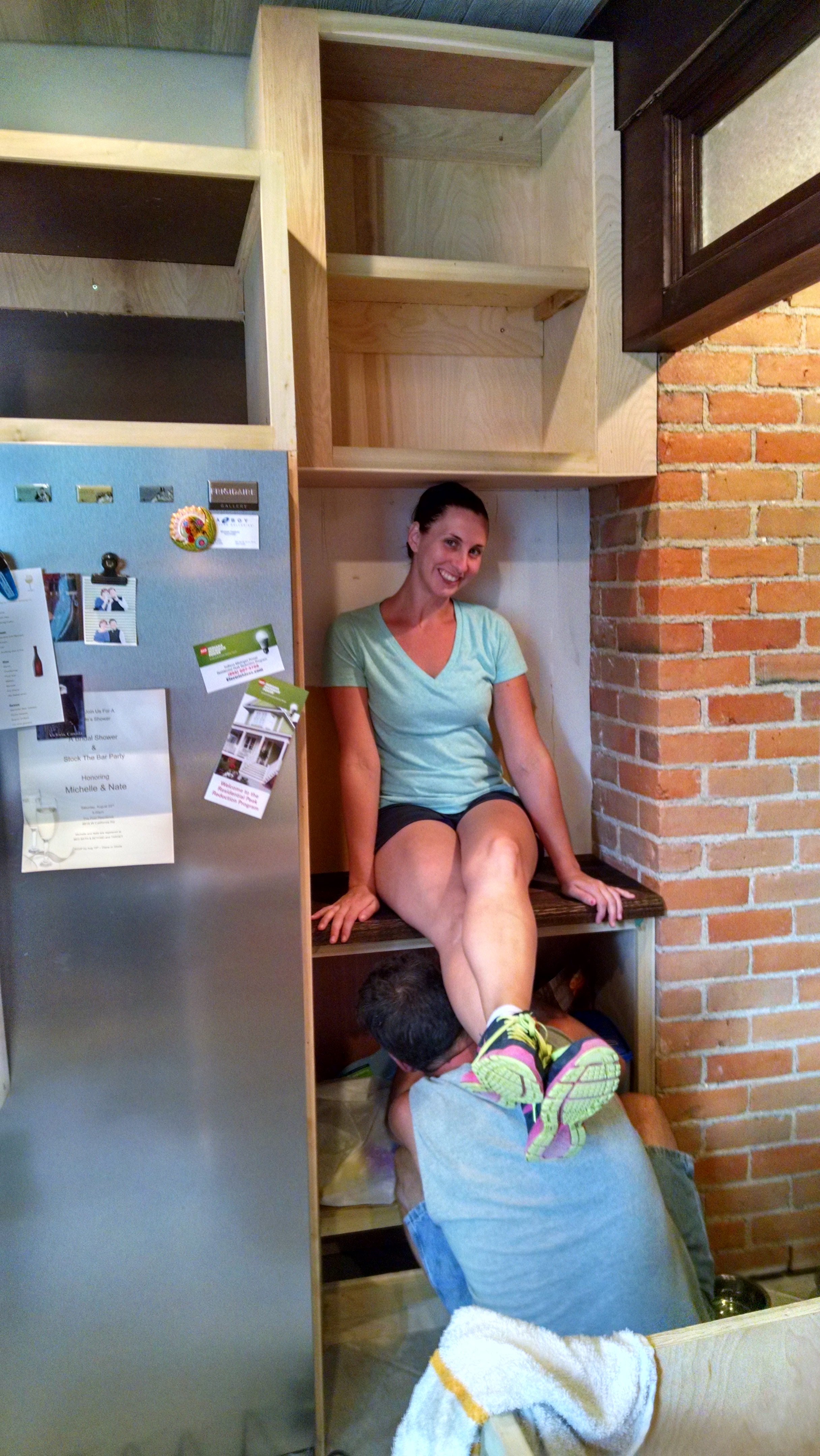
We purchased a new counter-depth refrigerator. Here my dad is taking measurements for the pantry and storage unit that we built to surround the refrigerator.14 16 1517 18

Broom closet anyone?!19 20

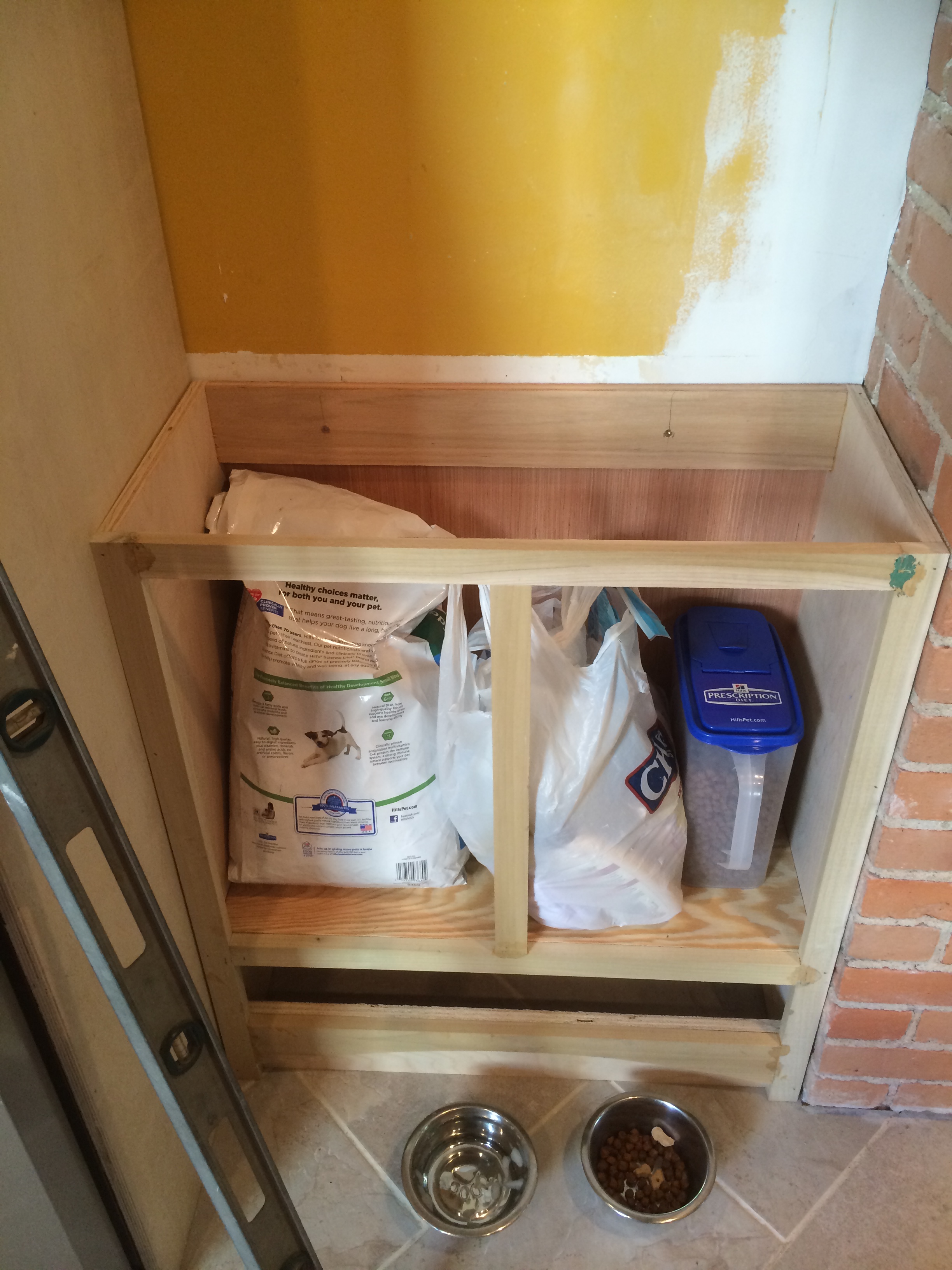
Ruco’s dog station! A handy way to hide all the puppy “stuff” including a pull out drawer which will hold his food and water bowls.

21

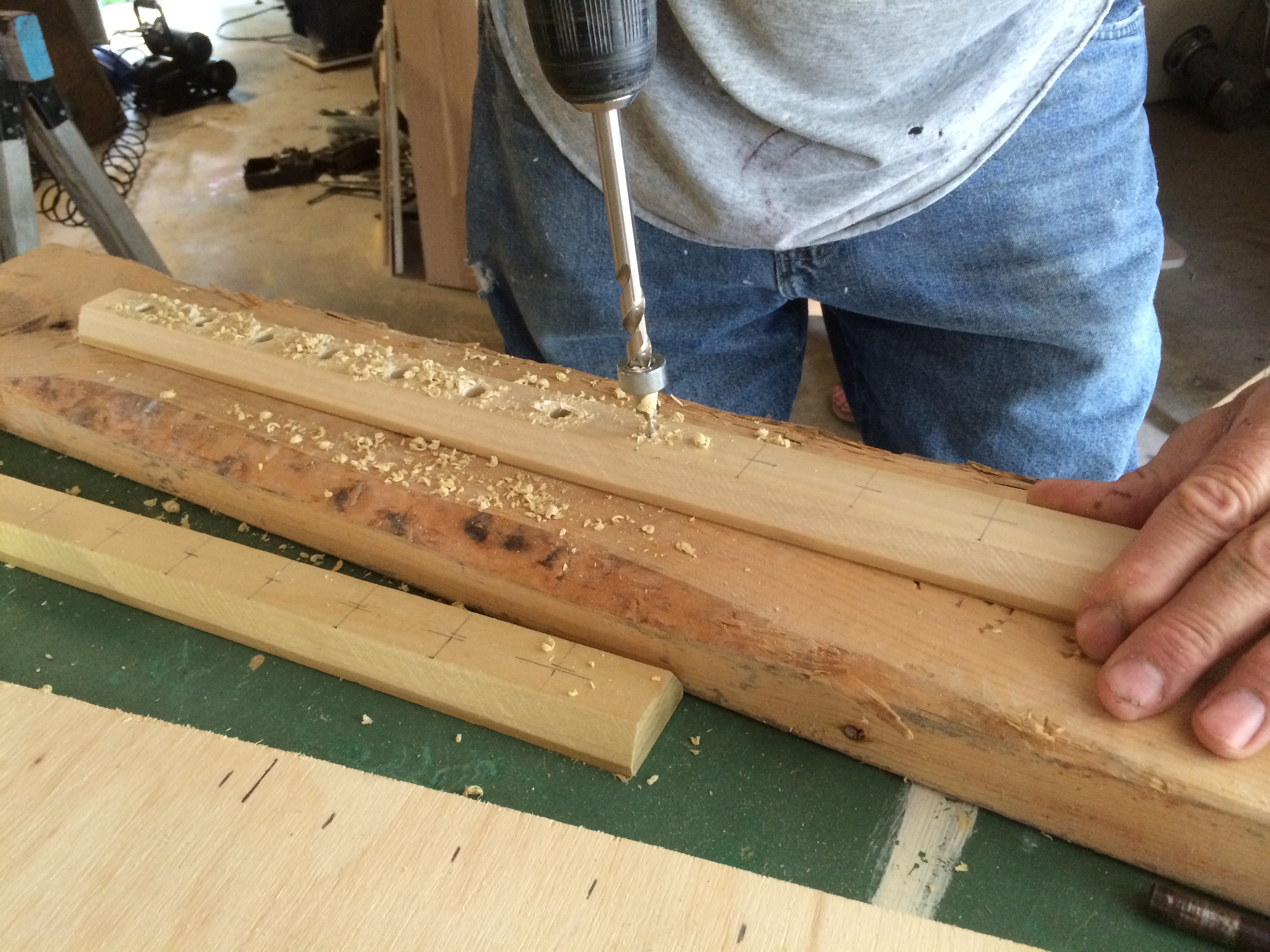
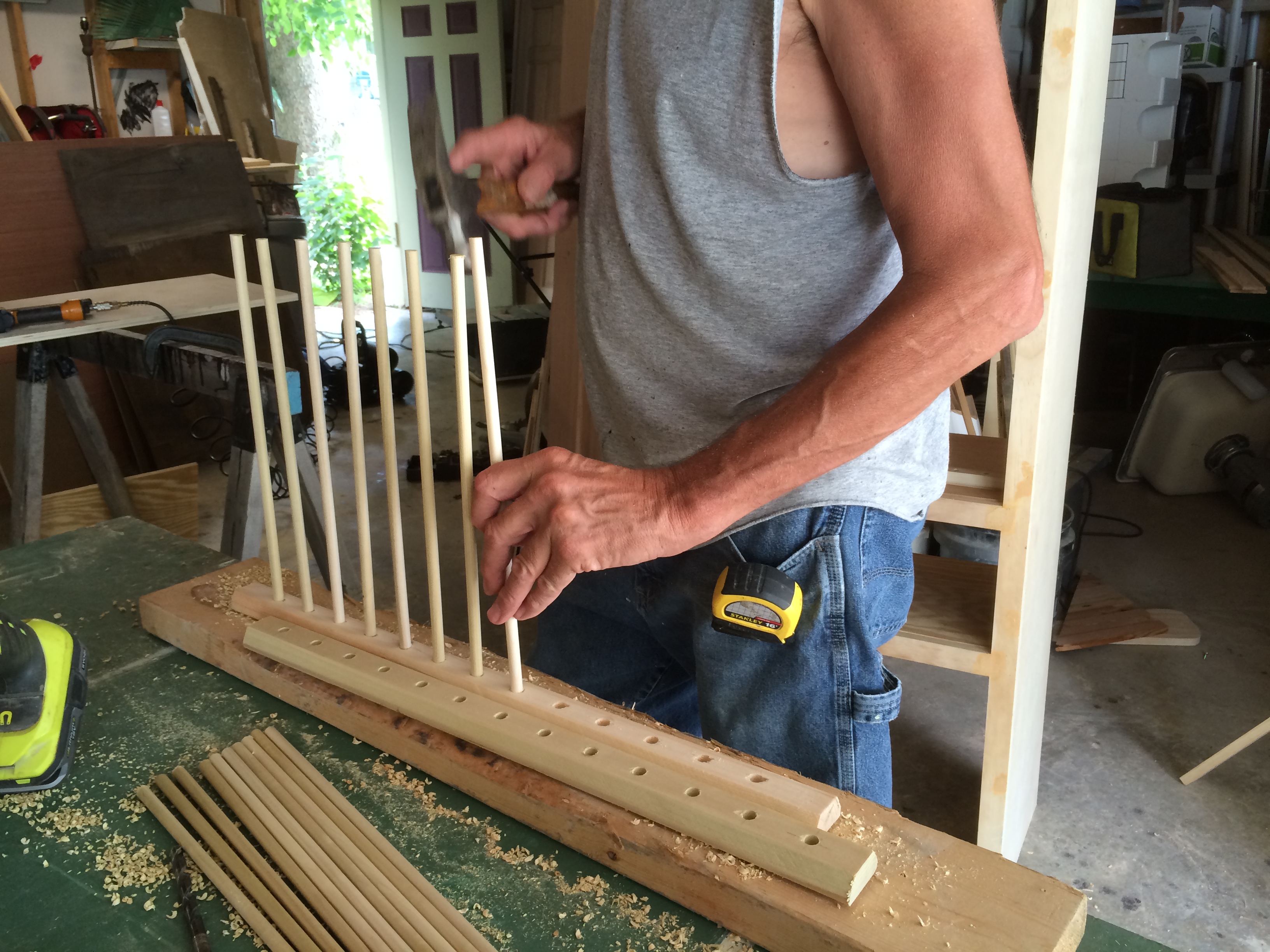
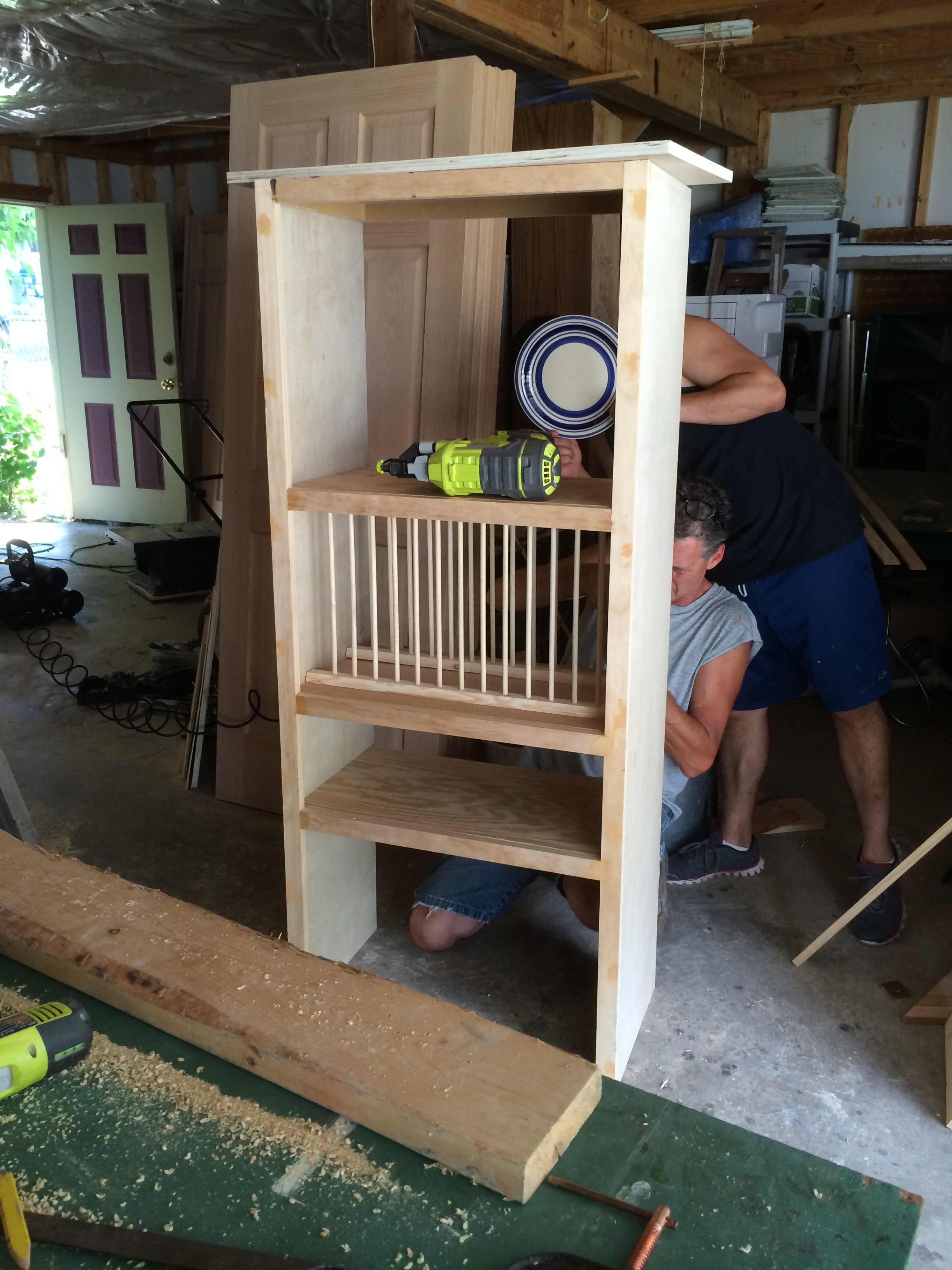
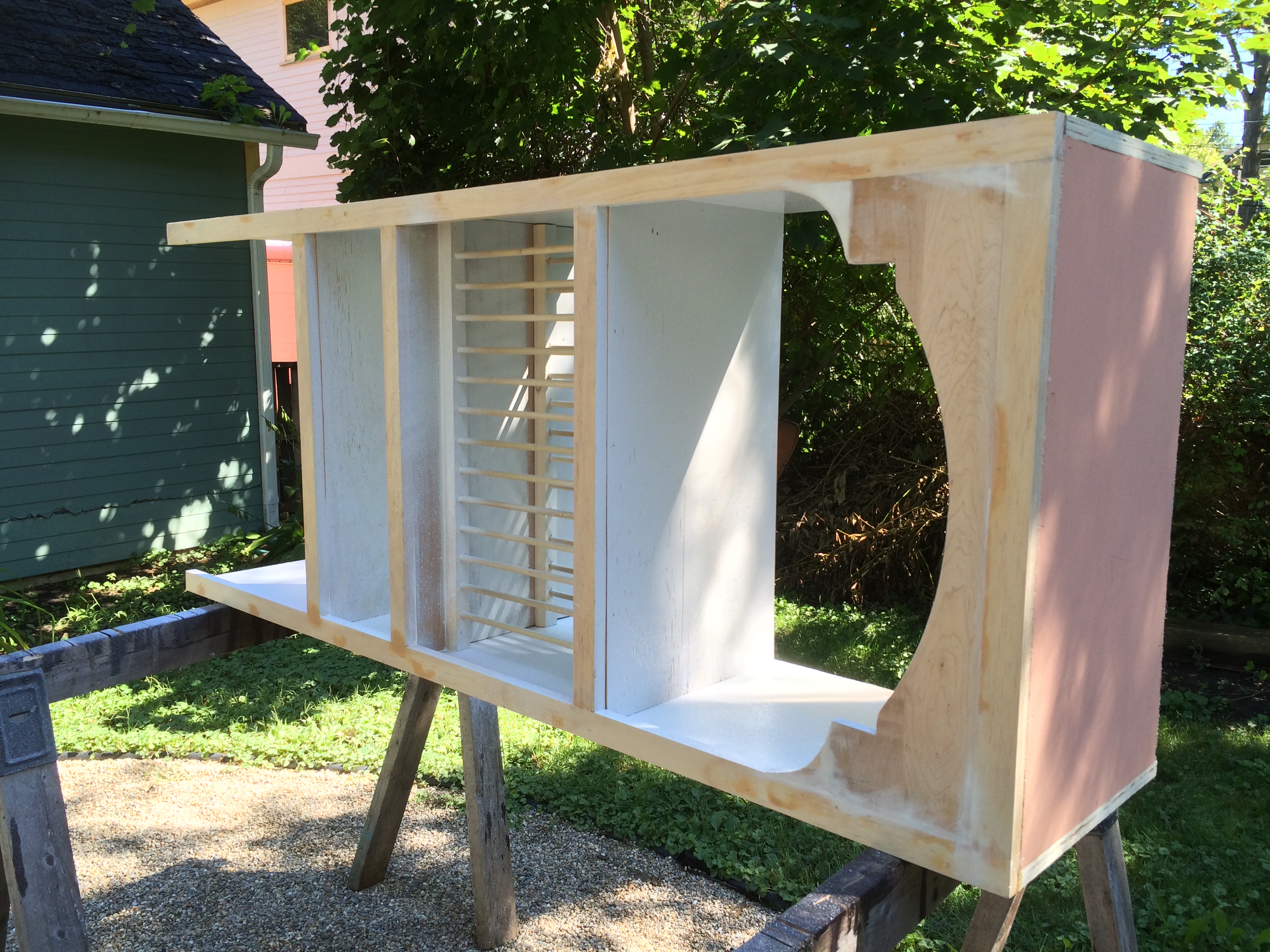
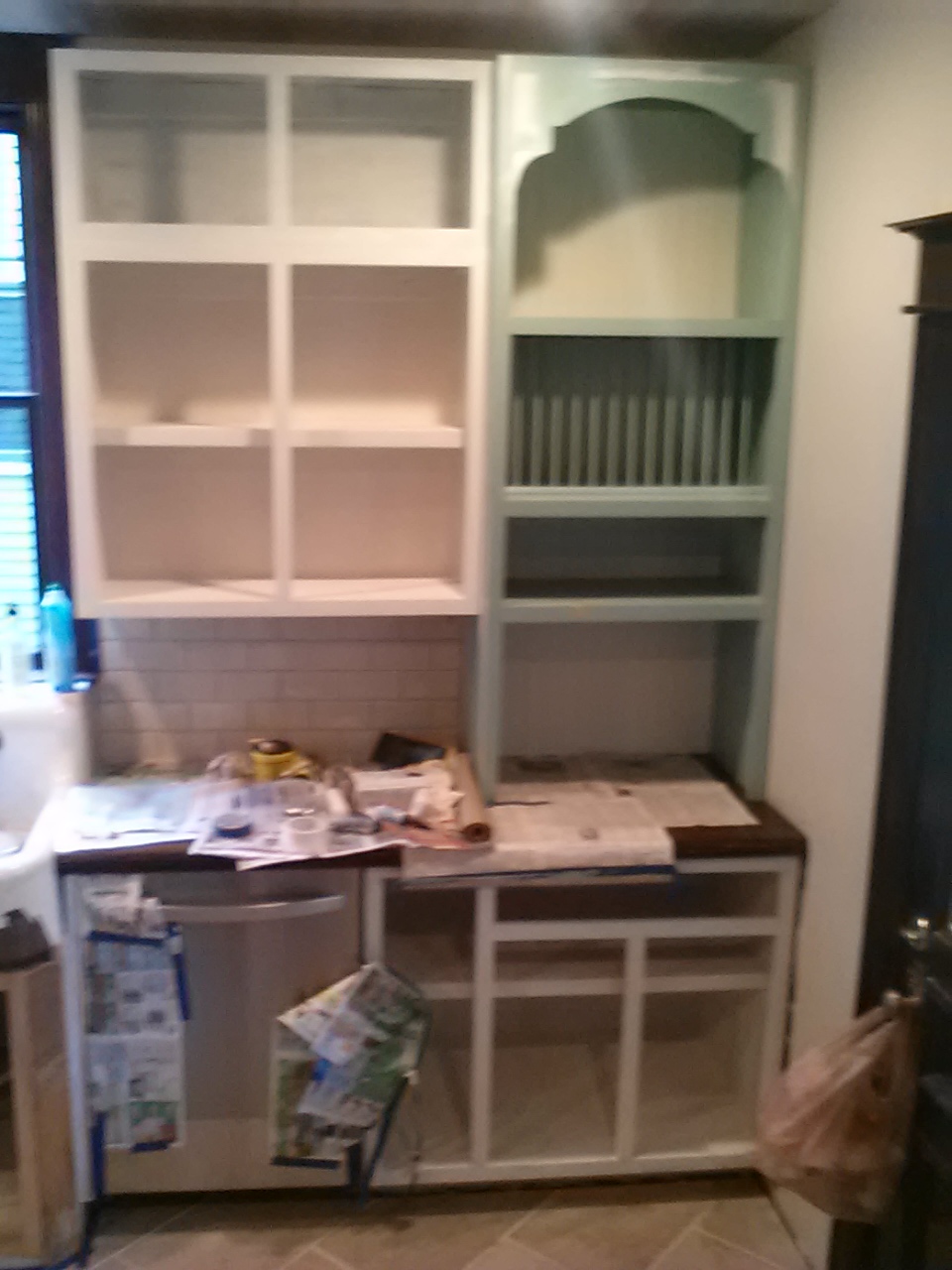
On the other side of the kitchen we added a handy coffee nook complete with a shelf for the coffee mugs and topped off with a dish rack.

photo 1 (1)photo 2 (1)photo 5 (1) photo 3 (1) photo 2 (2)

After everything was built we started the long and stinky process of priming everything. Since we had to prime cabinets which were previously installed in our kitchen (and likely very greasy and grimy) we chose to use Zinnser’s Cover Stain oil-based primer.

photo 2 (3) photo 5 (3)

Finally, everything is the same color and the kitchen is starting to look a lot more cohesive!

20140917_183755

20140917_18381420140917_183826

Next up, we have to sand and paint all of these! (ugh)

Until next time!

-L

Adding a Vintage Farmhouse Sink…alternately known as The Day My Heart Broke

During our quest to bring a bit of vintage flavor to our new kitchen remodel we did a lot of research on what kind of sink we wanted. There are tons of options- stainless steel, copper, farmhouse, under mount, yada yada yada, the list goes on. We really had one requirement- the sink had to be big and deep. We didn’t want to deal with the same kind of problem we were facing with our old sink. I couldn’t even fit one skillet in the sink basin to wash it after use.

We had the extreme good fortune of coming across a sink that our neighbors were not using while looking at a job with my dad in their basement. This wasn’t just a modern day take on the farmhouse sink, this was the real deal, drainboard and all! Of course that also meant a hundred and fifty pounds of cast iron and porcelain that we had to figure out how to move upstairs but alas it was love at first sight. A deal was struck and arrangements were made and we set to work moving the sink from their basement to ours.

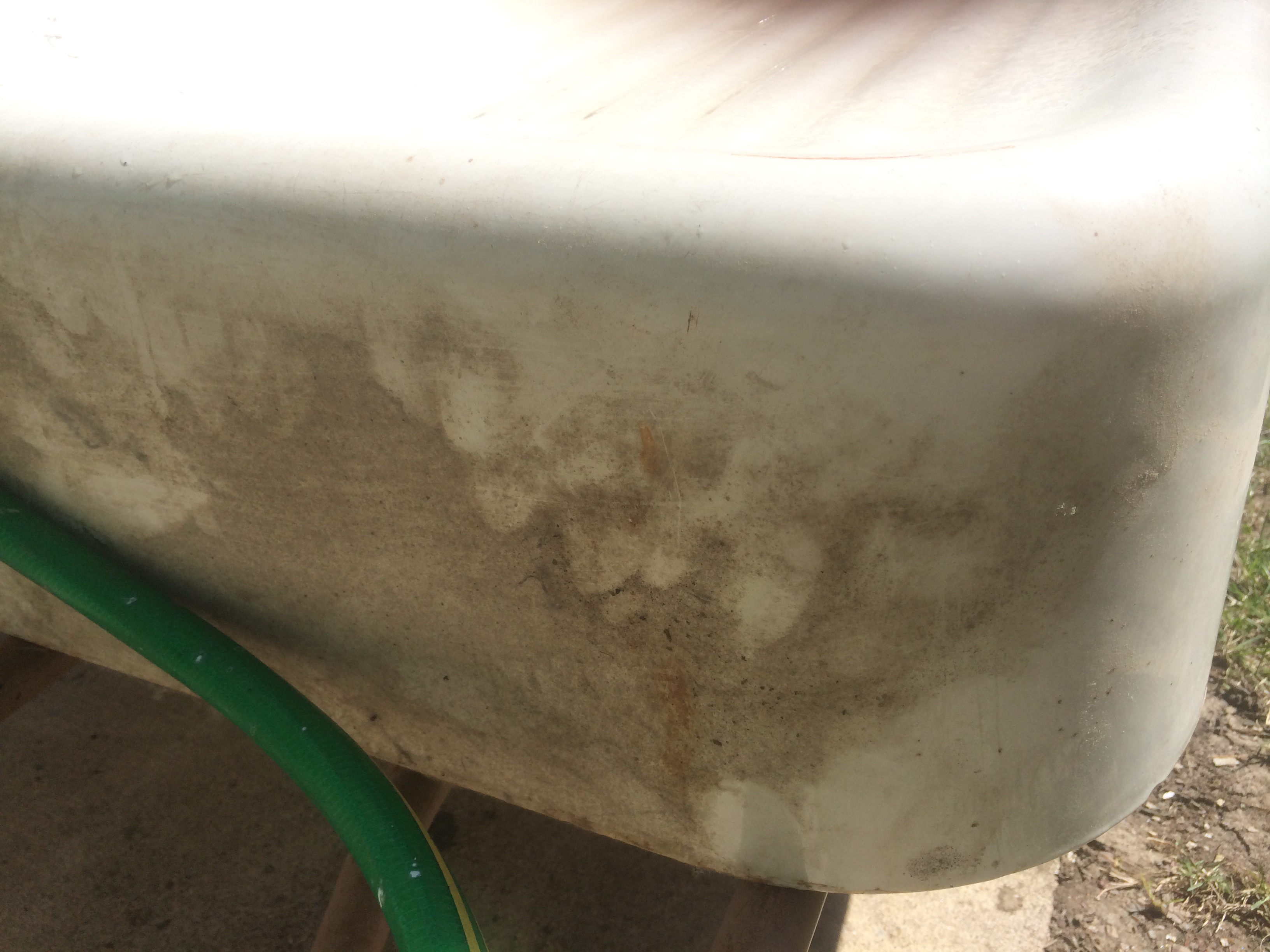
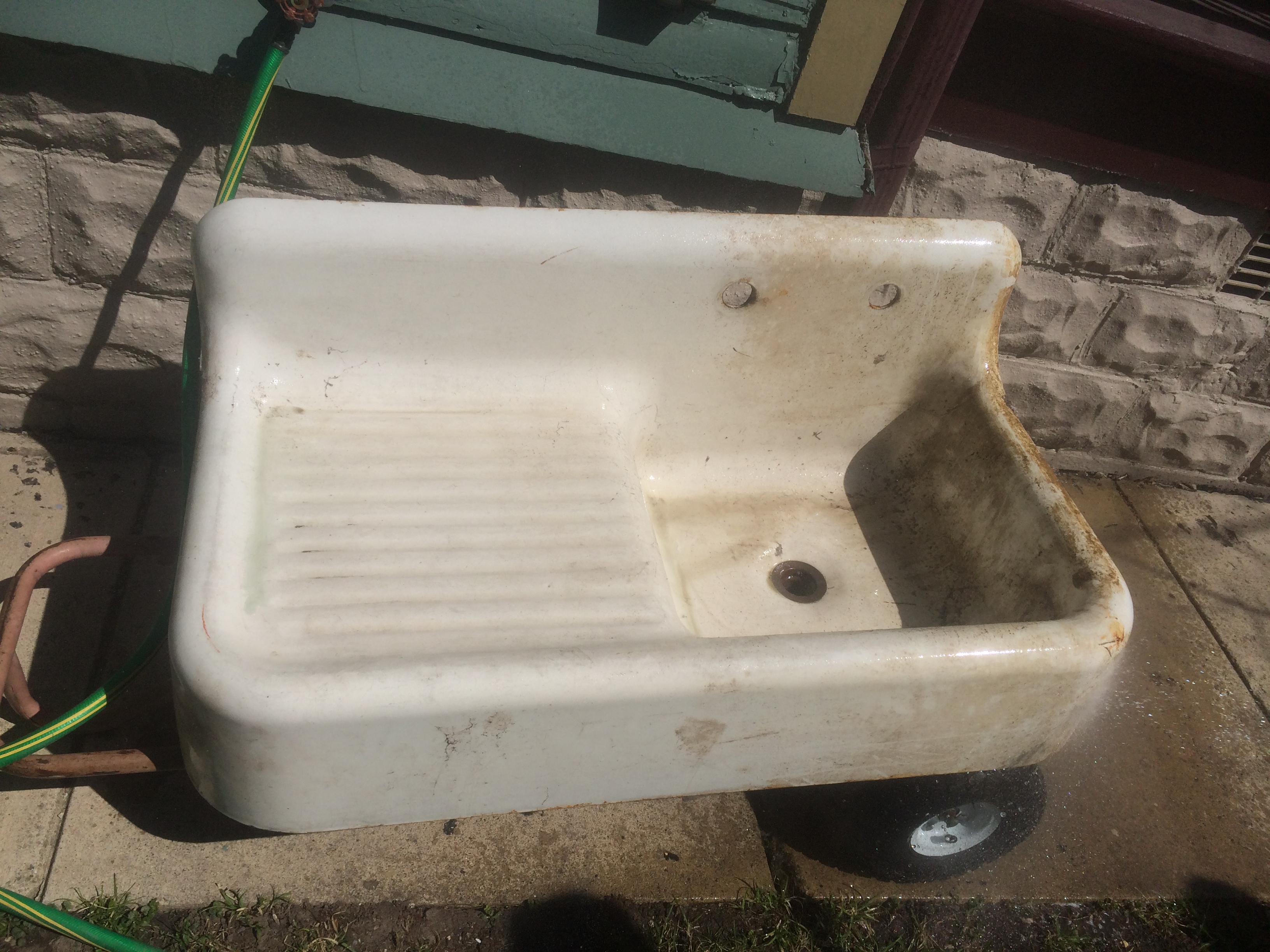
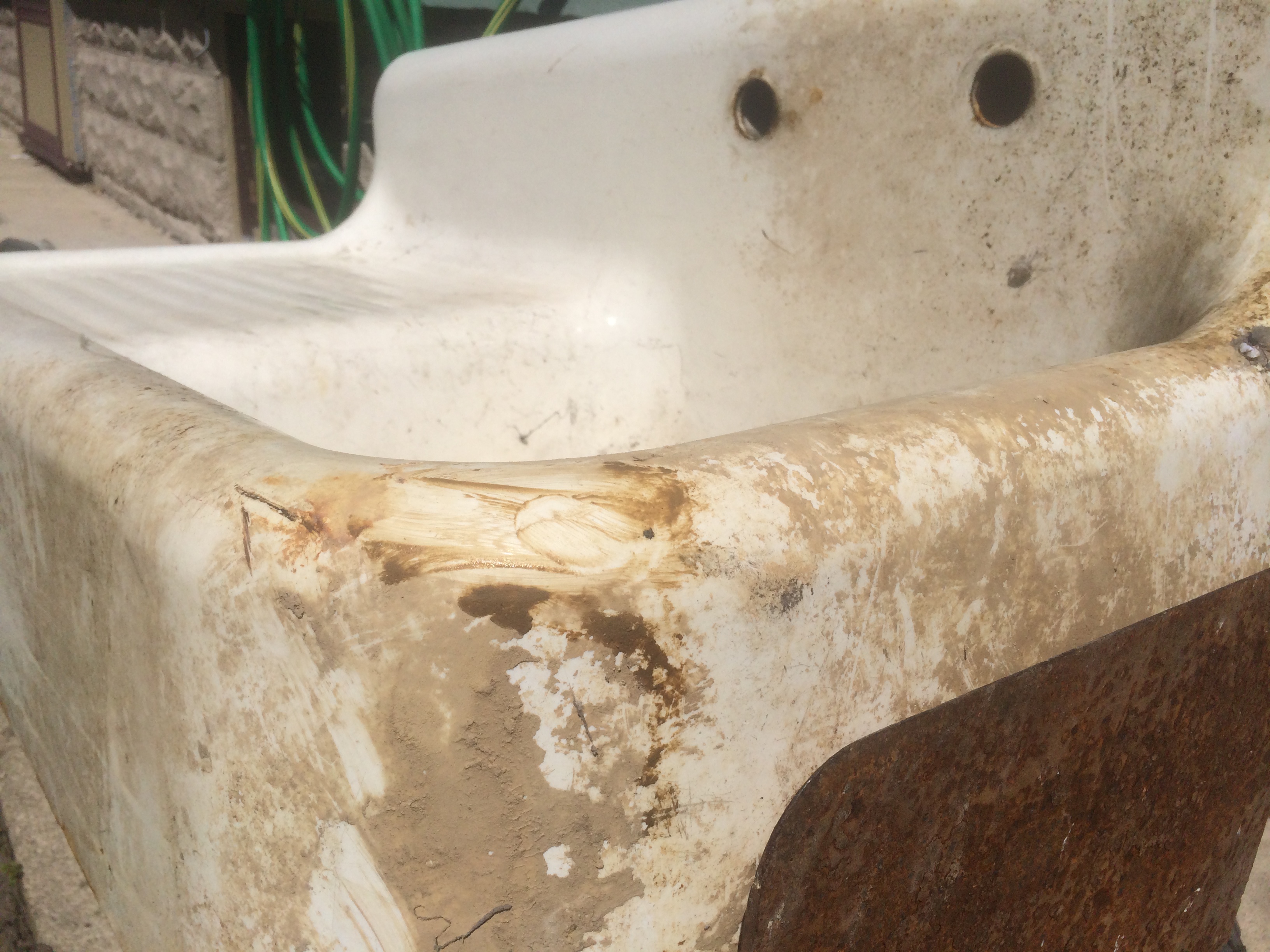
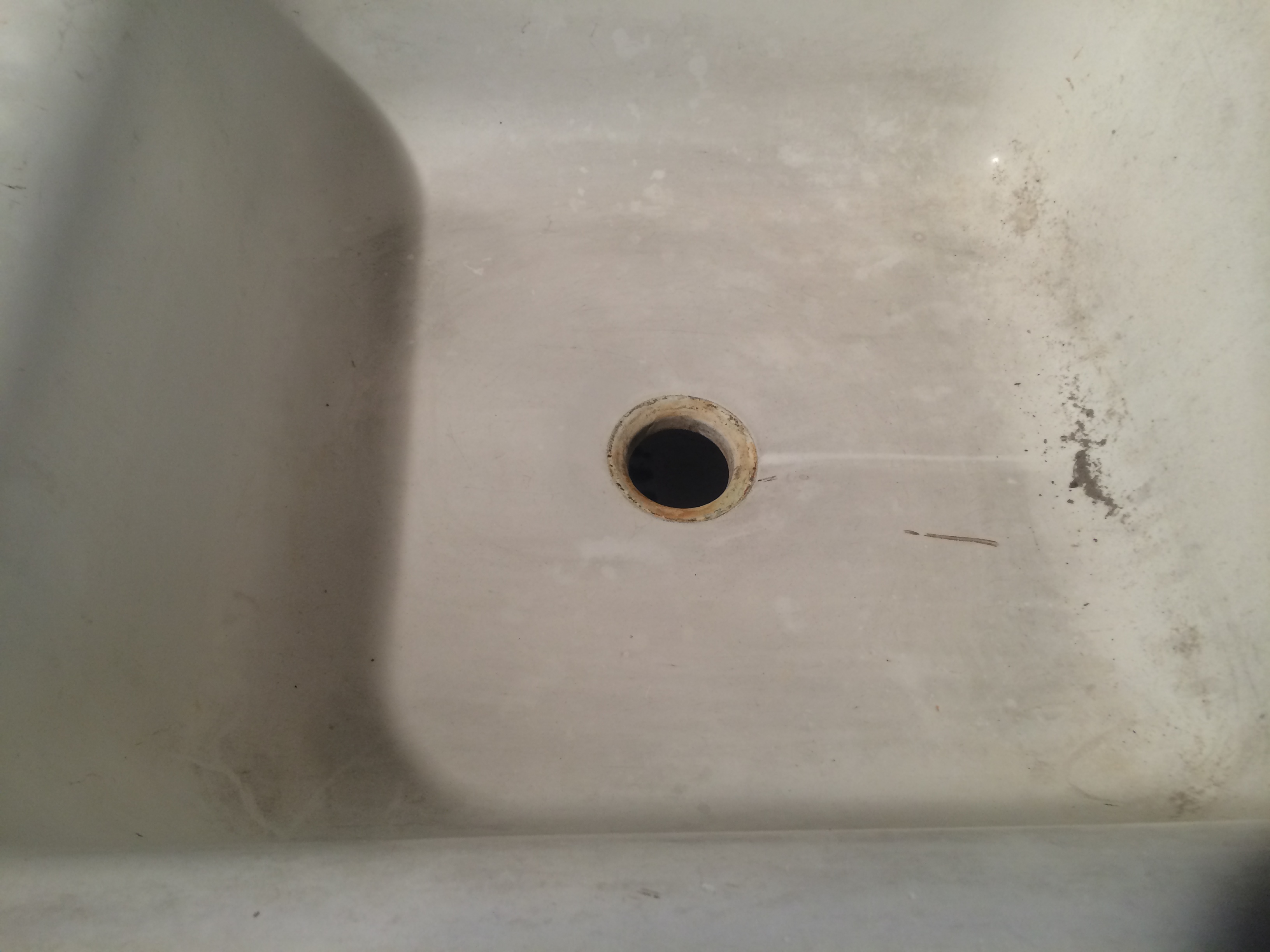
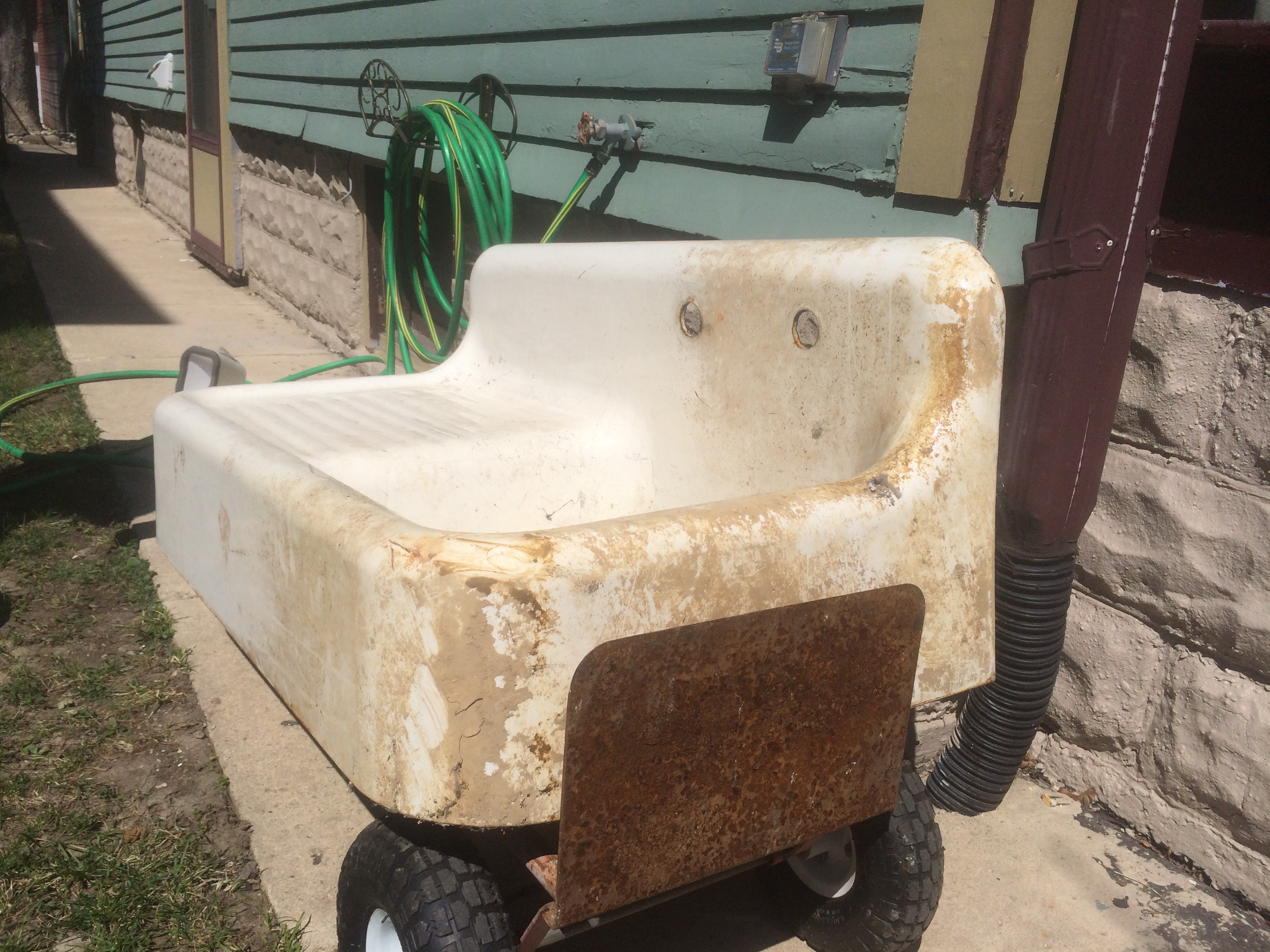
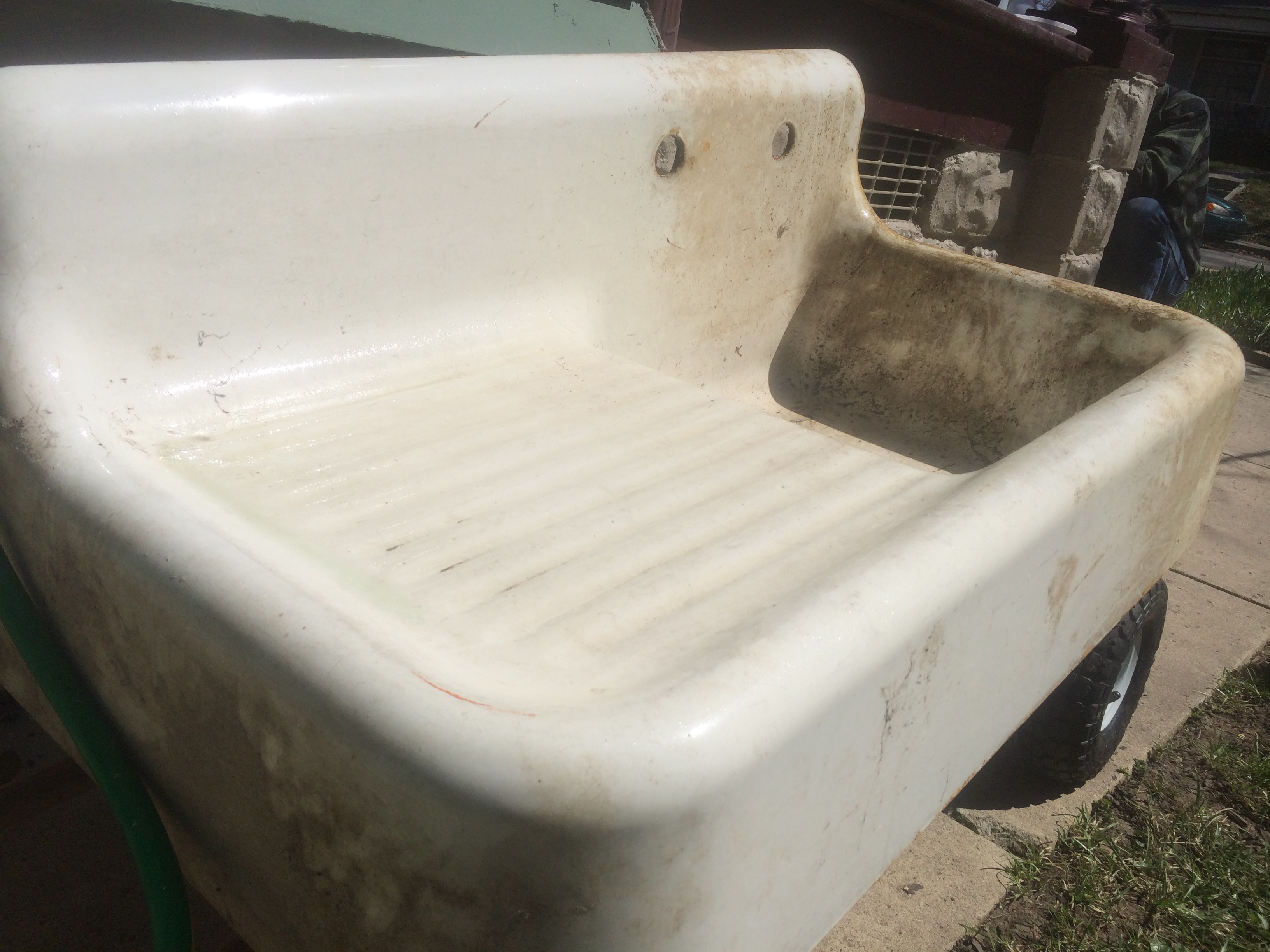
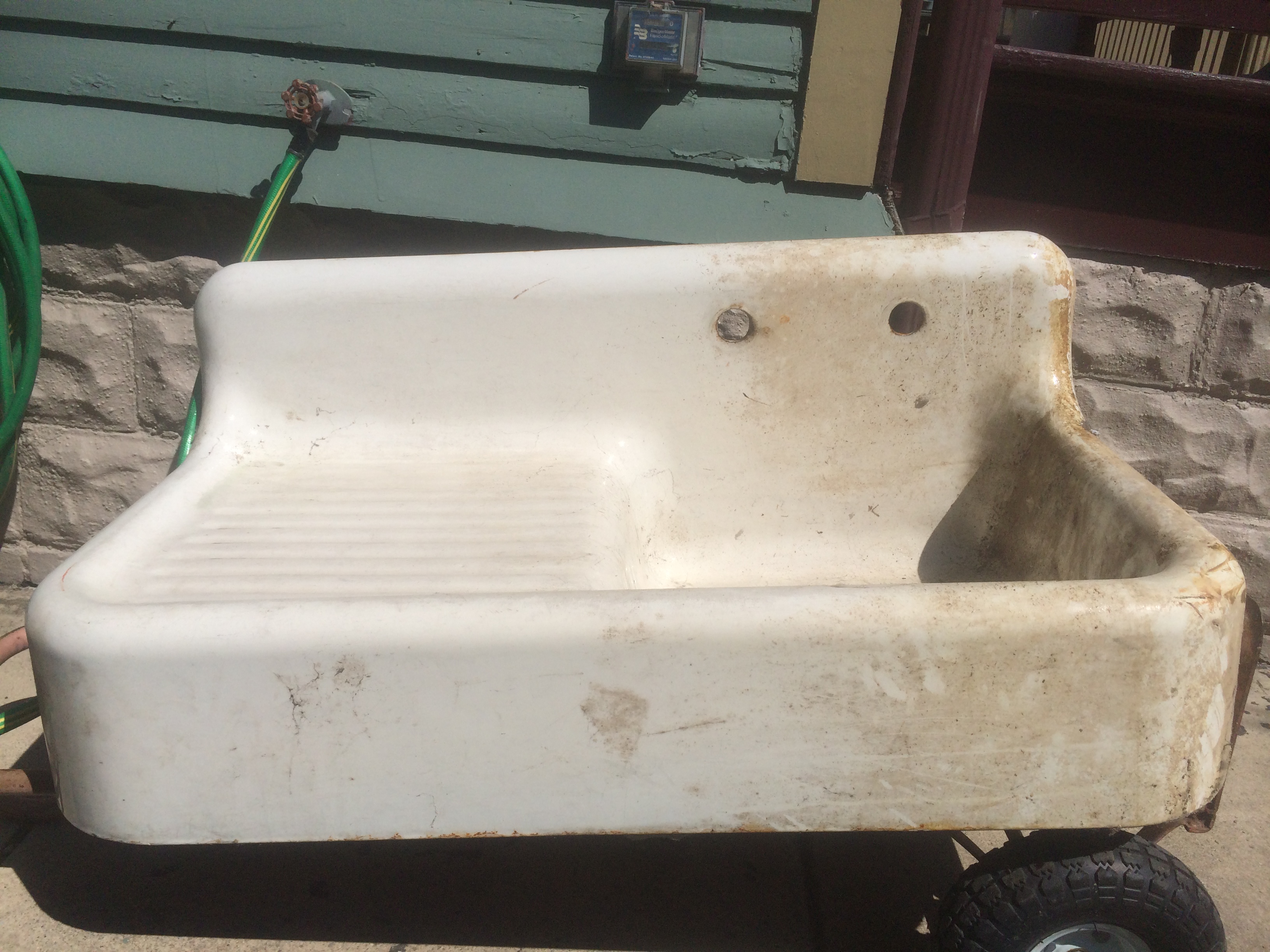
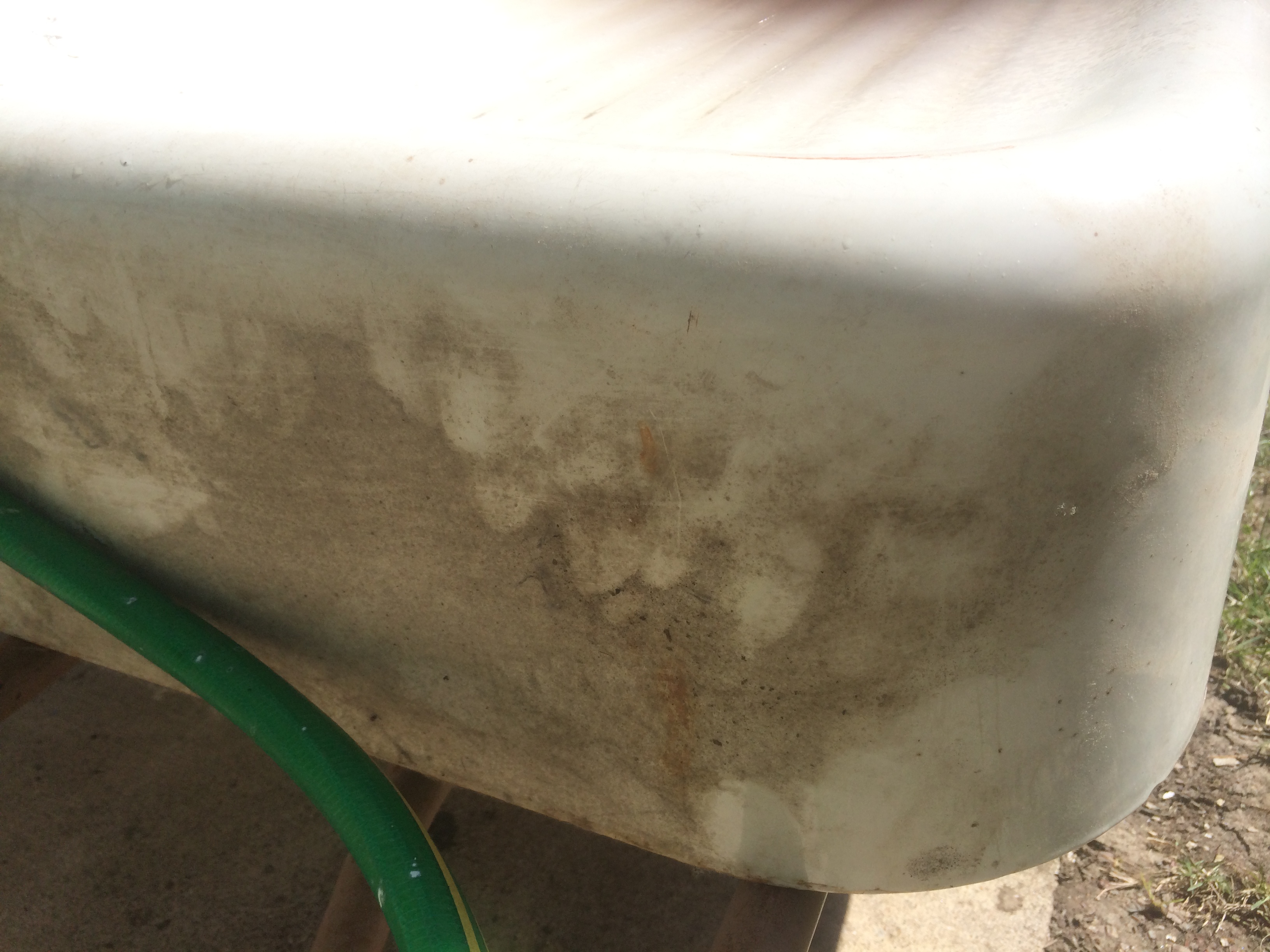
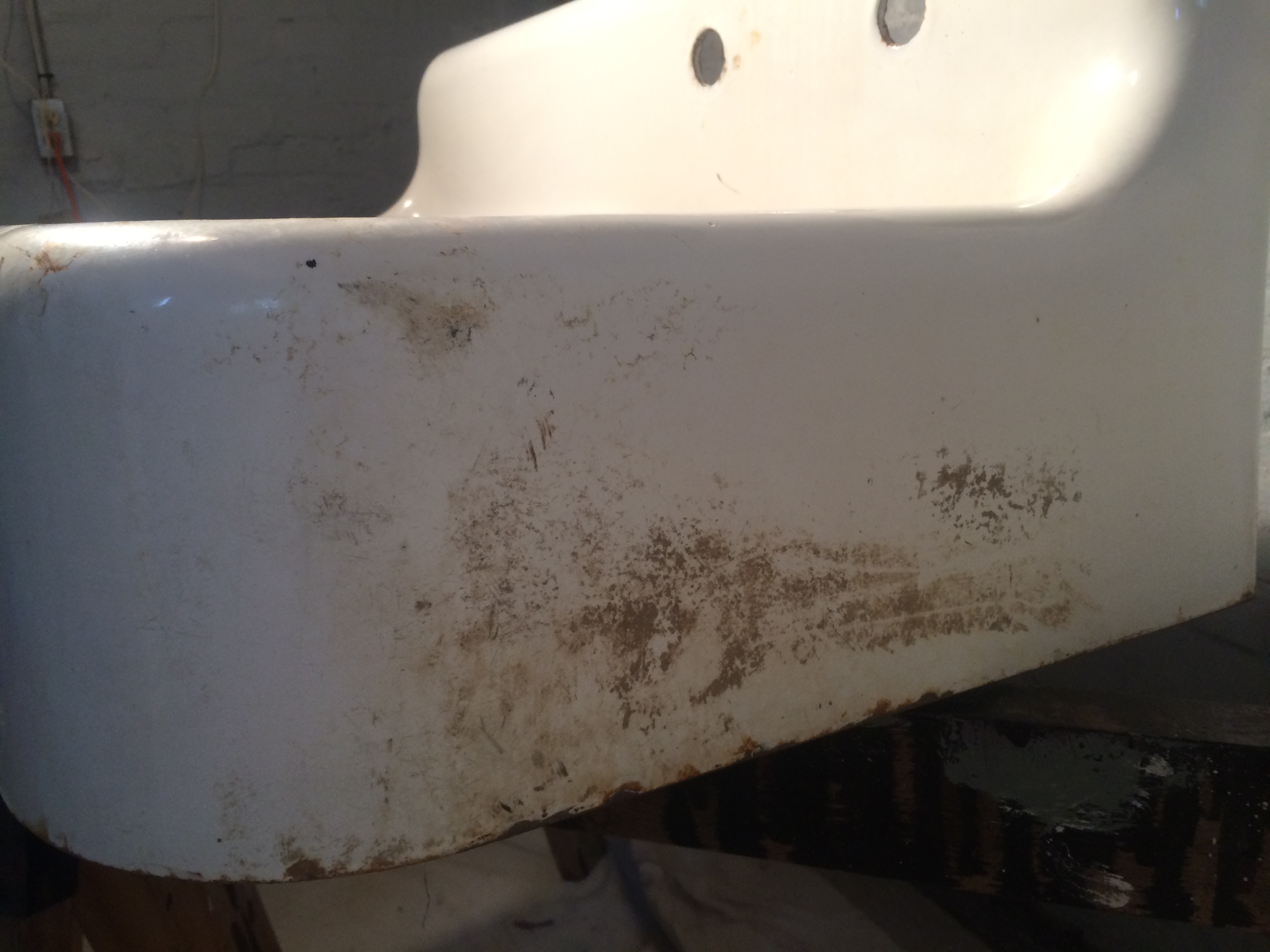
The sink is from the early 20th century…and having been removed at some point in time this baby had accumulated a lot of dirt and grime.

photo 5
photo 4 (7) photo 4 (6) photo 4 (1) photo 2
photo 3 (8) photo 3 (10) photo 3 photo 2 (1) photo 1

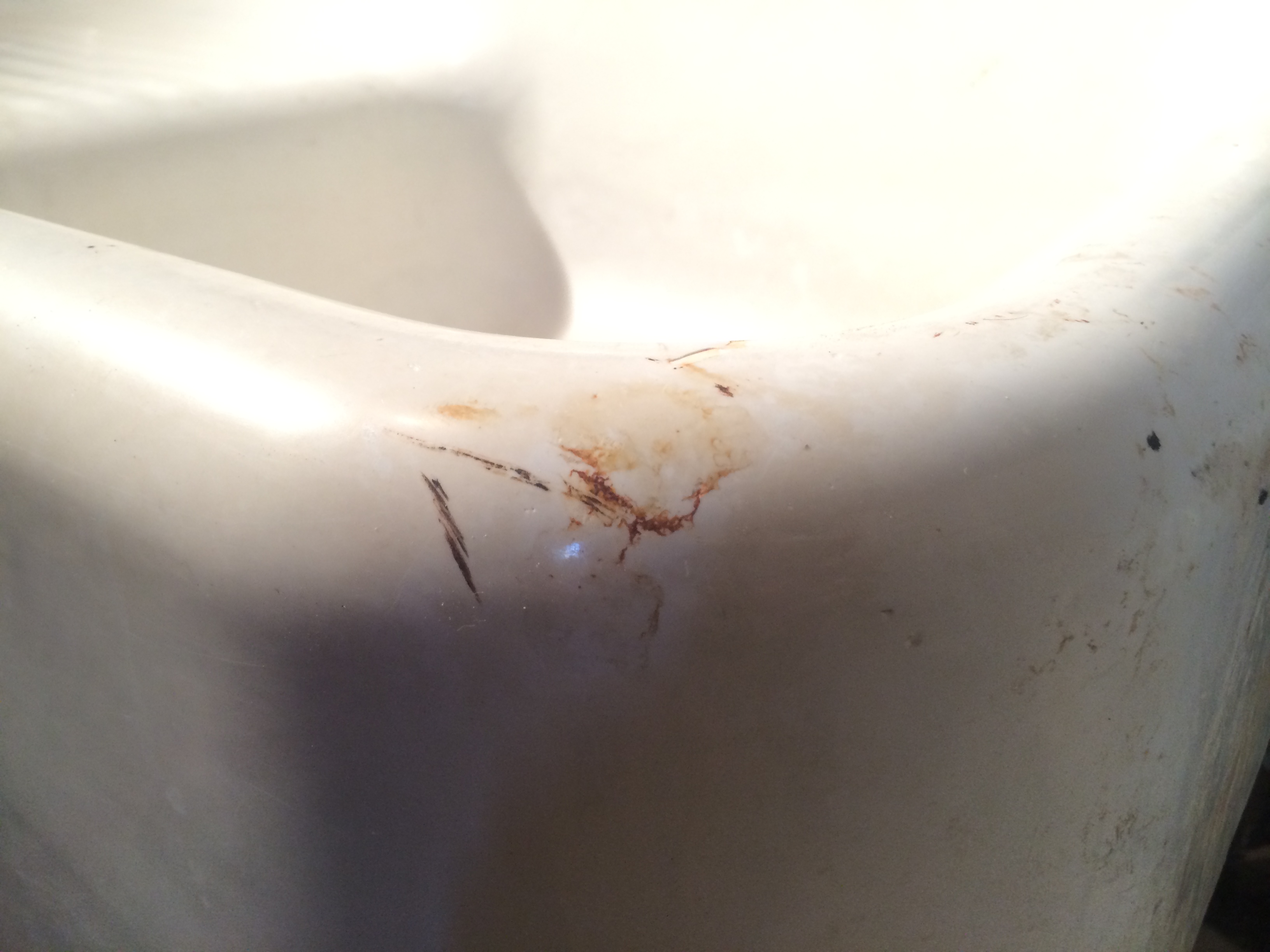
Even under all that dirt the beauty of this sink was still visible. I did a lot of research trying to find ways to clean up this sink but in the end we couldn’t get rid of a lot of rust spots and chips so we ended up calling a bathroom refinisher to help us out. I read all the literature online about the pros and cons of refinishing a porcelain sink. The downside is obviously that this process is a bit pricey (expect $200+) and also does not last for more than a few years. The upside is that the sink looks gorgeous in the interim. We decided to go ahead and take the plunge.

We hired a local individual to clean and fill the chips in the sink. Then he basically sprayed the sink with a latex high bond paint. The whole process took about 3 hours.

photo 5 (12)


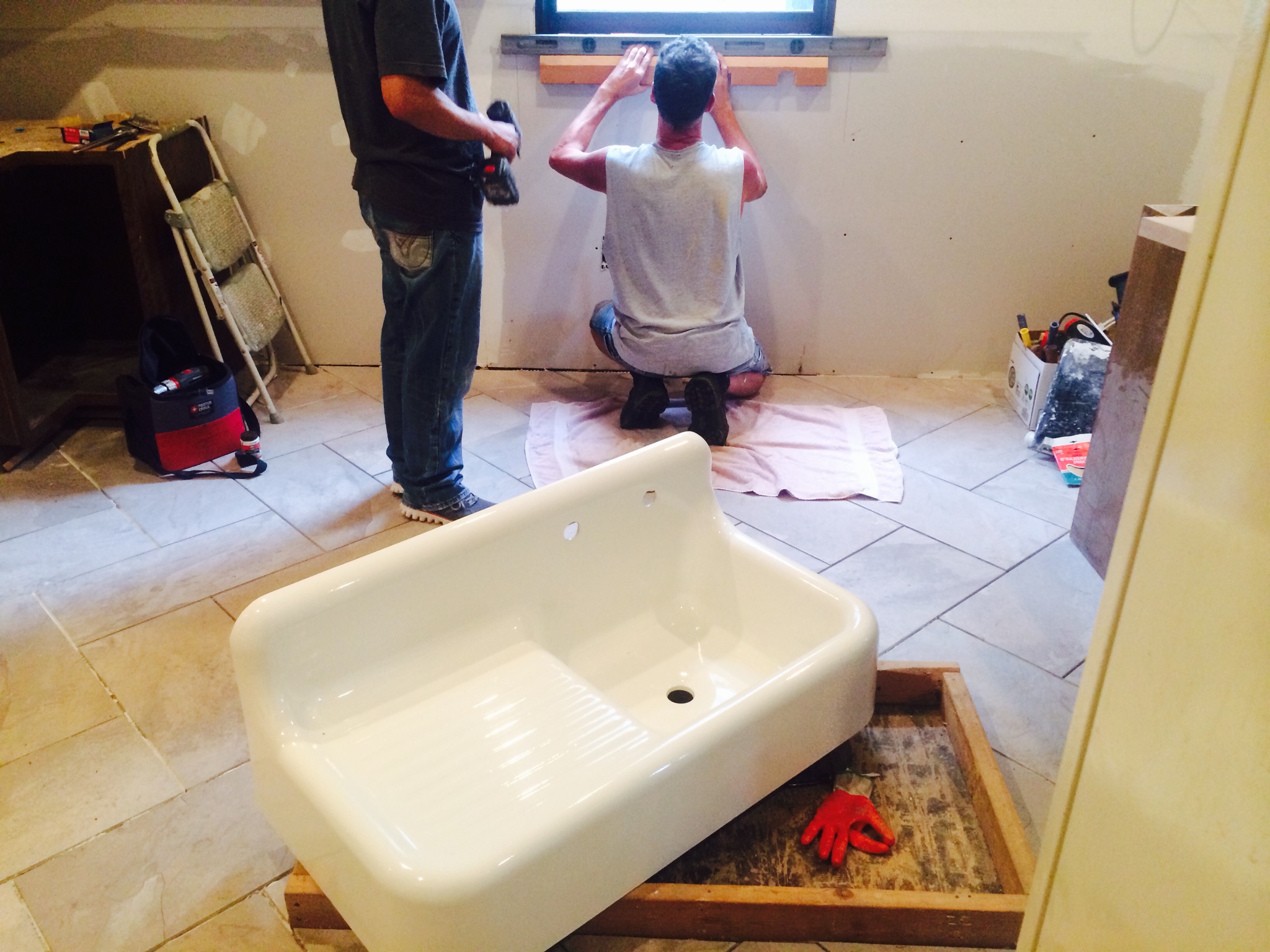
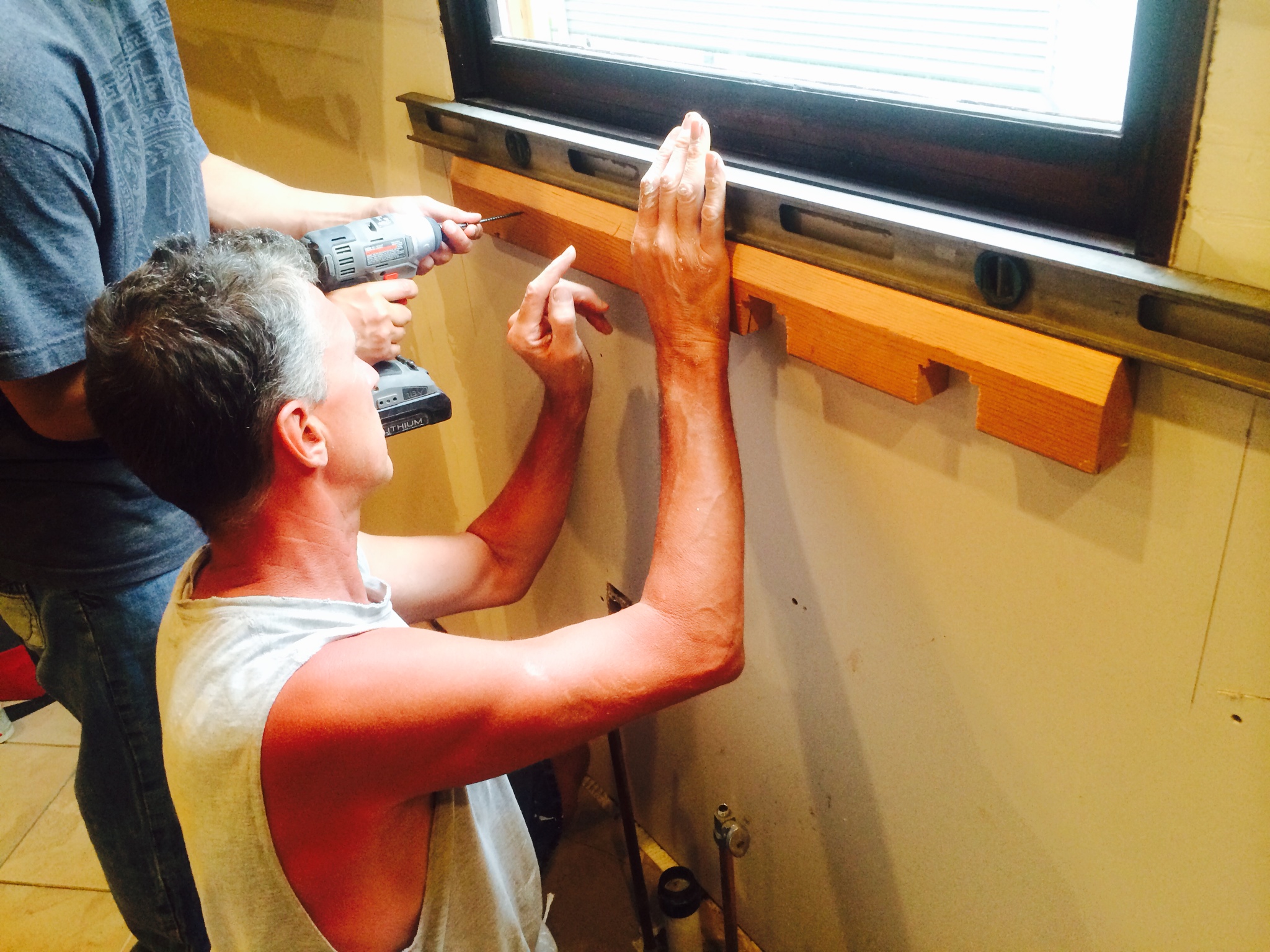
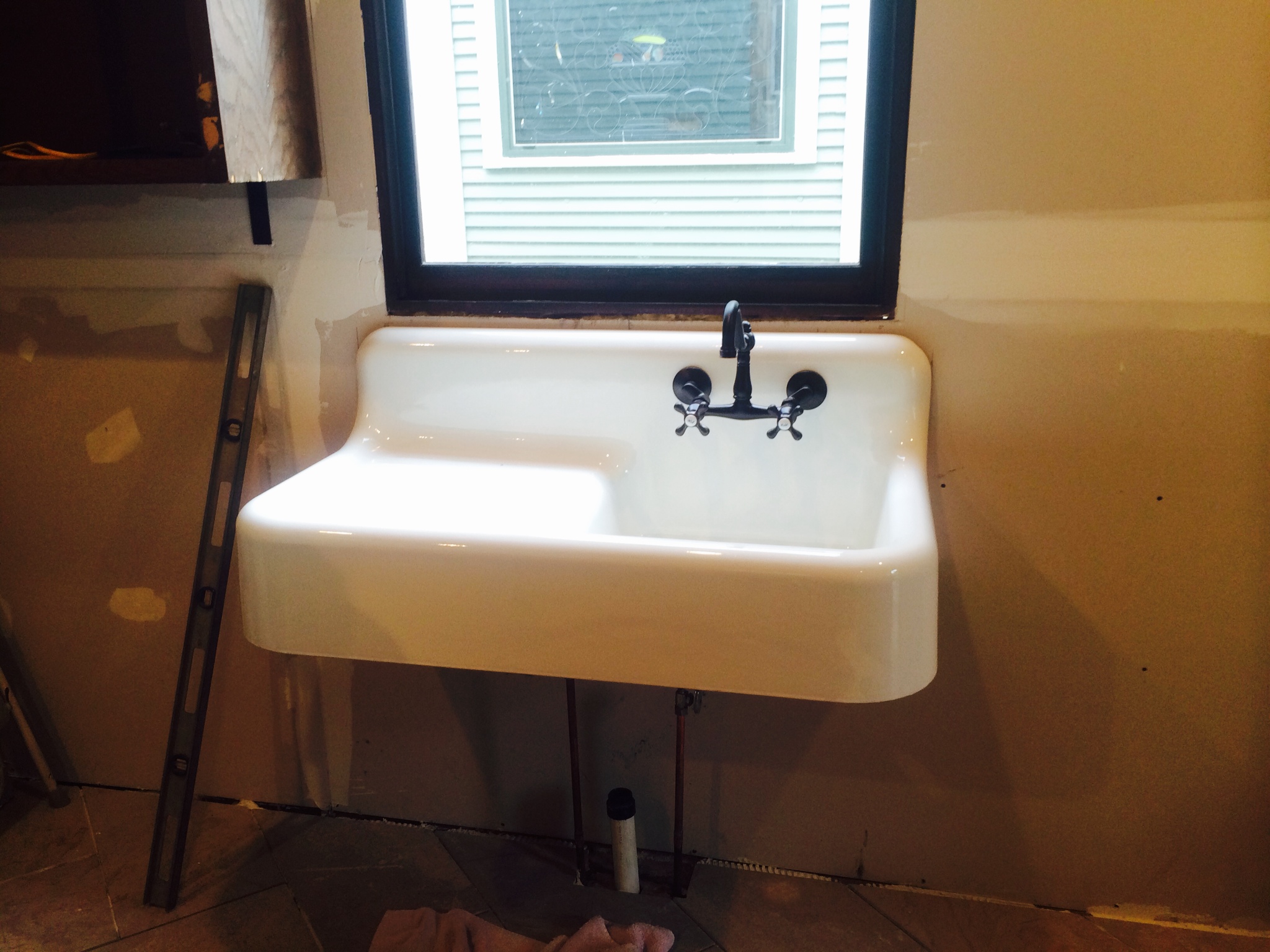
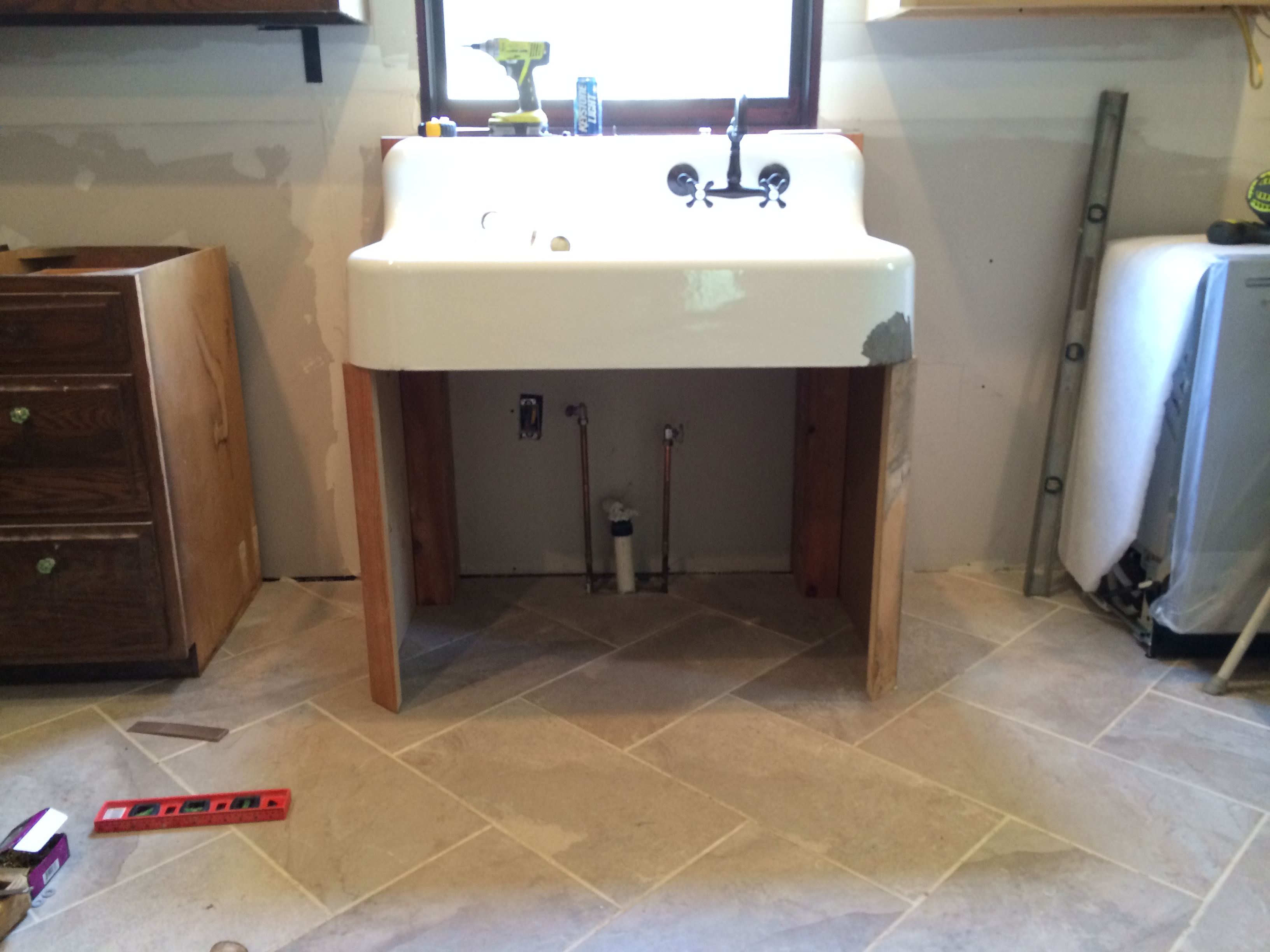
After the sink was looking beautiful again we had to devise a way to hang the sink under our new window. We devised a way to attach a 2×4 to the wall and hang the sink on the 2×4.

photo 2 (16)

photo 1 (16)


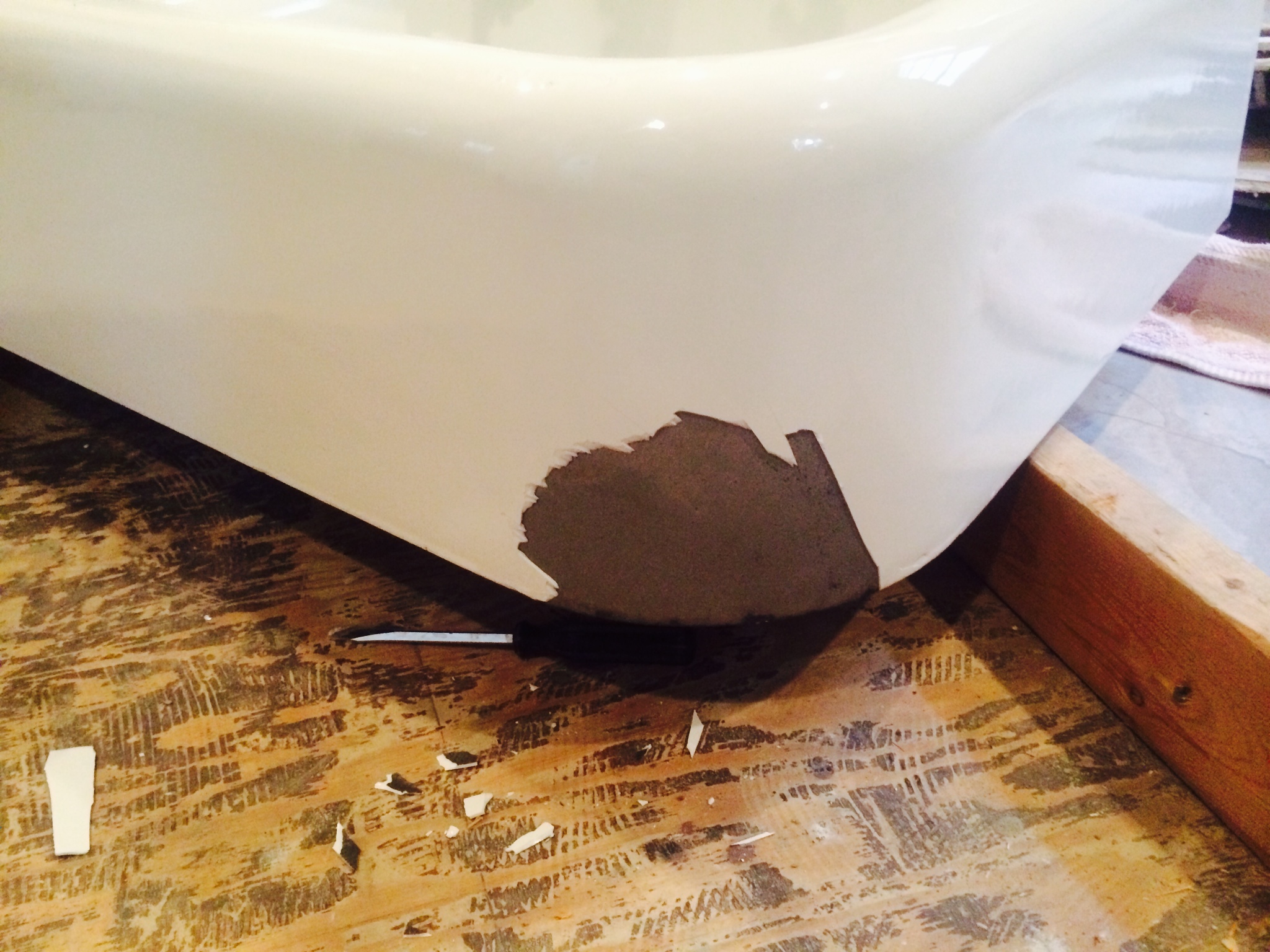
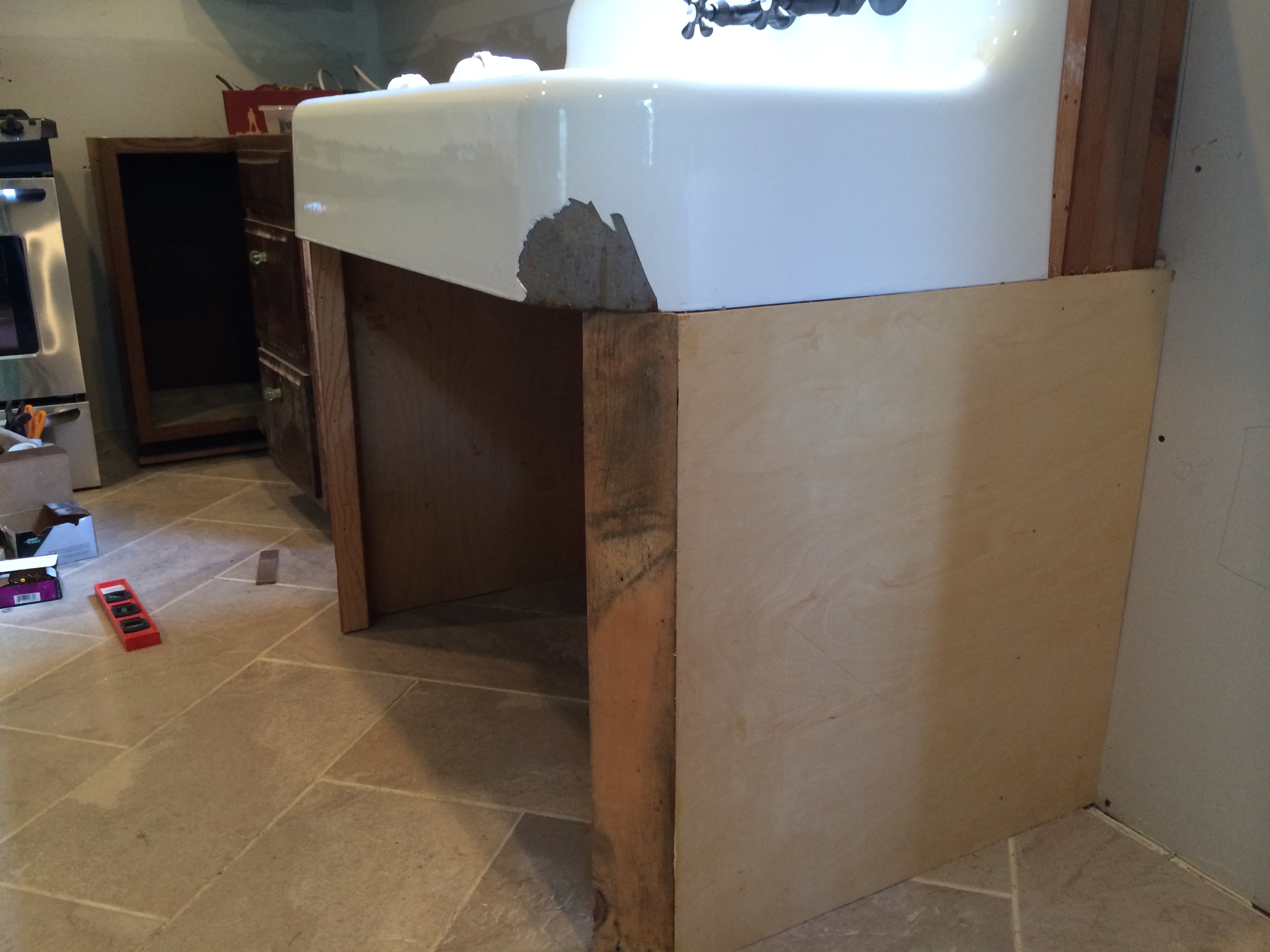
WARNING: This is where the story gets sad. The picture above lasted for about all of 4 minutes. As we were making braces to place under the base of the sink the whole thing came away from the wall and ended in a devastating crash of porcelain on the floor. All of us stared at the disaster in shock, afraid to get any closer. It was a rough day.

Eventually we had to examine the damage- 5 floor tiles cracked, several dented corners on the sink, a scratched faucet, and a chunk of the sink just absolutely missing.  This single incident has been our greatest setback of the whole project. We walked away from the kitchen for a few days to regroup, as you can probably imagine tempers were running high.

photo 3 (17) photo 4 (15)

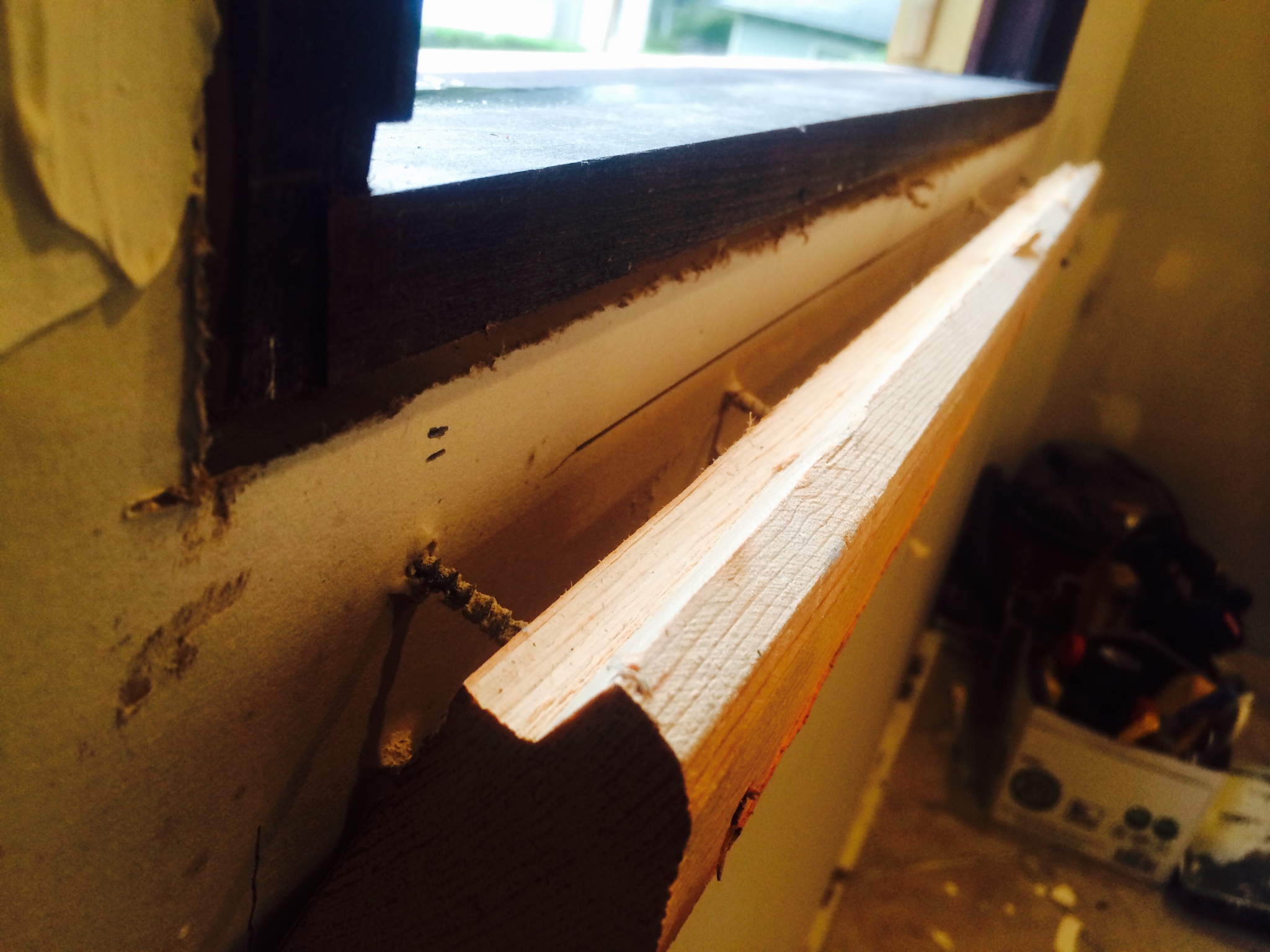
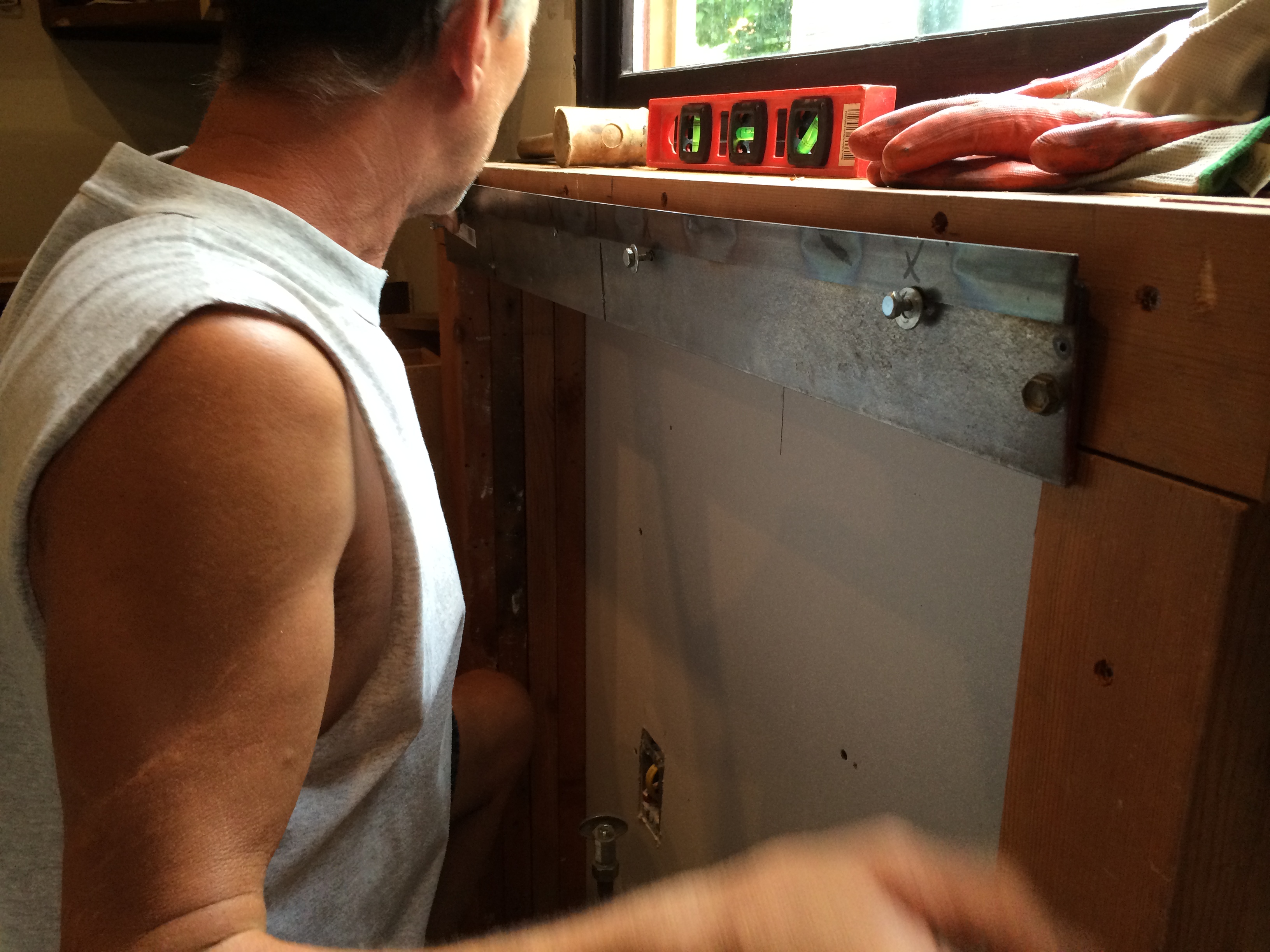
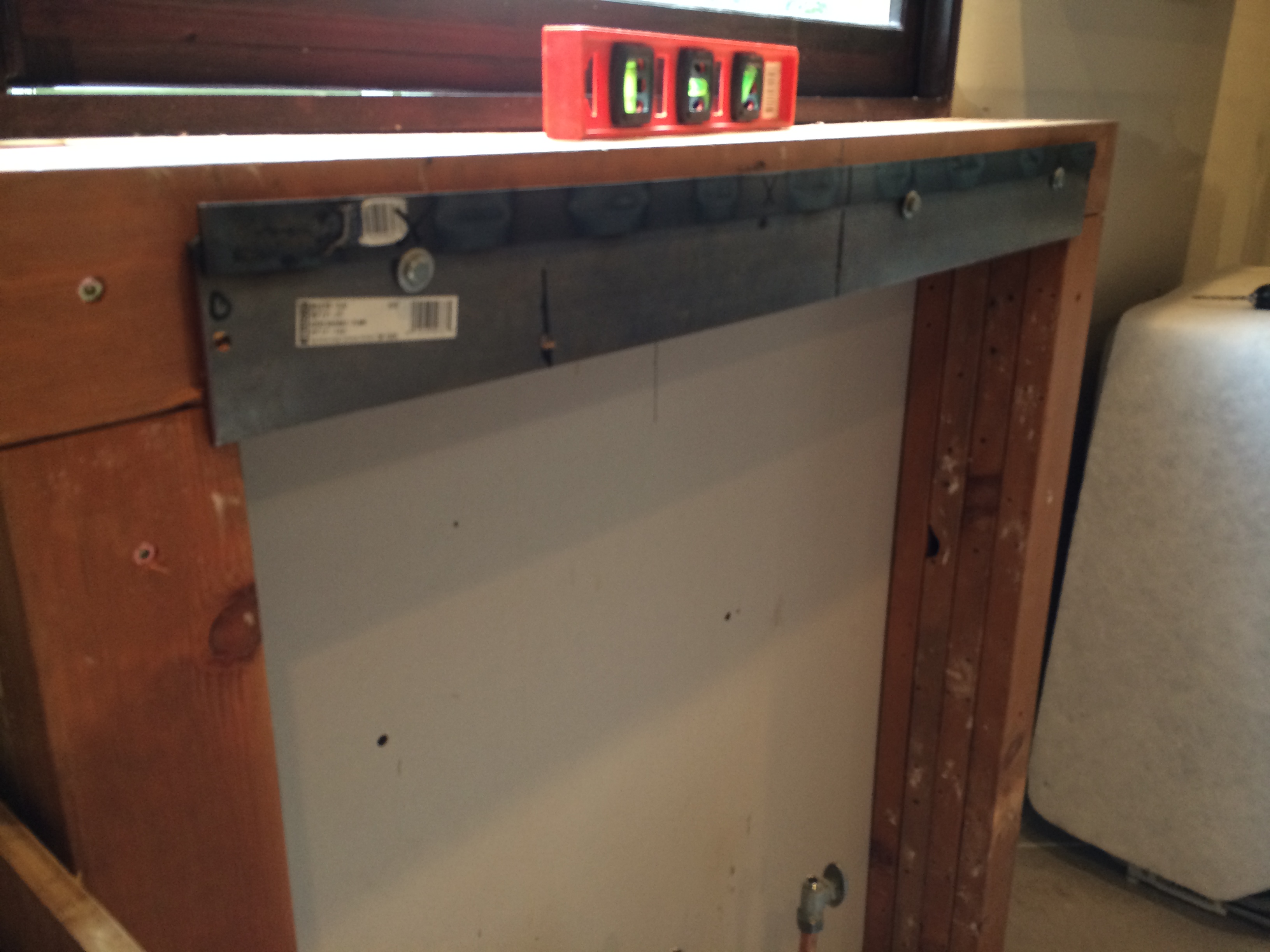
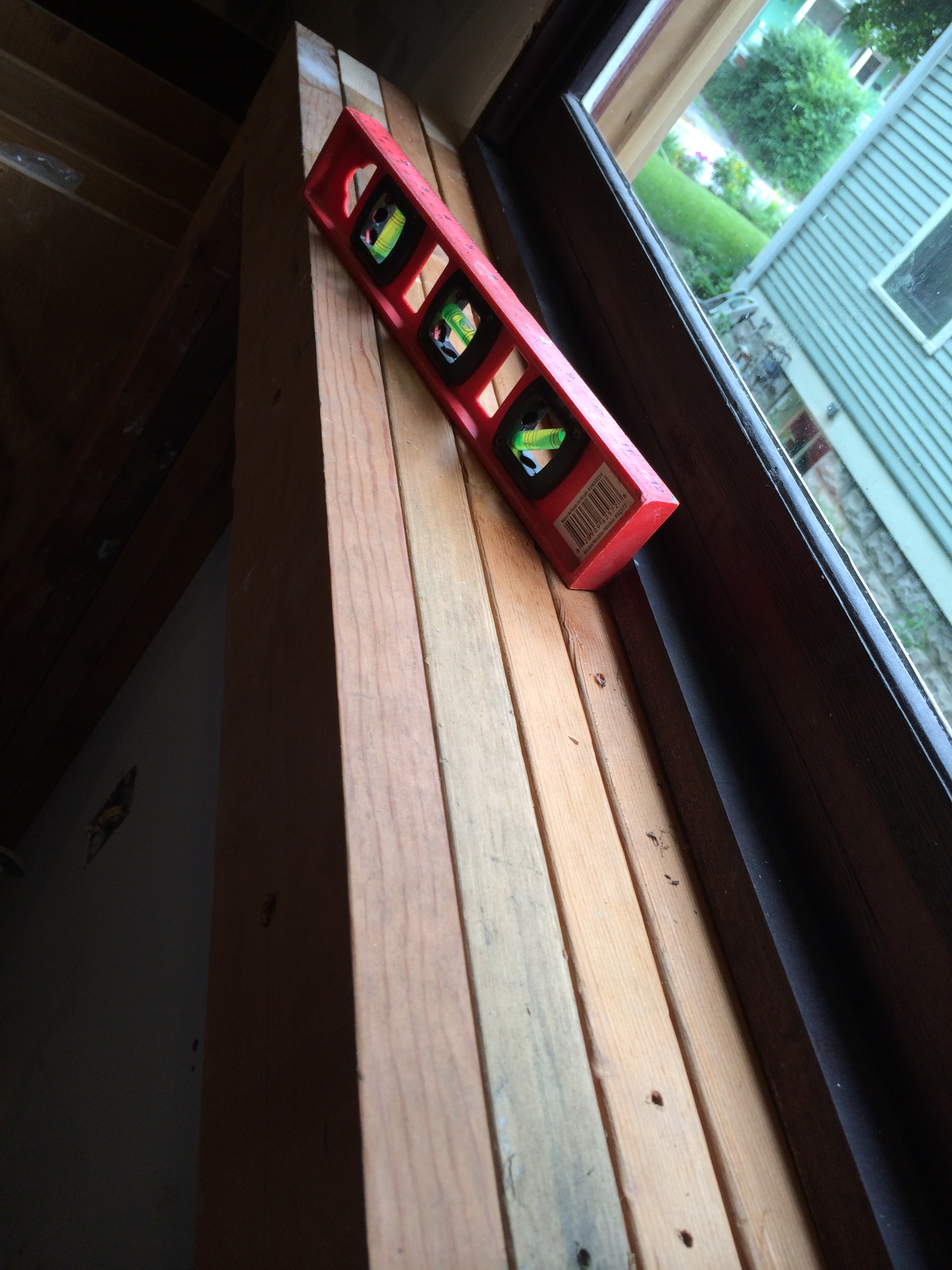
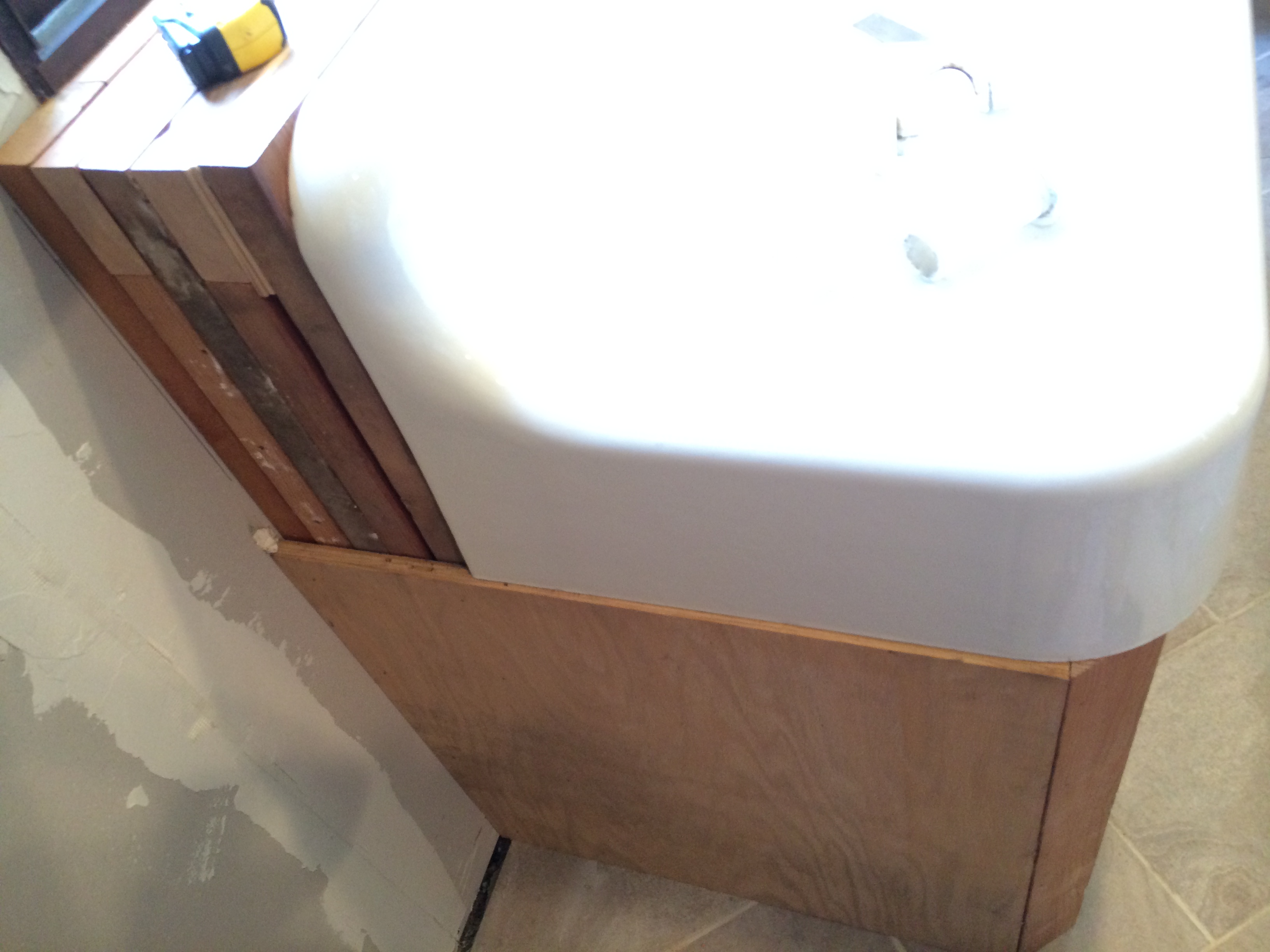
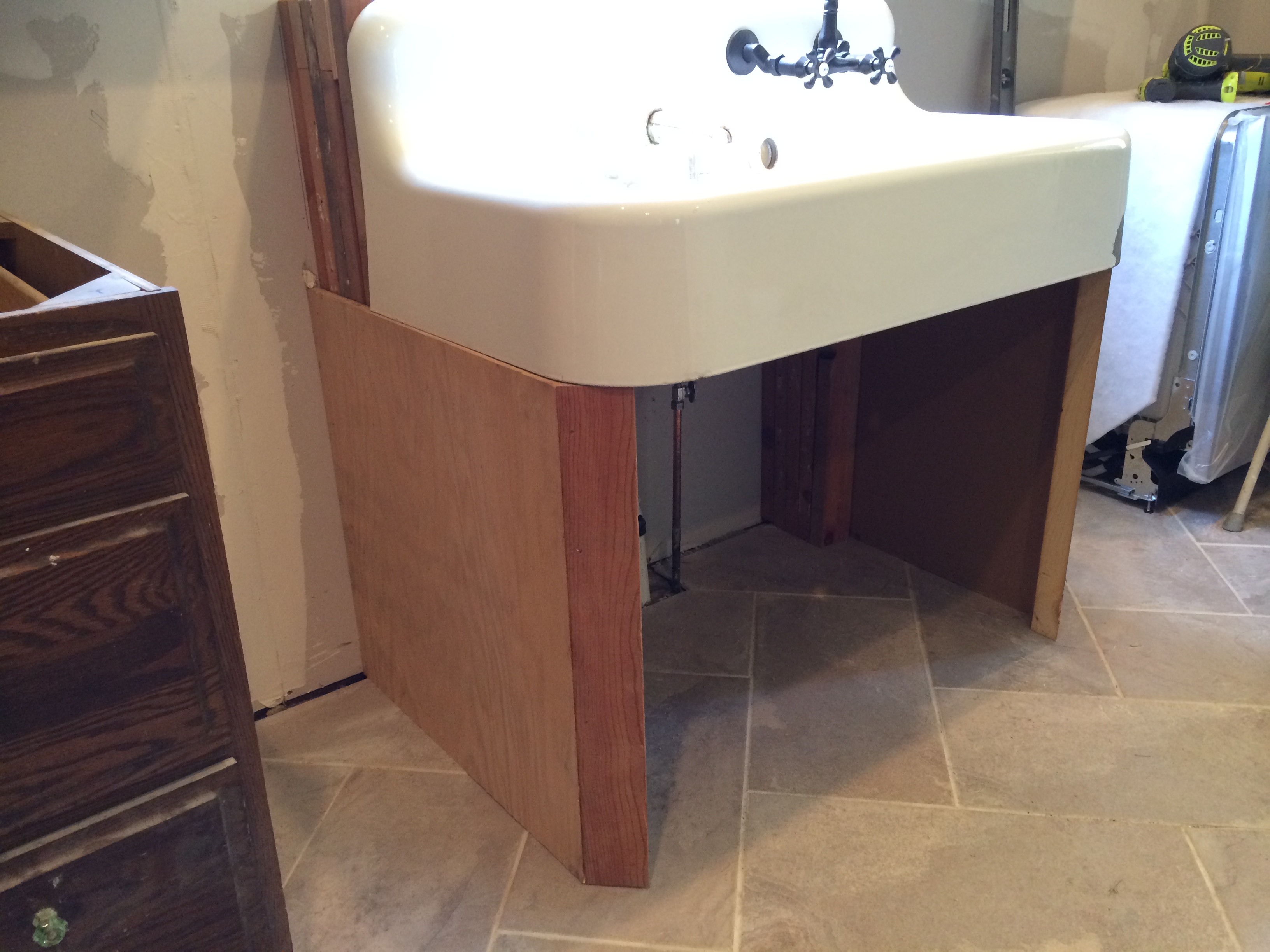
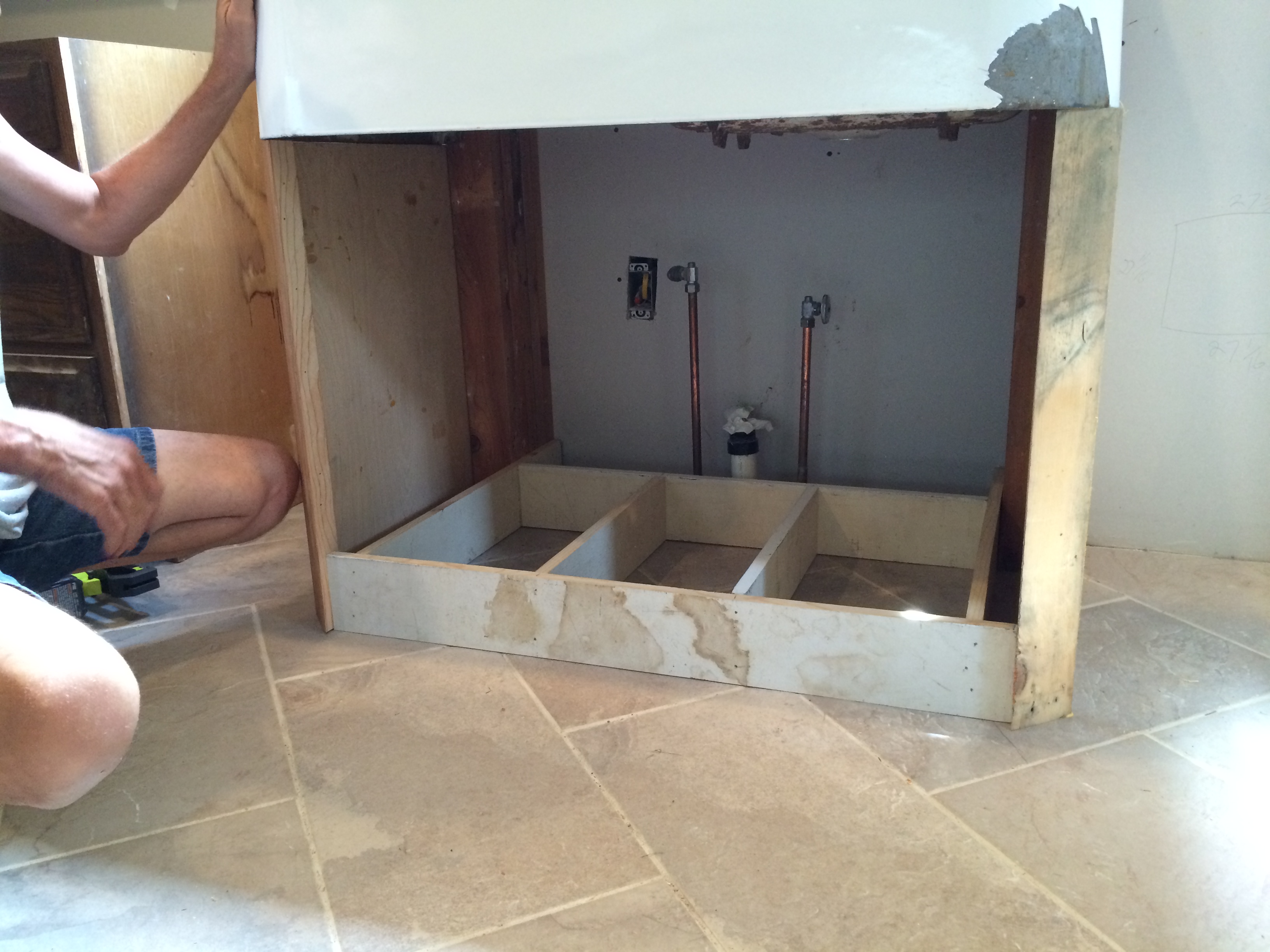
When we picked up work again we decided to try to salvage the sink  by either repairing it or covering the broken corner. First off we had to come up with a more secure way of mounting the heavy sink. Our solution was to use the strength of several 2×4’s nailed together. This time we would also add a metal bracket.

photo 1 (11) photo 2 (10) photo 3 (4)


The stack of 2×4’s not only added strength it also created an 8″ shelf that will be a pretty cool feature behind the built in backsplash of the sink. We added some sheets of plywood to create a base and finally we were ready to attempt mounting this sink again.

photo 1 (5) photo 2 (2) photo 3 (9) photo 3 (6)photo 5 (6)


So, lesson learned the hard way folks. Proper planning is essential. It’s also important not to get in a rush. We are lucky that no one’s foot was crushed as this sink came crashing down to the floor…or worse.

Now, onto researching ways to hid the blemish on the corner as well as some spots on the two upper corners where the latex paint was gouged! Any pointers are welcome!

Making old, new! Transom window installation

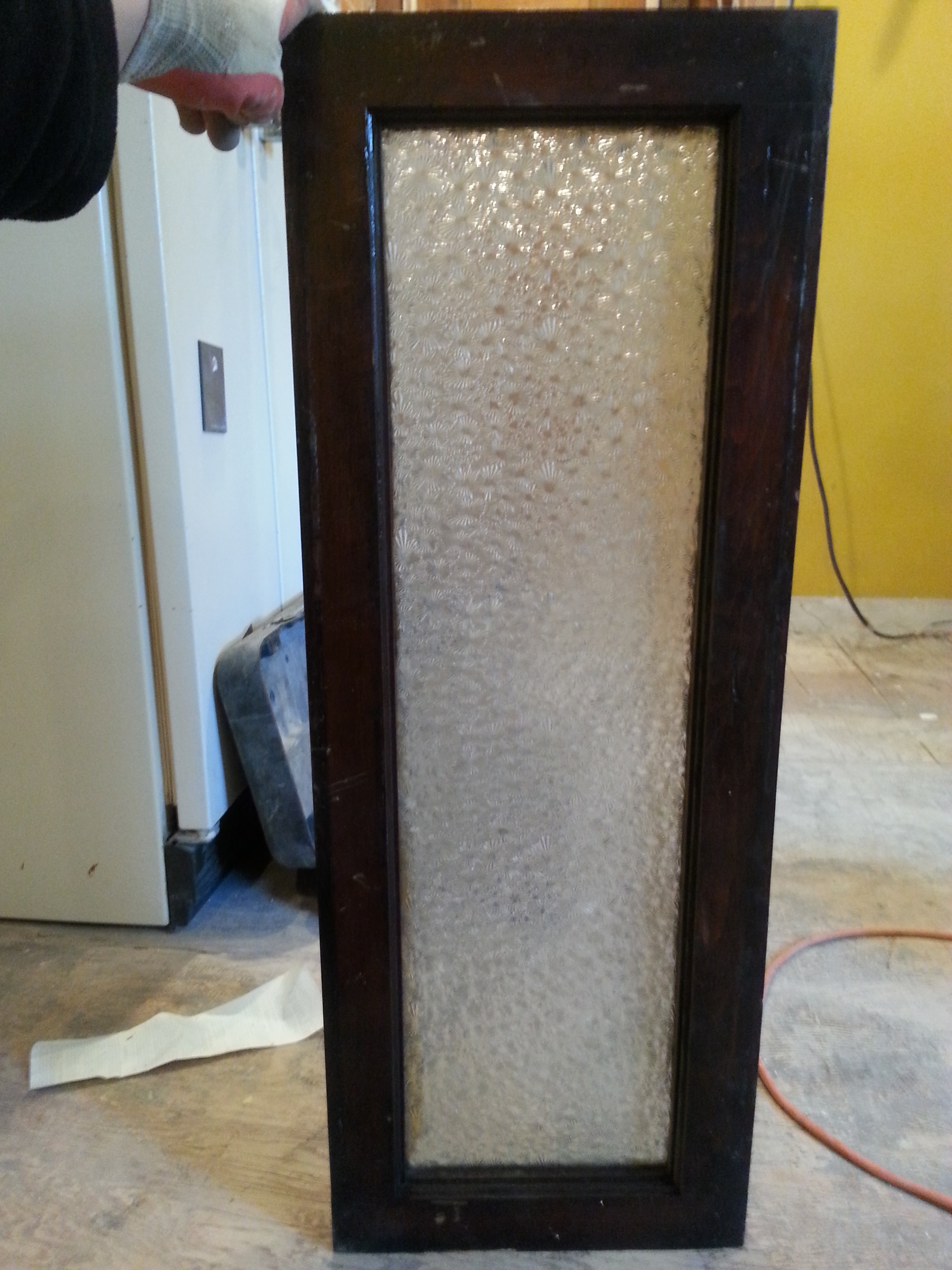
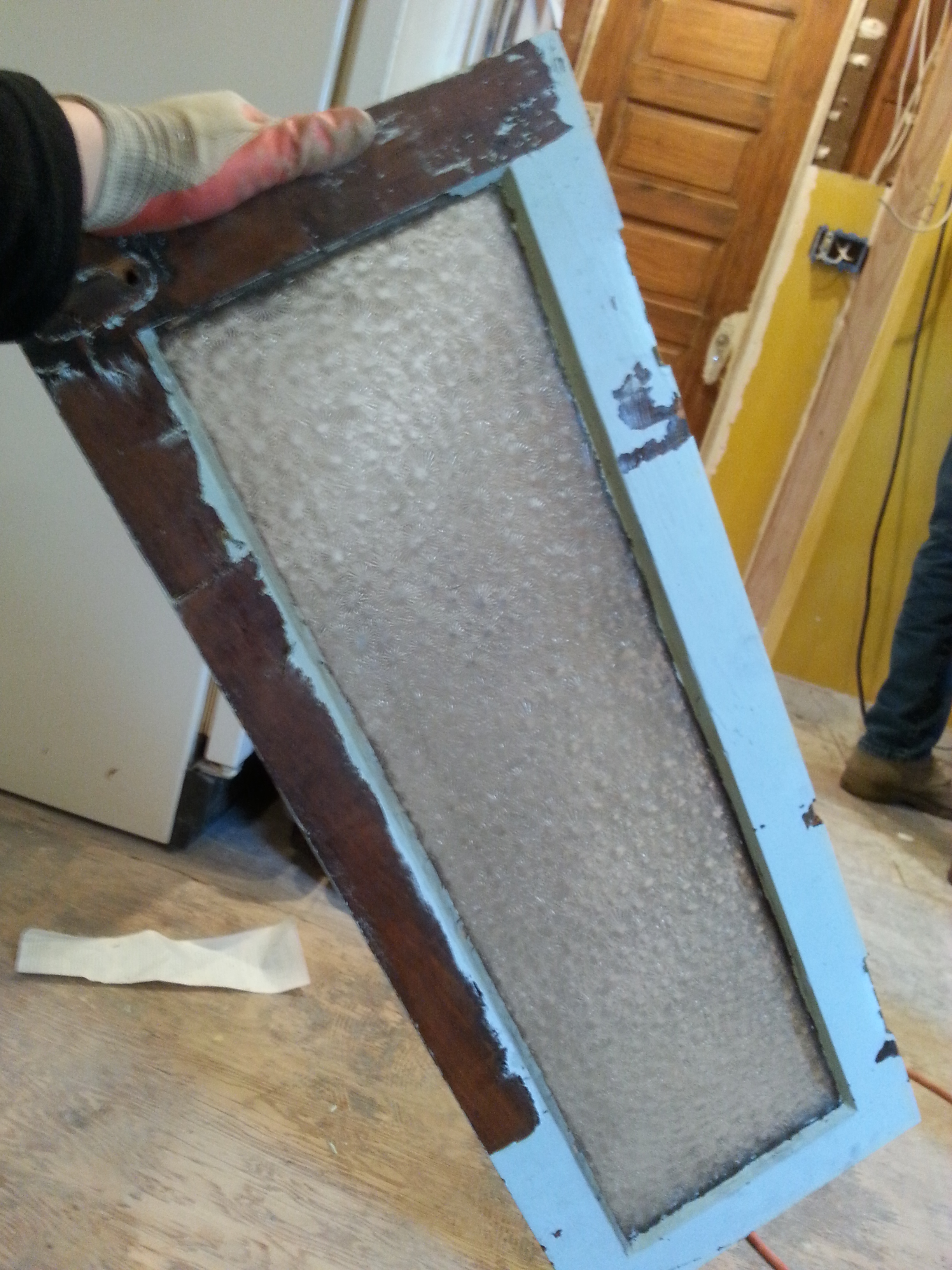
I can’t sing enough praise for this gem of a store in downtown Fort Wayne…but once again The Woodshack has supplied us with another awesome find! We picked up a transom window there that we chose to restore and install in our new kitchen. The window definitely brings a little true vintage flavor to our design and echoes the original back door of the house; we discovered the door was originally topped off by a transom window when we were tearing out the north wall of the house.

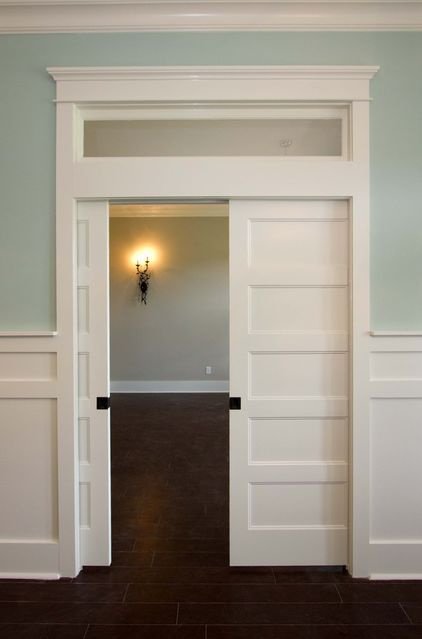
In case you don’t know, a transom window looks a little something like this:

transom ex


Traditionally, in historical homes like ours, the small window above a door could be opened in order to allow air to flow through the house.  We have an awesome leaded glass transom window above our front door. Even though it is non-functioning (someday we’ll restore it!!!) it is still an awesome feature!

We wanted to incorporate the same historical detail into our design plan and so we picked up this beauty.

20140223_105205

20140223_105157

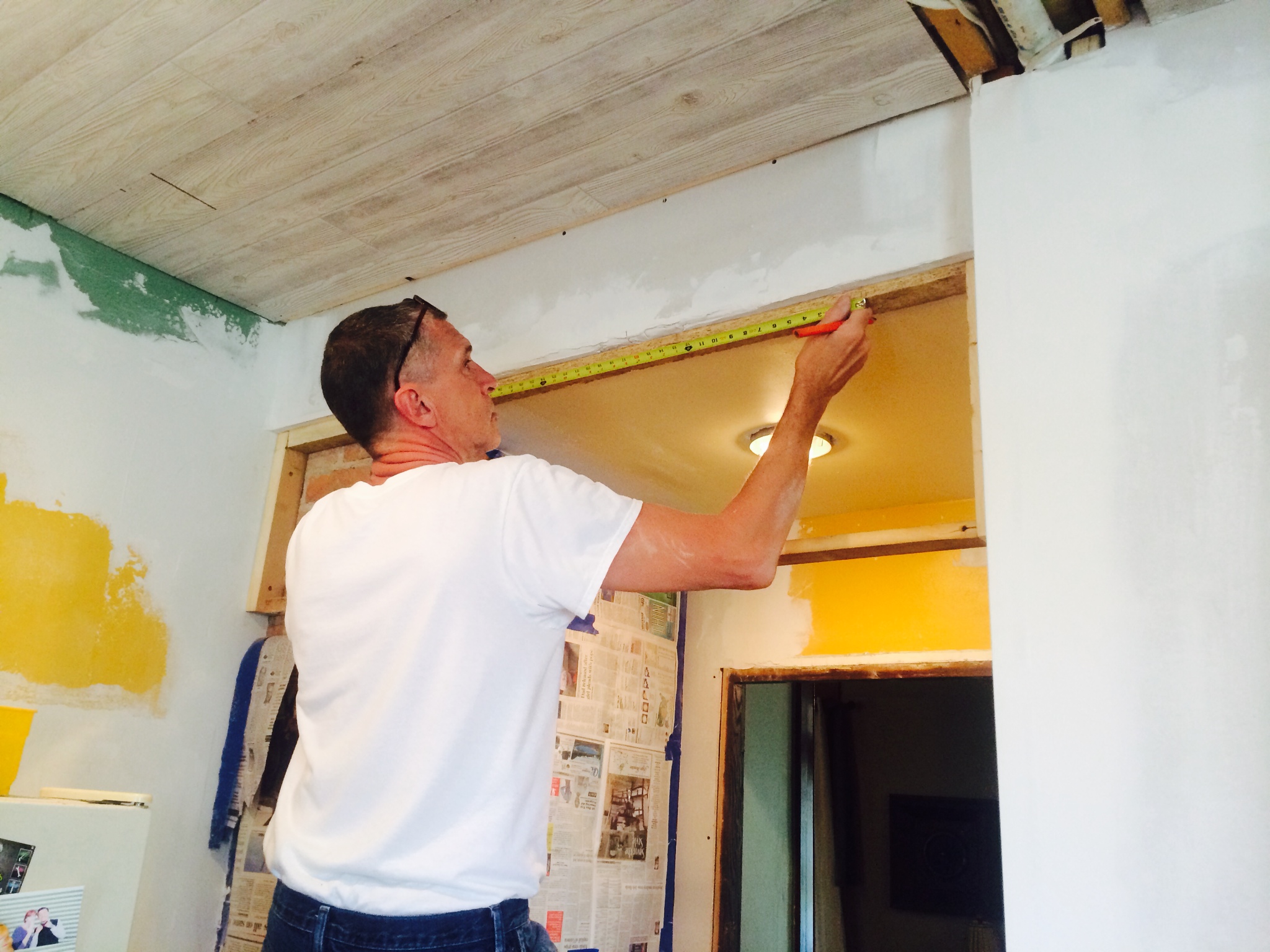
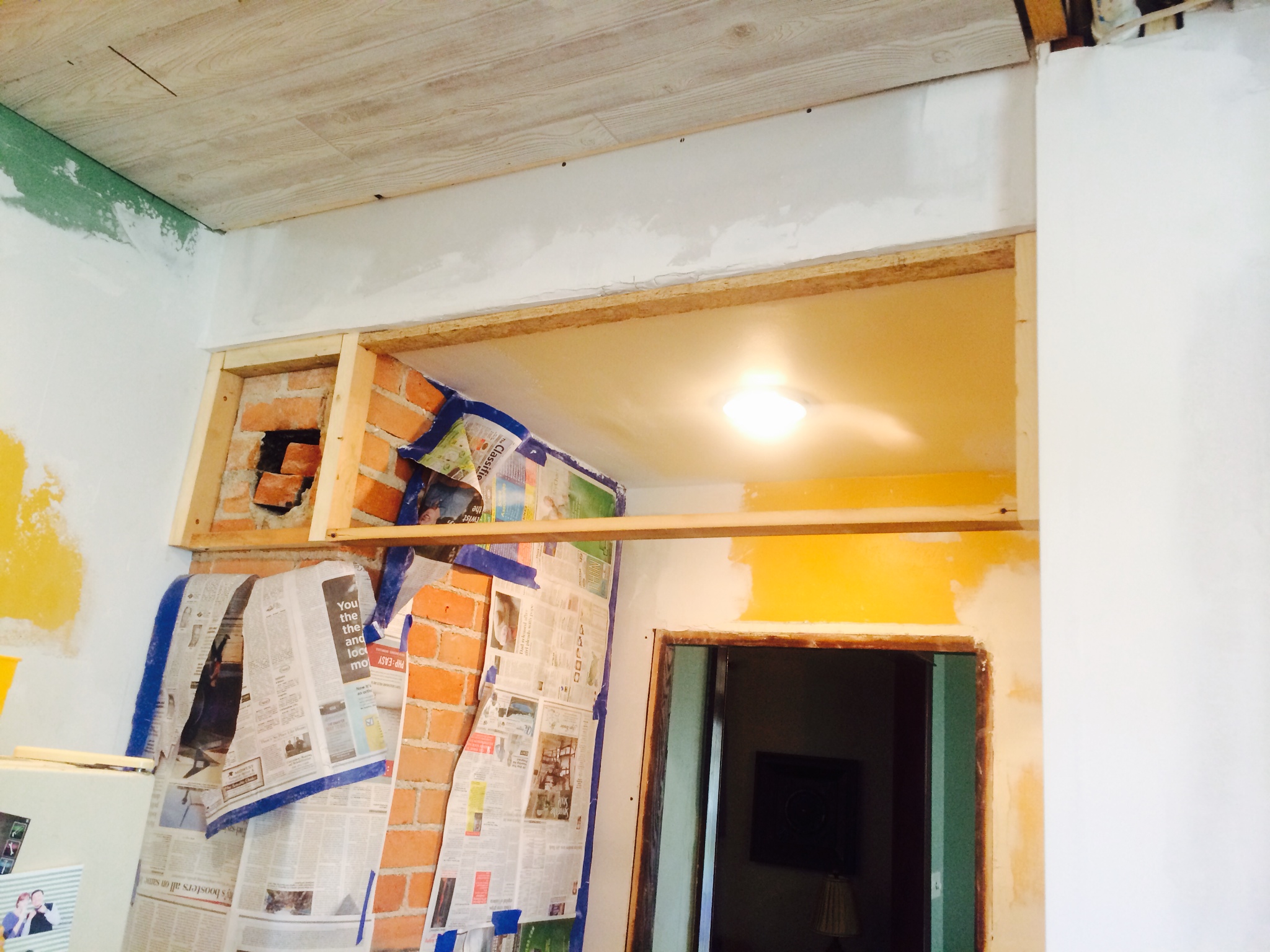
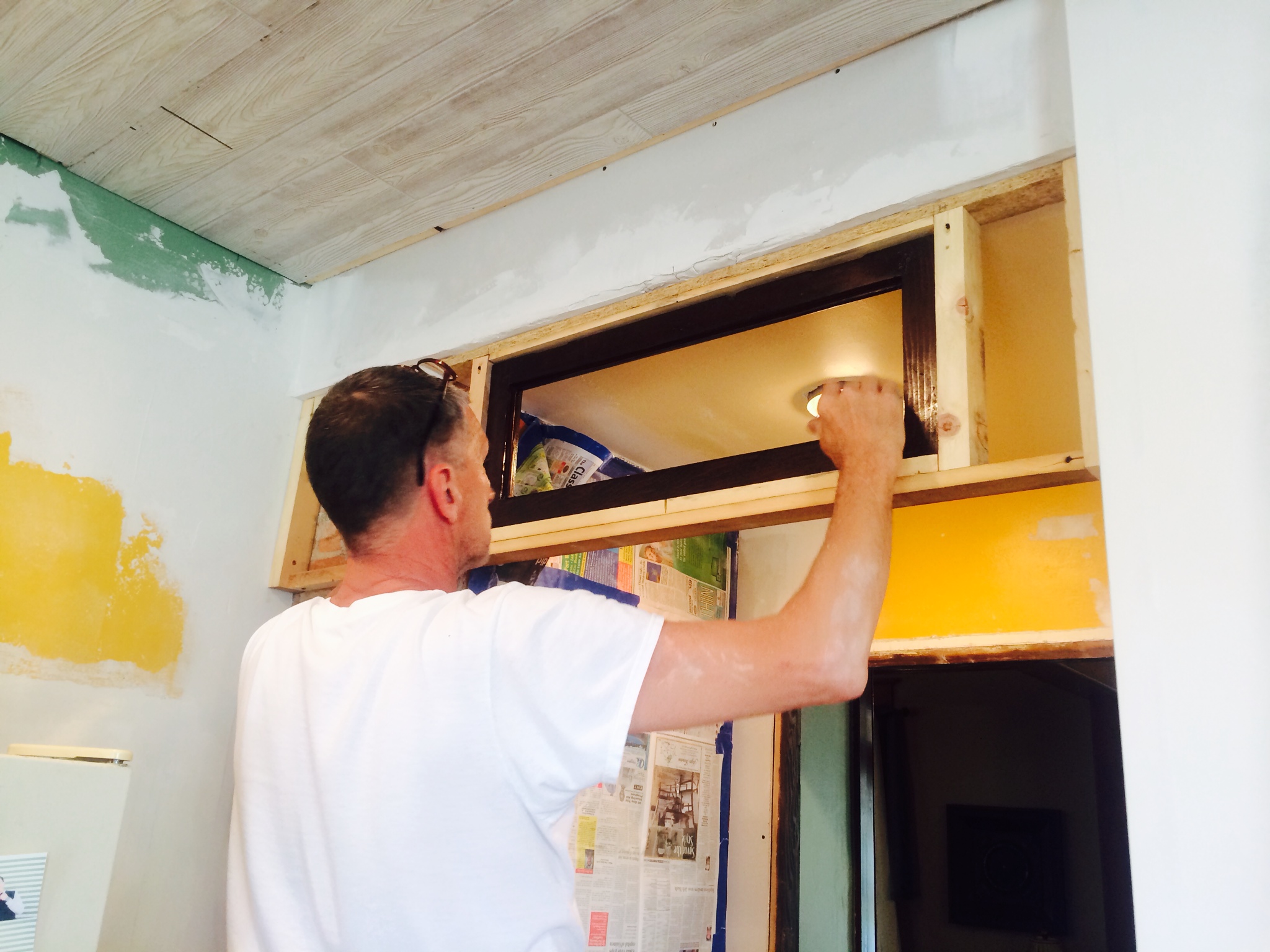
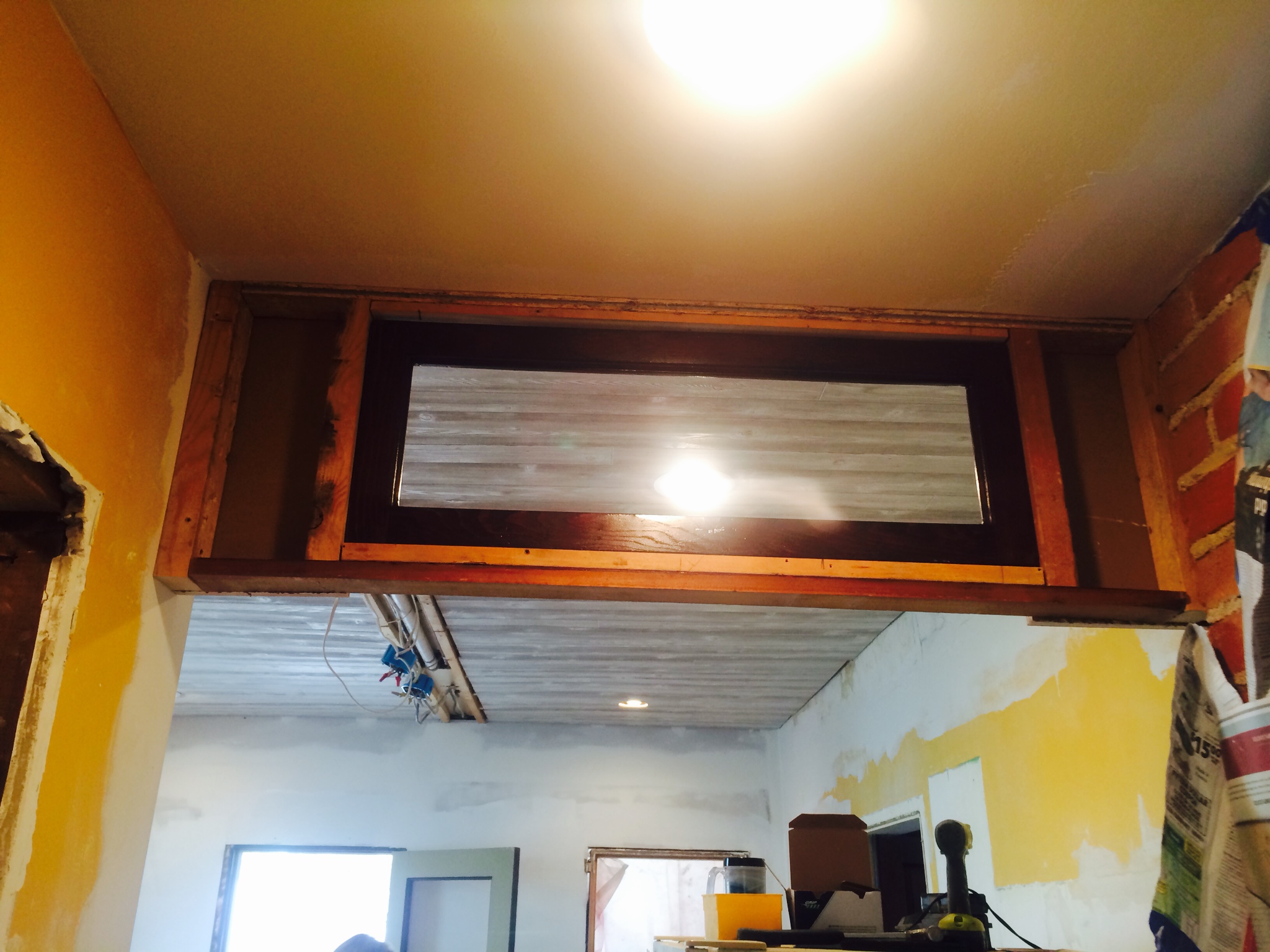
While my dad worked to  frame in a spot for the window in the entryway of the kitchen I  got to work stripping and staining the window.
photo 1 (3) photo 2 (10)


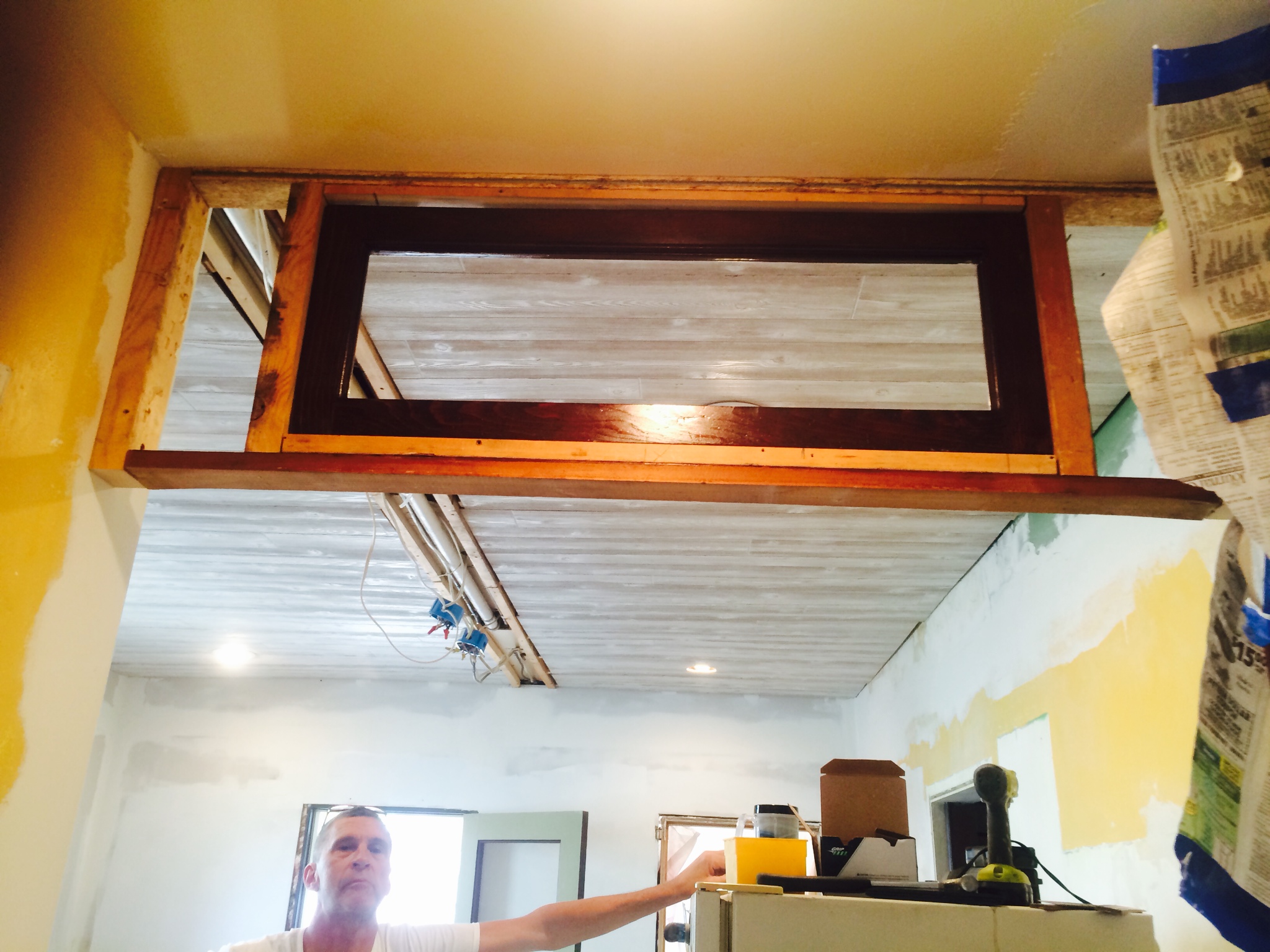
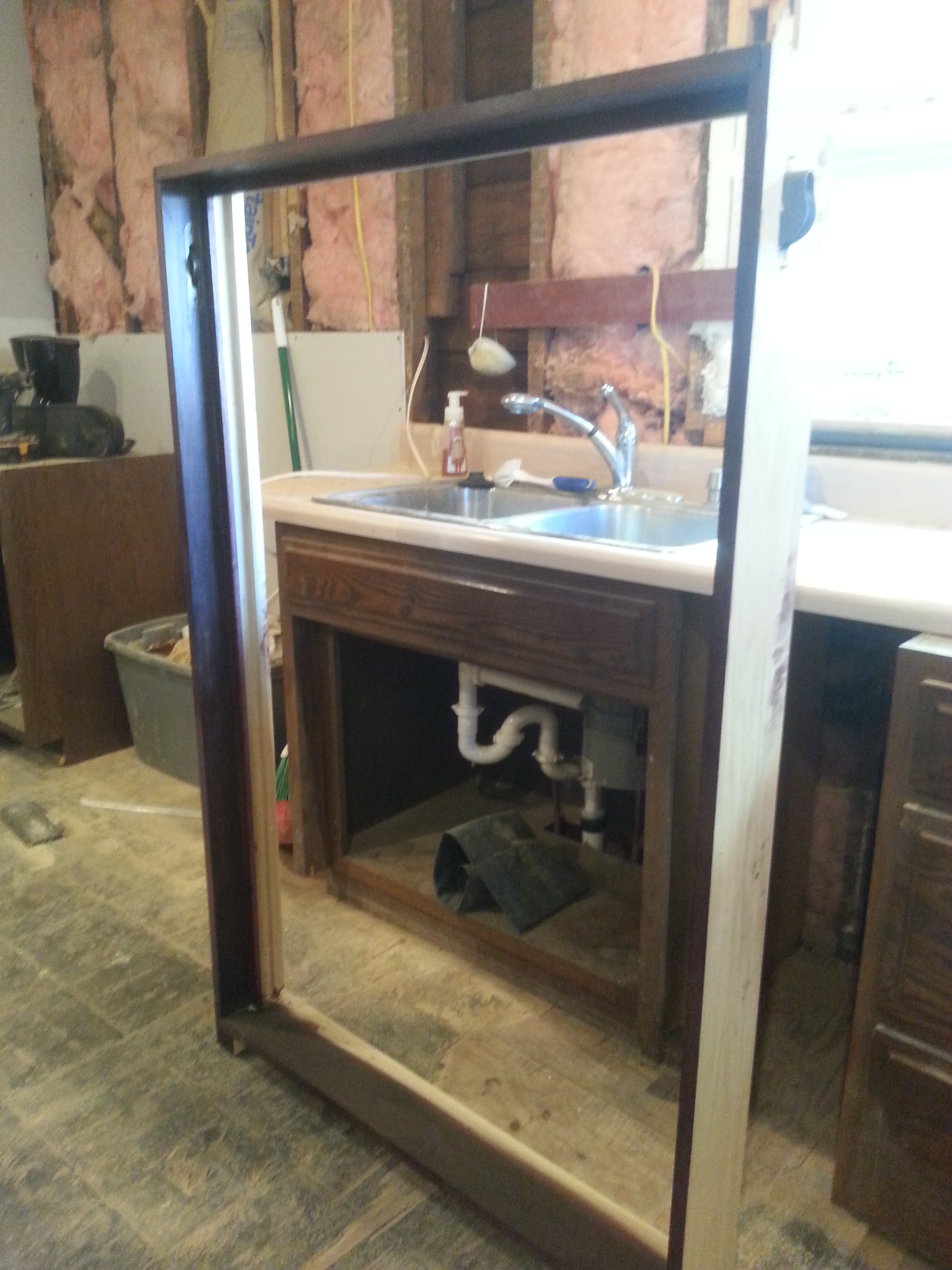
After the stain had completely dried we secured the window in place. We removed the glass so that it could be cleaned well and the window could be reglazed.


photo 1 (4) photo 3 (9)


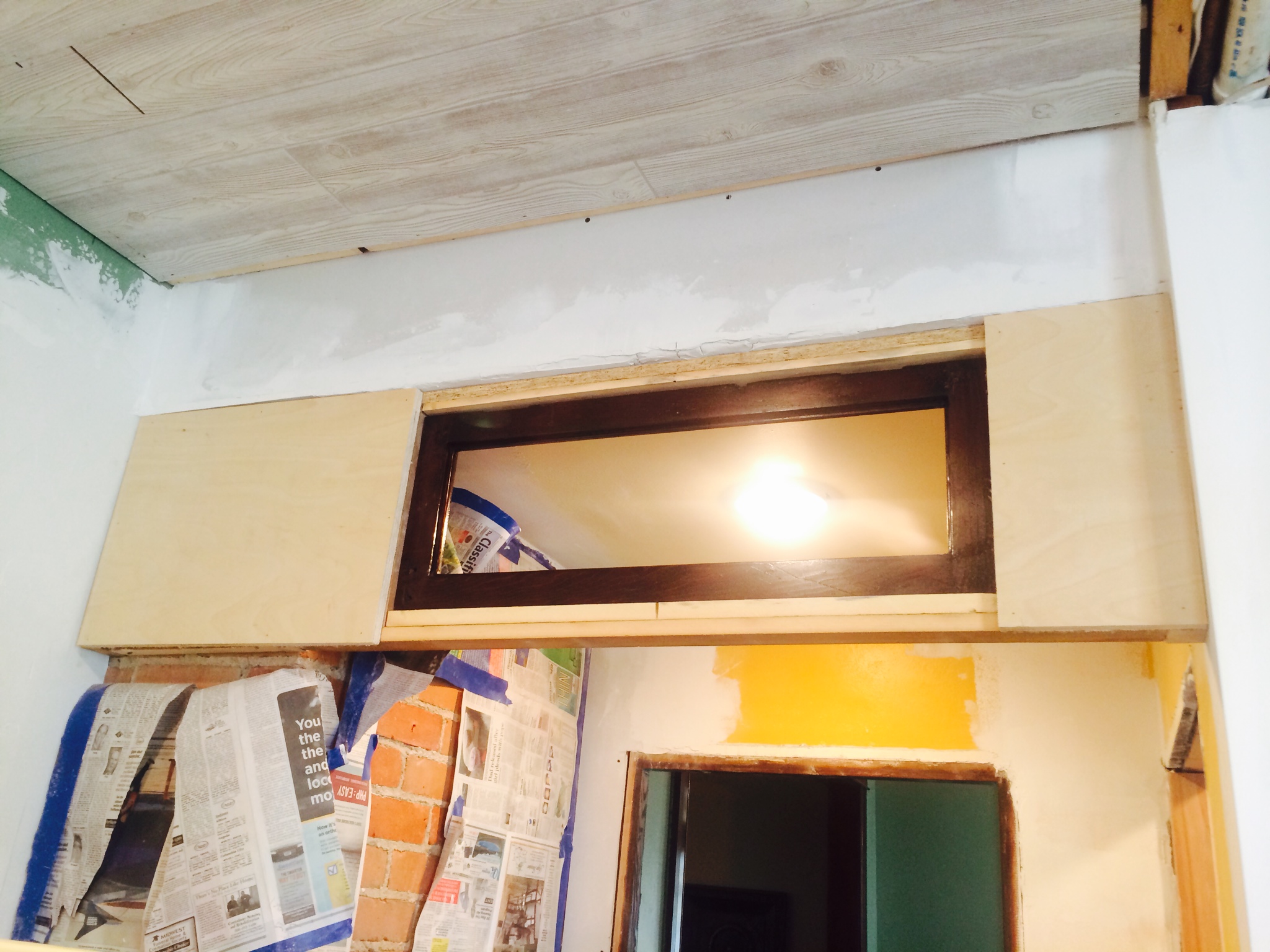
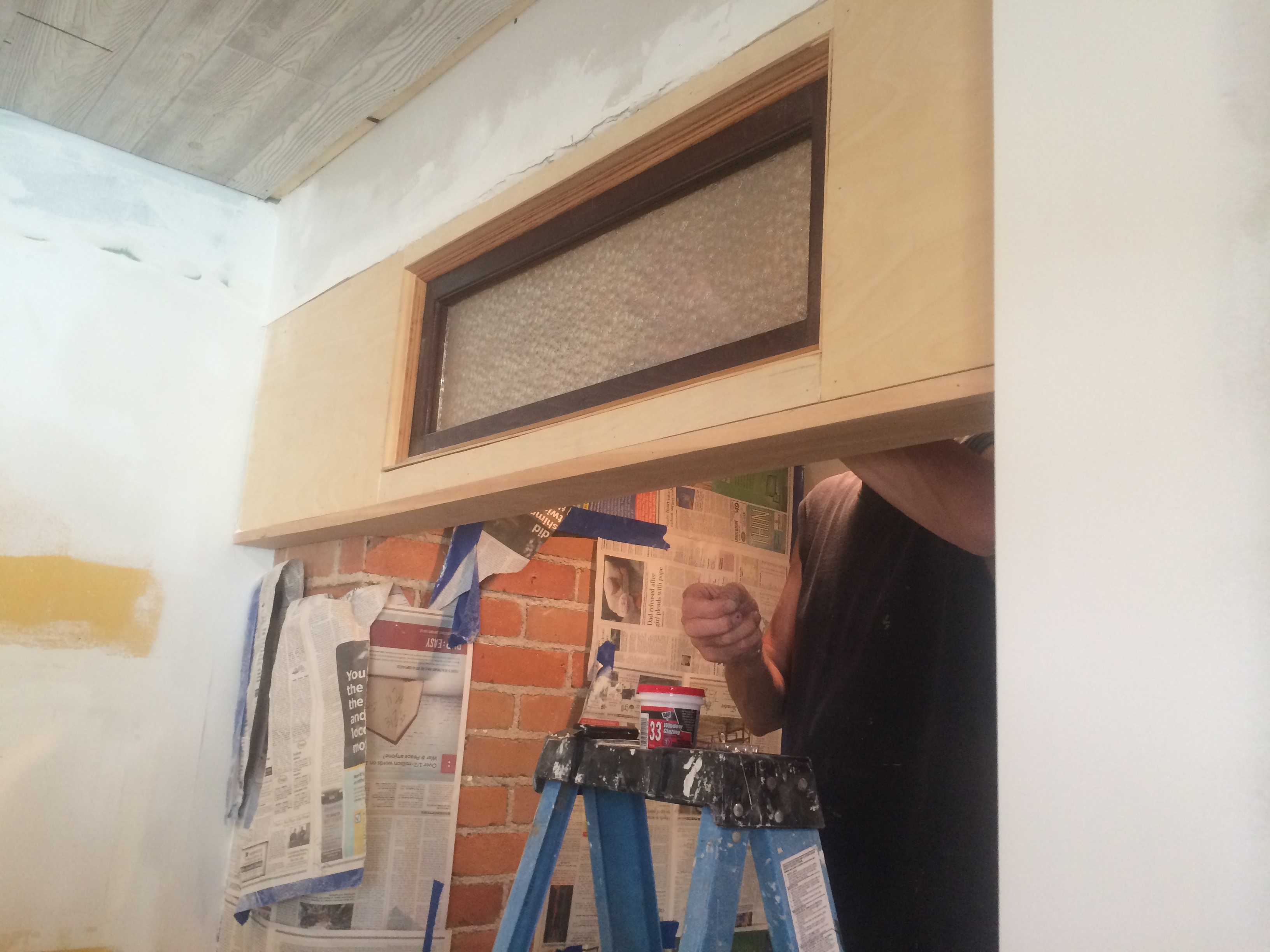
My dad then started covering the window frame with plywood so we could create the paneled look in our design.

photo 2 (4)photo 3 (4)

After we covered the frame with plywood we placed the glass back in the window and securing it with glazing putty.

photo 3 (12)

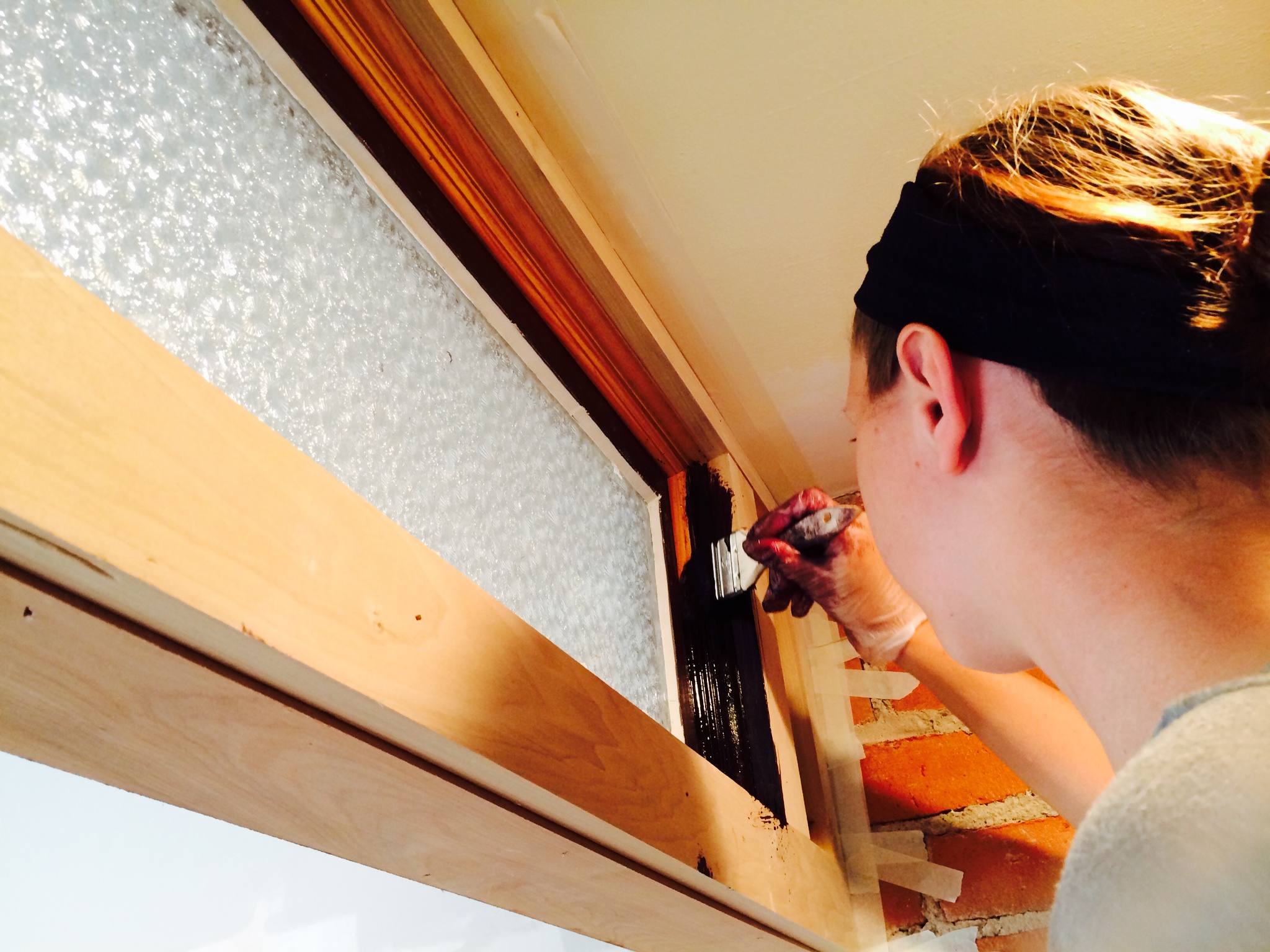
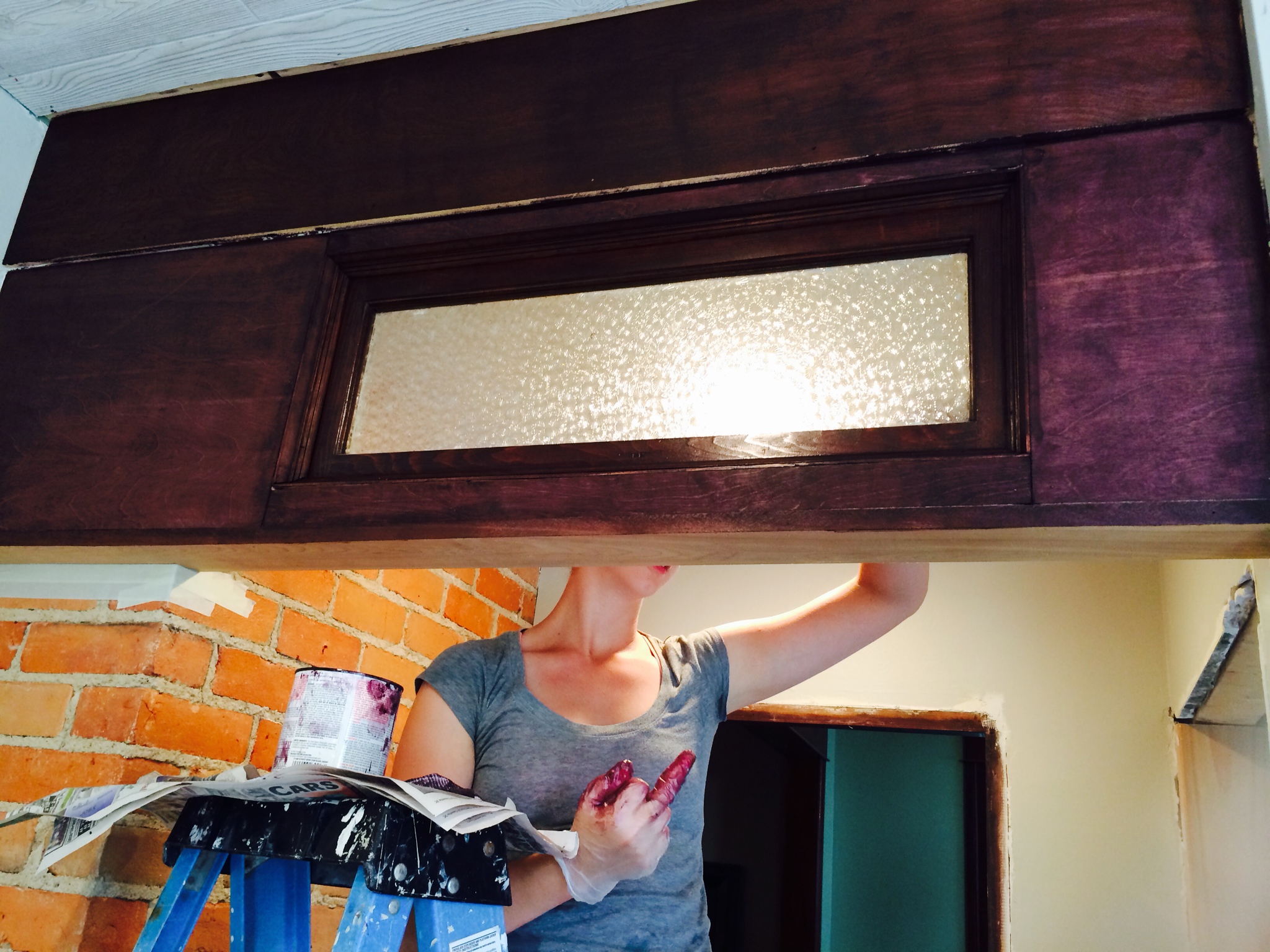
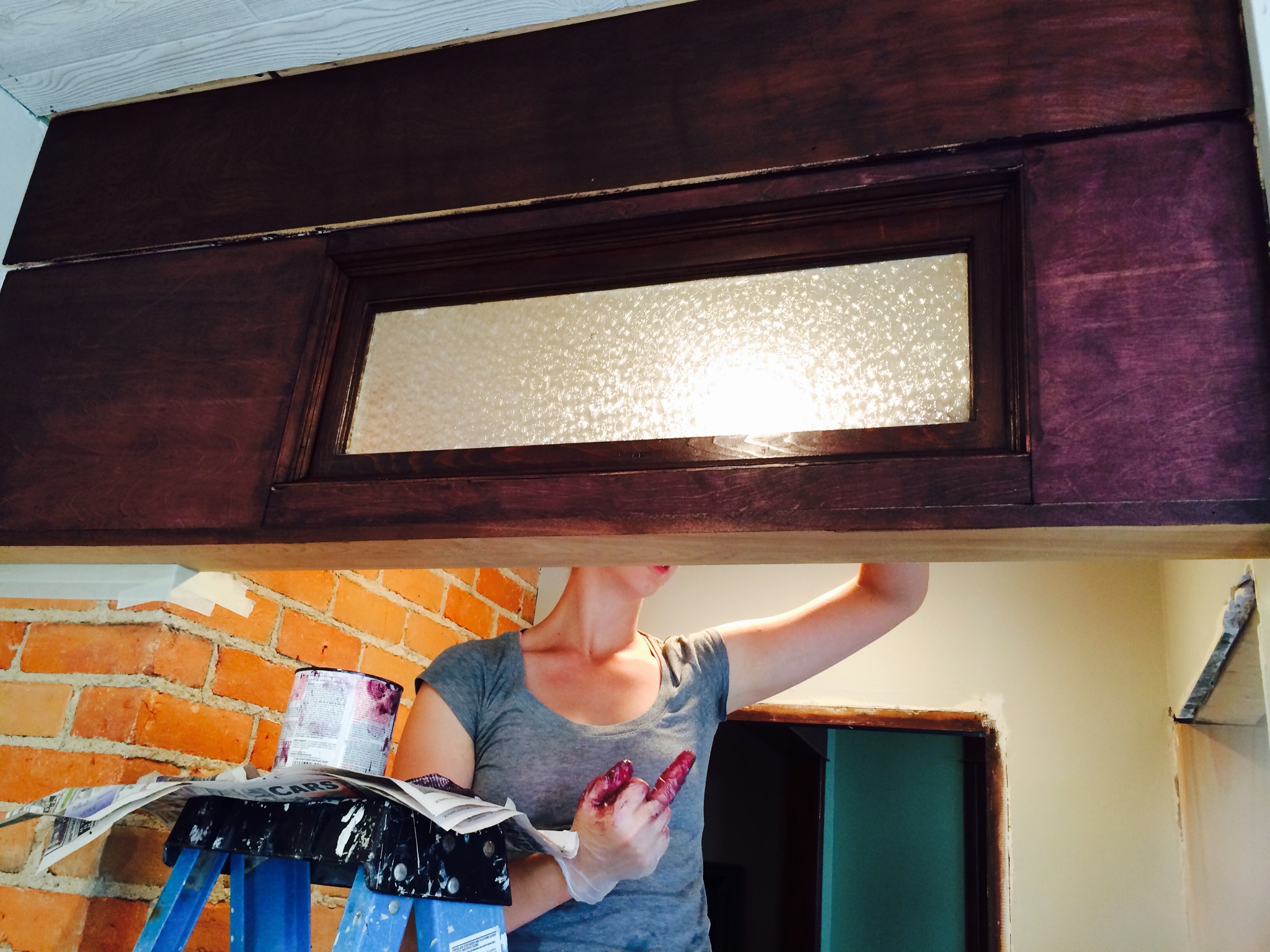
Once the glass was secure I stained the rest of the bare plywood and trim pieces.

photo 5 (14) photo 3 (18)

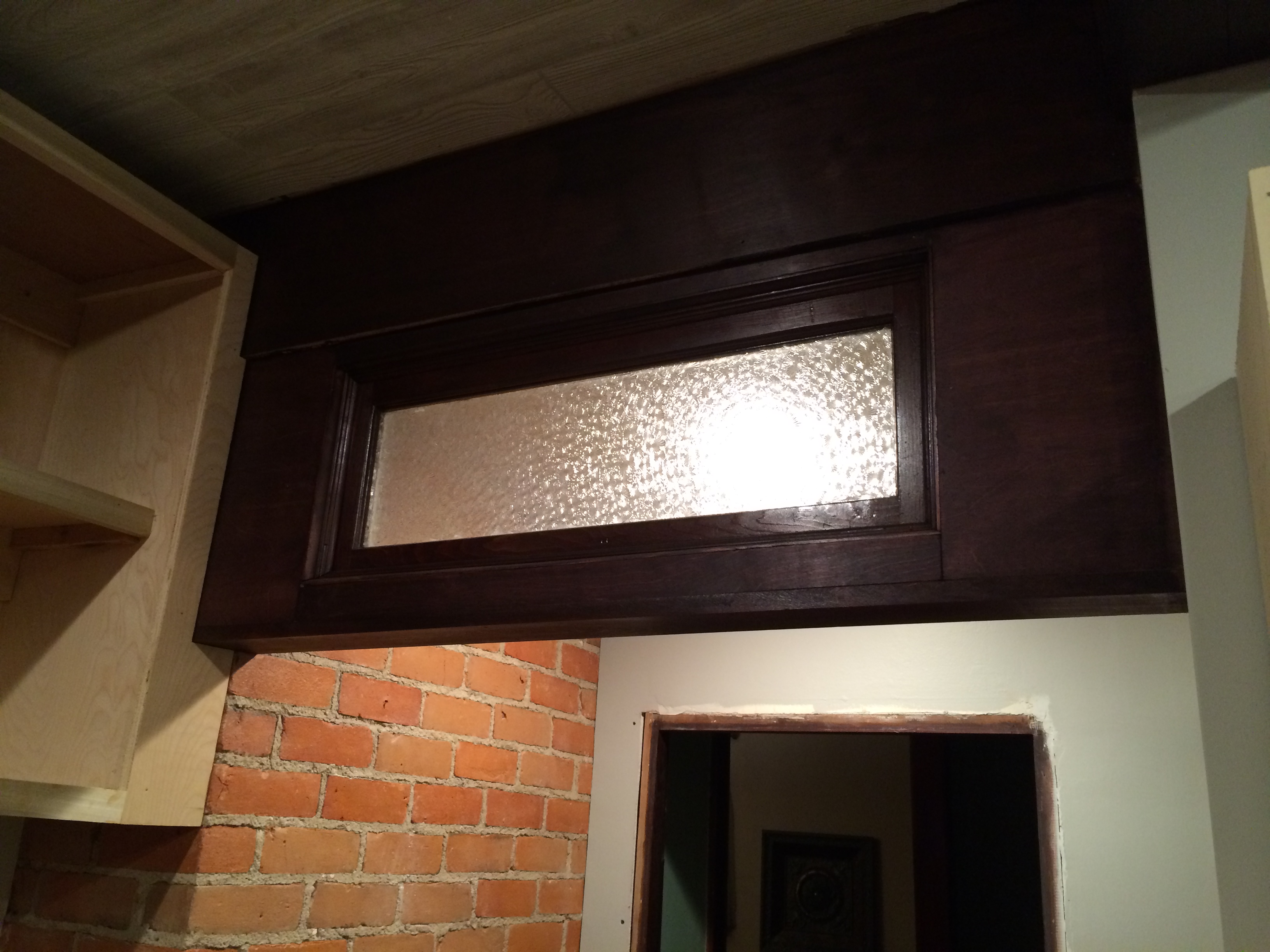
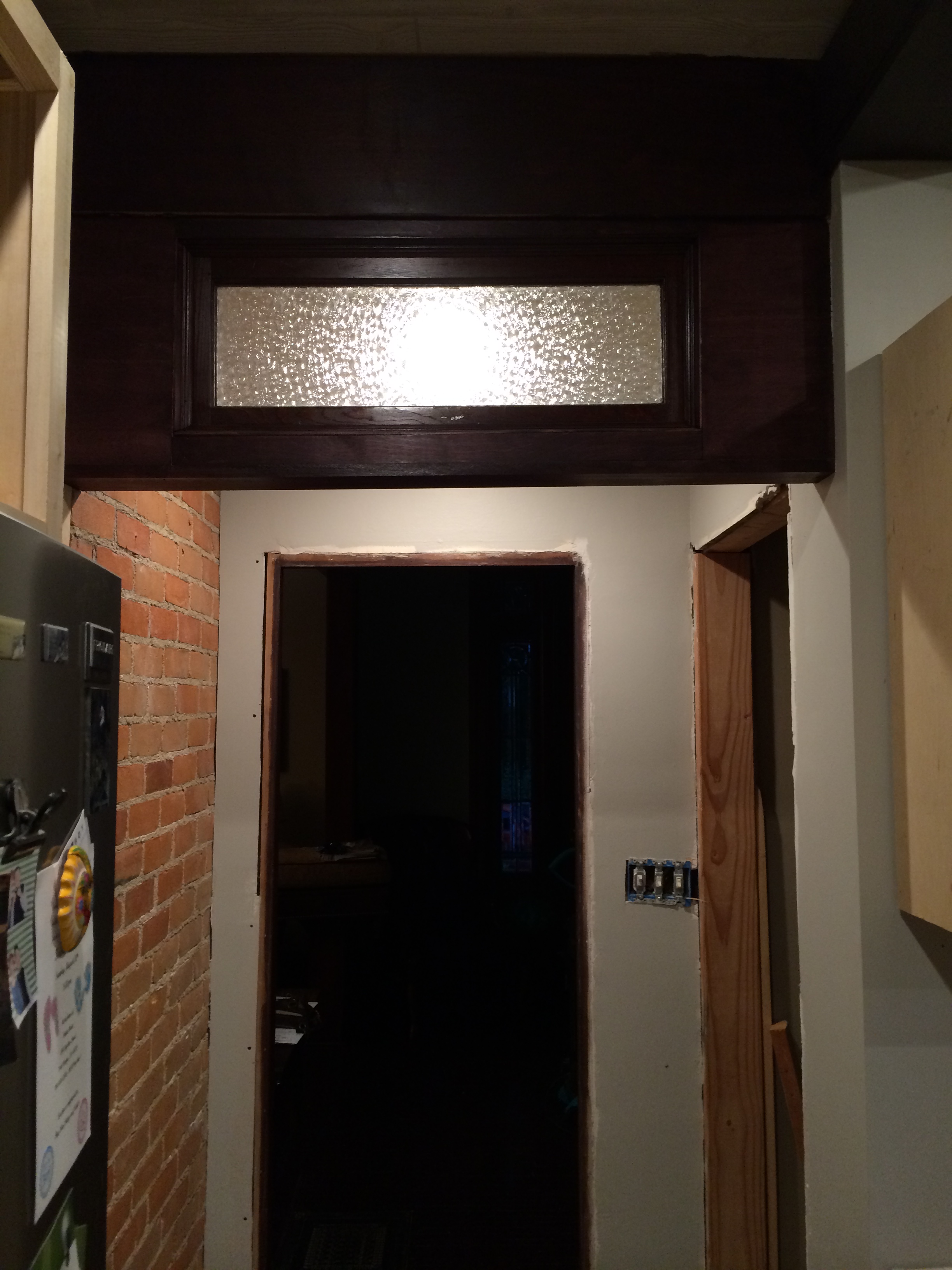
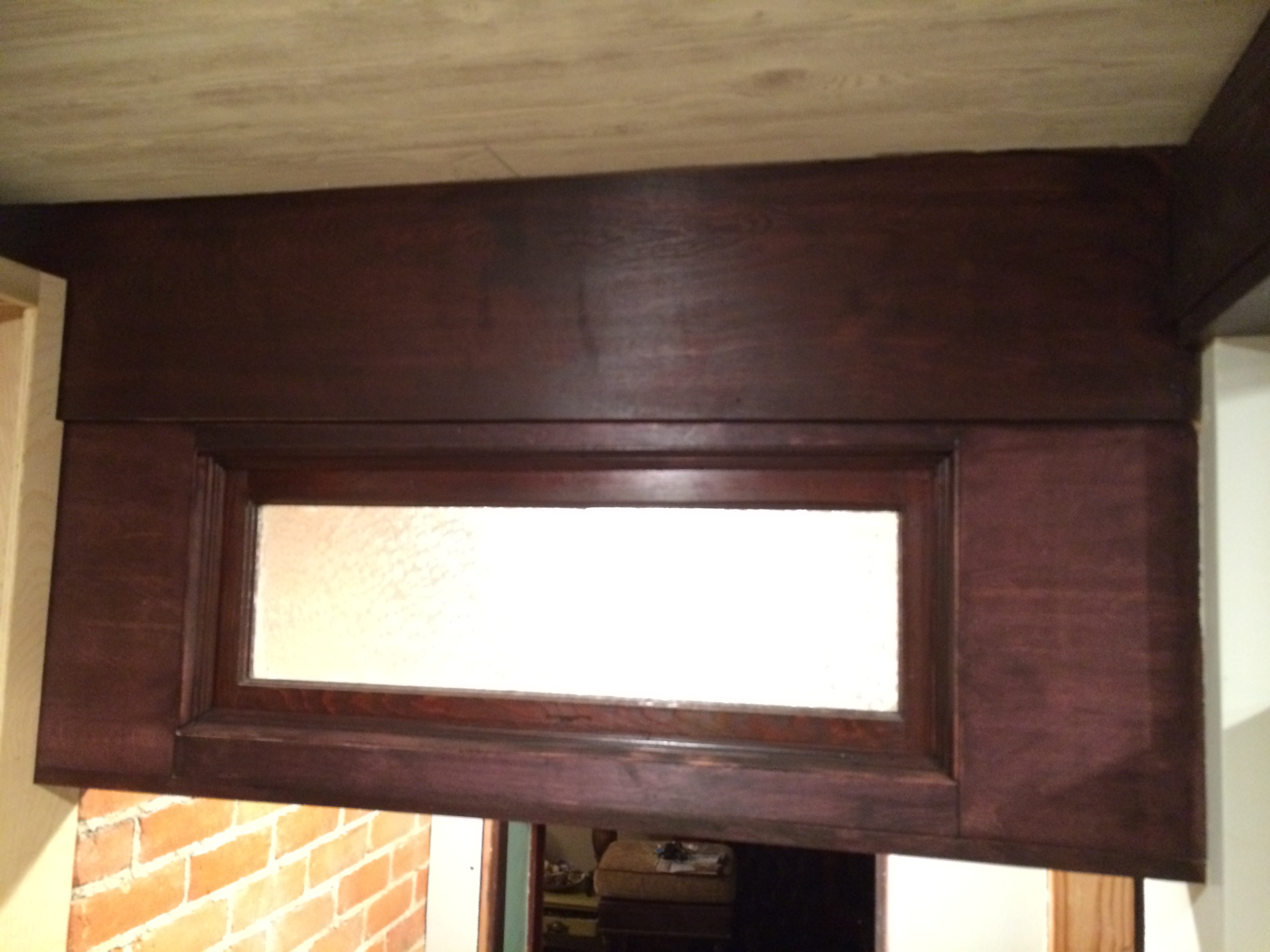
The end result looks great! The window looks like it belongs in the house and it really adds some vintage charm to our remodel project!

photo 2
photo 3 photo 4

The light looks beautiful coming through the seeded glass of the window. I can’t wait to see how this baby is going to shine once I am ready to polyurethane everything!


Powder Room Update

One of the projects that I have been most excited for during this season of renovation is the 1st floor powder room. Not having to run up and down stairs multiple times a day will be so nice. Of course, this is probably one of our biggest projects as well and the horrible state of the space that we started with didn’t make things any easier on us.

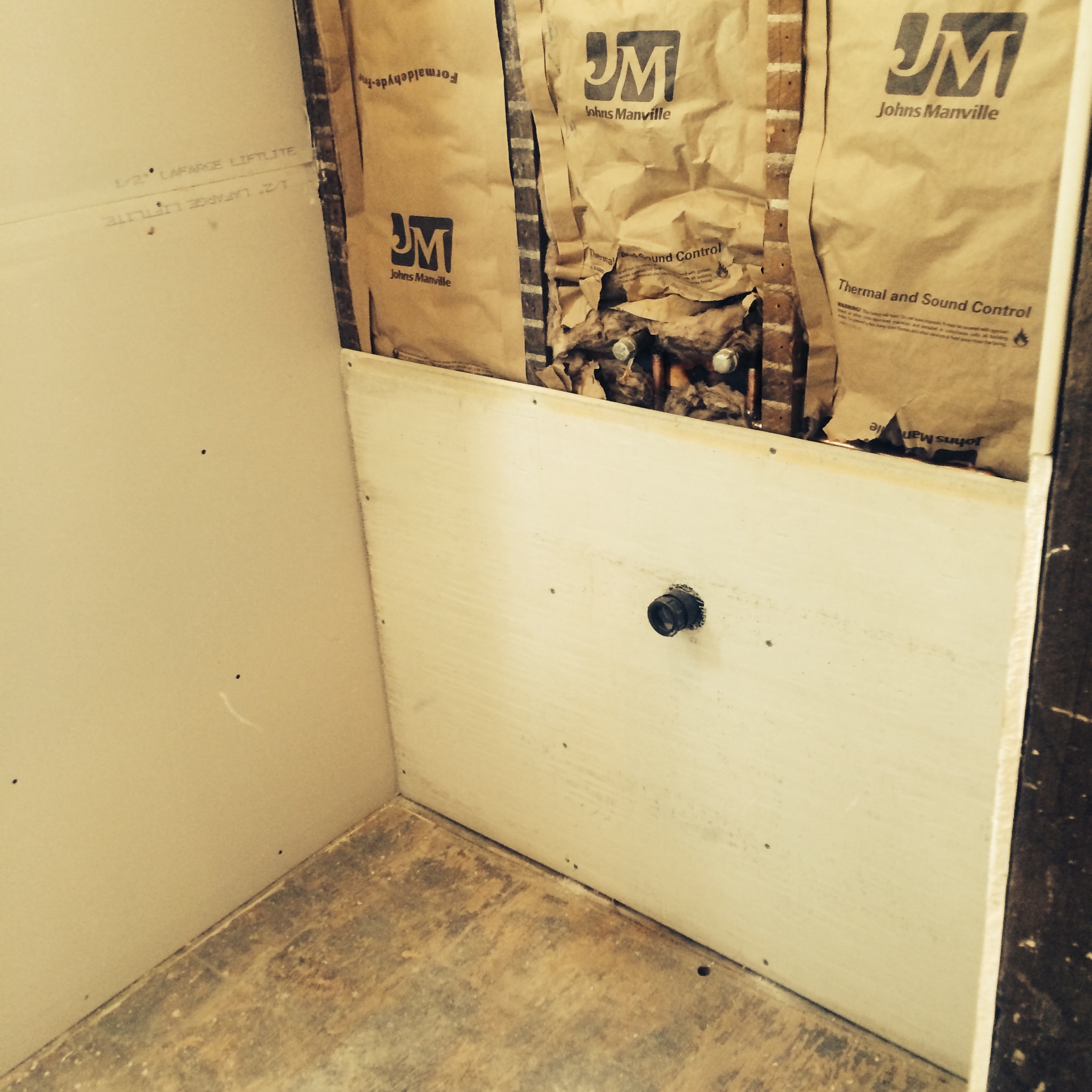
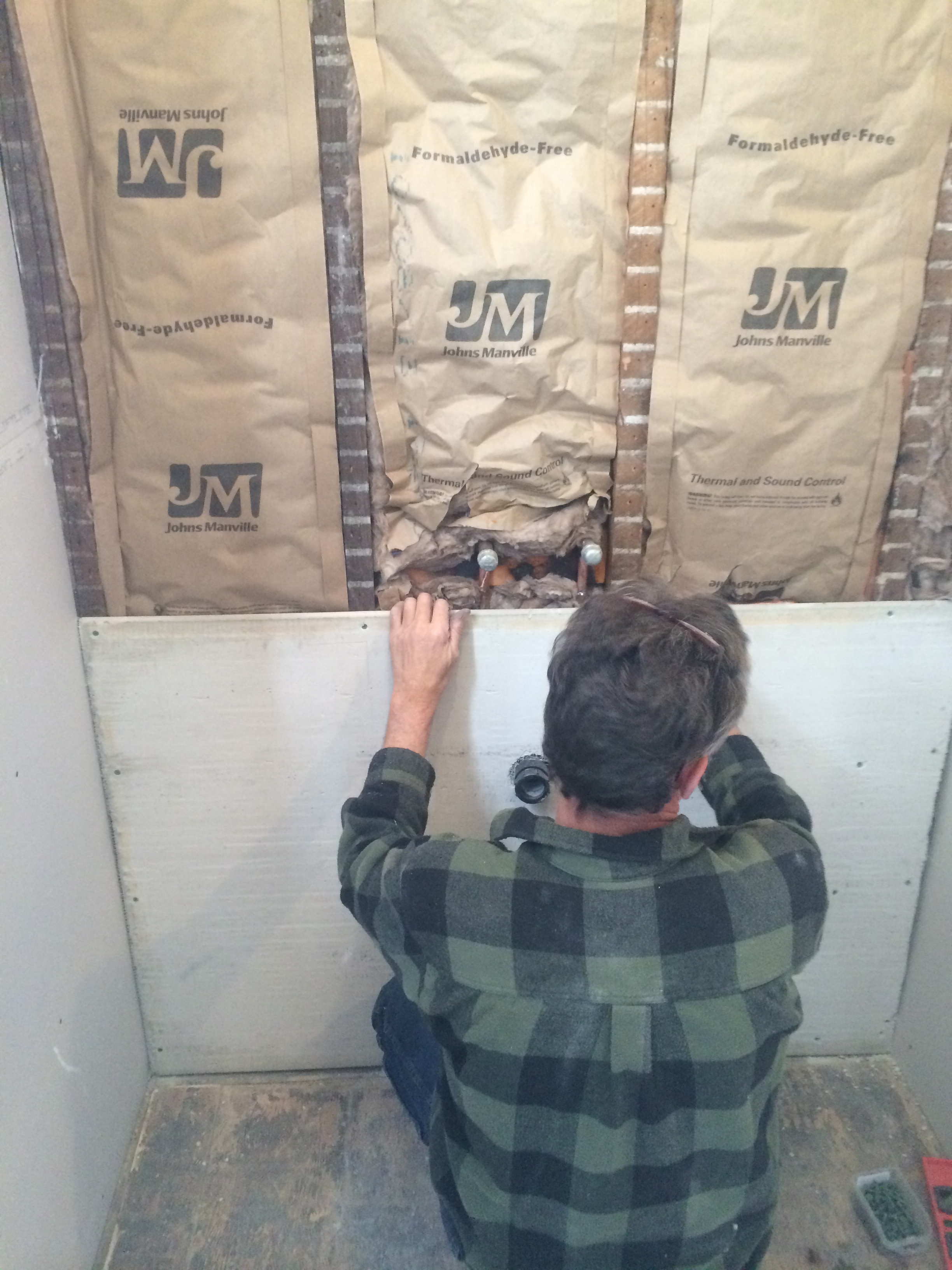
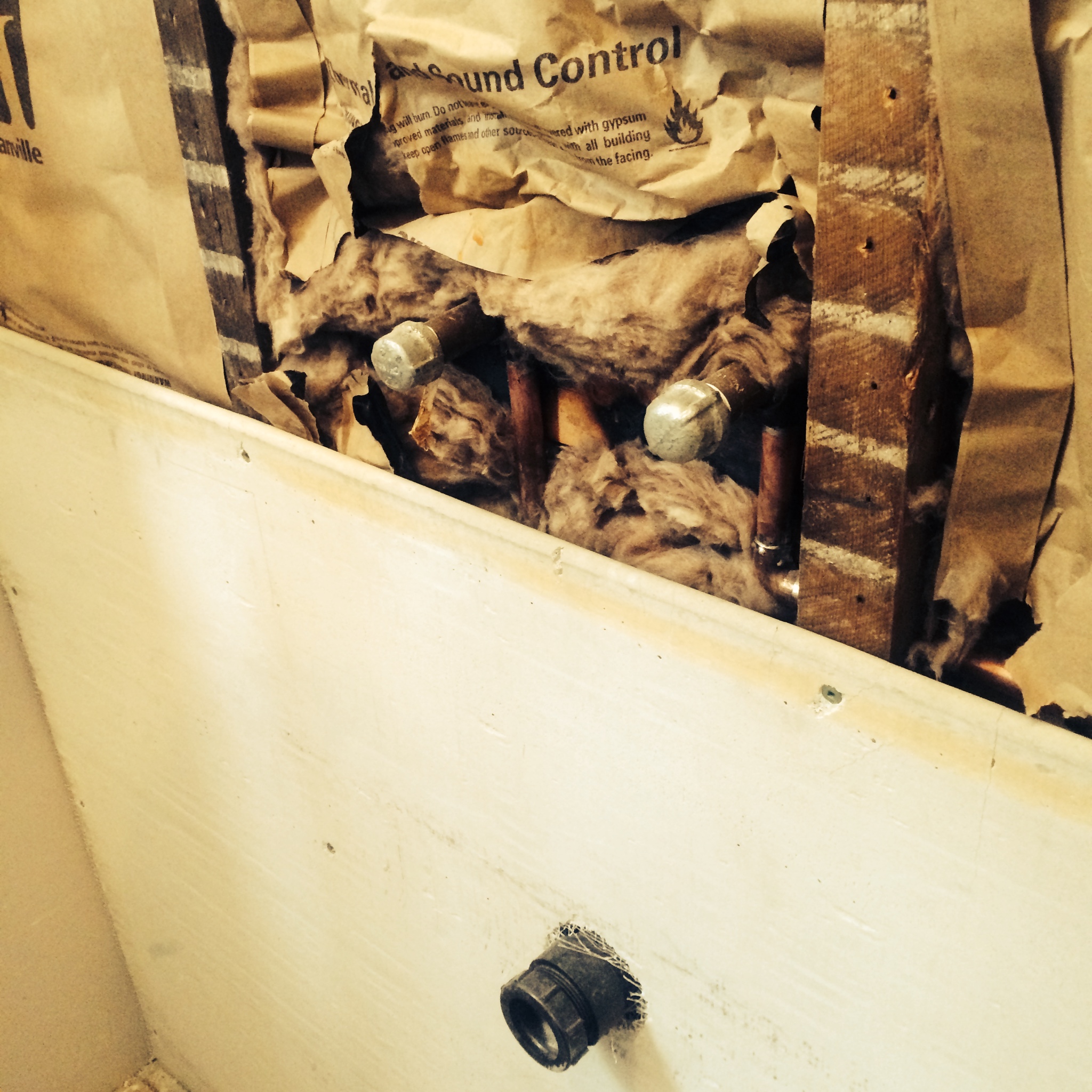
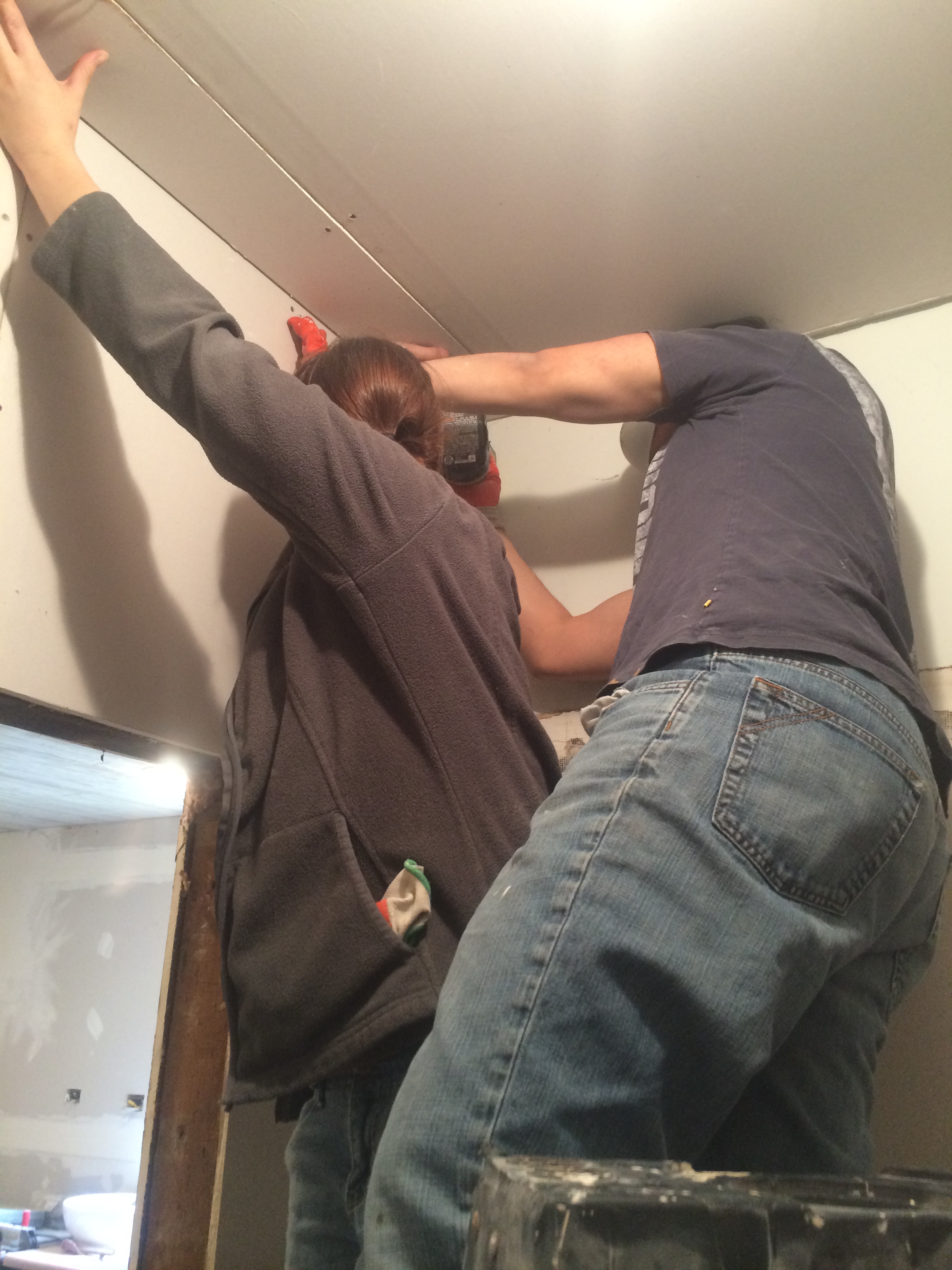
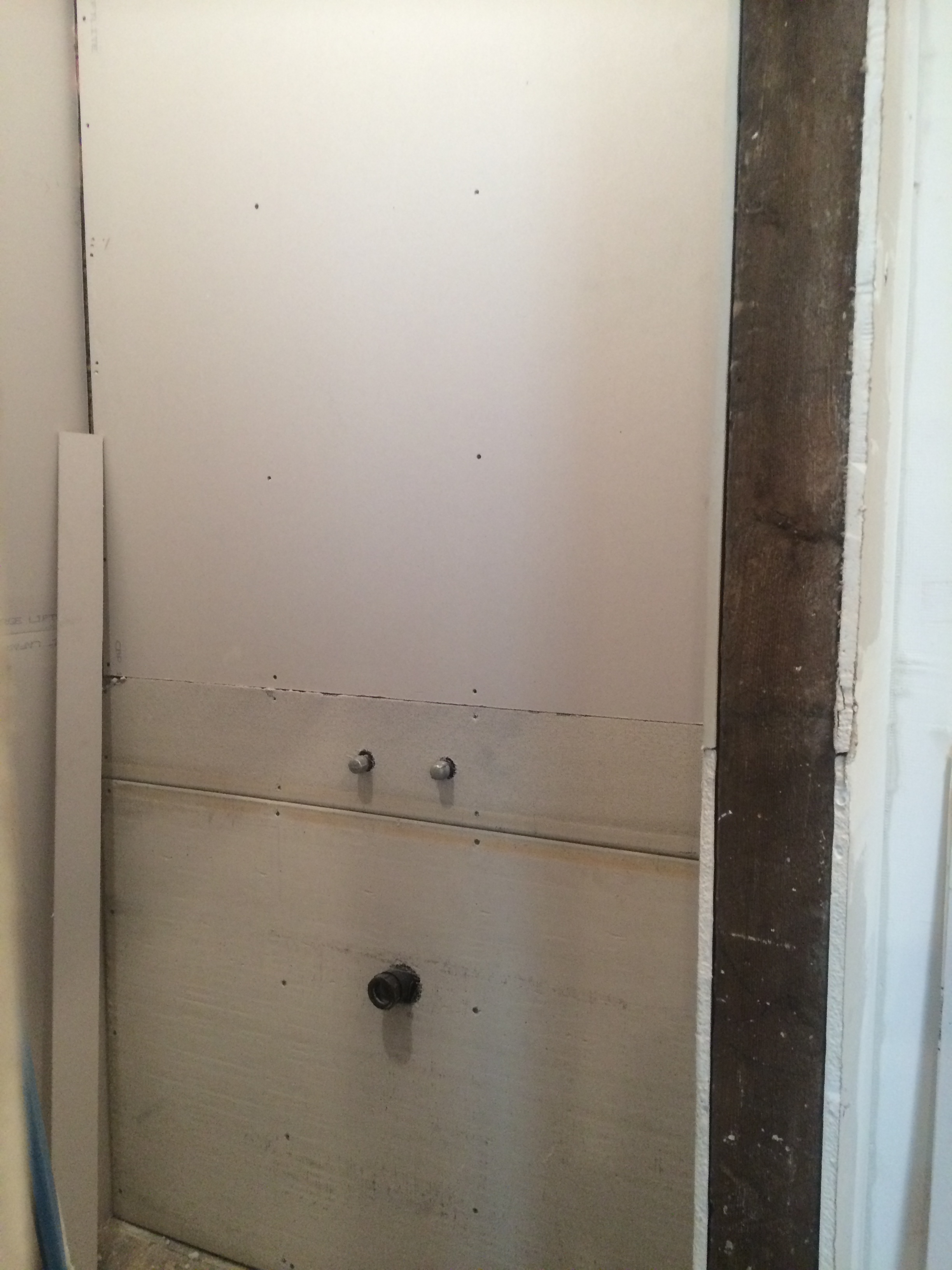
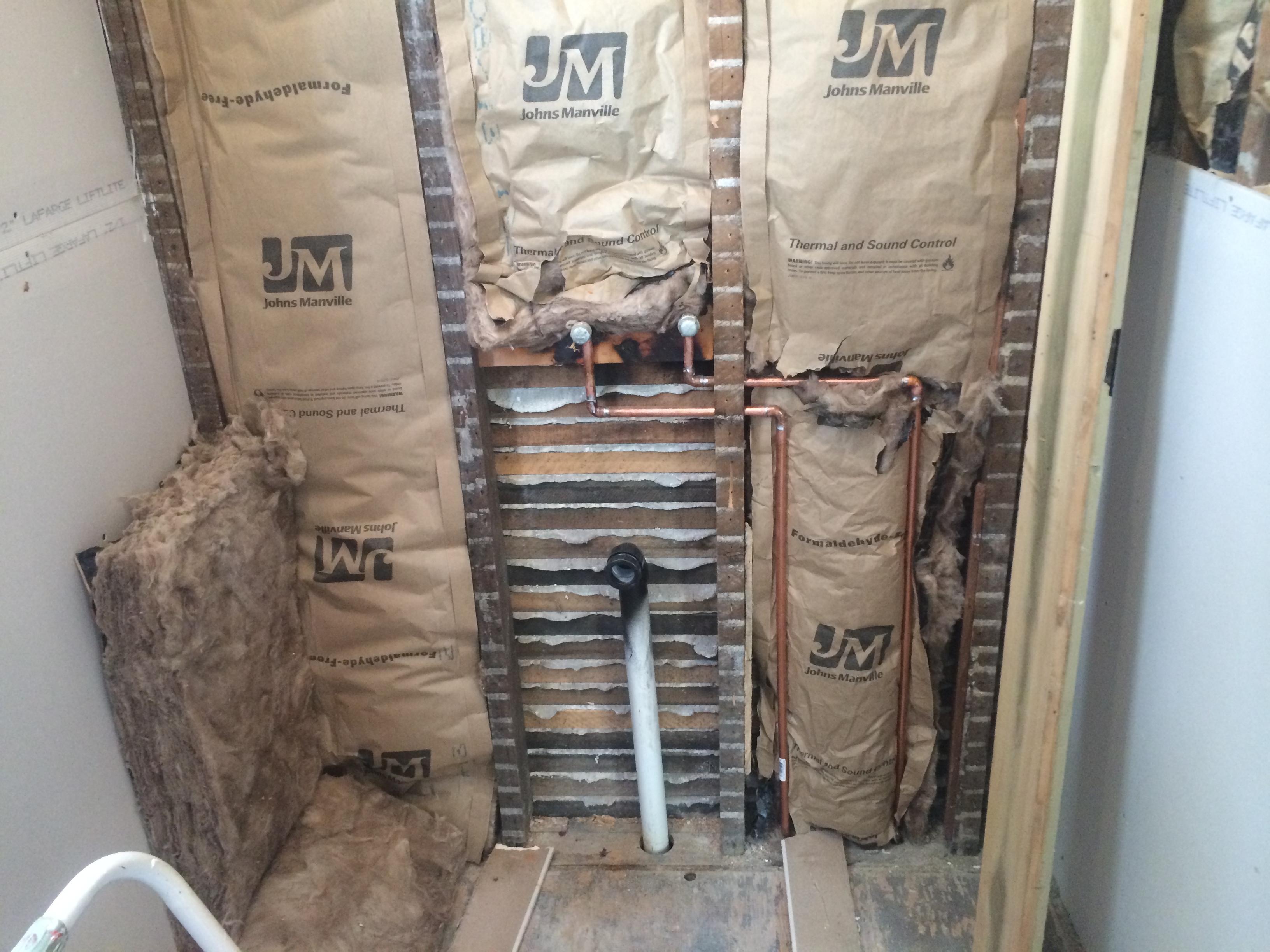
After removing all the old, uneven, and cracked plaster from these 4 walls (not to mention completely sealing up an exterior doorway as well!) we were ready to insulate between the studs and put up drywall.

photo 2

photo 3 (1)photo 5 (1)photo 3 (2)photo 4 (2)

photo 2 (3)

As you can imagine this room required lots and lots of sanding!photo 2 (12)

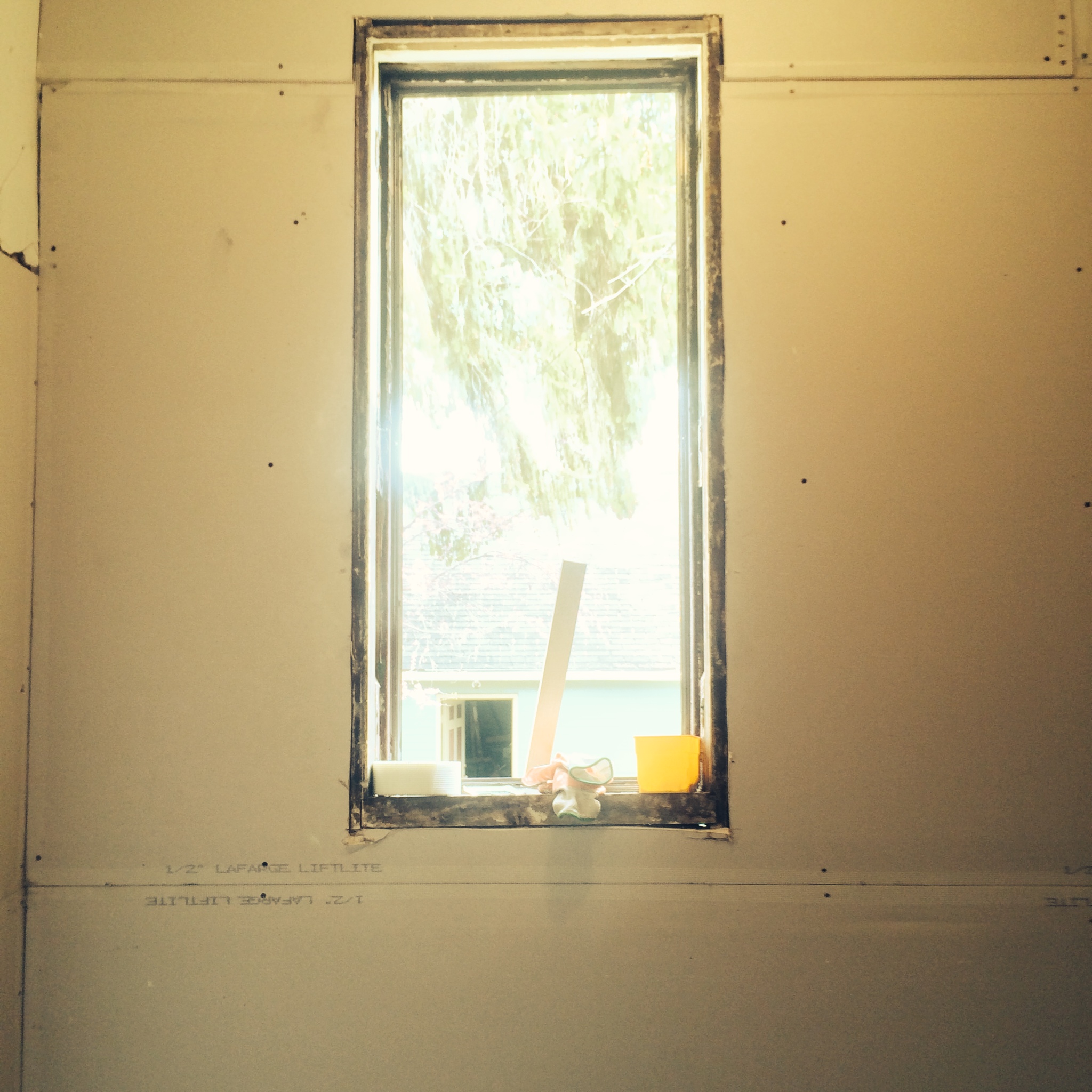
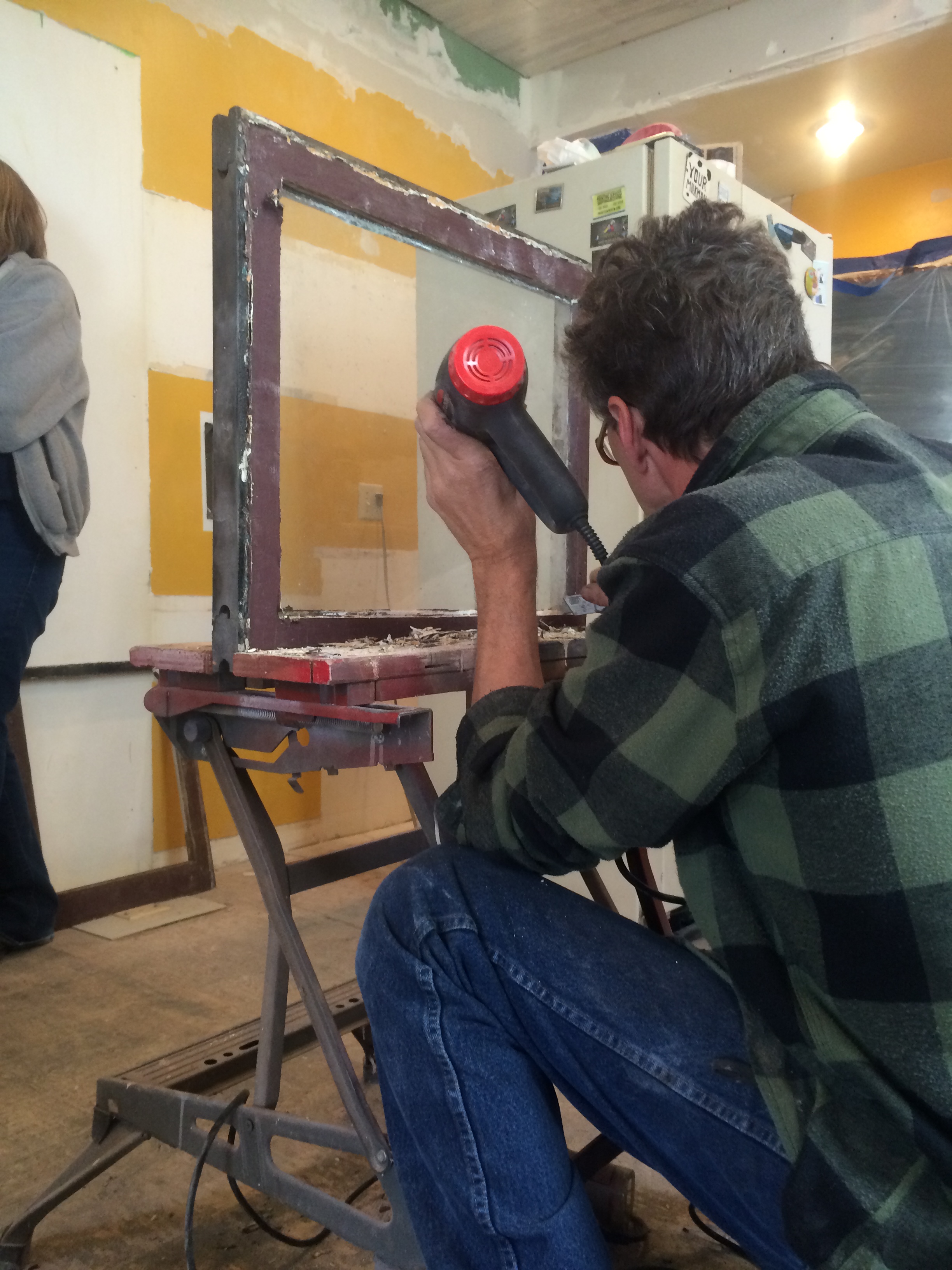
While Raul was busy getting our walls perfectly smooth my dad and I set about removing the pieces of the window in this room. The frames had several thick layers of paint and the window itself was nonfunctional. We removed the frames and started restoring the pieces.

photo 2 (2)photo 5photo 1

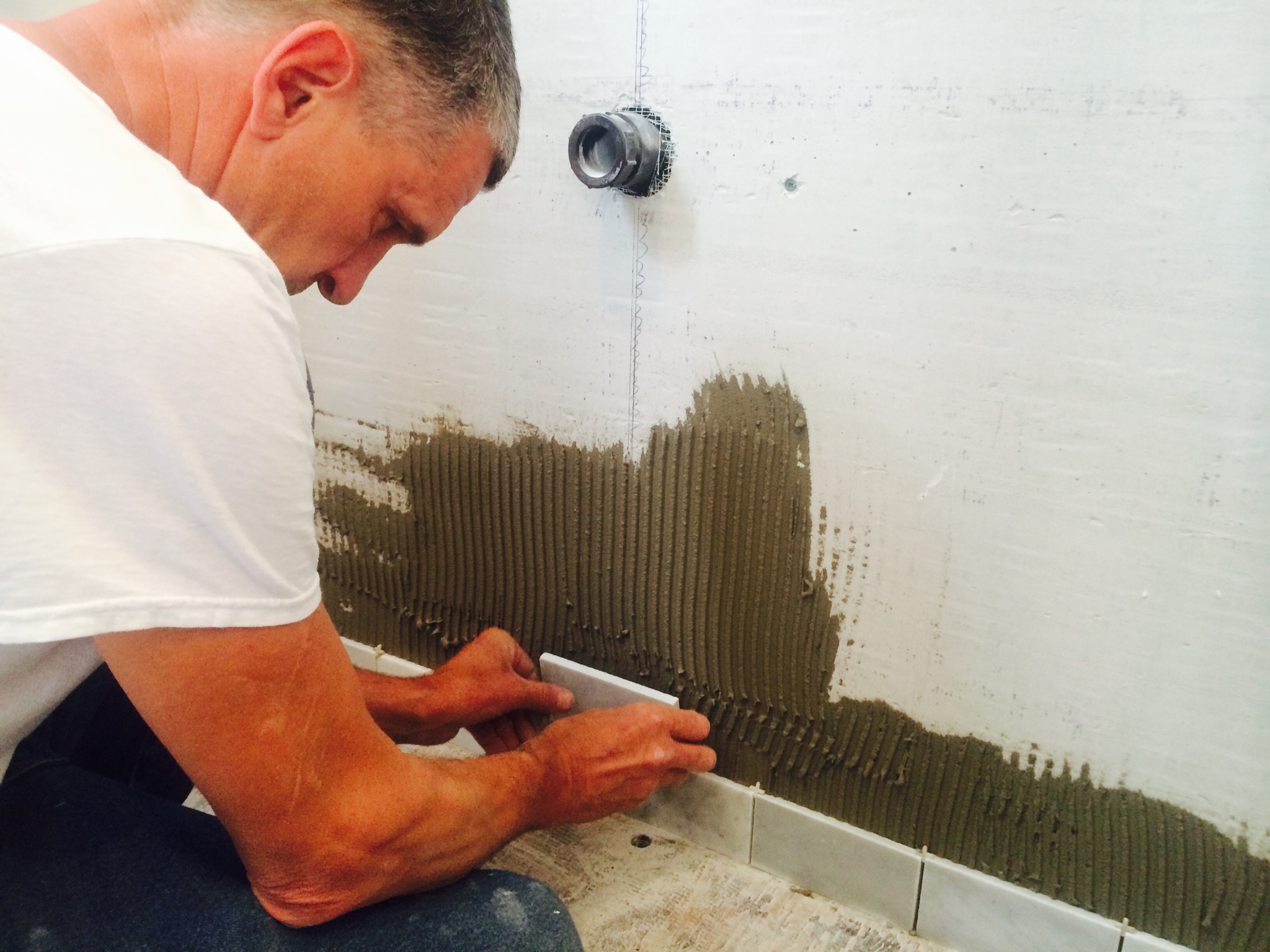
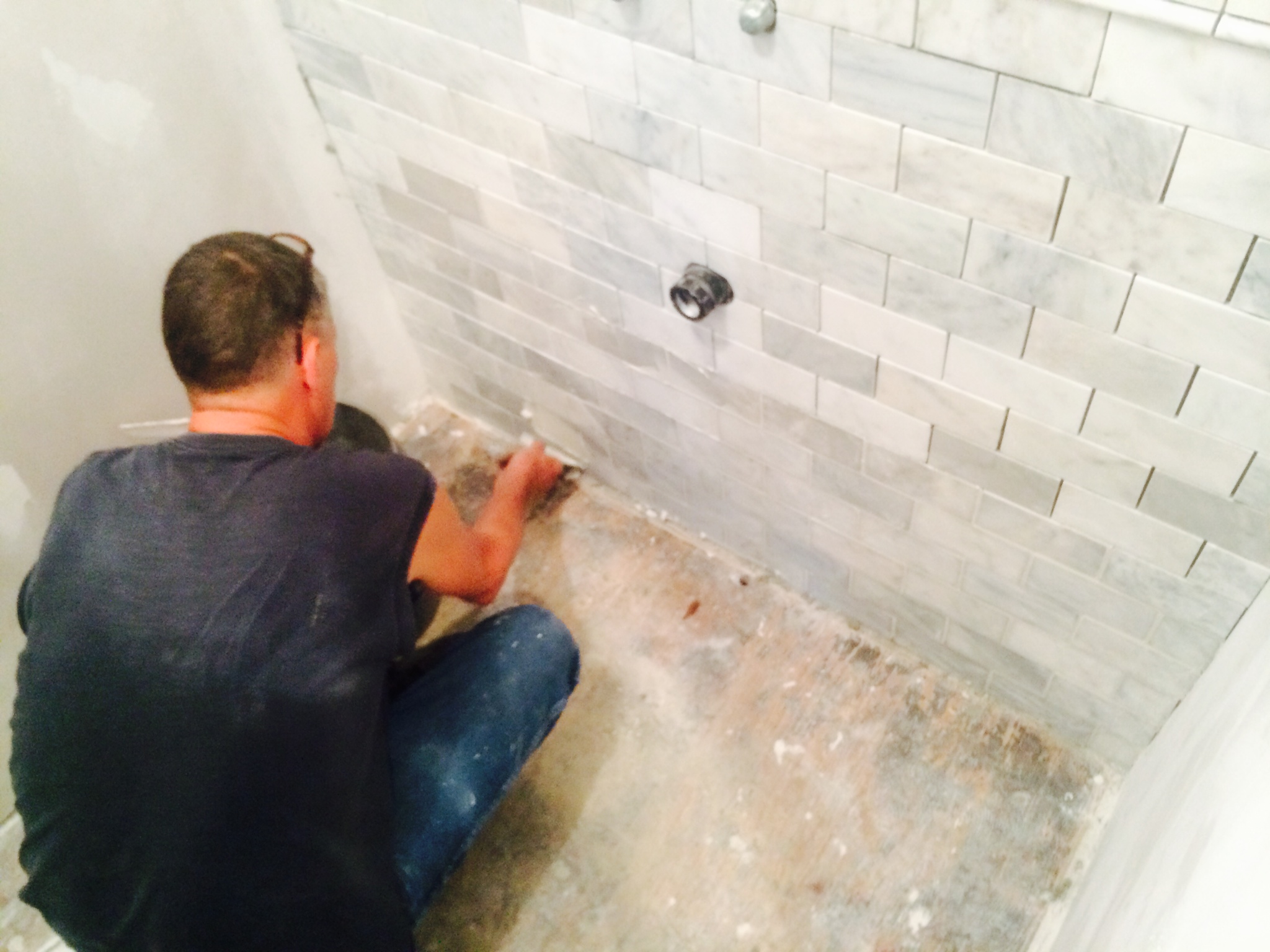
After the horrible experience of drywalling the fun started! I am a big fan of feature or accent walls.  Whether it be paint, fabric, or wallpaper I love to have at least one wall in a space draw attention from the eye. This little room would be no exception. In order to achieve the vintage feel we were going for in a completely new room we decided to create our accent wall out of subway tiles.

photo 2 (5)photo 1 (5)photo 3 (5)


Check out this cool time lapse video of the tile going up!


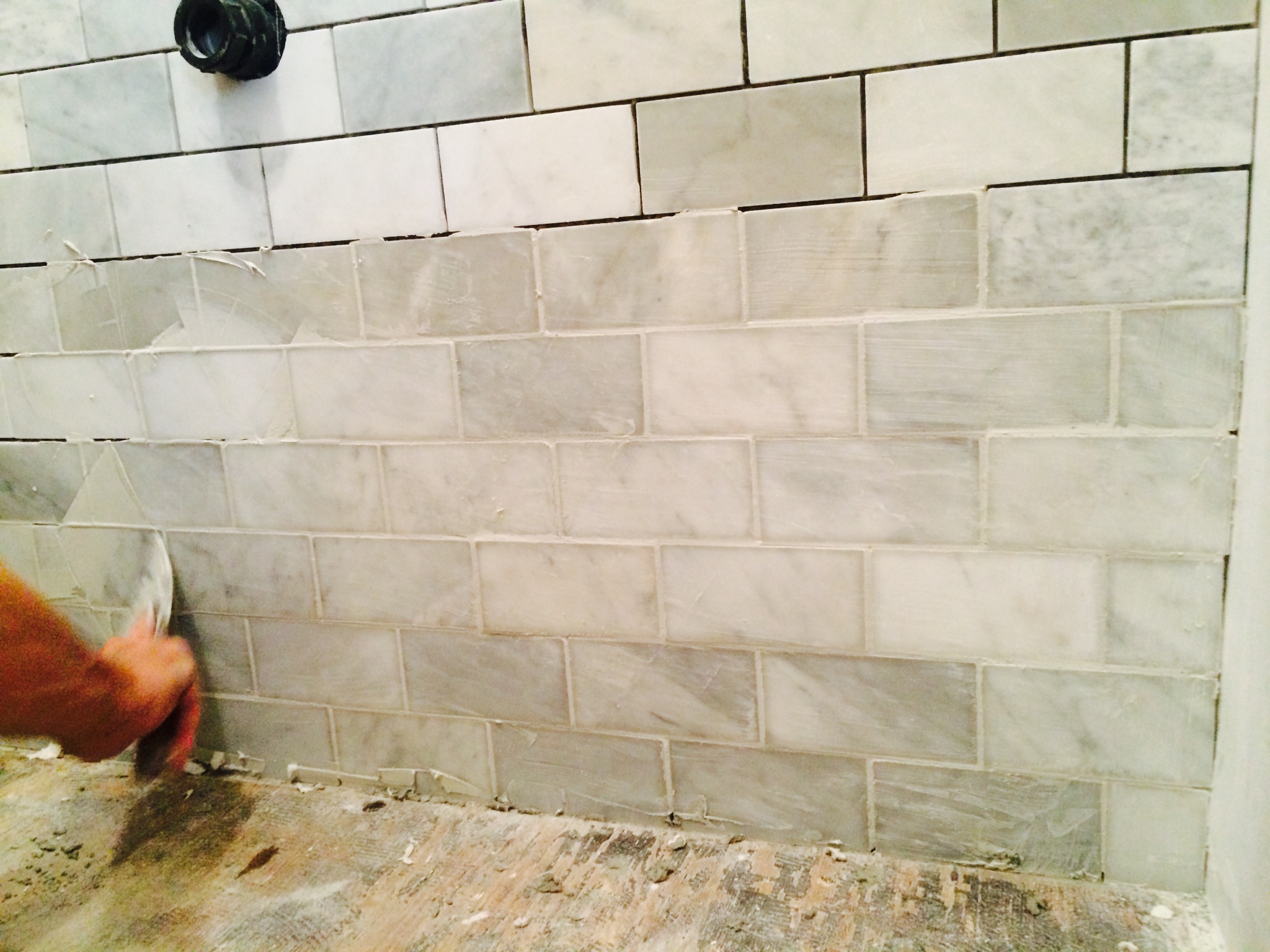
After the thinset has dried for 24 hours it is okay to start grouting the tiles.

photo 2 (7) photo 3 (7)

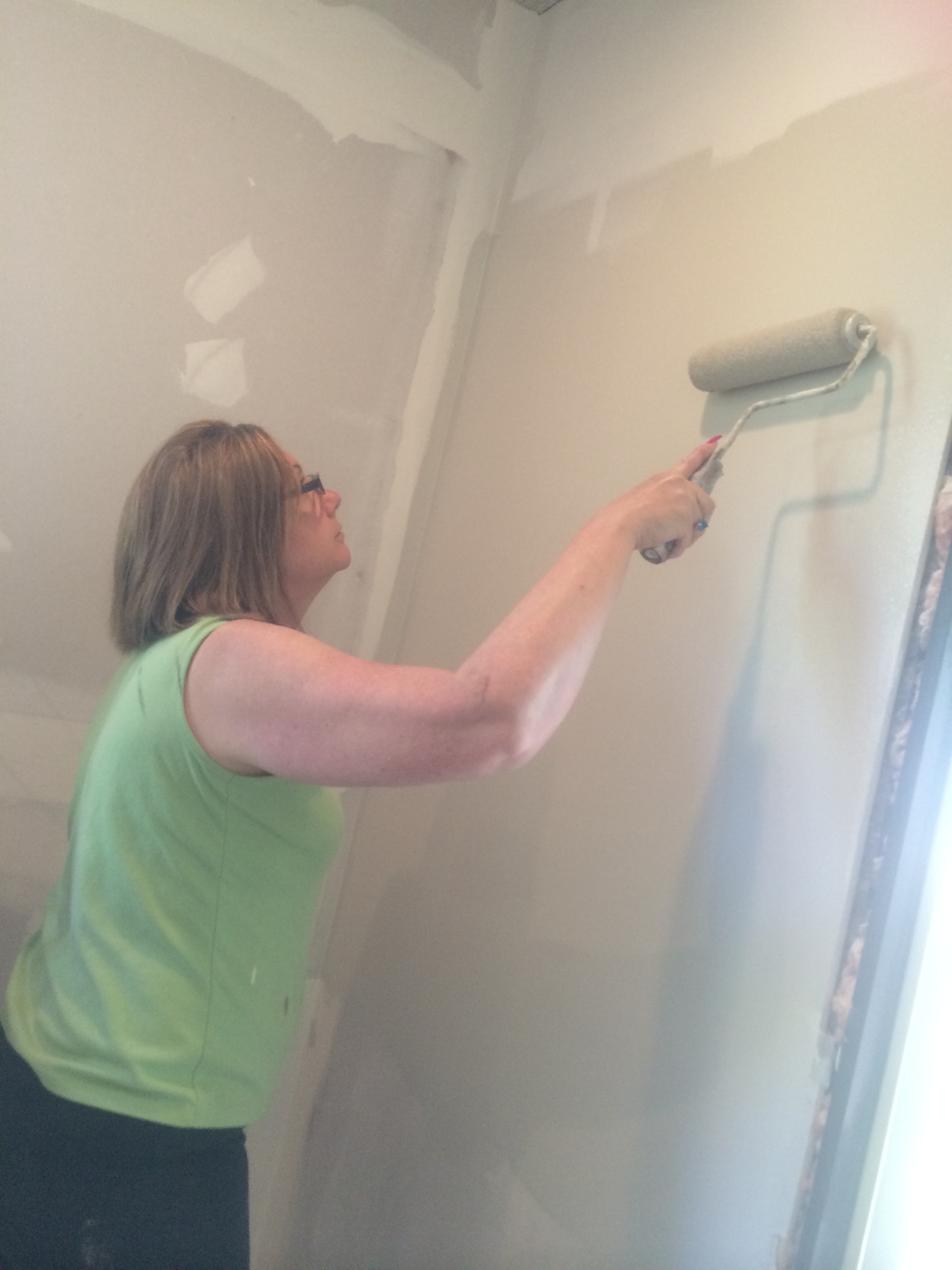
photo 4 (10)With my dad and Raul busy working on perfecting our subway tile feauture wall my mom and I started on preparing the other elements of the room. We decided to pull one of the grays from the tile for our wall color (Thanks Taber Street Interiors for the advice!)

photo 4 (5)

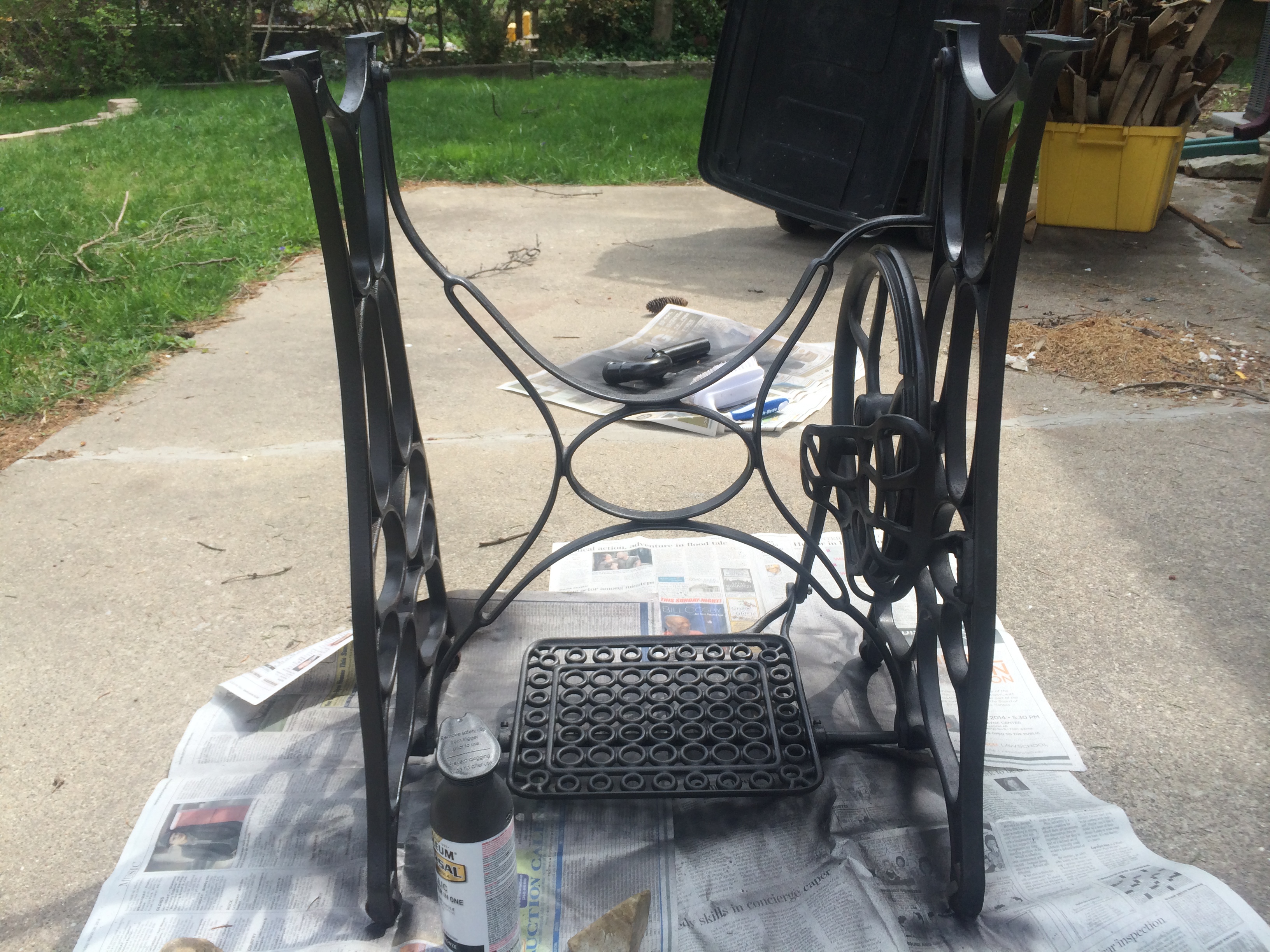
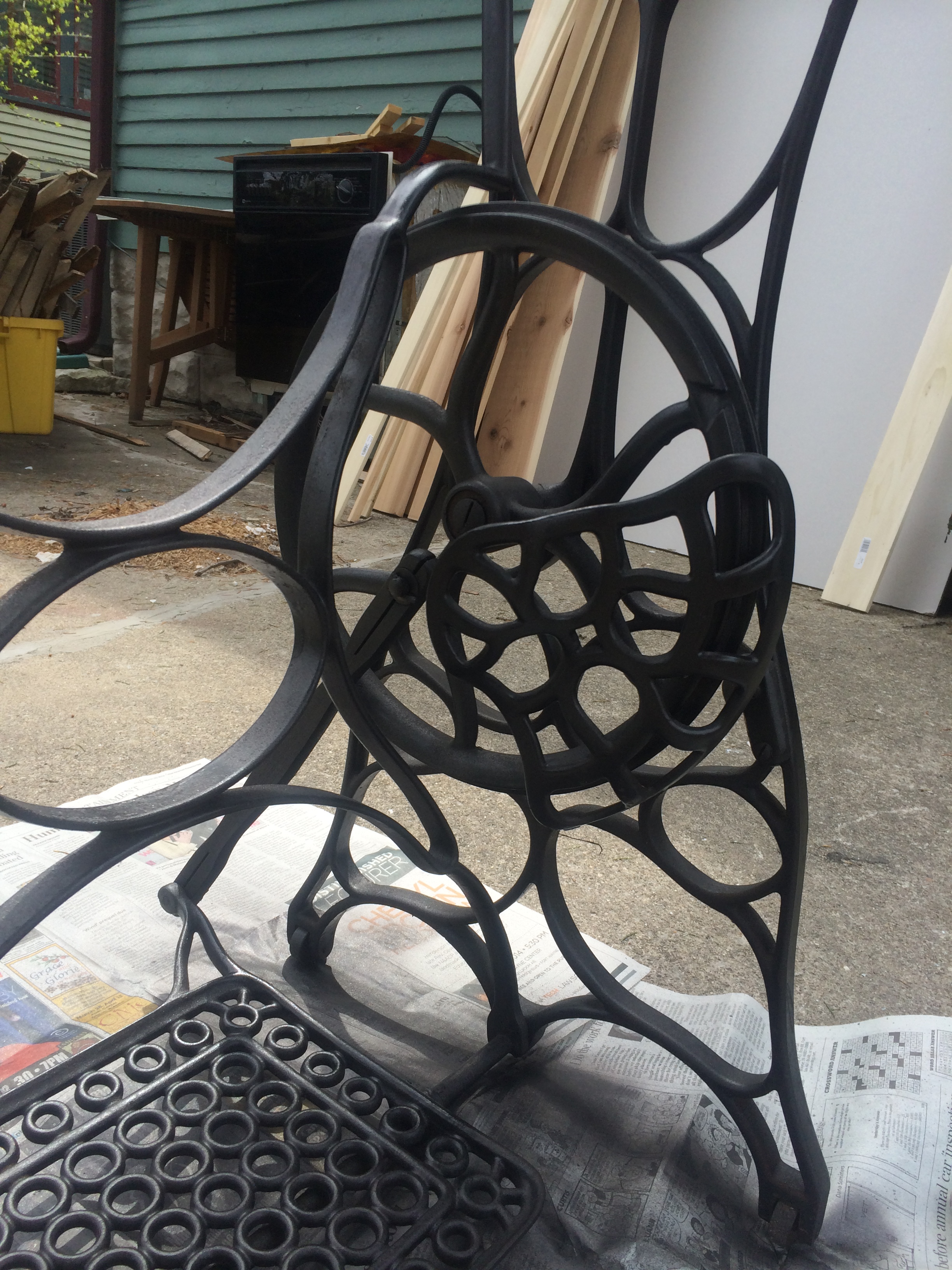
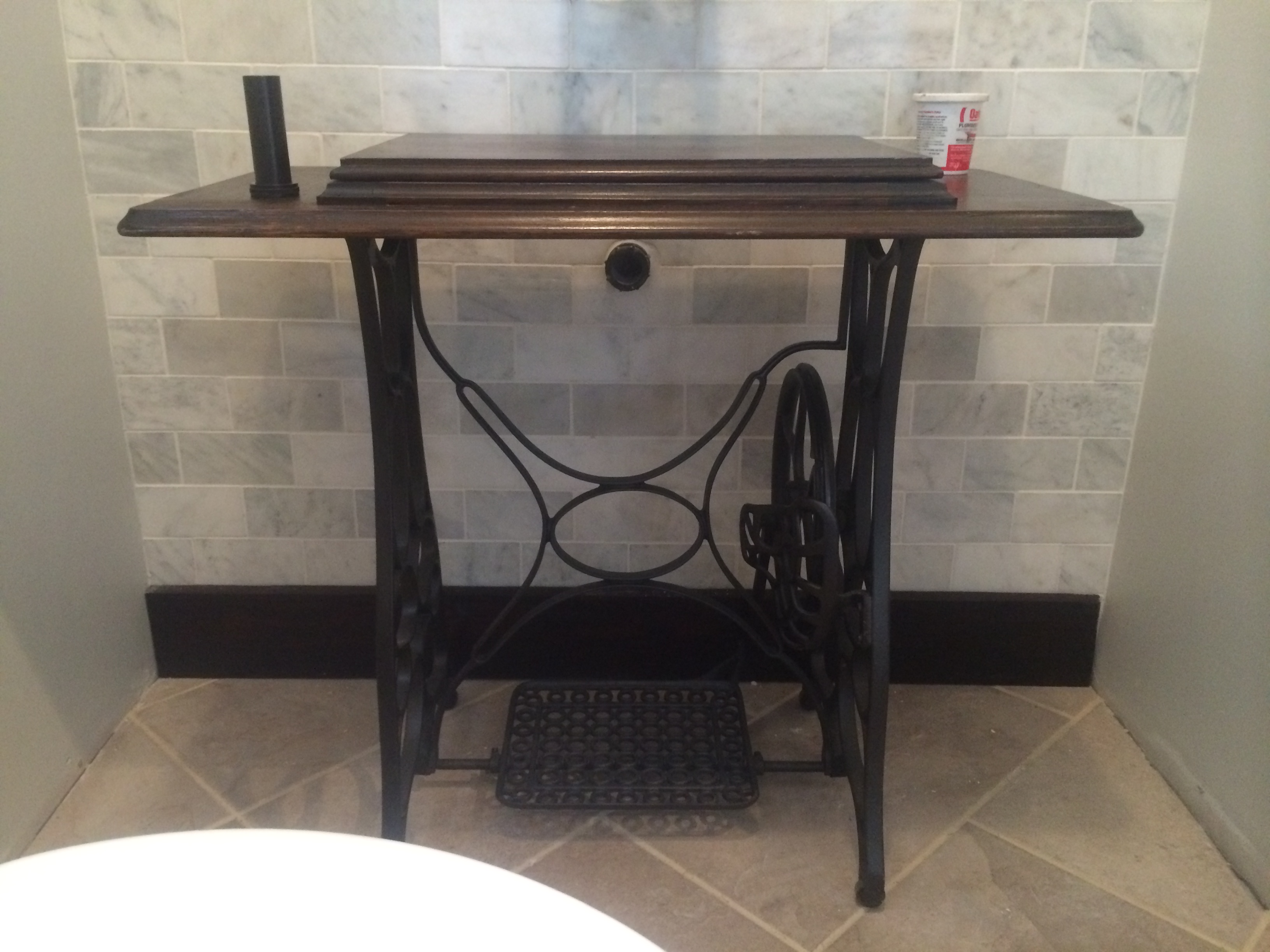
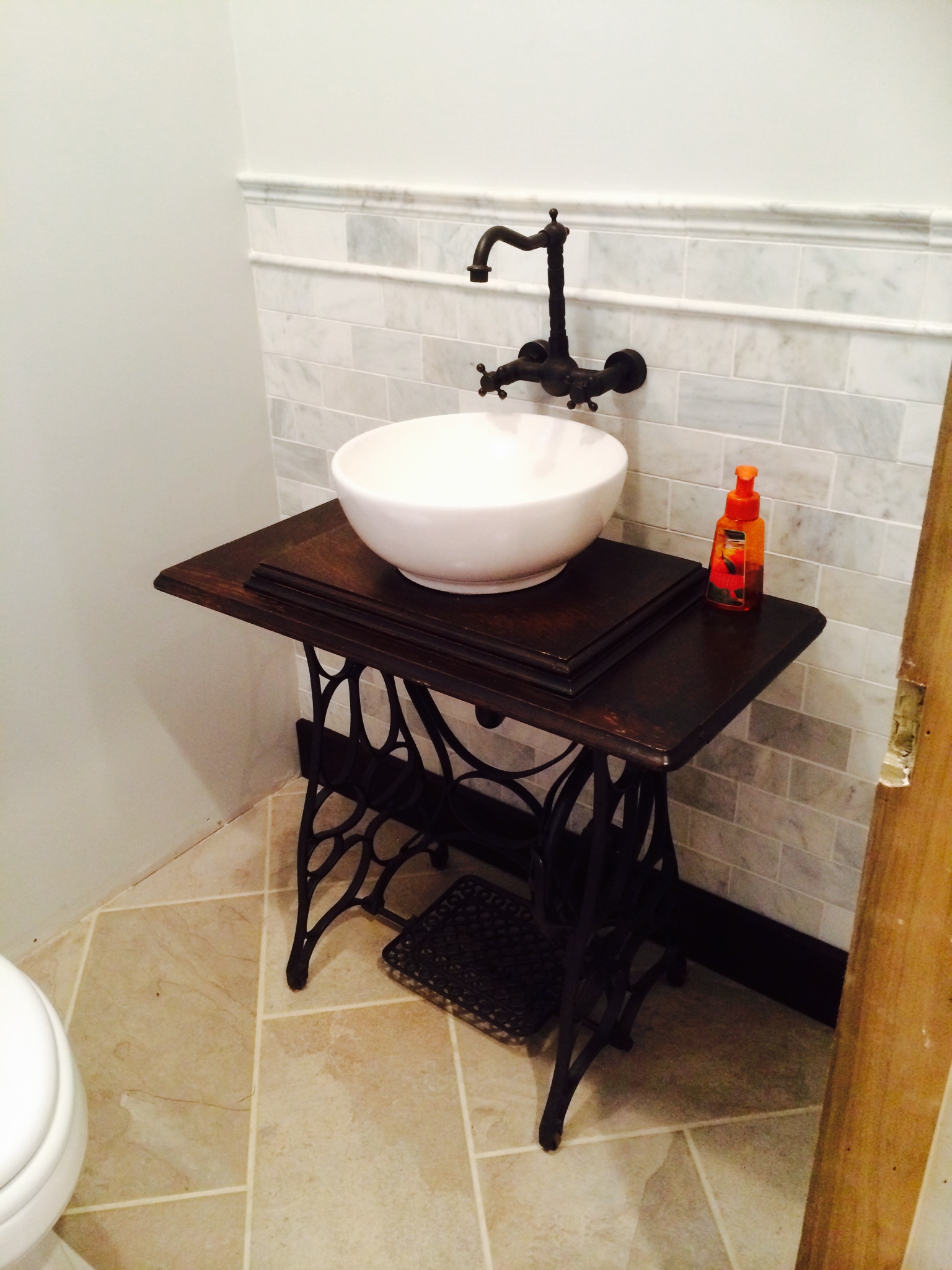
We also had to get our antique sewing table/vanity shining like new. I scrubbed down the metal and knocked off all the loose paint and then I simply spray coated the base with an oil-rubbed bronze paint.

photo 3photo 4This refurbished piece looks great against the tile wall!

photo 2 (14)

photo 5 (5)

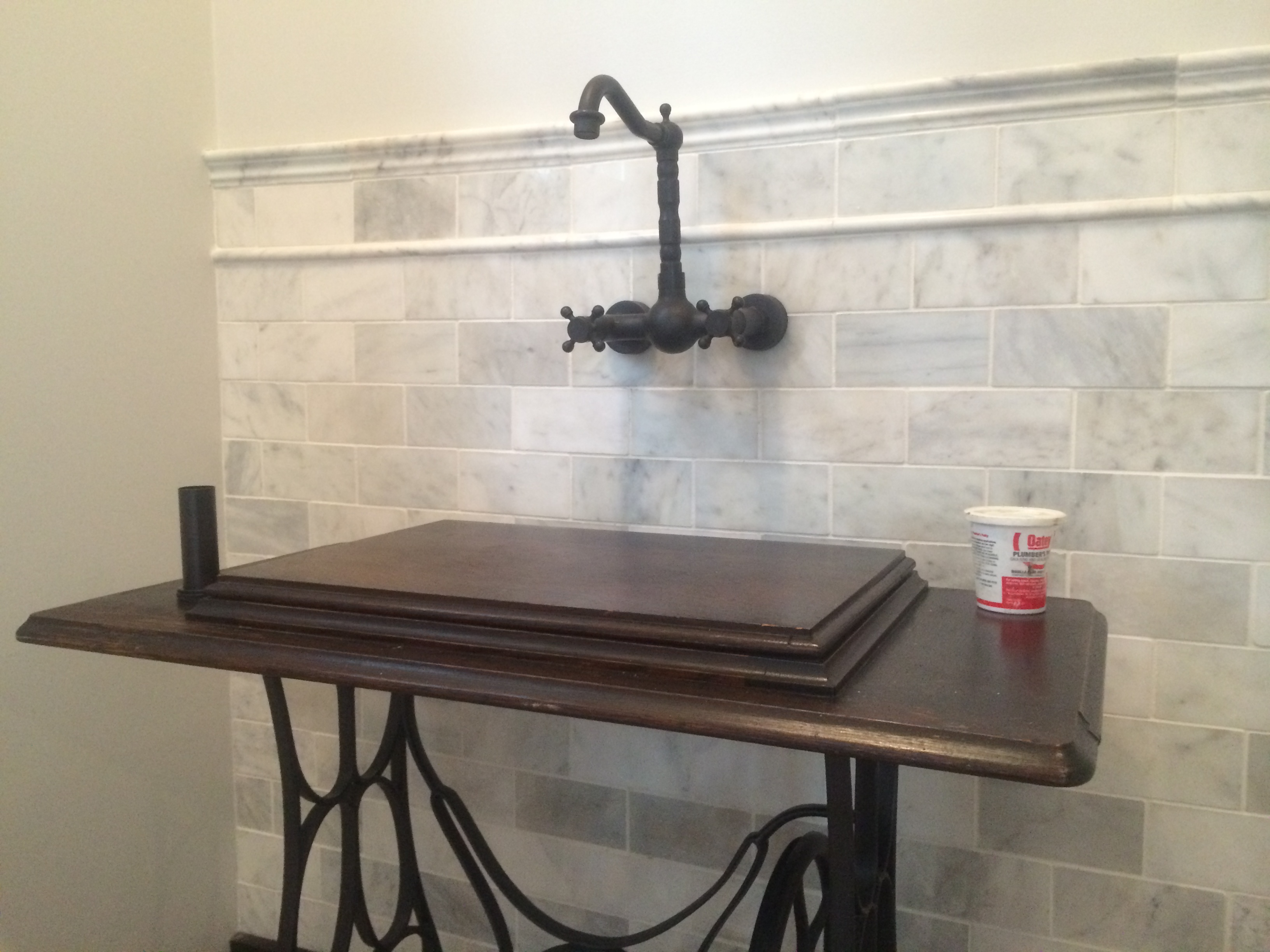
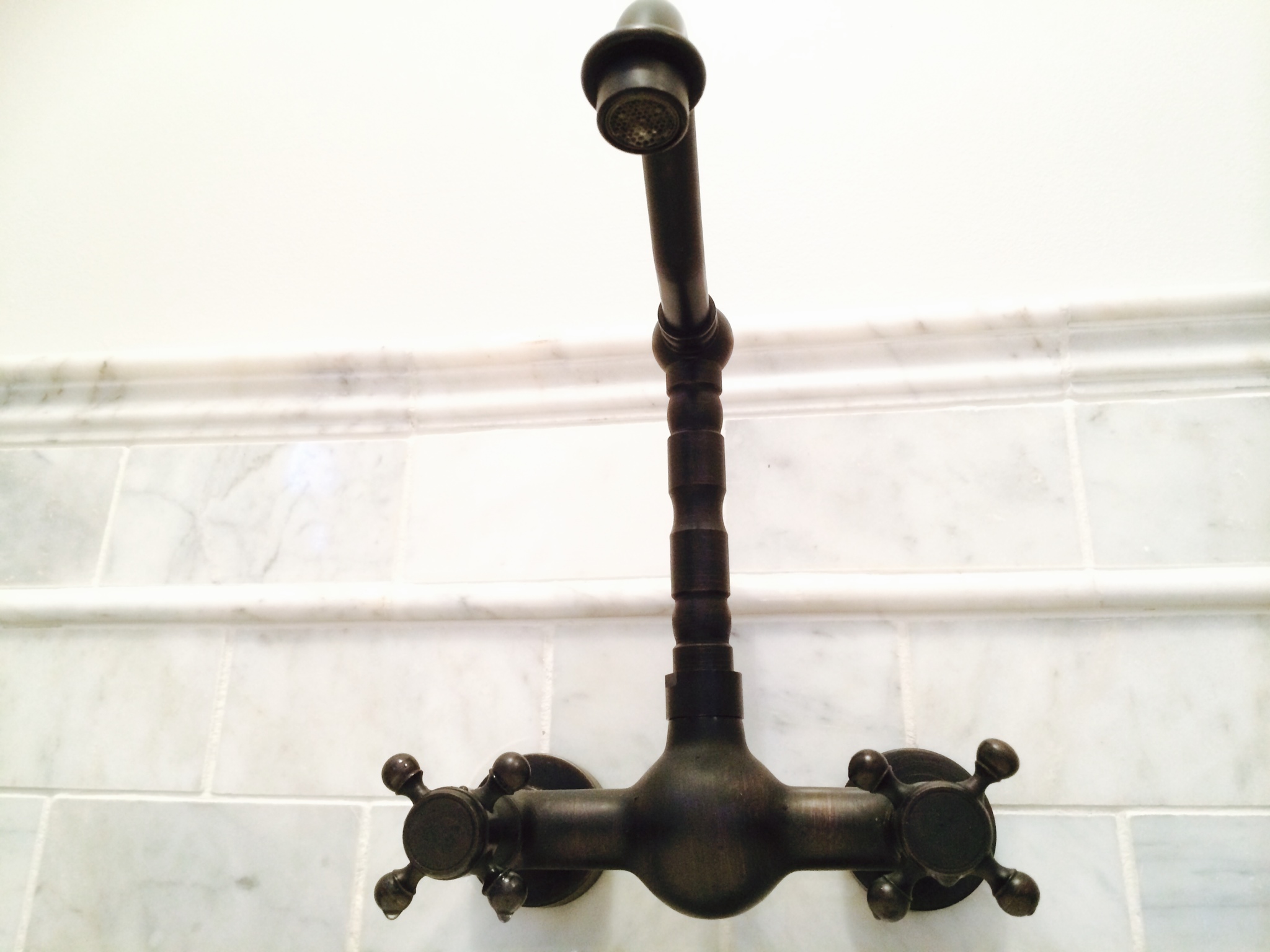
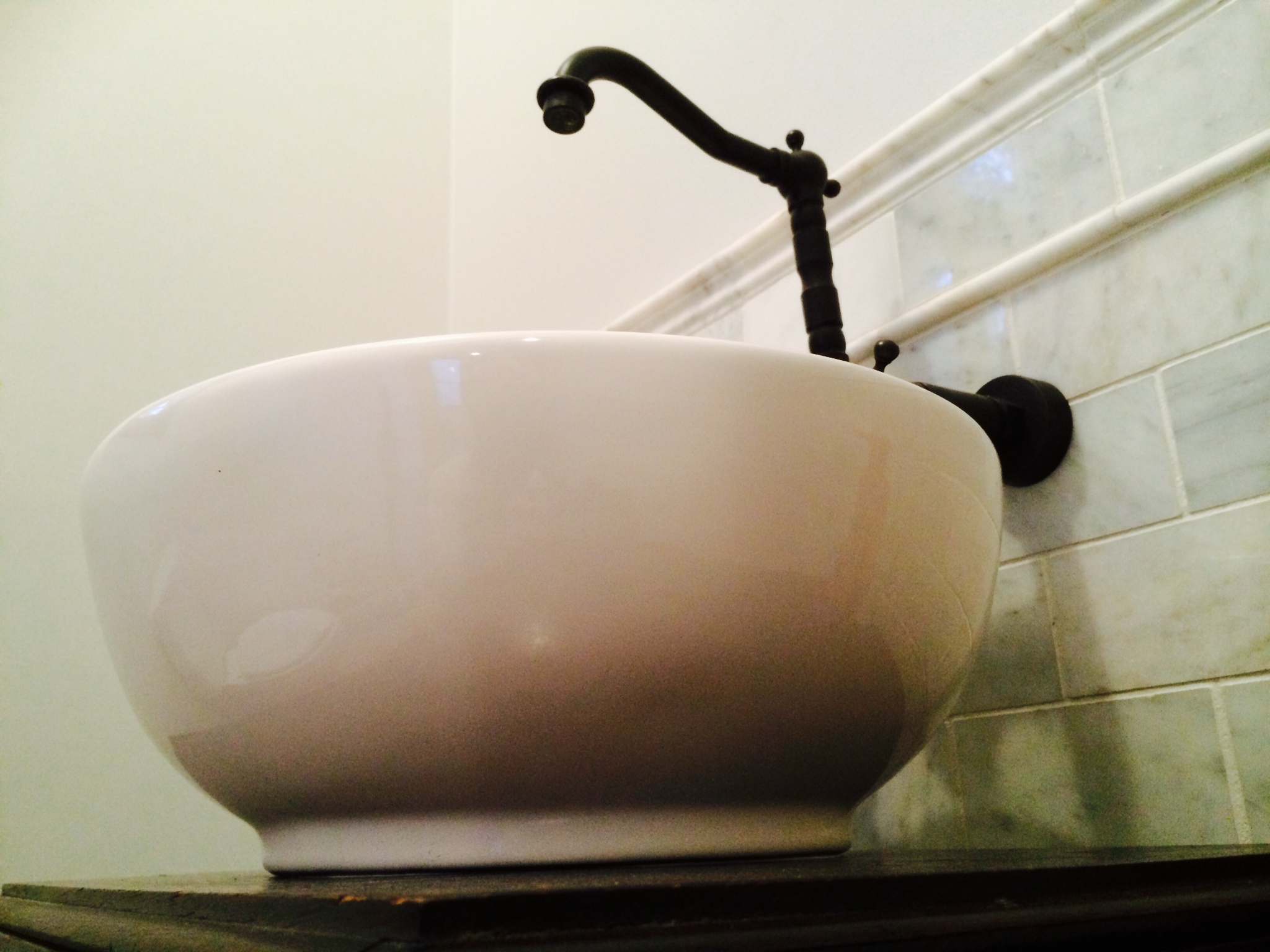
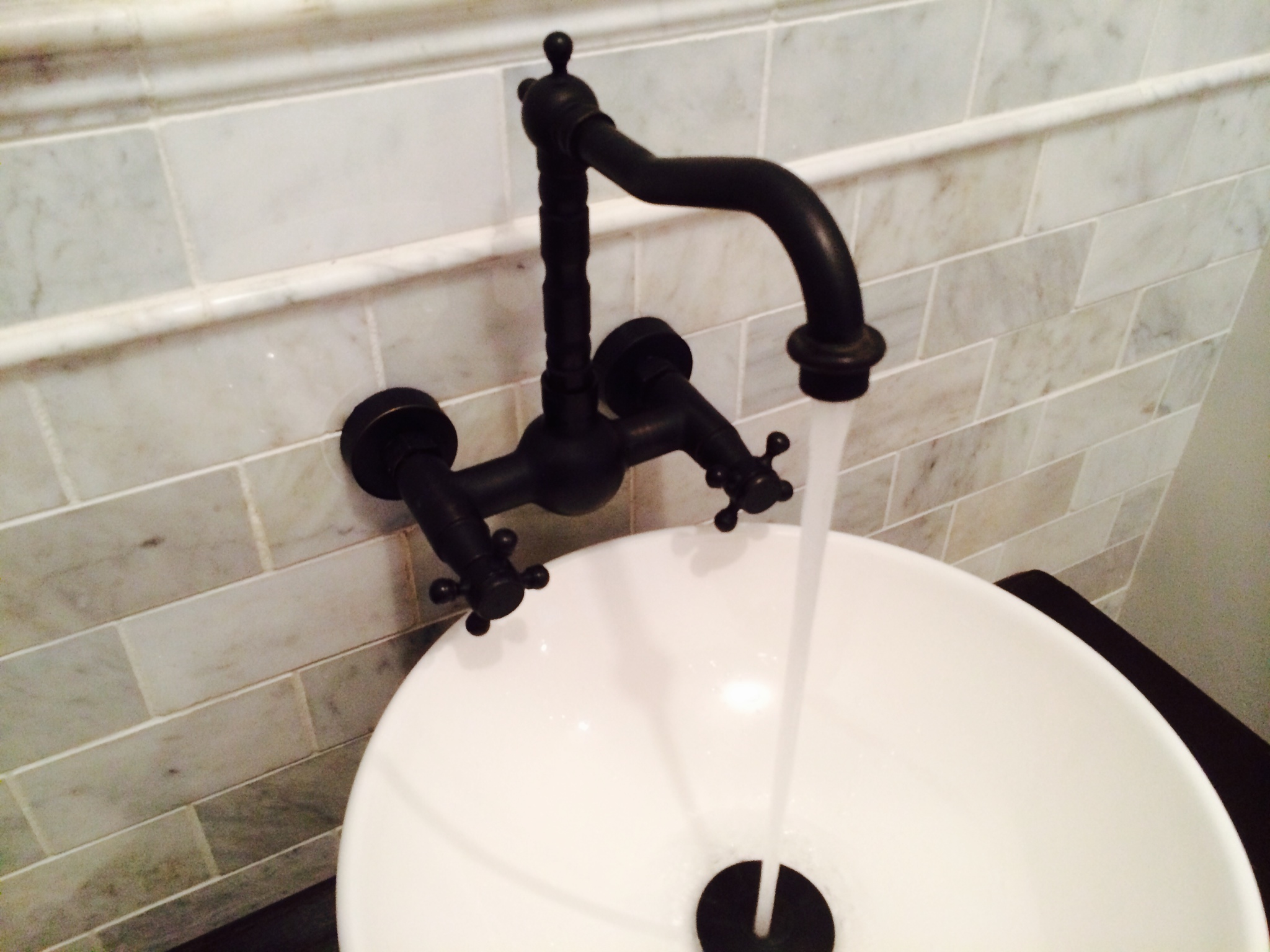
We added a wall mounted faucet to continue with the vintage flair.

photo 1 (13)photo 4 (3)

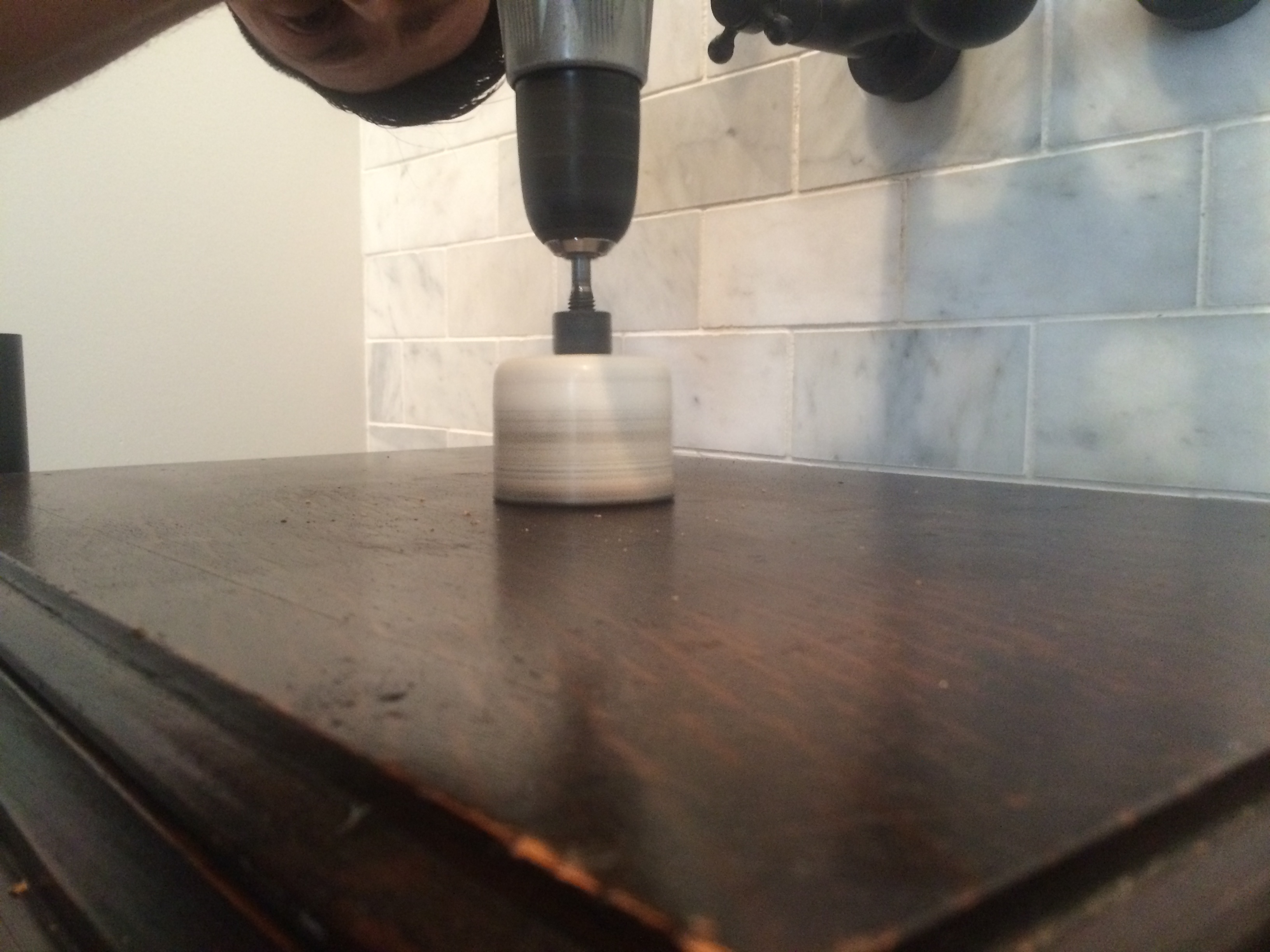
The next step was converting this sewing machine into a functional bathroom vanity. We had already removed the sewing machine from inside of the table. Don’t worry- the machine will be making an appearance later when we get ready to decorate the powder room 🙂 We used a hole saw to create an opening for the sink drain.

photo 3 (14)

After that we simply mounted the vessel sink.

photo 2 (1)


photo 1 (2) photo 1 (3)

The windows were now stripped, sanded, stained and ready to be installed.

photo 1 (8)
photo 3 (4)photo 2 (4)

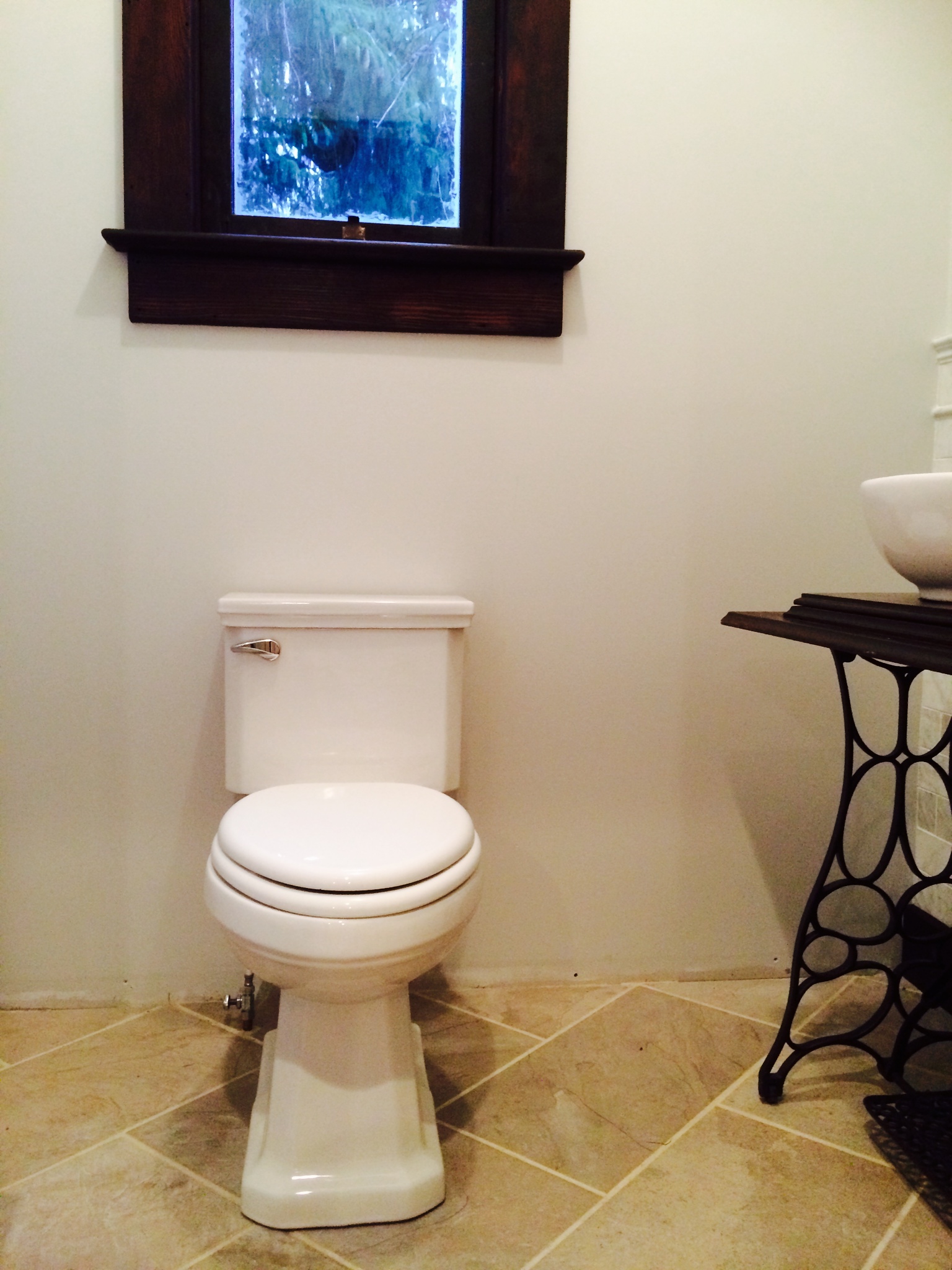
We ran the plumbing for the toilet…and VOILA! 1st floor powder room! I am one happy lady!!! 🙂

There are several finishing touches to add including trim work, door (probably necessary, huh?!), decor, lighting, etc. Check back soon for what will surely be some awesome before and after photos!
GUEST POST: A few words from my mother!
Hello all,  today I am writing as a guest writer on Lyndsay’s blog. I am the Mom, and I perform most of the behind the scenes tasks.   You don’t see me much in the pictures, but I do work as a helper most of the time.

mom
 My tasks include, but are not limited to, preparing breakfast, lunch or dinner, washing dishes, catching up on Raul and Lyndsay’s laundry, trips to Lowe’s and Menard’s, sweeping up dust, picking up scraps and of course watching the new puppy Ruco.  I hate mudding and sanding drywall the most, I am not very good at staining boards, and I can’t read a tape measure.  However, I do
watch Rehab Addict. Today I would like to share a trick I learned from Nicole Curtis, the Rehab Addict.
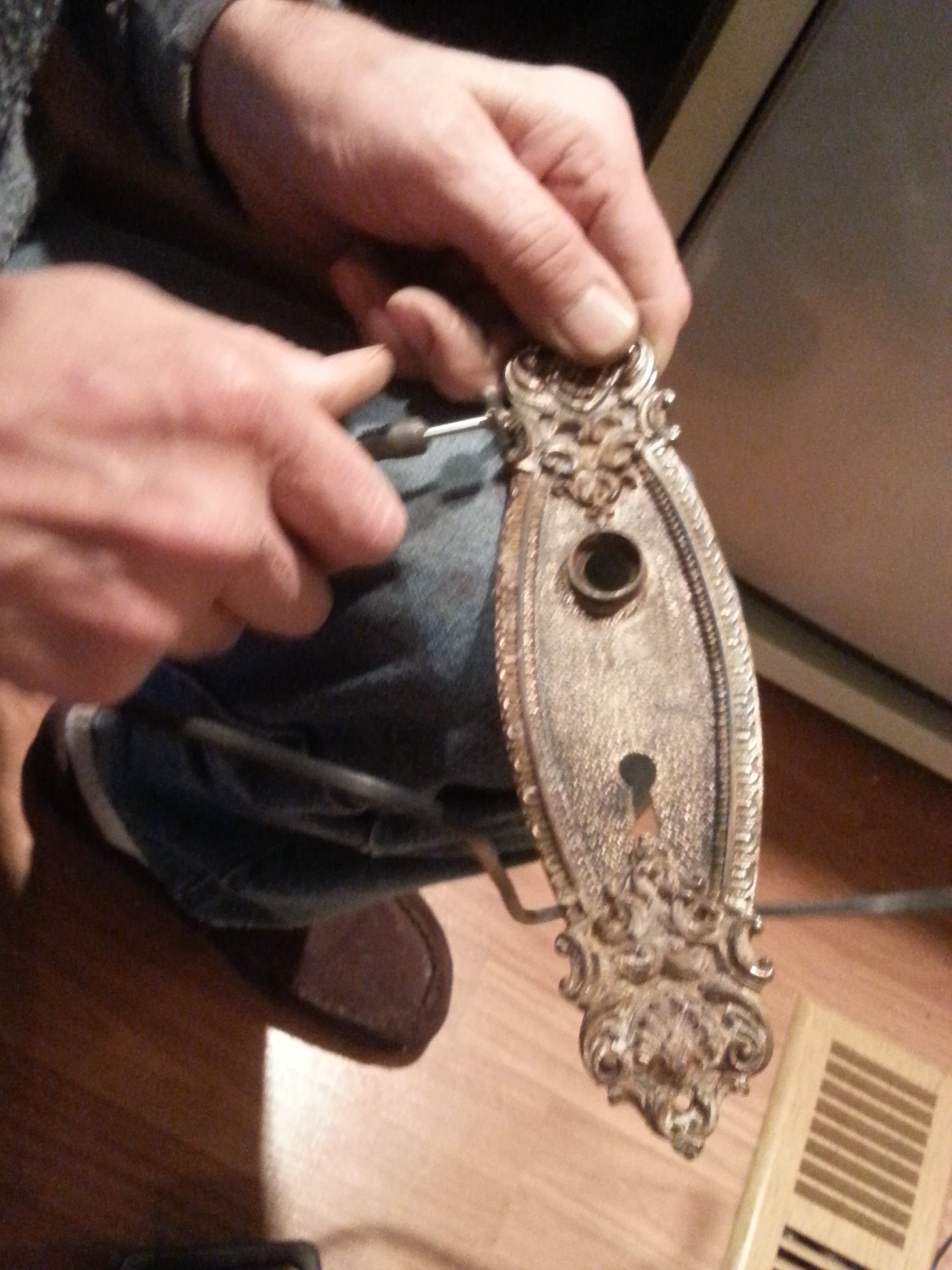
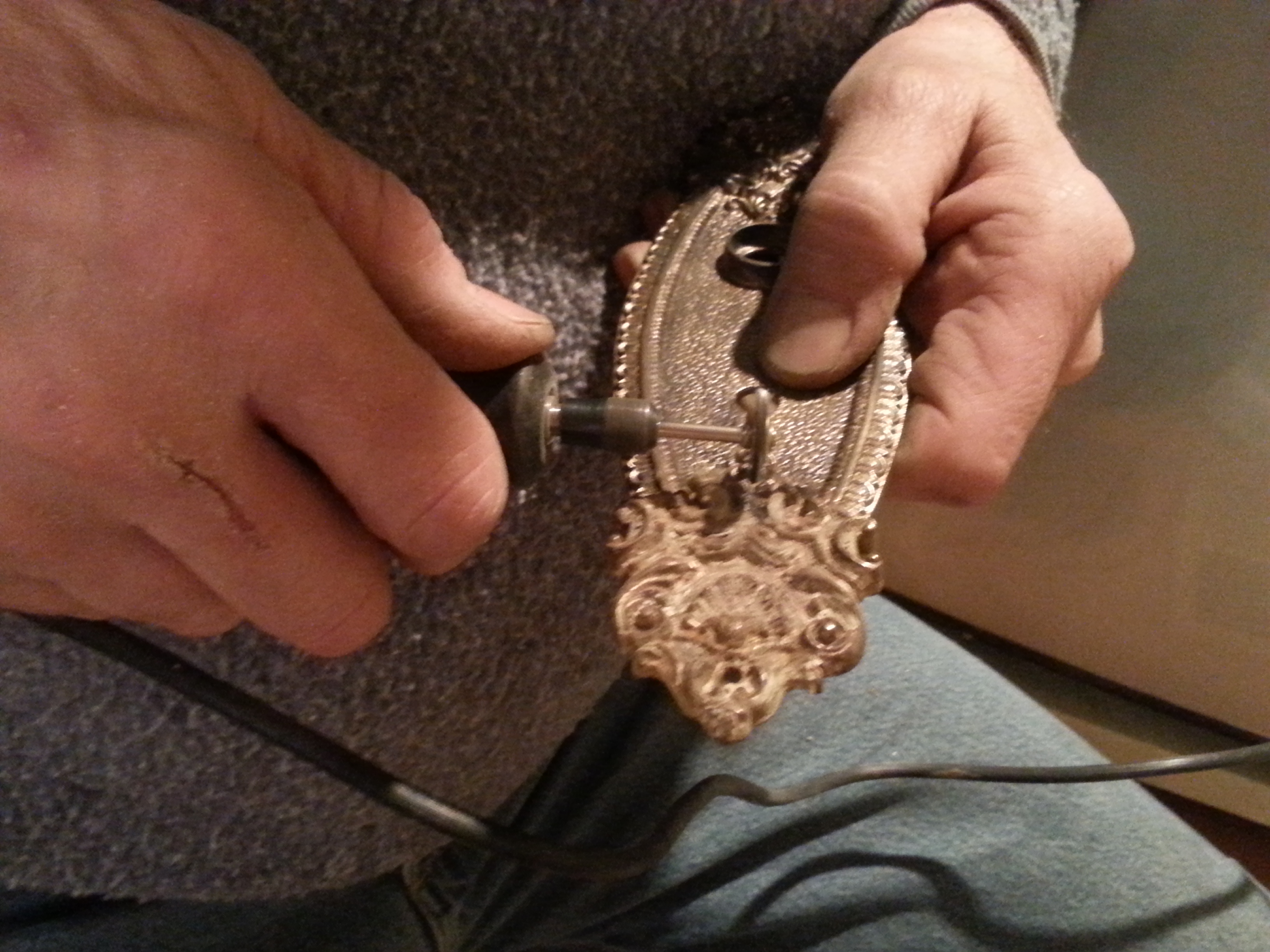
HOW TO: Remove old layers of paint from hardware.

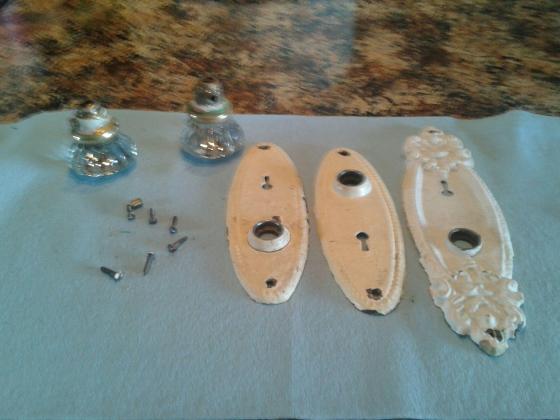
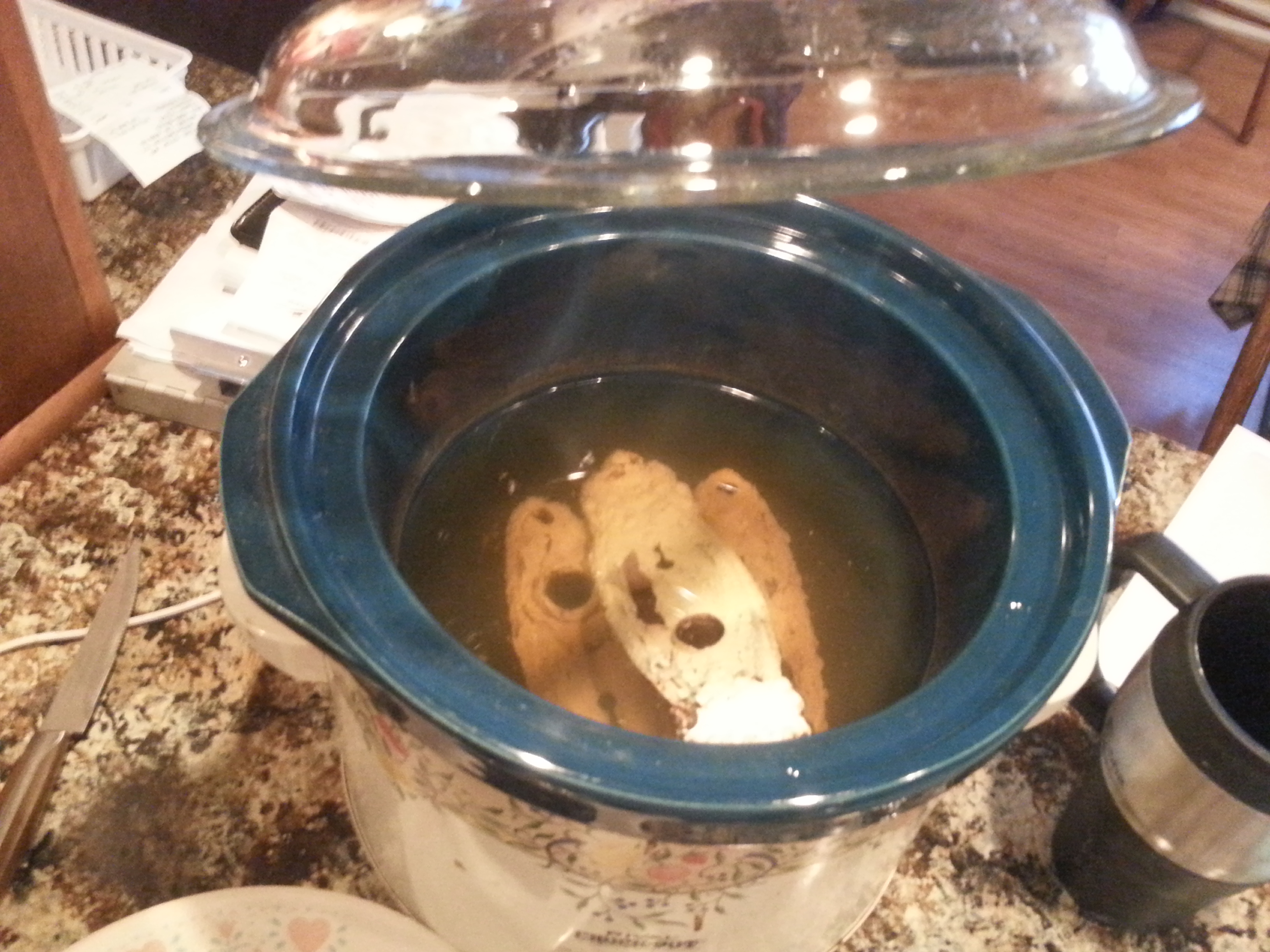
2014-02-269513.38.45
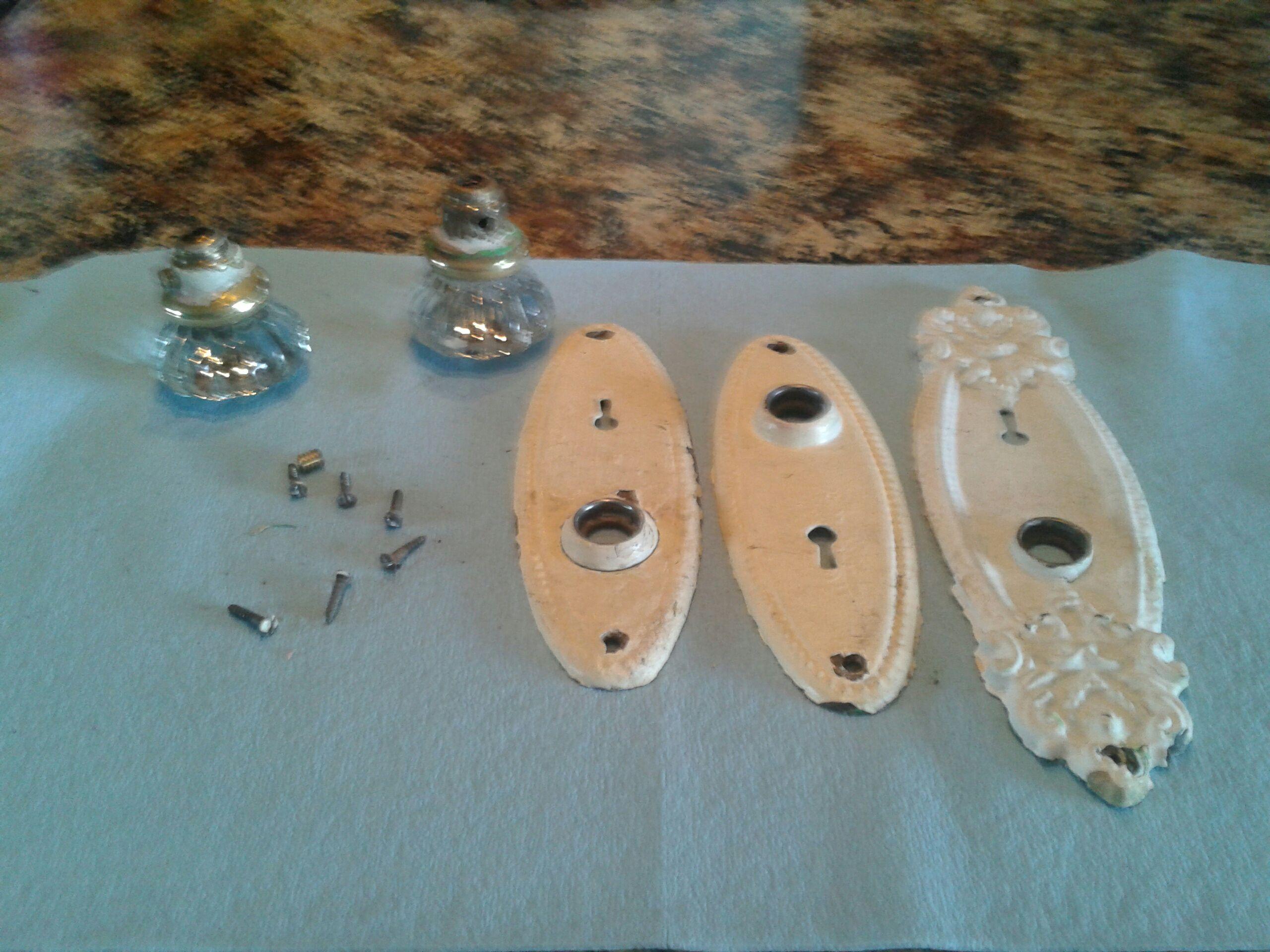
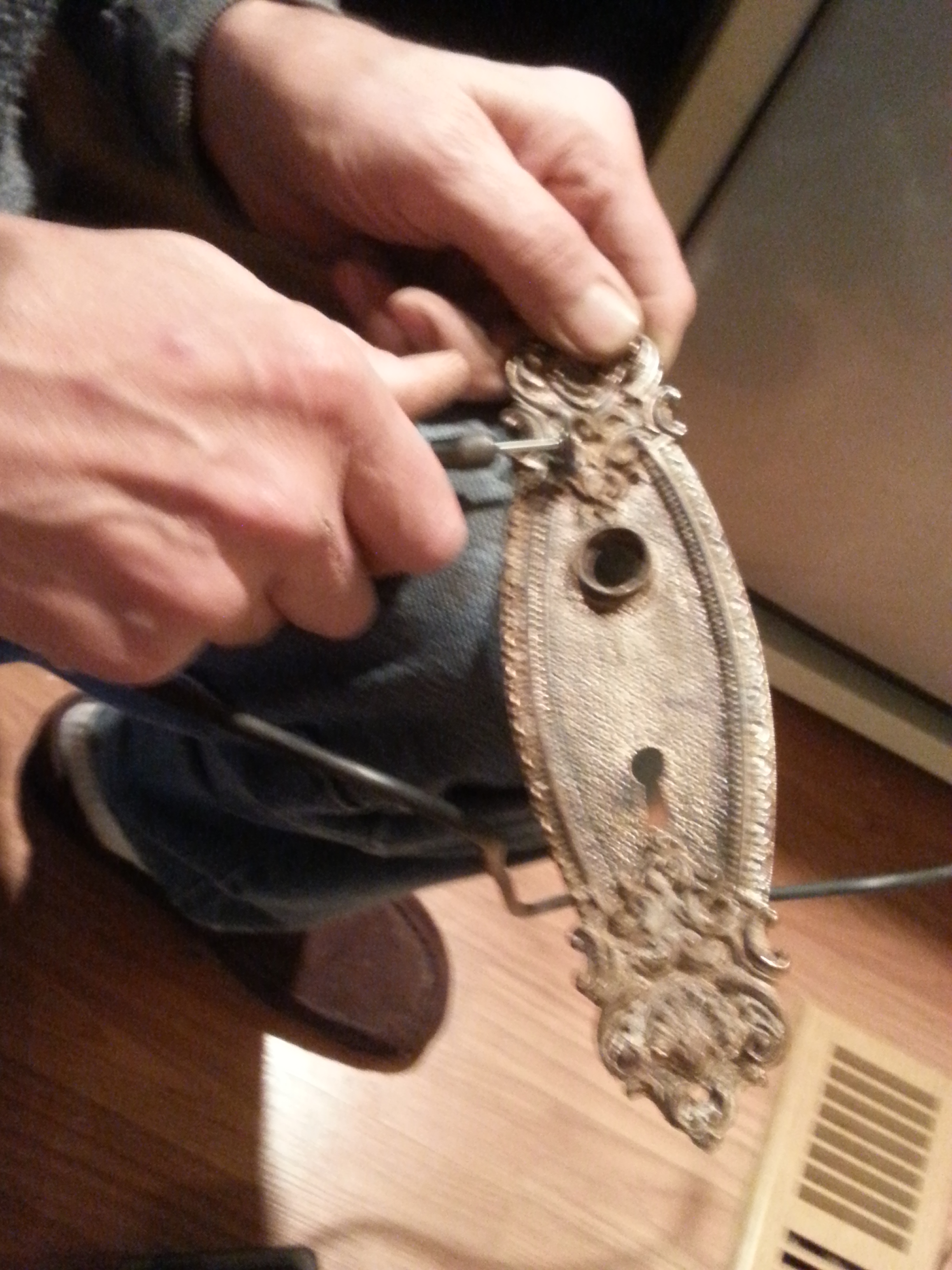
First I gave up my big old crock pot.  I filled it with water and turned it on HIGH.  I placed all the old door and window hardware into the pot and just let it “cook ” for a long while, about 2-3 hours. Make sure you use tongs or some other tool to get your old hardware out, this water will be HOT!
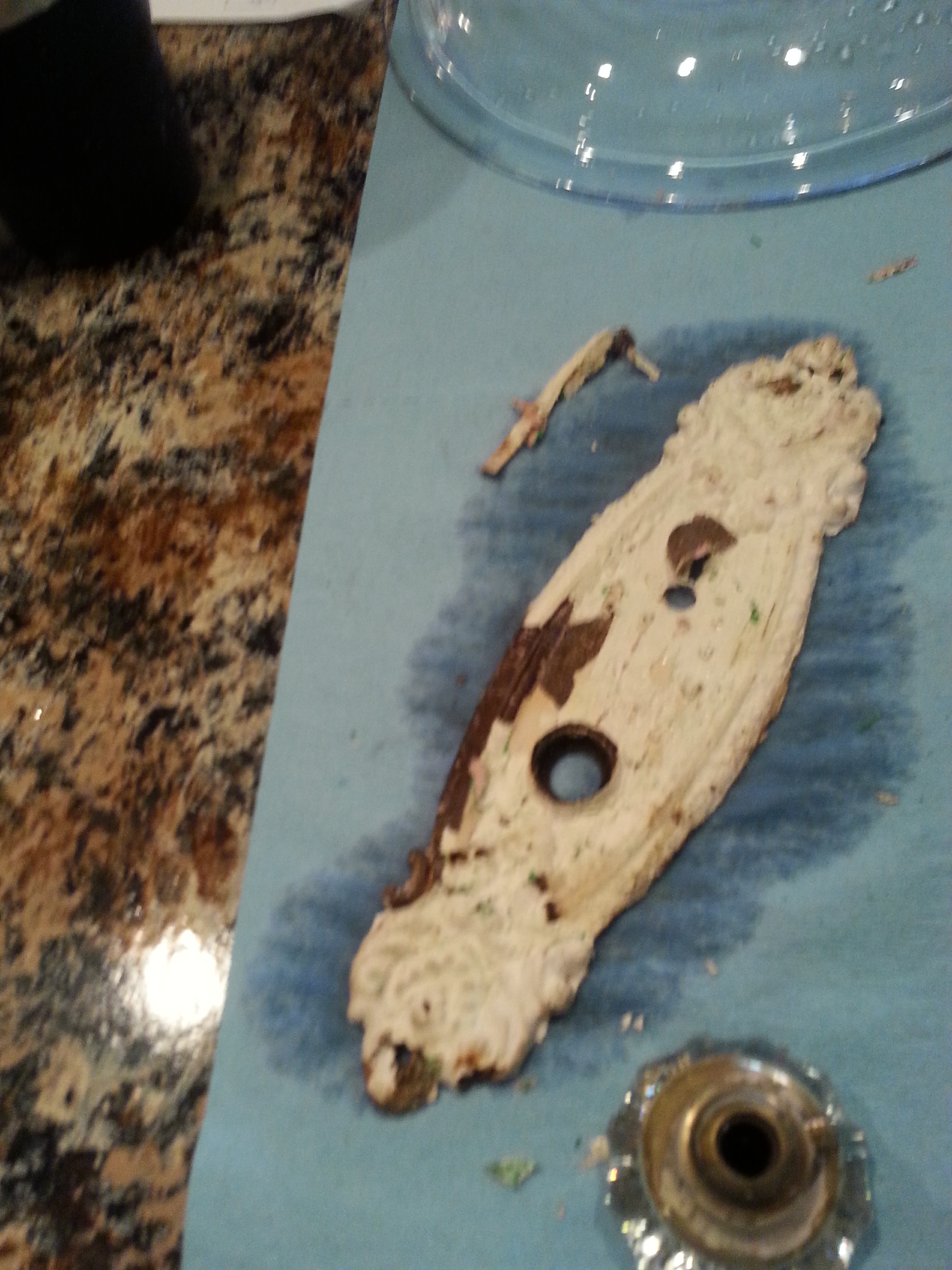
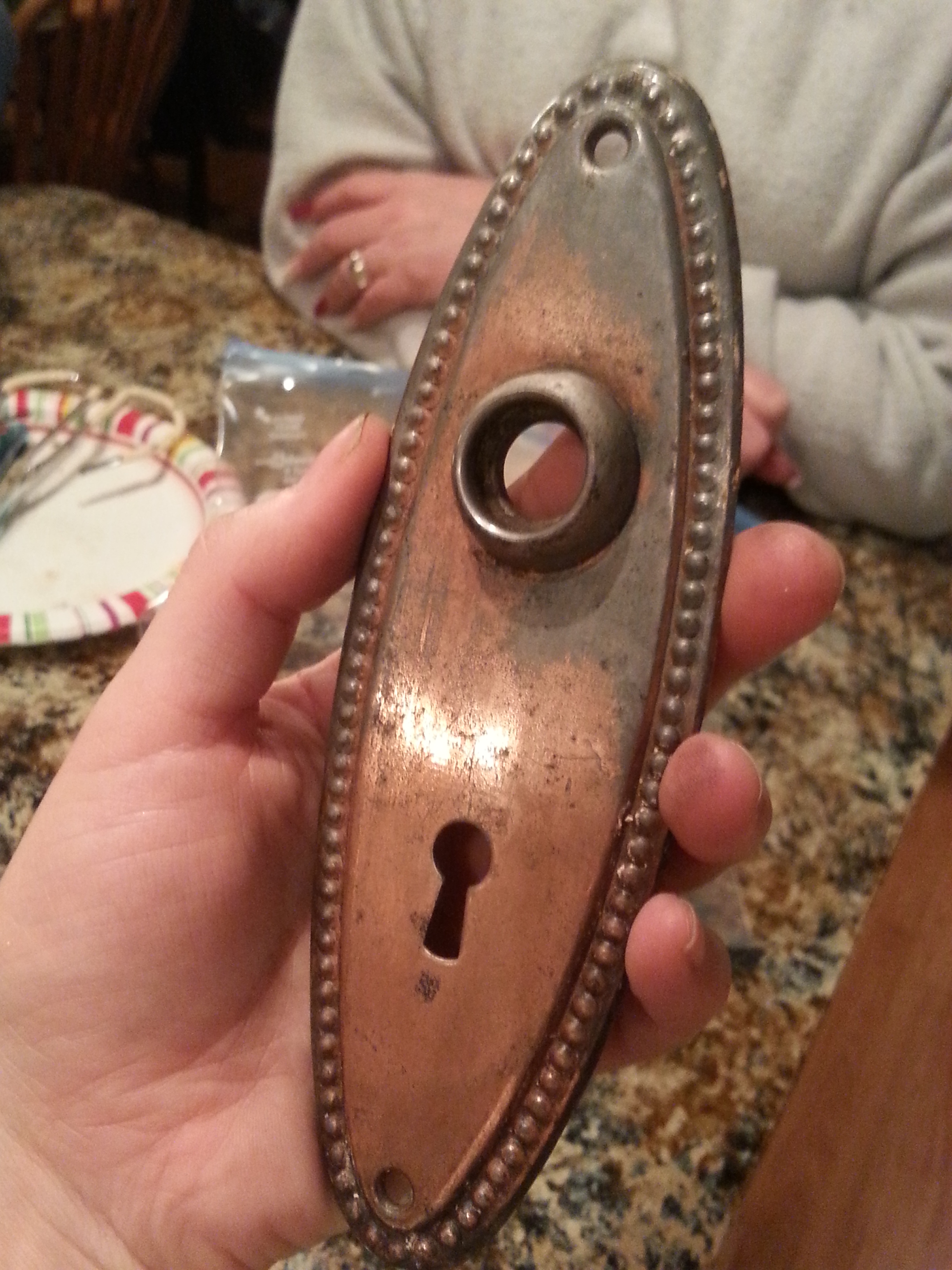
When we removed the hardware, the paint just fell off completely.  No stripping or chemicals necessary!
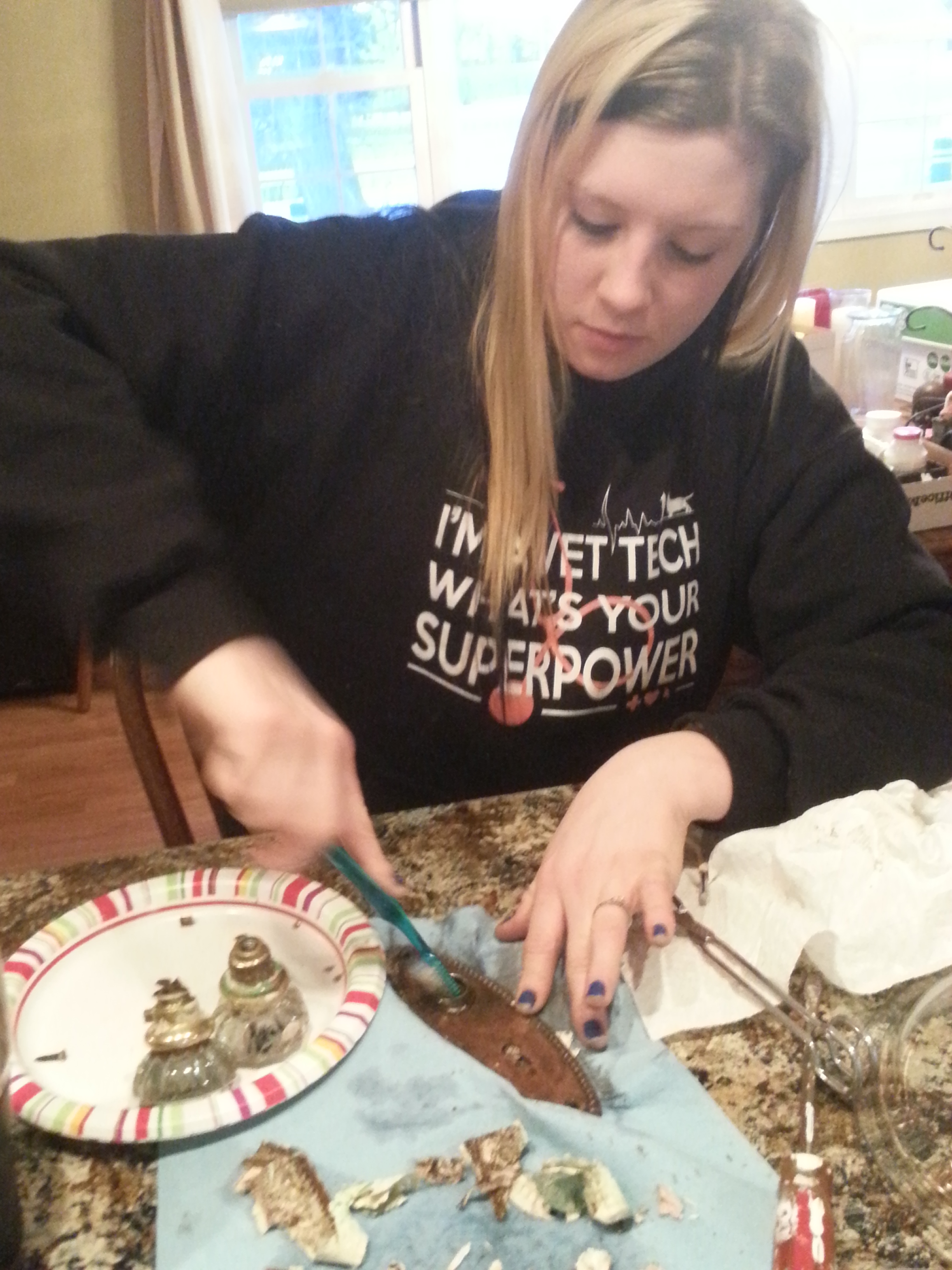
20140226_181729
A small amount of elbow grease to remove the loose paint, and a bit of shining up and the hardware was sparkling like new!
At last…I have made a contribution to RESTORING THIS OLE HOUSE!
Until next time,
Sheila

First, the window…Now, the door!

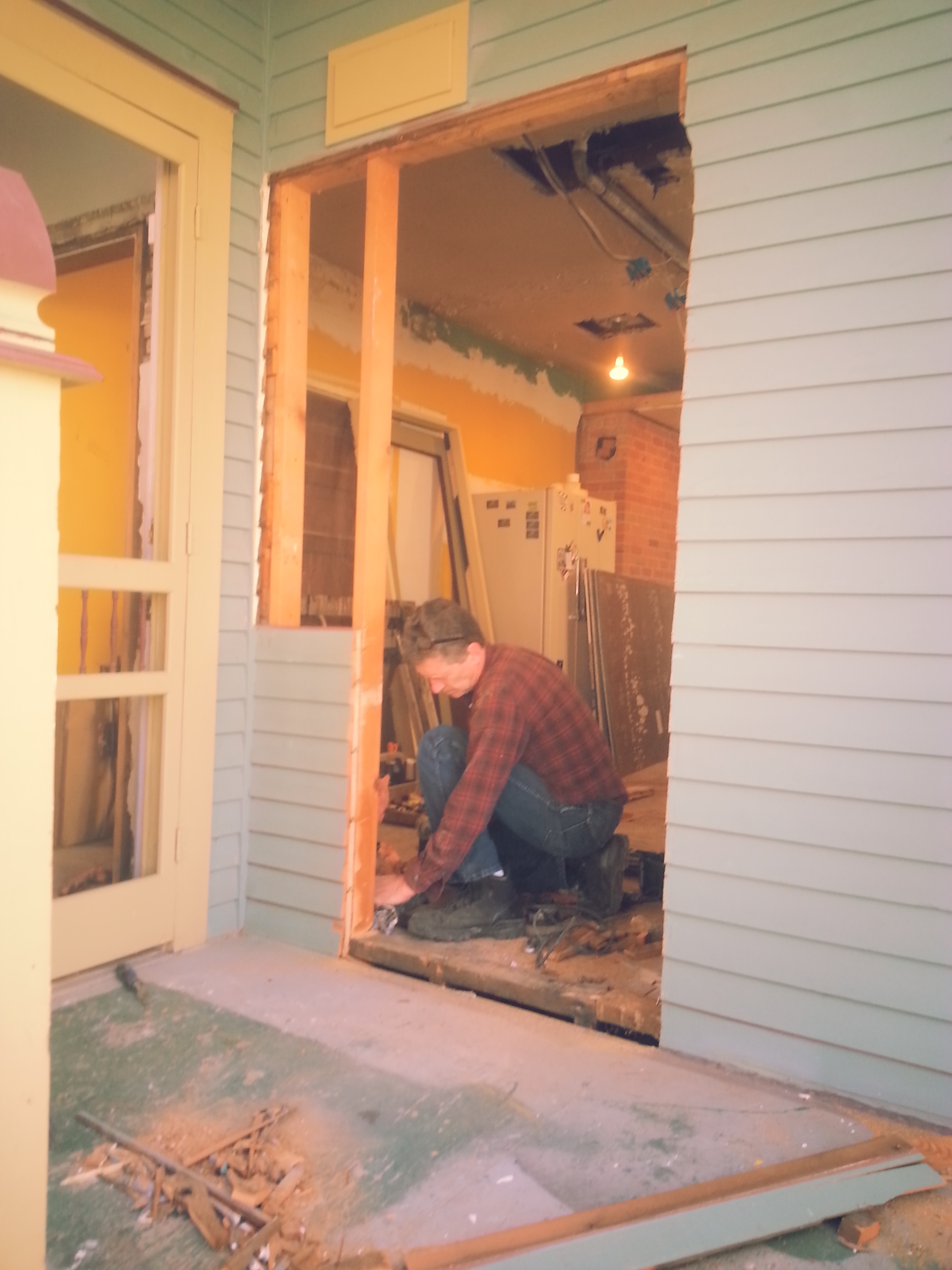
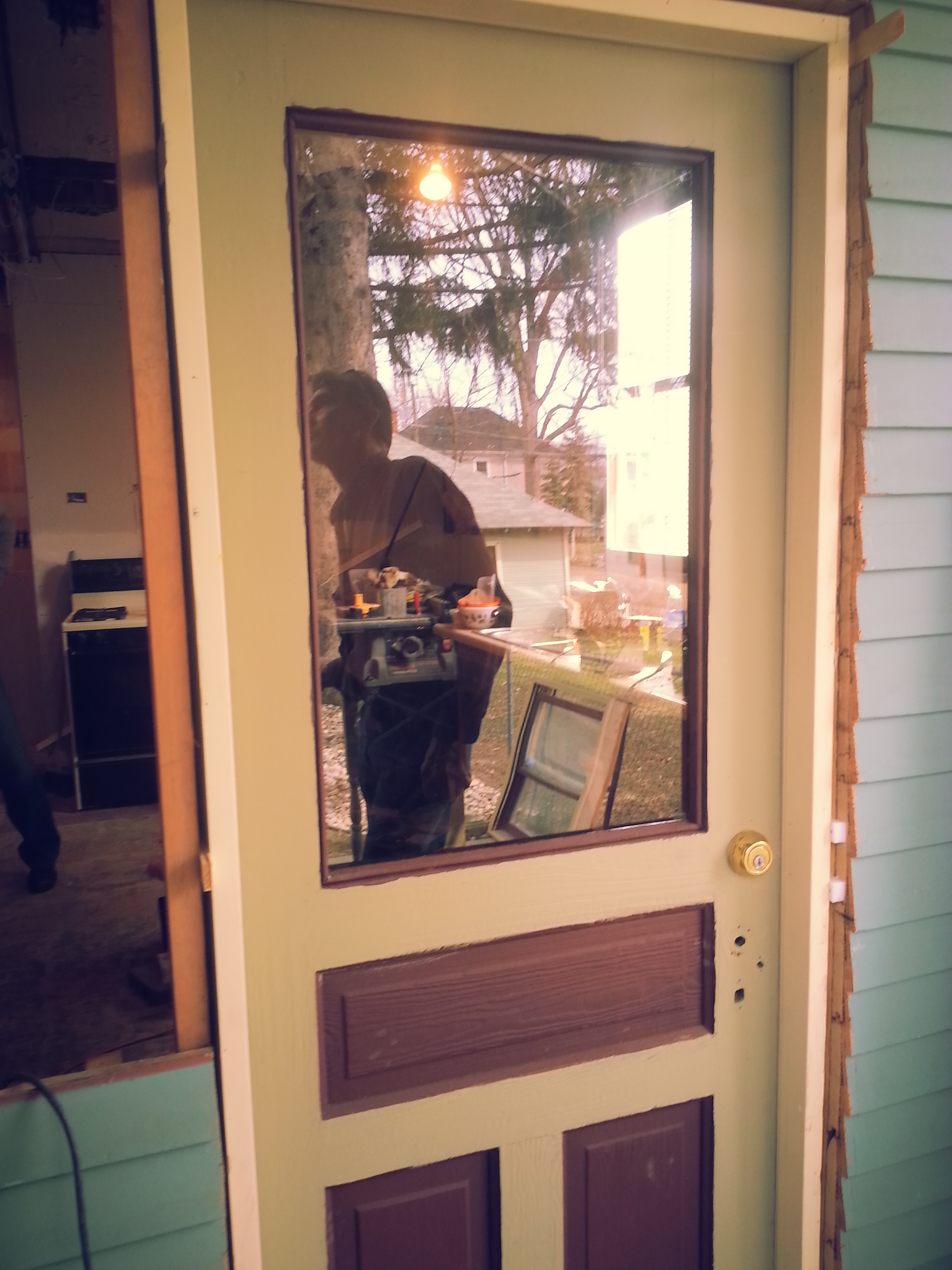
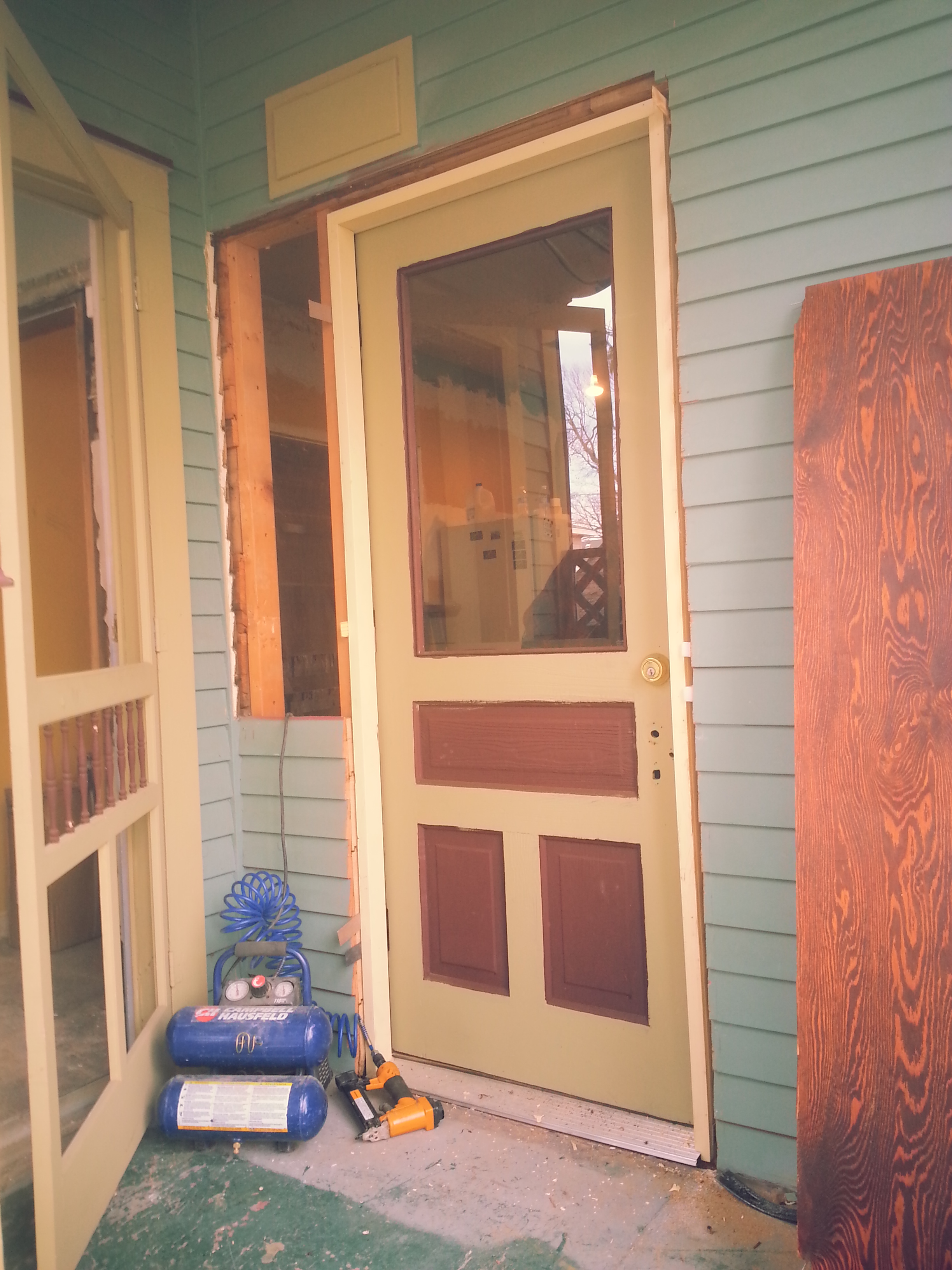
Once we were able to get our new window installed we were faced with the task of removing a second window from the north side of the kitchen and replacing it with a door. This task was perhaps a bit more complicated because it also involved closing off our current back door. It’s complicated but I will try to explain the best that I can with pictures.

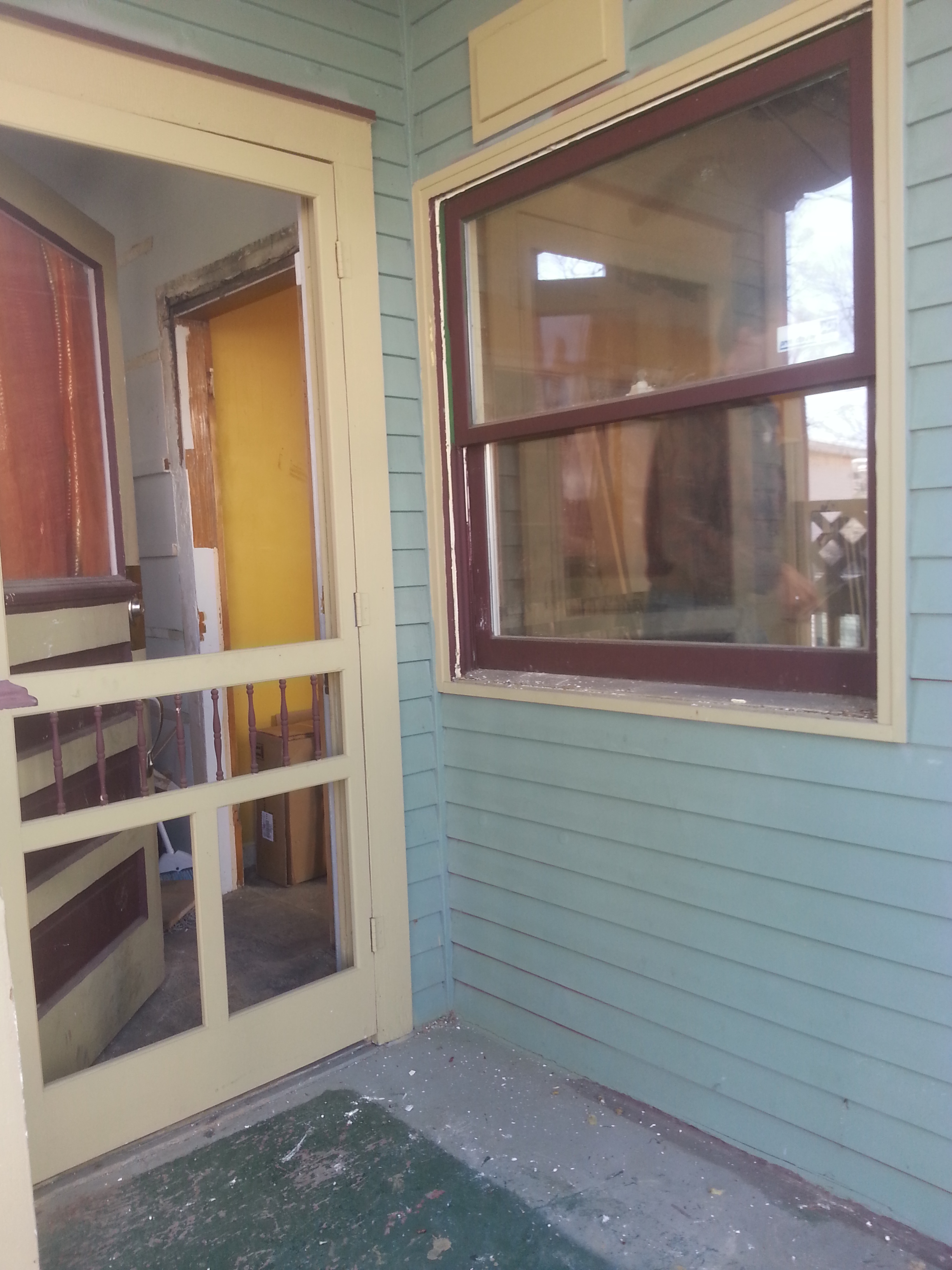
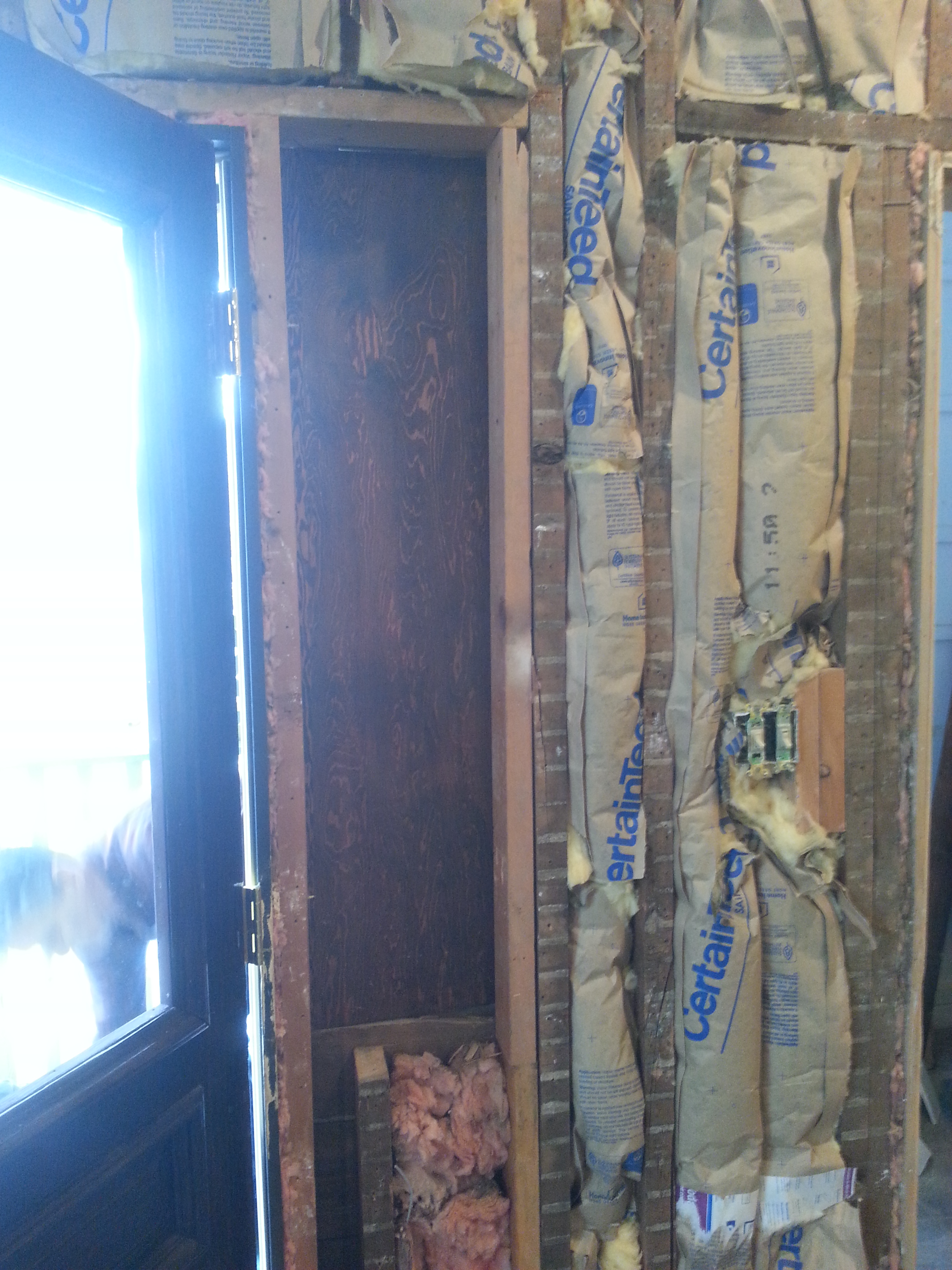
If you take a look at the picture below you will see the window on the right that we wanted to remove. In the space left by the window we will be installing an exterior door that will lead directly to the back porch.  This is the door that I talked about in the post here. The door that you see on the left side of the photo currently opens into a utility closet off the back of the kitchen. We are converting that utility closet into our only downstairs bathroom and so, understandably, a door leading to the outside of the house has gotta go!

Image


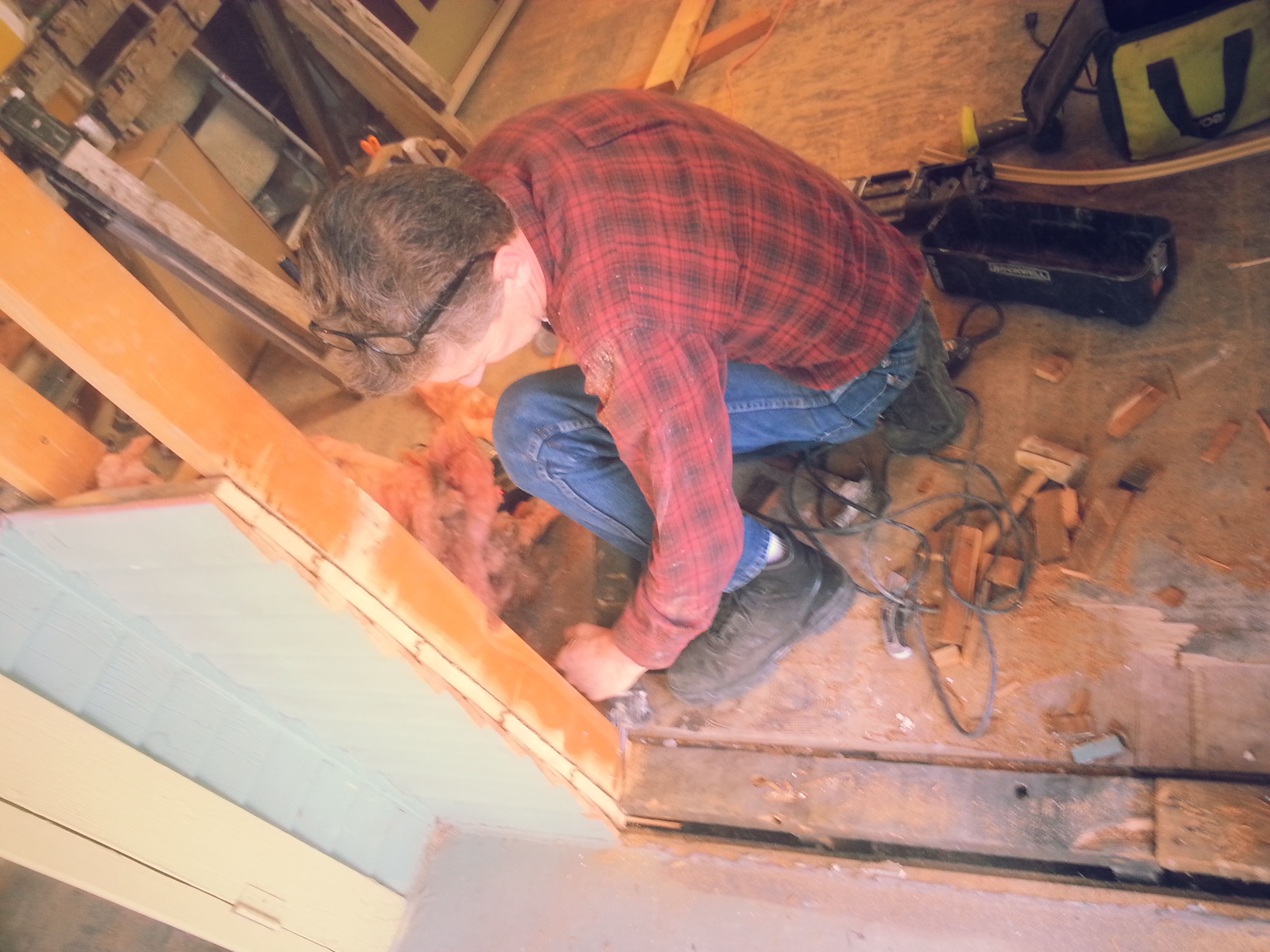
I’ll skip some of the boring details- this process of removing the 2nd window was pretty similar to the process of removing the first window. Wash, Rinse, Repeat. Once the window was out we had to remove additional siding and parts of the house below the window opening in order to expand the hole so that we could install a door.


ImageImageImage

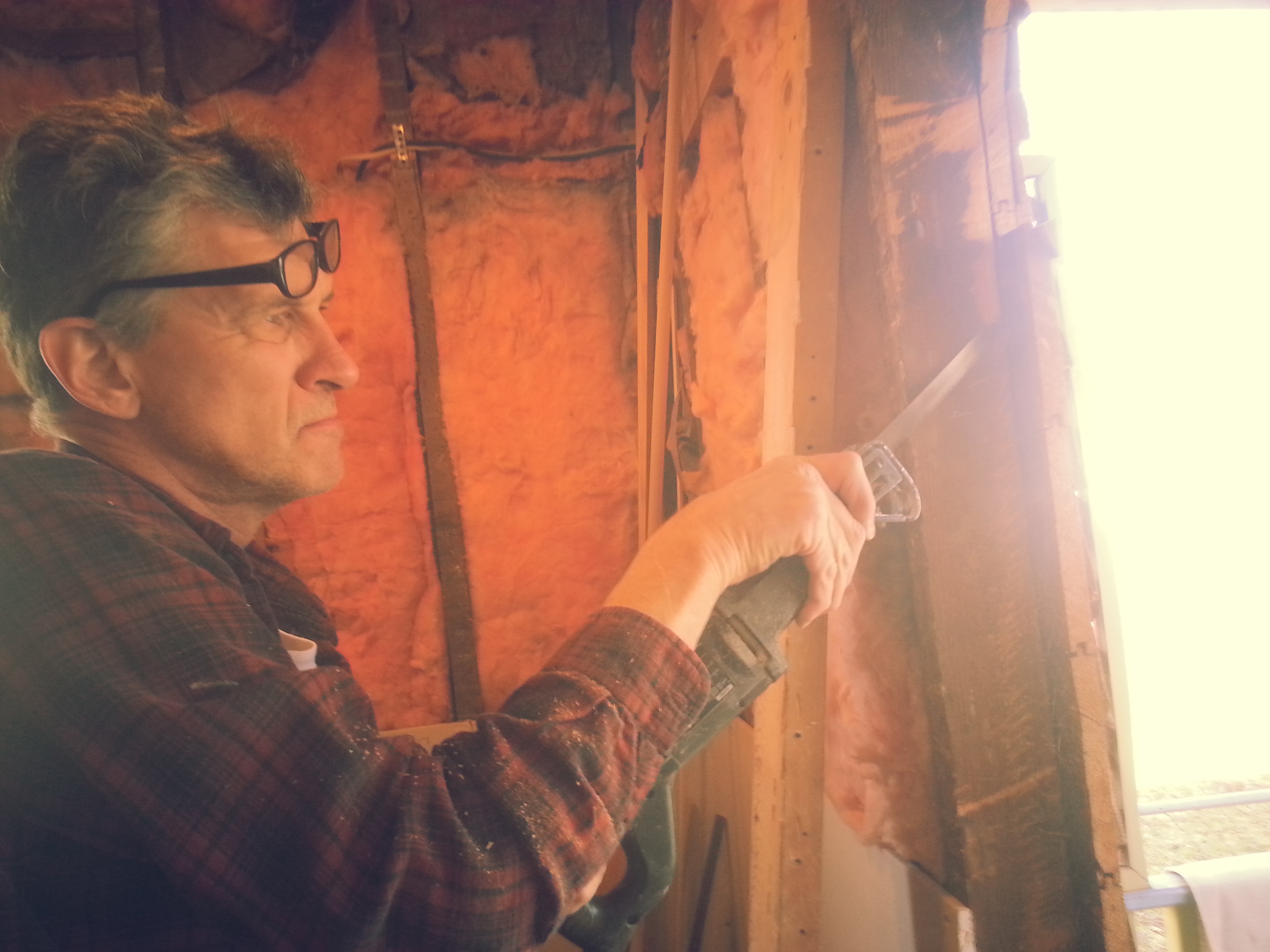
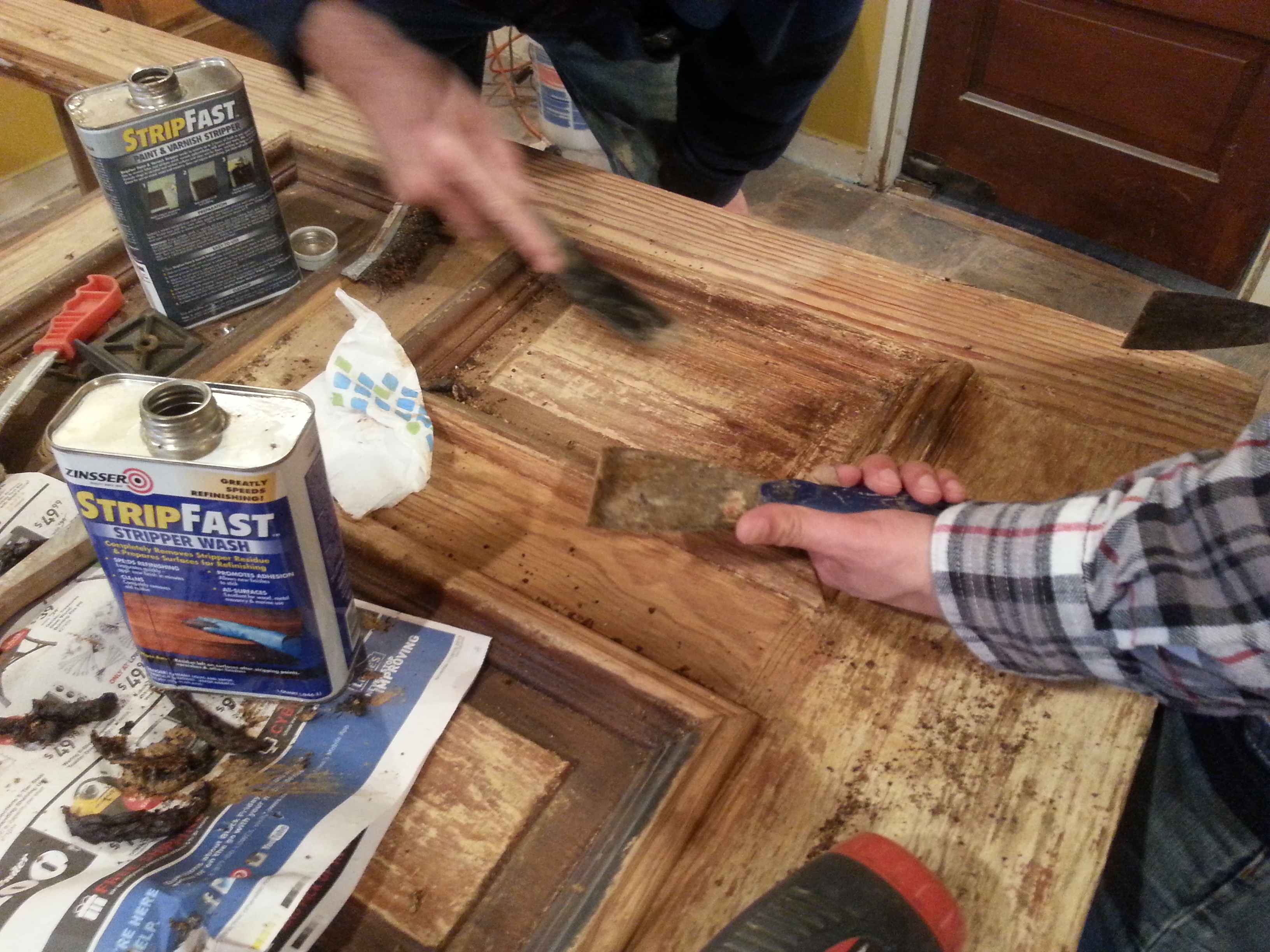
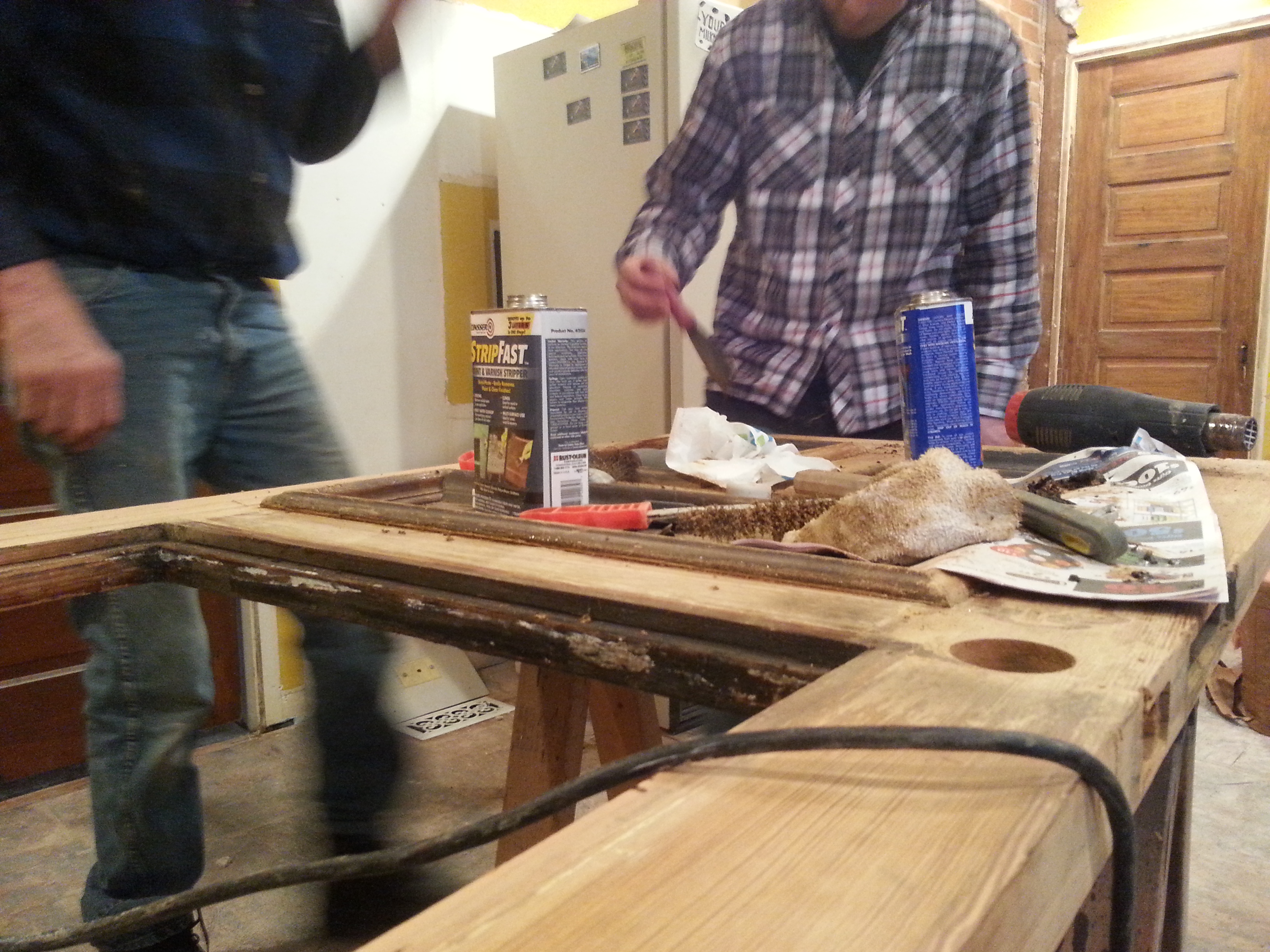
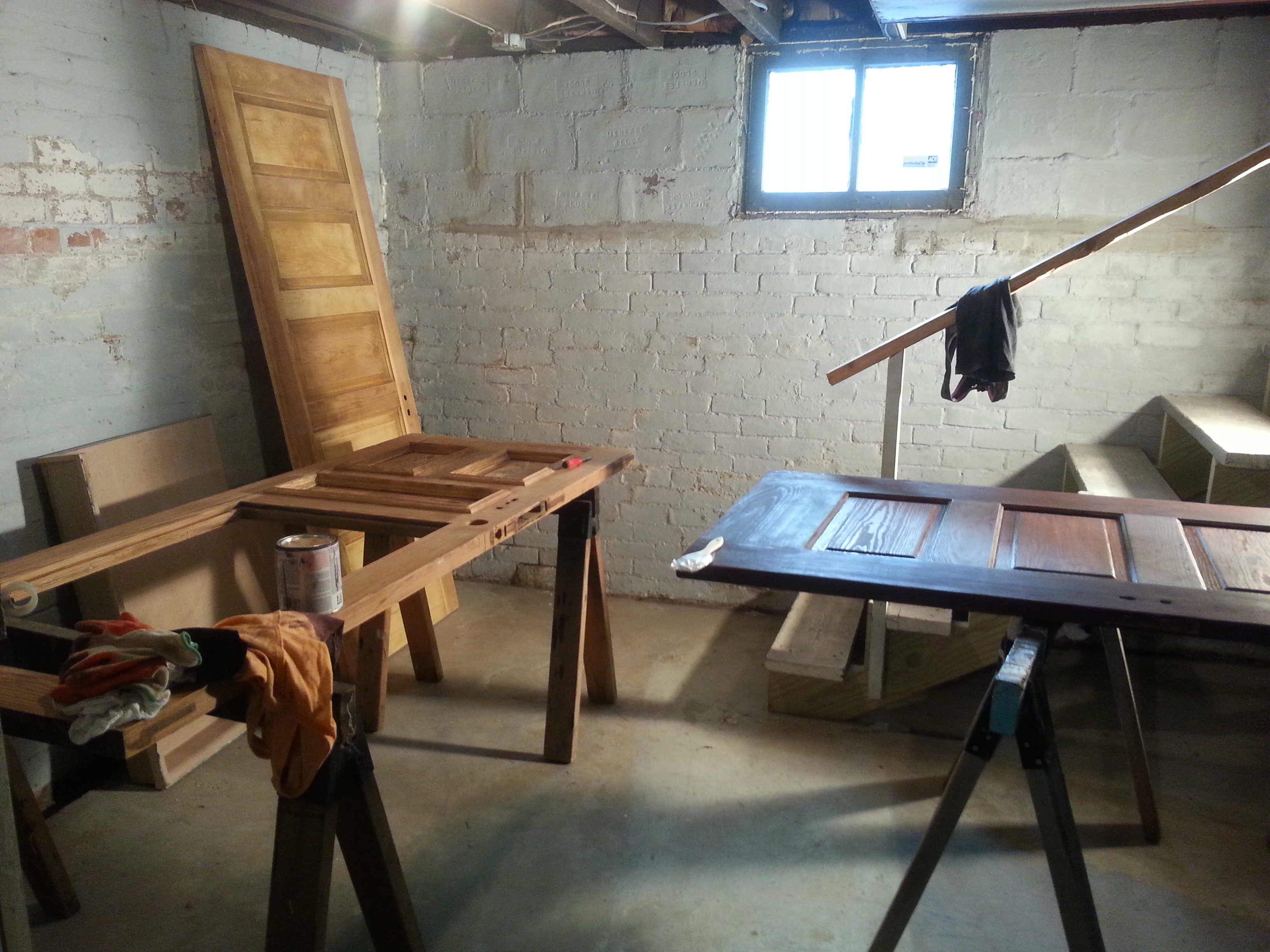
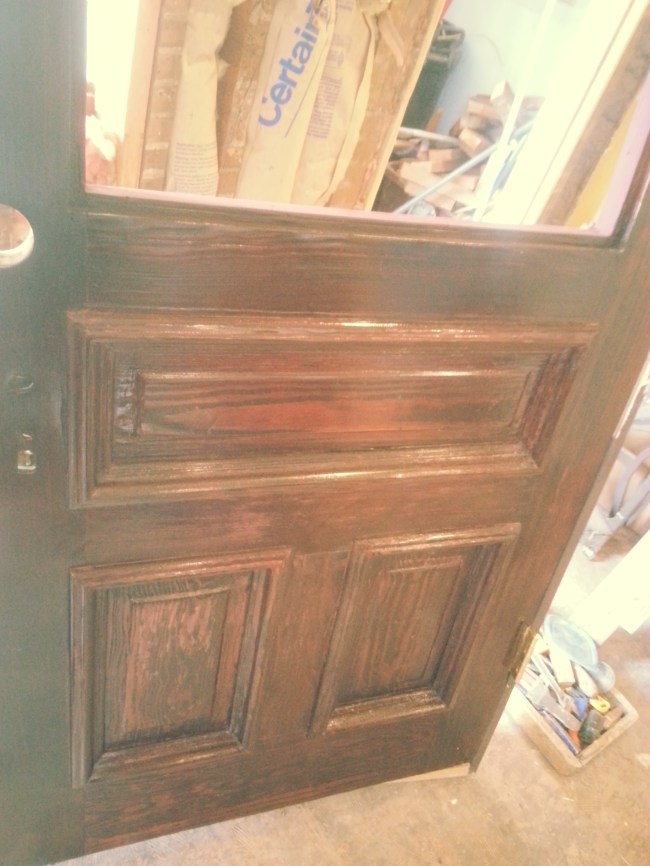
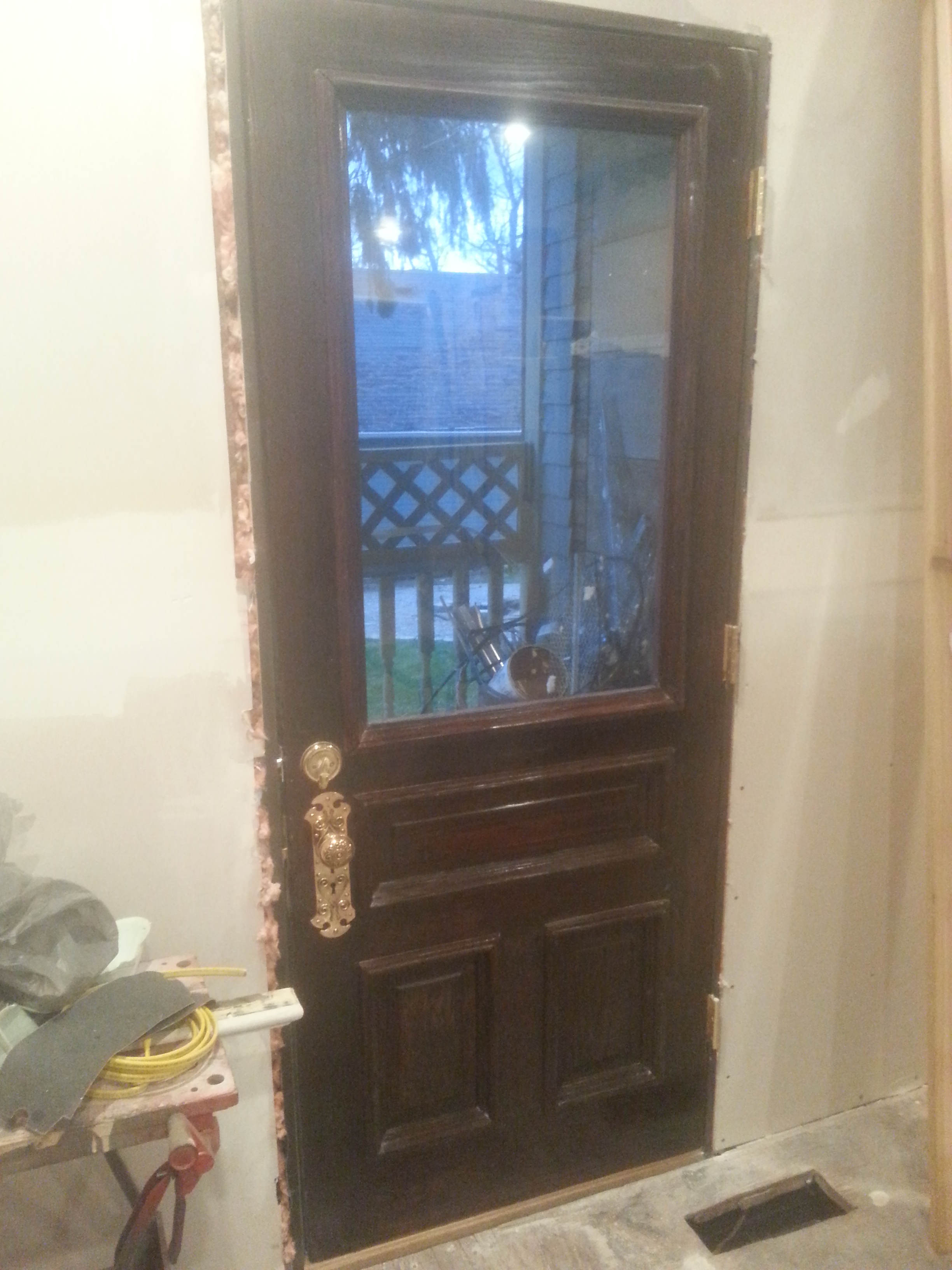
Now, let me rewind for a moment. I had been working on refinishing the door we purchased from The Woodshack for a couple of weeks.  It took hours of stripping and sanding to get the door down to bare wood.  I’m not sure of the exact age of the door but it was old enough that the finish that was on it was caked on and no amount of heat or chemical stripper would remove it. We resorted to scrubbing the entire door with a wire brush. The work was painstaking…but rewarding. I am so happy with the end result.

ImageImageImageImage

Image

ImageImage


ImageImageImage

Image

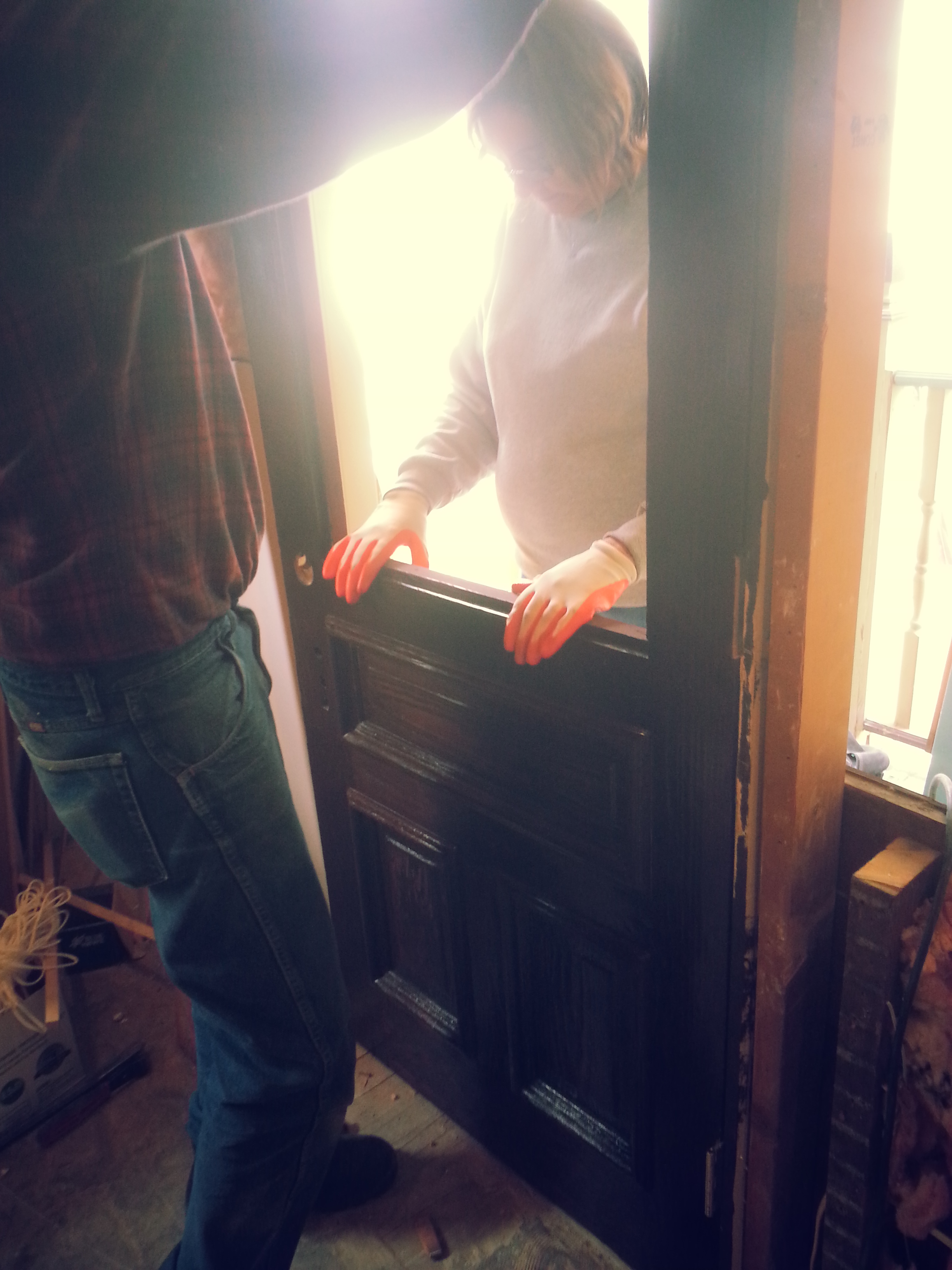
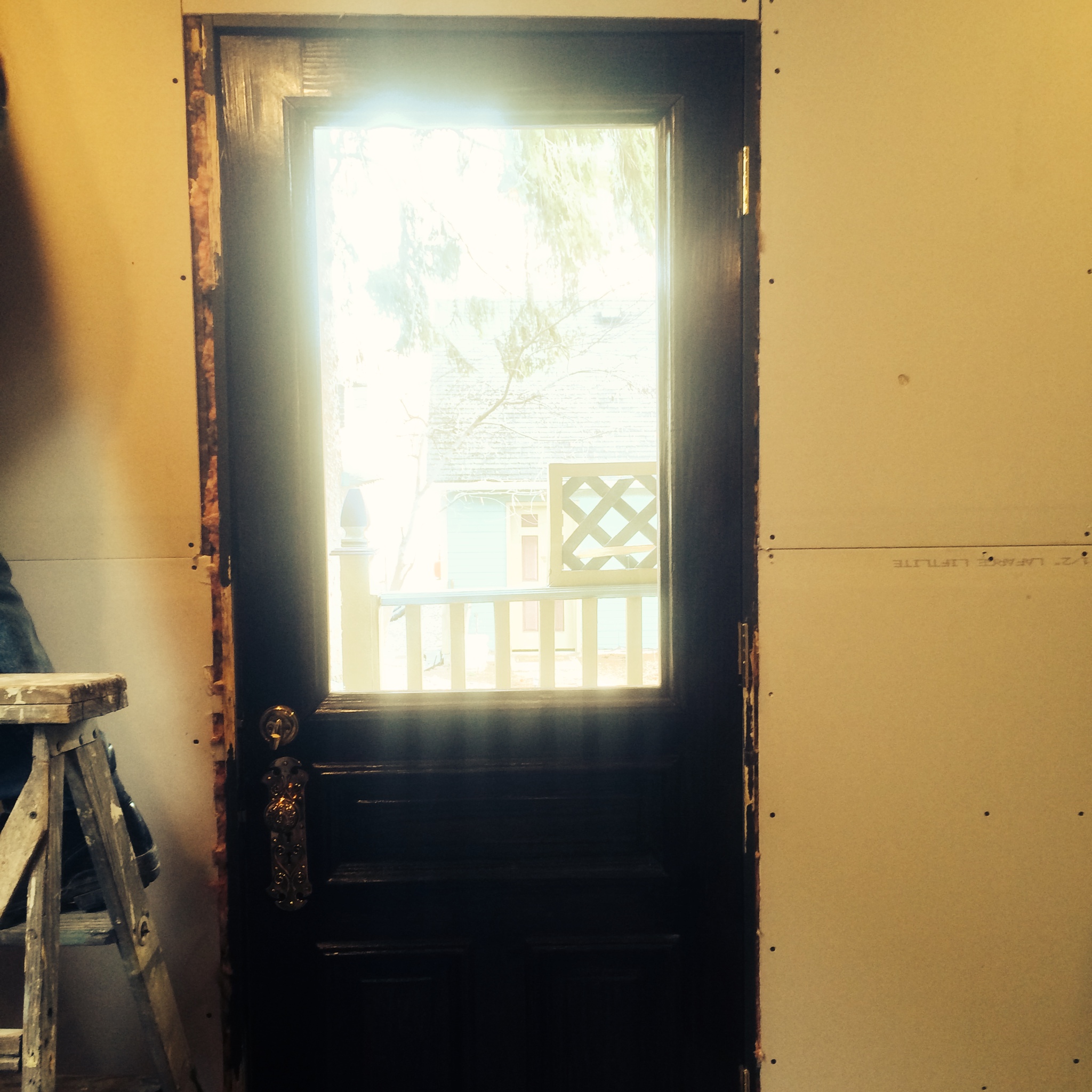
Once the door has been refinished we were able to bring it upstairs and install it in the opening created by my dad.

ImageImage

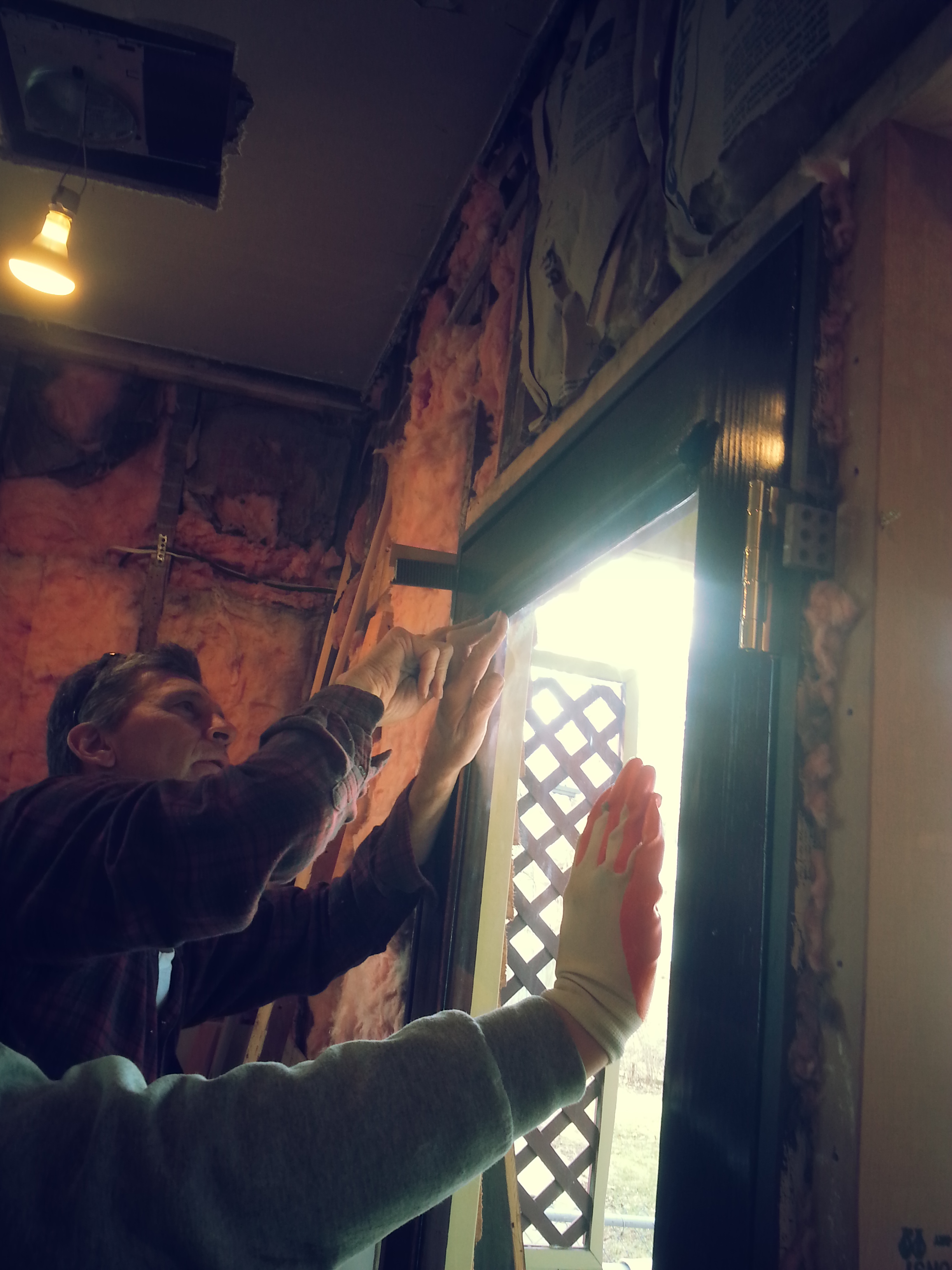
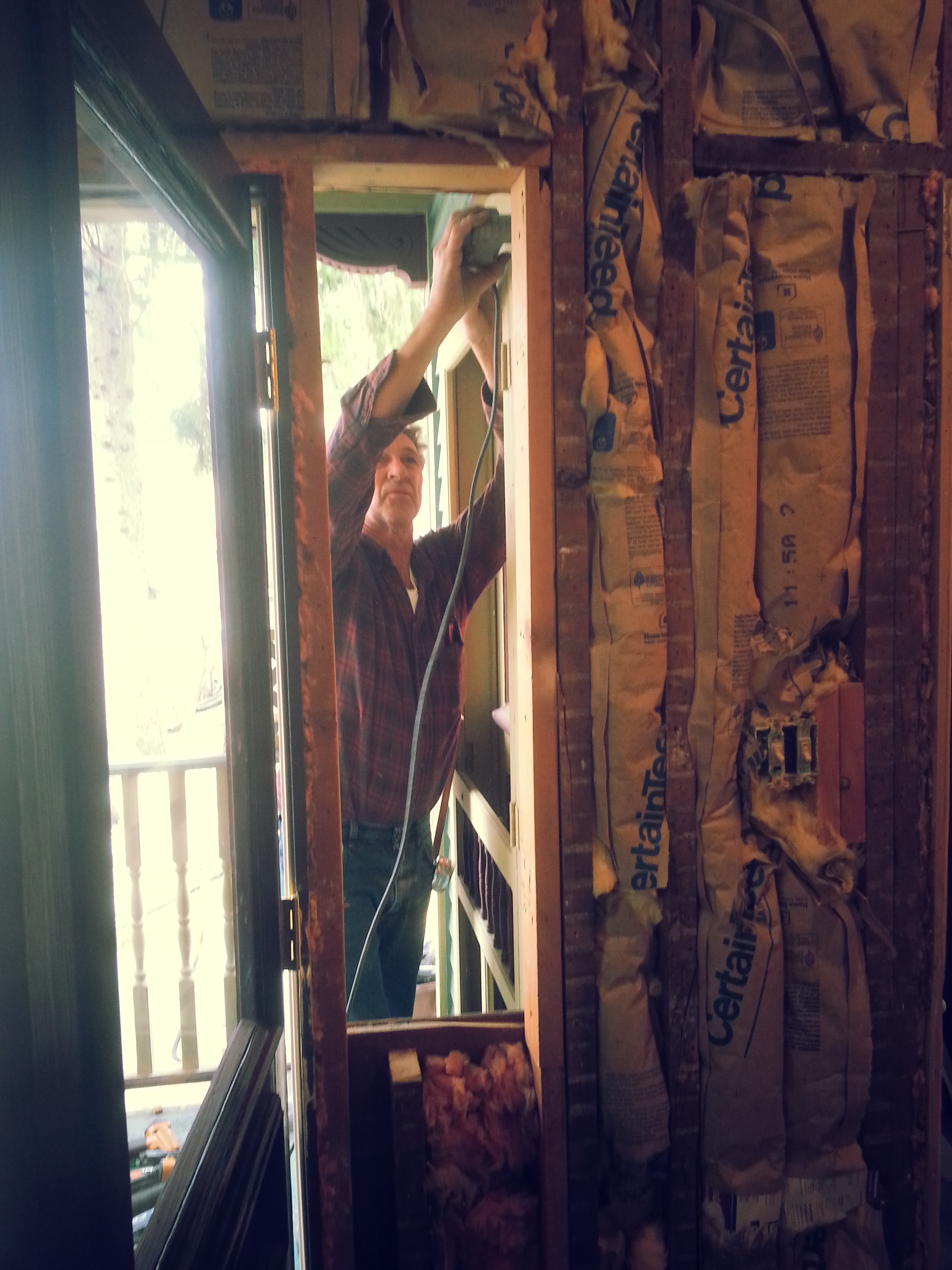
We were able to hang the door with only a few minor setbacks.  We had some issues because after 100 years things just aren’t square anymore! After some adjustments we were able to get the door opening and closing properly. Then, the process of closing up all the holes started.

Image

Image


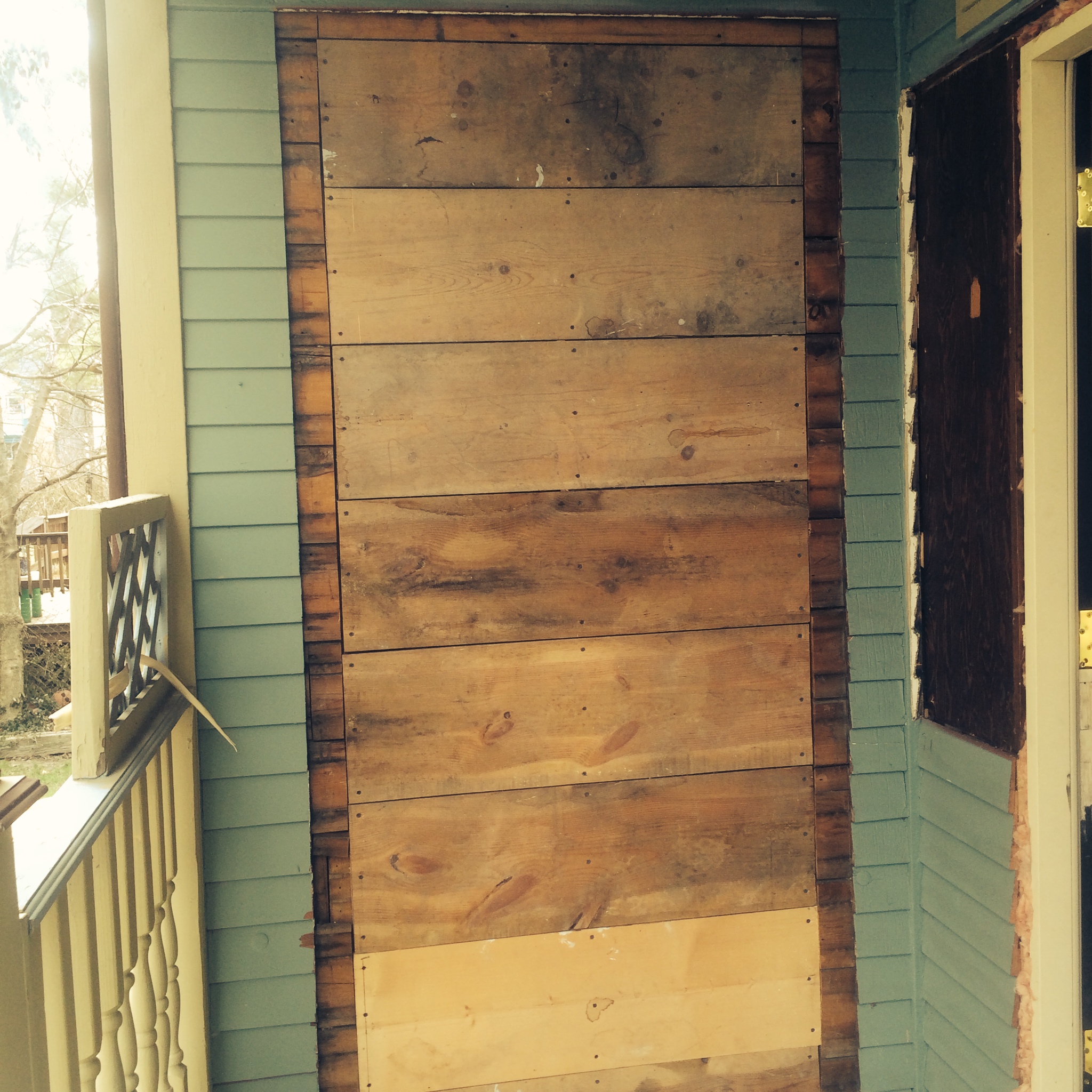
We removed the previous exterior back door and boarded it up. This area will be covered by siding to match the rest of the house.


Image


I am so happy with the end result, this door is a truly beautiful (and functional) addition to our kitchen remodel!

ImageImageImageImageImageImageImage

Ladies and Gentlemen…We have a window!

After many hours of painstaking plaster removal, electrical wire rerouting, plumbing installation, gas line addition, and far too much dust in my hair I can say that we are finally at the point where we are closing this baby back up! That’s right, folks, we have 4 walls AND a ceiling! I can’t express to you all how excited I was to get to this part of our remodel. Not only does it mean less dirt and dust but it also means that instead of looking at ugly studs (hmm is that an oxymoron or what?!) and pink insulation while I am making dinner, I get to see the crisp whiteness of freshly hung drywall!

Before we could hang new sheetrock we first had to solve the problem of what we would do for kitchen windows.  We opted to remove the 2 existing kitchen windows which had been installed during a previous remodel. Both windows were square shaped which is entirely wrong for the style of this house. We were looking for a wooden window frame that would measure about 40″ x 60″ in accordance with our design plans. One thing about living in a historic district is that we must request permission to complete any exterior changes to our homes.  This approval process is necessary in order to preserve the historic integrity of the neighborhood and for me it was  pretty quick and painless. I showed the designated organization the window that was currently in place and then provided a couple  of reference pictures and sketches of our intended changes.  Since the window that was in place was actually a newer window and the original window had already been removed at some point in time it was not hard to convince anyone to approve a design that would echo what this kitchen probably looked like when it was built in 1911.

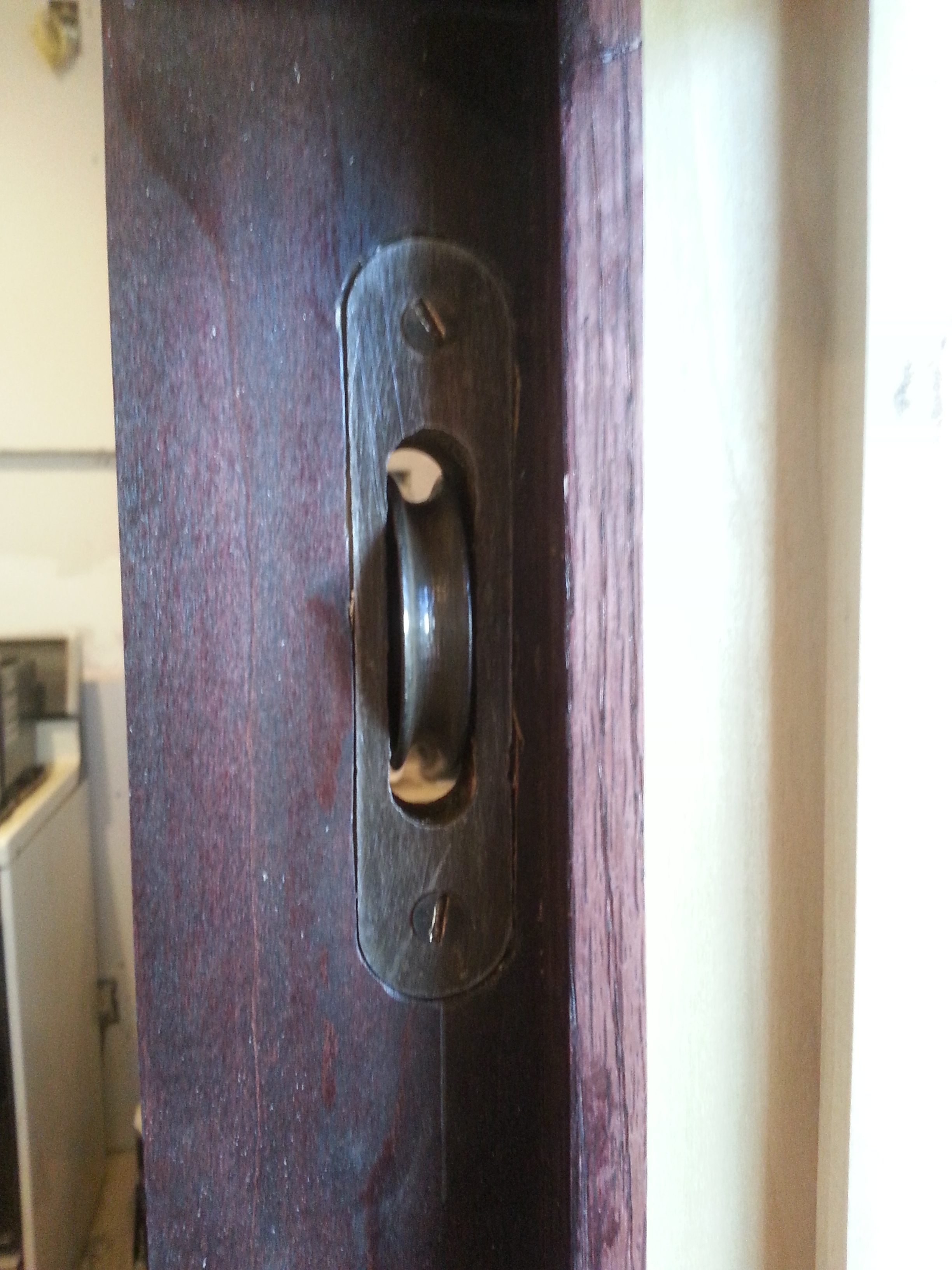
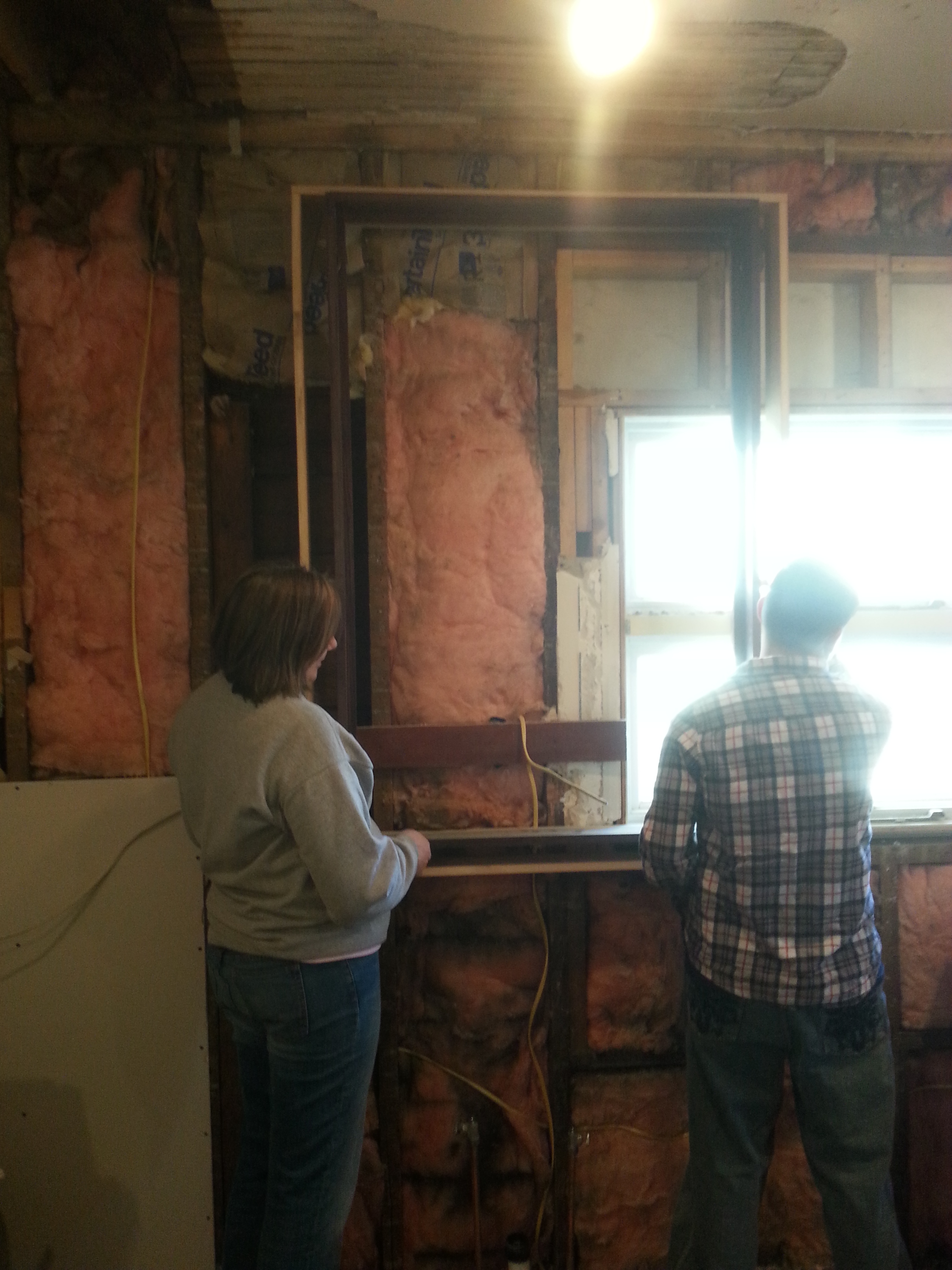
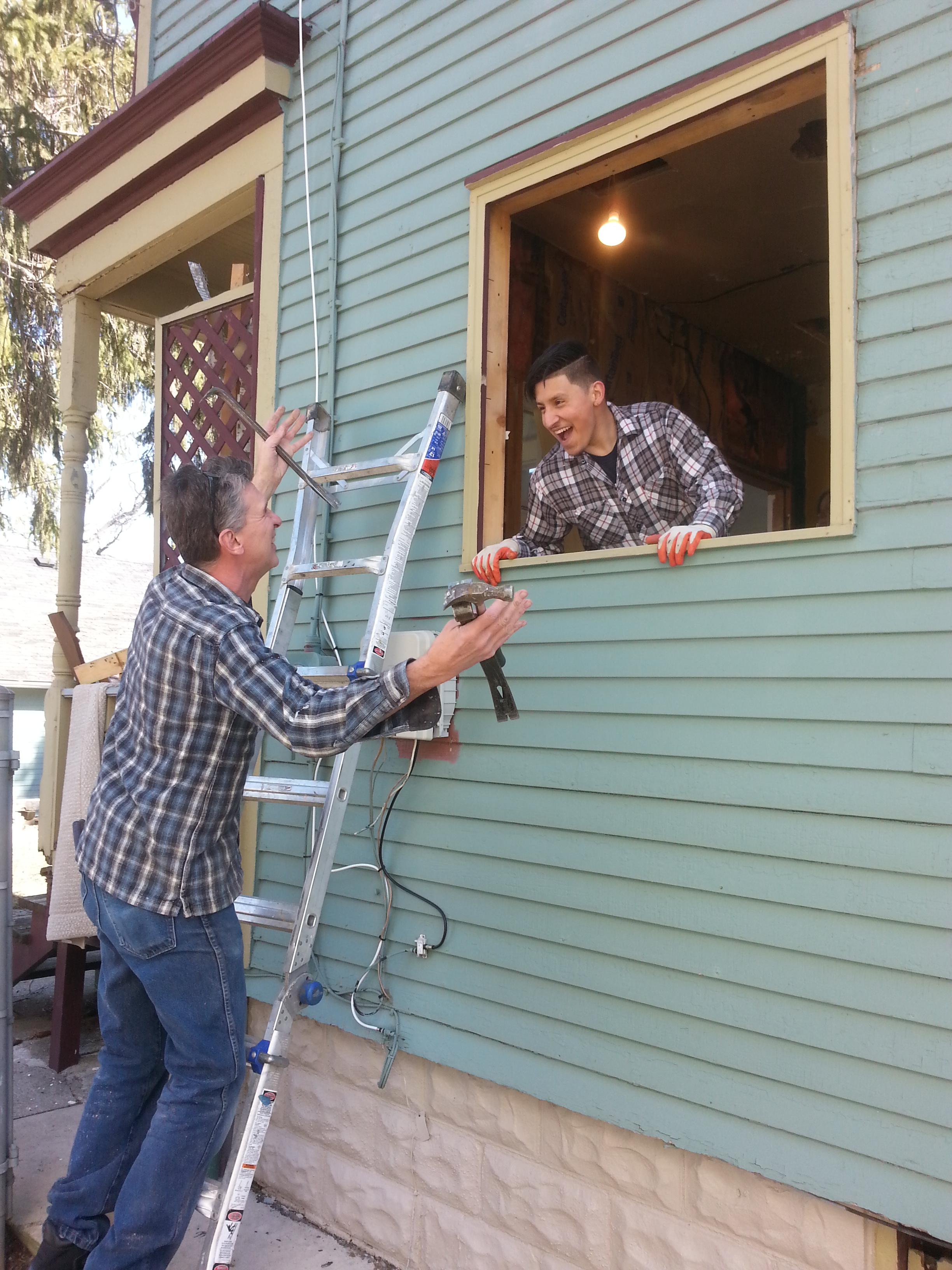
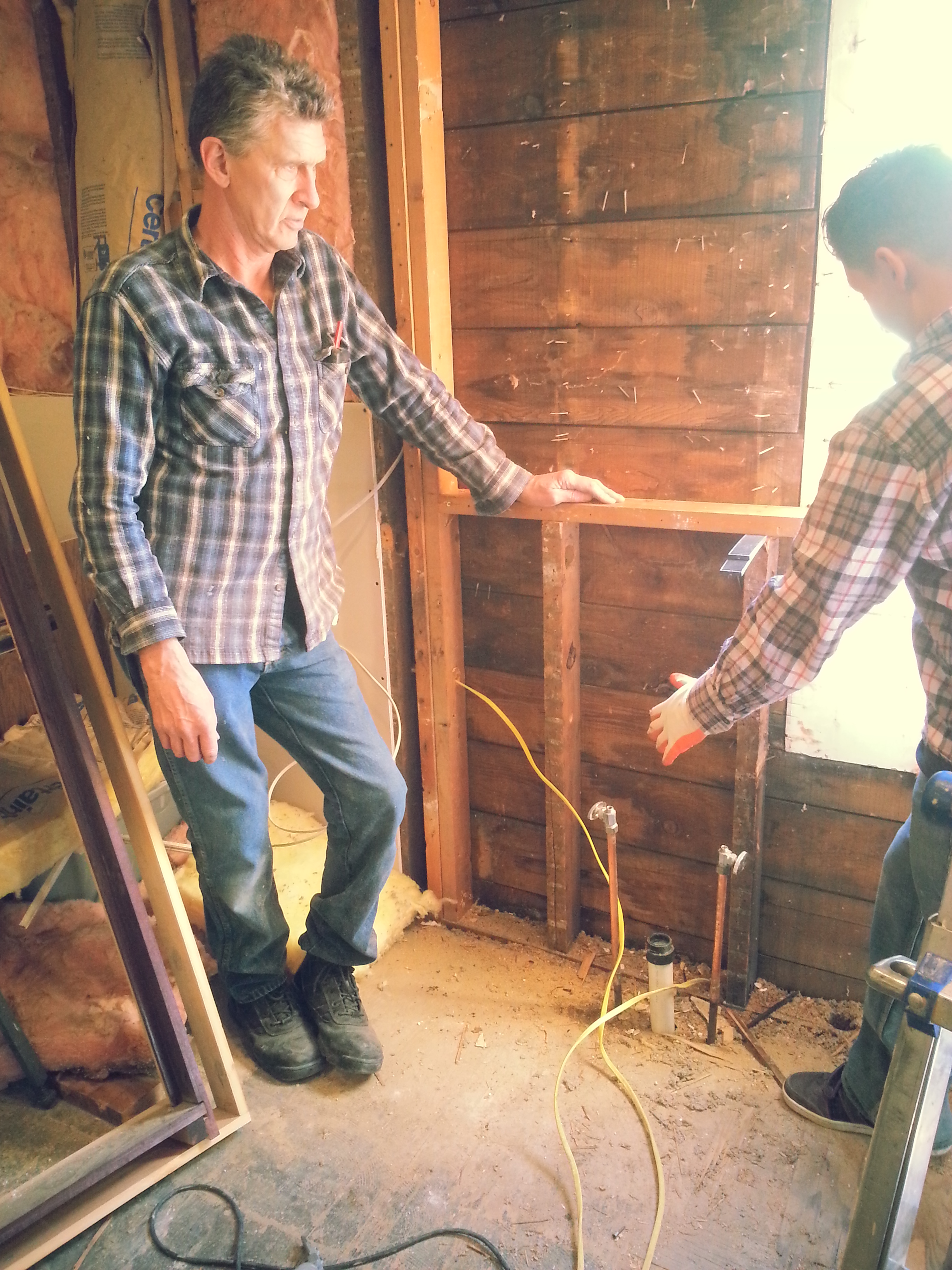
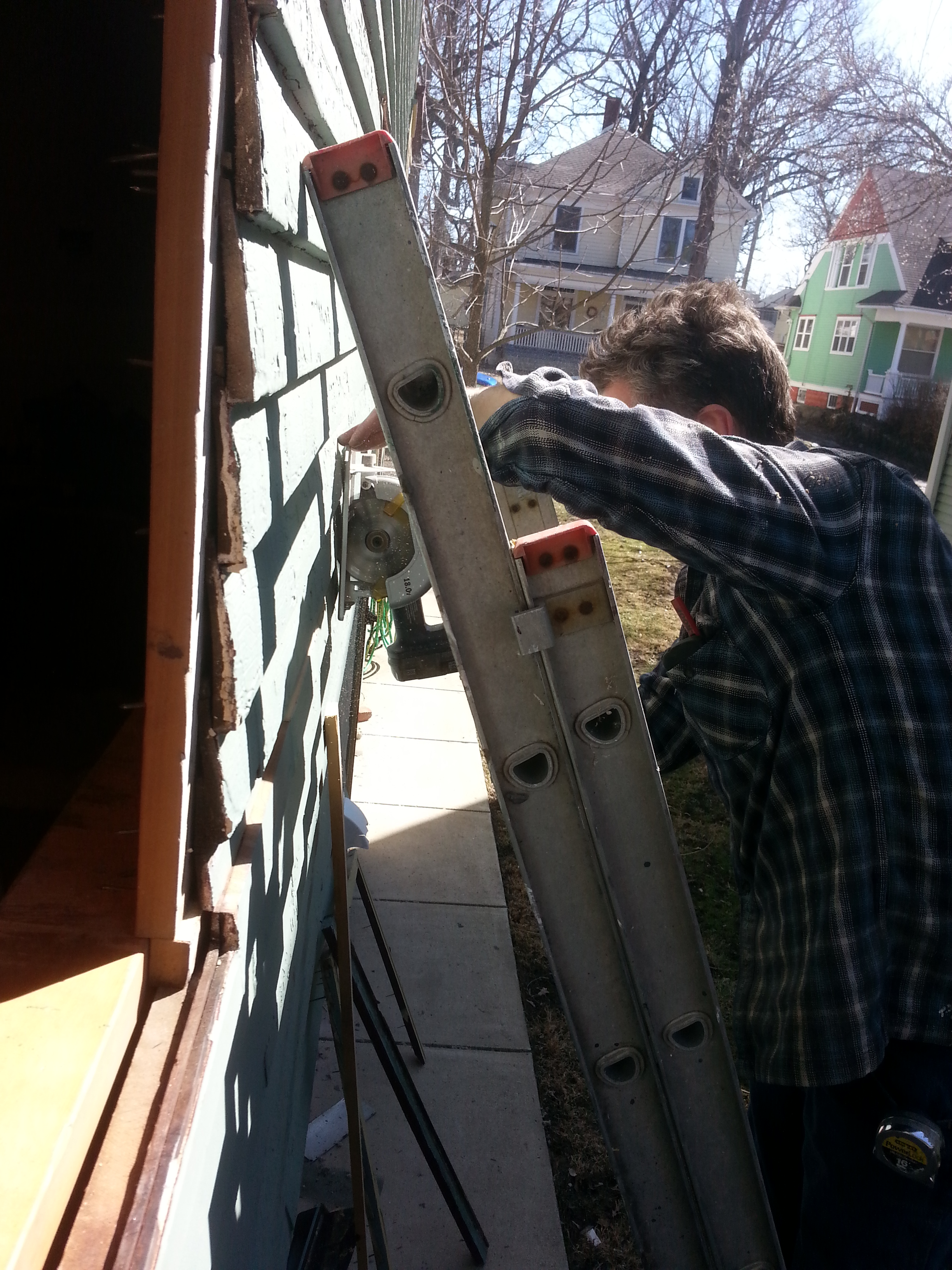
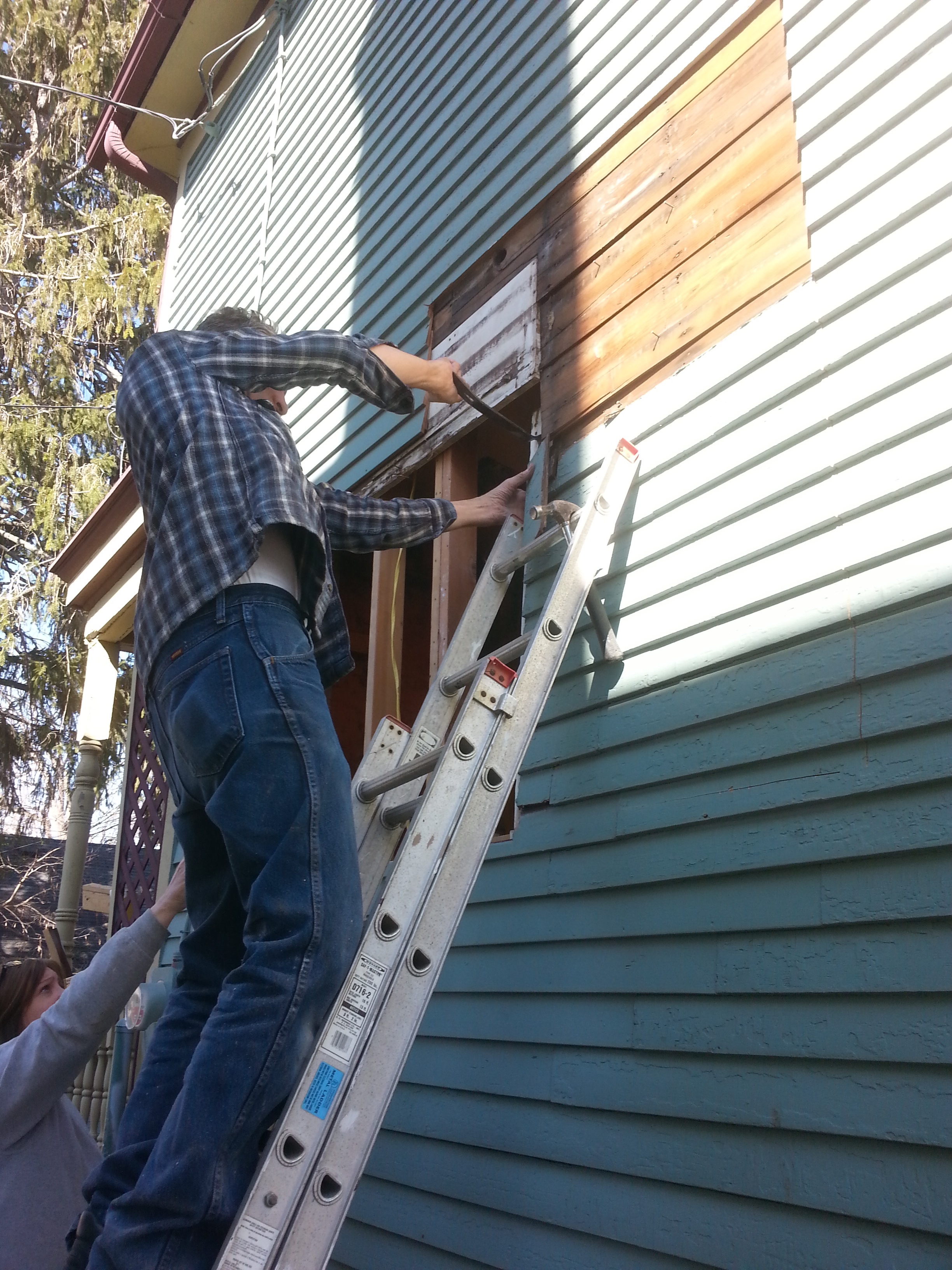
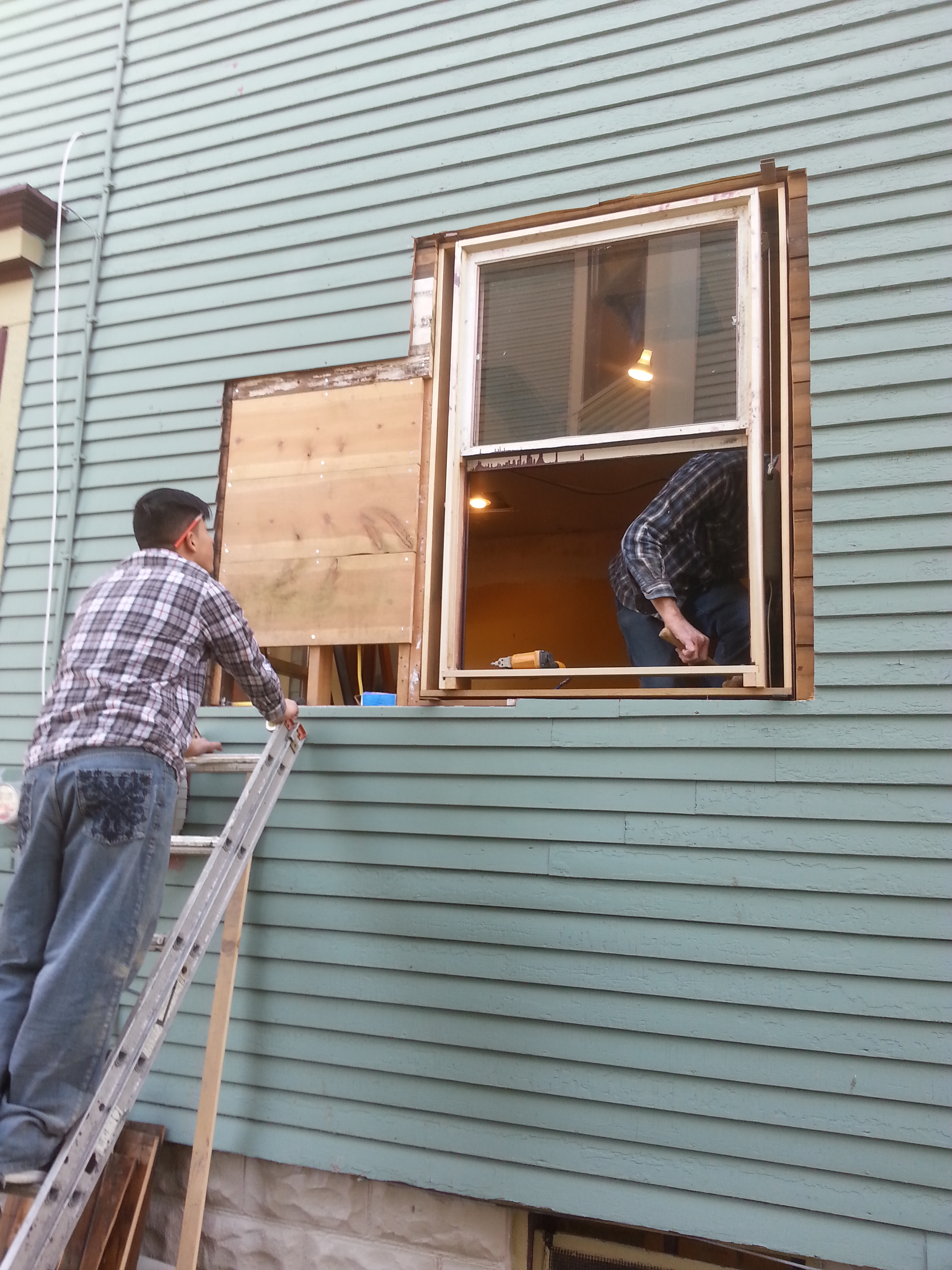
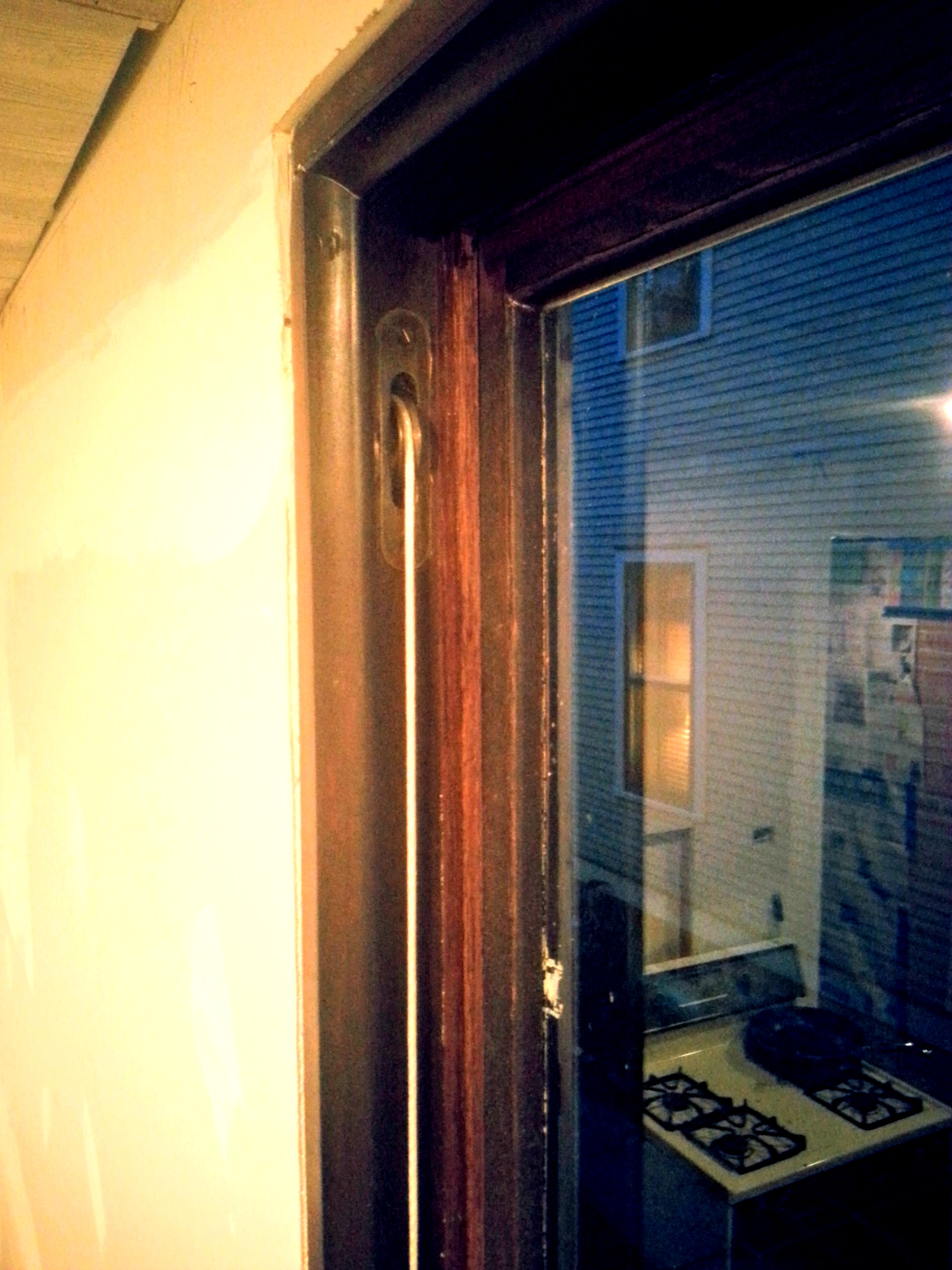
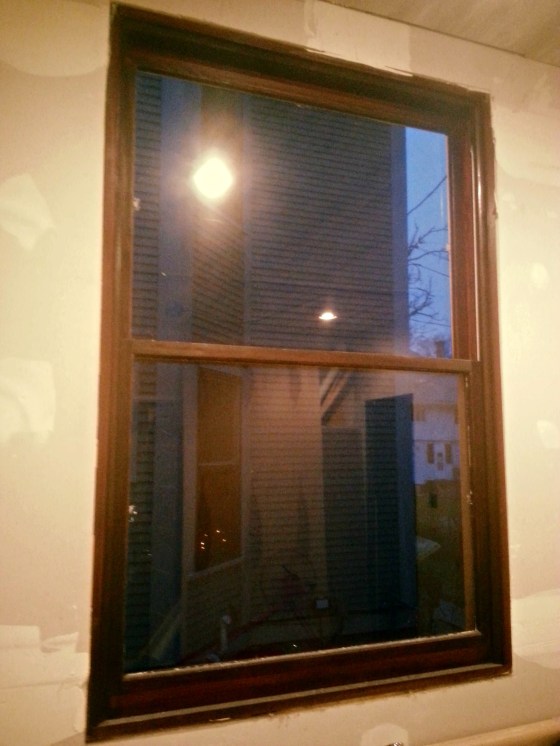
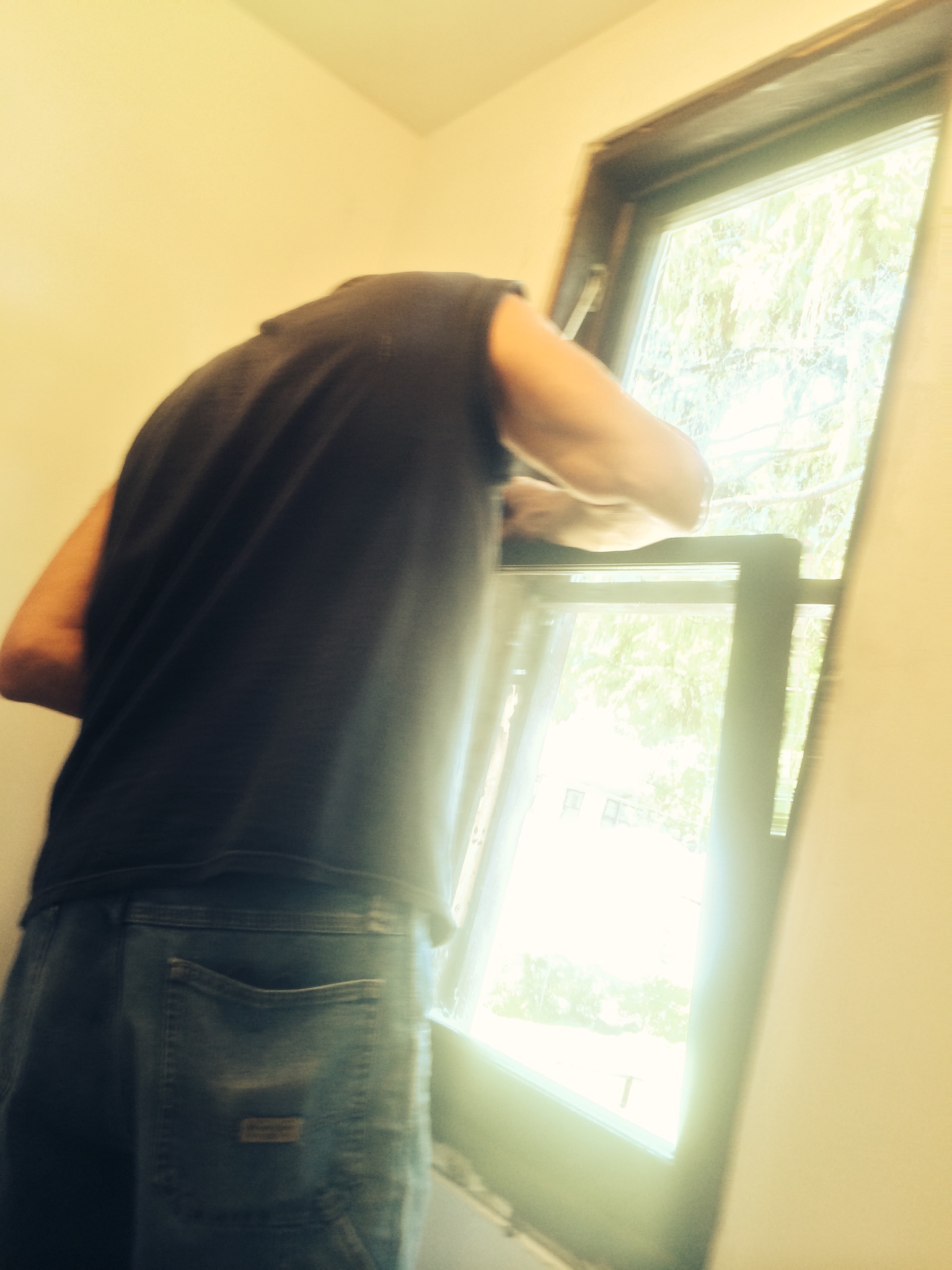
We had two options as far as installing our new window. We could choose to purchase a new construction wood window or we could find an old wooden window with the correct dimensions and install that.  I considered and priced both choices. In the end my dad came across two window sashes that he had removed from a remodel he did on another home  a couple of years ago.  The two sashes put together would be the perfect size! He generously regifted the windows to us (free is good!!) and we set to work stripping and sanding the frames down to bare wood. My dad custom built the actual frame that the two sashes would sit in.  After that it was a matter of cleaning up the glass and staining the frame to match the rest of the woodwork throughout the house.  In trying to match the rest of the windows in the house we were also in need of a set of pulleys and window weights so that the sashes could be raised and lowered. That meant another trip back to The Wood Shack! We also picked up a lock for the window while were there. The hardware matches all of our other windows pretty closely.  My dad worked on sinking the pulleys into the window frame and we were ready to begin install. 20140330_095417 20140330_095357…But first, that meant ripping out the existing window.   Here is a before picture of what this window looked like from the outside. 20140330_123407 20140330_115546   Since the new window would be set over about 14″ to the left we had to mark exactly where our new frame would have to be placed. Raul and my dad began with removing this window. 20140330_120040 It was definitely a noisy process sawing through all of the studs that were in the way and hammering out the new window but after a couple of hours we were able to install the new window frame. 20140330_15075320140330_123602 One thing’s for certain- they sure used a shit ton of nails back in the day!   After the old window was removed we had to frame in the hole for the new window with 2×4’s. 20140330_153942 20140330_152225 20140330_154932 We then had to cut the new opening. We tried to salvage as much original wood siding as possible. We will reuse this to cover up the hole left by the old window.20140330_154937 20140330_160346 20140330_161308

We had to close up the old hole with a few boards. The siding will be installed on top of these boards.

20140330_173143With the window frame set we could finally install the two sashes using the window weights we purchased at The Wood Shack.         20140330_165514

20140428_204435

20140428_204416

And voila! We still have a lot of molding to add to the inside and outside of this window but it is so nice to have this installed so that we can continue along with the fun stuff!

A local treasure: The Wood Shack

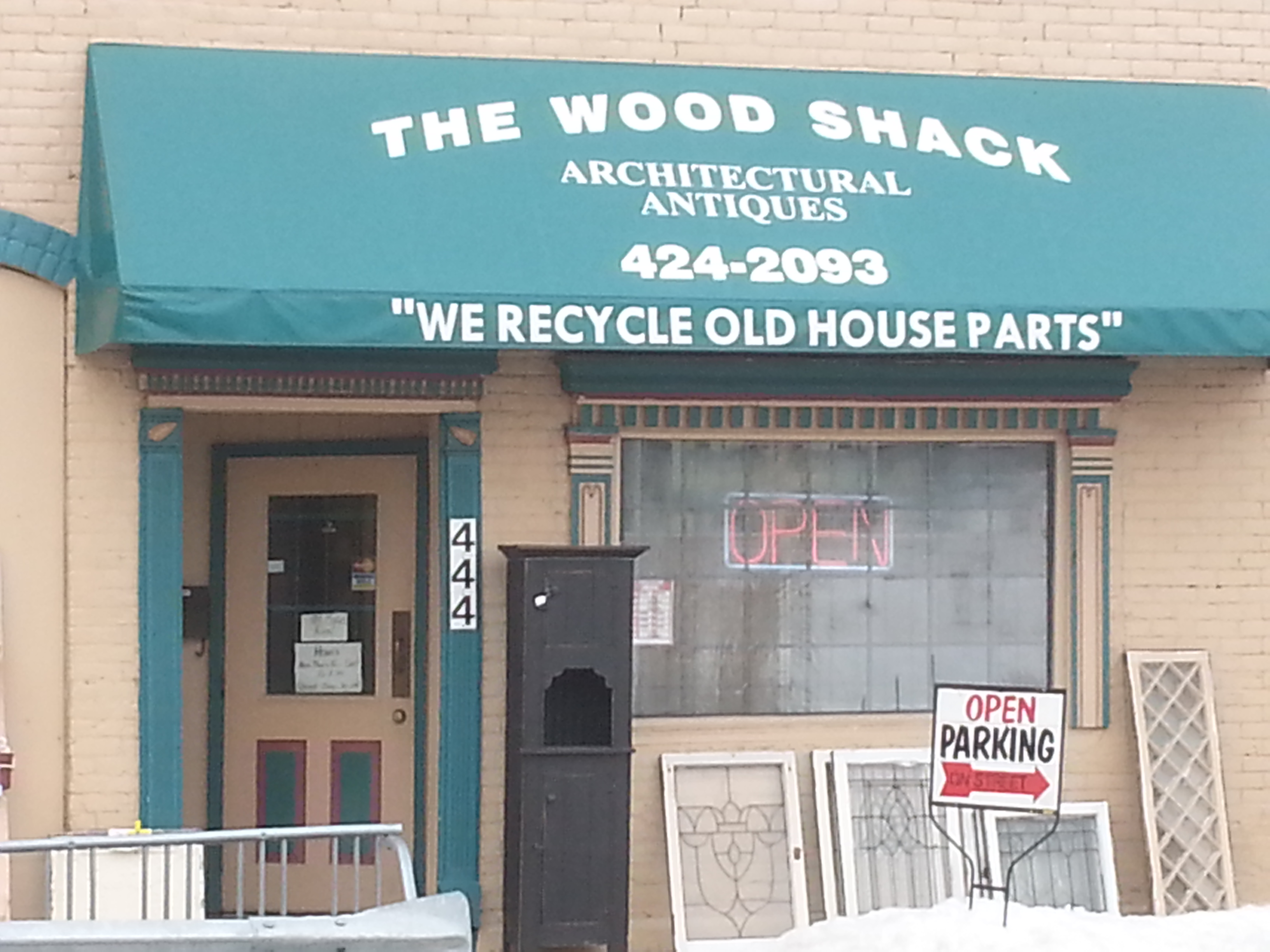
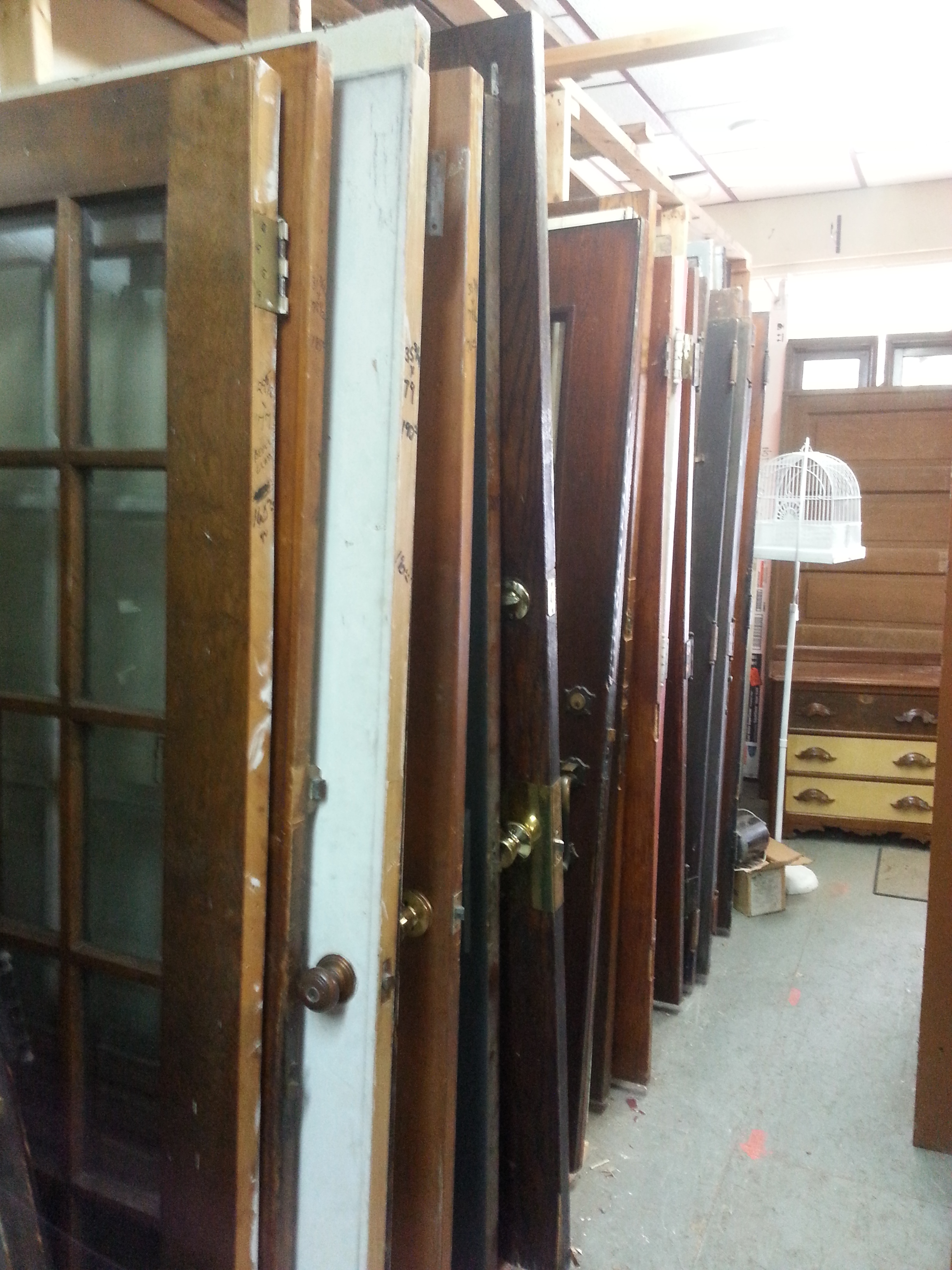
For all of you interested in historic home renovation we have a great resource here in Fort Wayne called The Wood Shack. They specialize in salvaging architectural parts from old houses and buildings. For homeowners like us this is an awesome place to pick up doors, trim, windows, etc that look like they belong in our own house! The shop is run by a super friendly and knowledgeable husband/wife duo and their store is a jam-packed architectural heaven.  They are proudly located downtown behind the Tincaps baseball stadium and they are big supporters of our historic neighborhoods and restoration in general.

20140301_142725

As part of our kitchen remodel we have made the choice to convert the existing utility closet into a first floor powder room.  We currently have one full bath upstairs and a random  toilet in the middle of the basement laundry room but as time goes on we have realized that a first floor bathroom is pretty much a necessity.  We are going to have to remove the exterior door from that utility room in order to full enclose the area and make it functional as a bathroom.   This means that we will be adding an exterior door directly off the north side of the kitchen with direct access to the back porch.

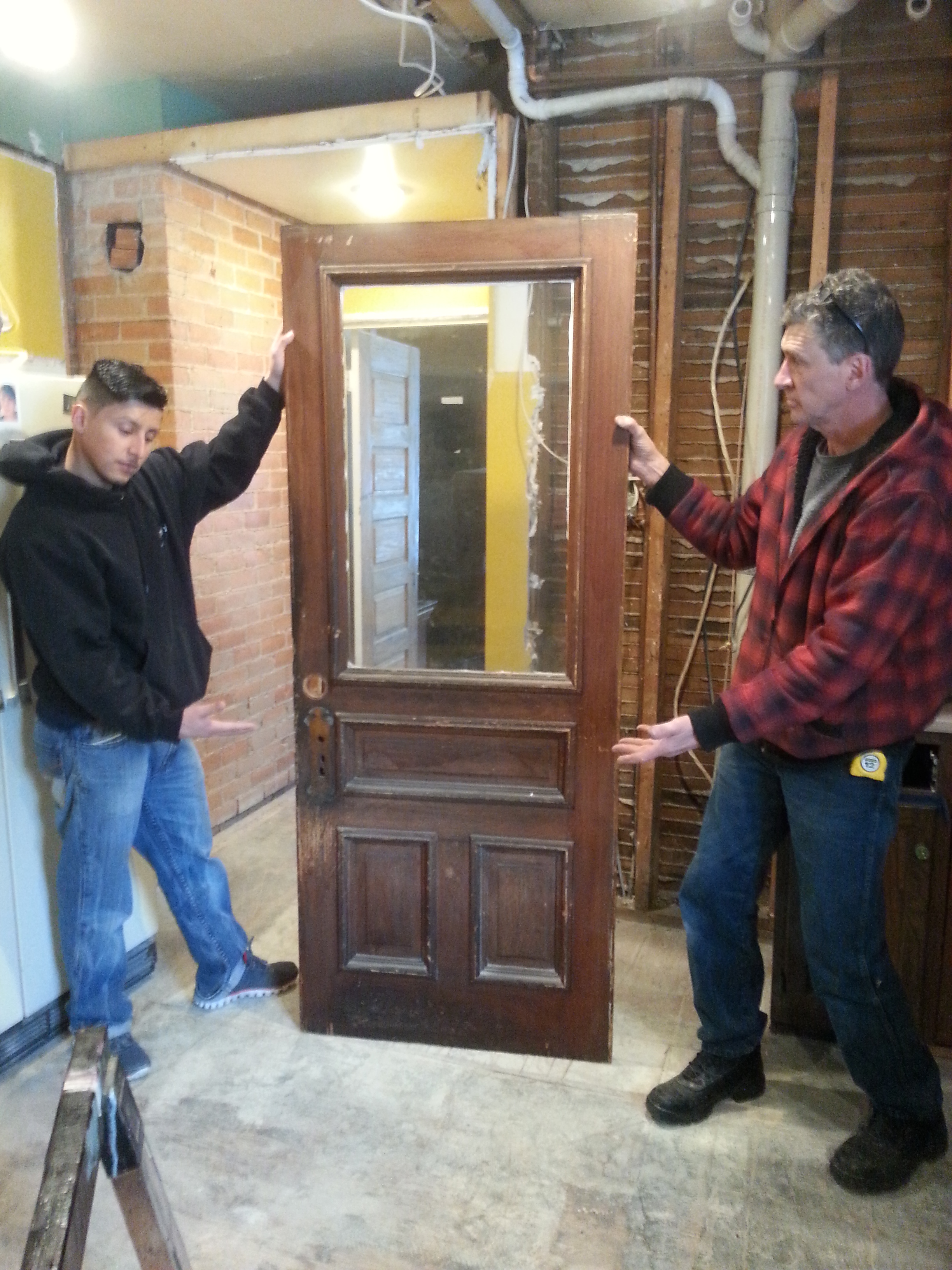
We were in the market for an old exterior door and The Wood Shack had some great finds!
20140329_124644

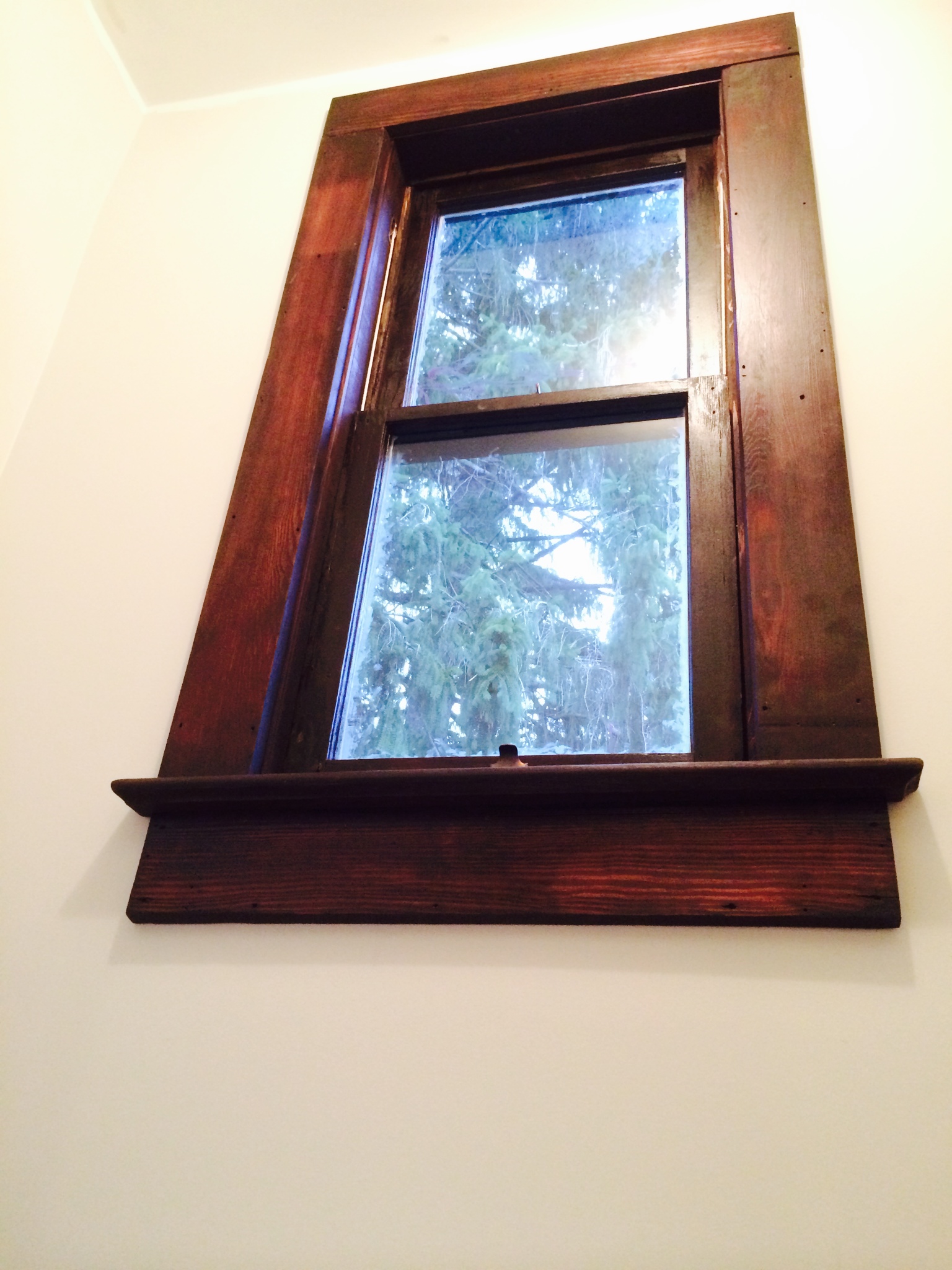
Our budget for this mini project was $200.00 and we were looking for a door with a good amount of glass so that we could capitalize on the natural light.  We were so excited to find this beauty!!
20140301_152045

I am in L-O-V-E!! I can’t wait to see how this will look in our new kitchen. And now with a bit of elbow grease…well, maybe a lot of elbow grease…we are going to clean this door up and make it our own!

Shop local and check out The Wood Shack!

https://www.facebook.com/TheWoodShackfw